Drawn by a robust innovation ecosystem, foreign investment in actual use in China saw a significant shift toward high-tech industries over the first eight months of the year, according to data released Friday by the Ministry of Commerce.
The broader investment landscape remained relatively stable. Between January and August, the country welcomed 42,582 new foreign-invested companies, a slight 0.3 percent increase from the previous year, bringing total actual foreign investment in actual use to 479.95 billion yuan (about 71 billion U.S. dollars).
The standout, however, was the high-tech industry. The sector utilized 200.26 billion yuan (about 30 billion U.S. dollars) in foreign investment, representing a massive 35.1 percent leap year-on-year. This dramatic influx means utilized high-tech investments now command 41.7 percent of the national total, an impressive increase of 12.4 percentage points compared to the same period last year.
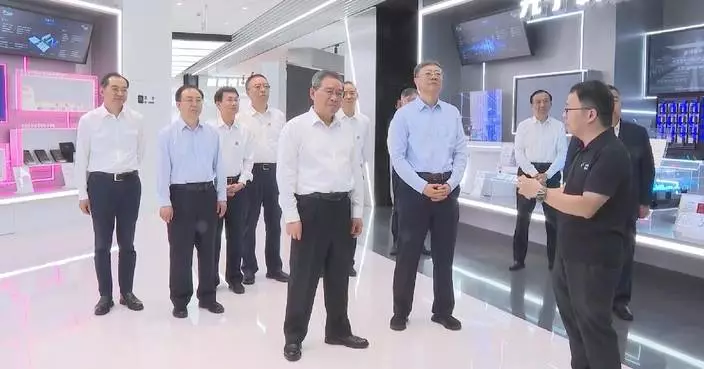
Among the major foreign-funded projects recently put into operation is a motor production base in Foshan City, south China's Guangdong Province. With an investment of over 10 billion yuan (about 1.4 billion U.S. dollars), the South China Manufacturing Base Project is the third production base launched in China by Finnish manufacturer SEW Industrial Gears. It is expected to produce 450,000 geared motors annually, mainly catering to the needs of industries such as robotics and new energy equipment.
Also leading the surge were research and development and design services, with utilized foreign investment jumping 74 percent in the eight-month period. The transformation of scientific and technological achievements followed closely with 64.2 percent growth while the manufacturing of electronic and telecommunications equipment also saw robust expansion rising by 41.9 percent.
In Kunshan City of east China's Jiangsu Province, the global innovation center of Tenneco, an American automotive supplier, was inaugurated not long ago. The innovation center integrates three major businesses -- powertrain, air purification, and spark plugs -- and its research and development investment is expected to reach 500 million yuan over the next five years.
"There's a shift. It's not just China for China and the technology in China, but I think it's starting to drive the world and not just from productivity, not just from components or engine components, but it's also the technology that's spreading throughout the globe," said Jim Voss, chief executive officer of Tenneco.
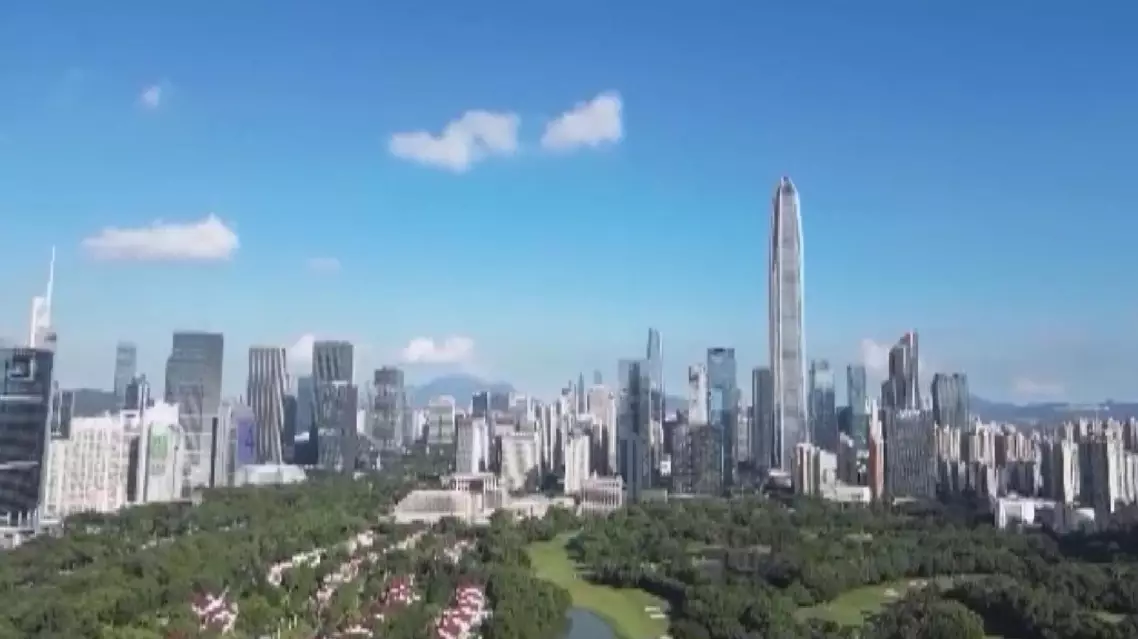
China's high-tech sector sees surge in utilized foreign investment in first eight months
Doctoral students from the U.S. and China spent days together aboard a research vessel, collaborating on marine science projects and exchanges designed to foster deeper understanding and enduring friendships between the two countries' scientific communities.
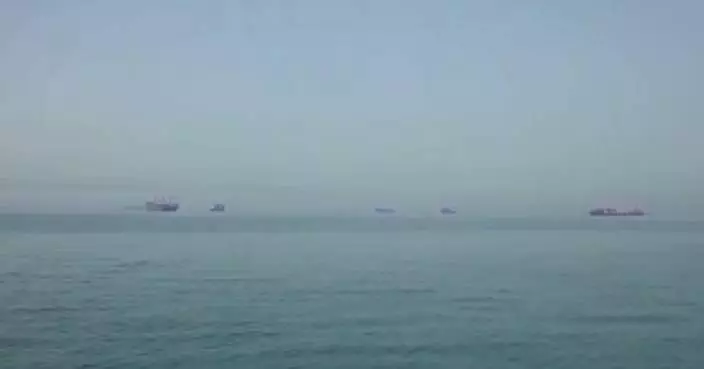
In late March, 20 Chinese and U.S. students boarded a research vessel in Hong Kong, sailing via Ningbo to Shanghai as part of the "A Shared Voyage: China-U.S. Youth Friendship Program". Over 12 days, the students collaborated on marine science and cultural exchanges.
Since the launch of an initiative to invite 50,000 young Americans to China for exchange and study programs in a five-year span in November 2023, over 50,000 young Americans have visited China, achieving the target two-and-a-half years ahead of schedule.
Chinese and U.S. students who took part in the program wrote to Chinese President Xi Jinping in April, thanking him for the "50,000 in Five Years" initiative, which has provided valuable opportunities for young people of both countries to engage in learning and exchange.
To their surprise, Xi replied to the letter, encouraging the students to make new contributions to the stable, healthy and sustainable development of China-U.S. relations.
In the letter, Xi said that the story of China-U.S. friendship is written by the people, and the future of China-U.S. relations is shaped by the youth.
"Hearing back from him was really crazy. I'd love for people to have more buy into what the project was all about, which was, shared friendship, shared science," said Benjamin Acosta, a Columbia University PhD student.
"He actually took the time to read our letter and even respond to it because I know he's very busy. I feel very honored," said Lesley Figueroa, a PhD student at UC Santa Barbara.
Chinese students also expressed gratitude for the opportunity to meet their U.S. counterparts and exchange ideas.
"We are truly grateful for the '50,000 in Five Years' initiative proposed by President Xi, which has offered young people from both China and the U.S. valuable opportunities for certainty in an otherwise turbulent international landscape. It's remarkable that we could come together aboard an American research vessel and carry out such meaningful scientific and cultural exploration in Chinese waters," said Niu Lishan, a PhD student at Tsinghua University.
Noting that young people, full of vitality and dreams, represent the future and hope of China-U.S. relations and of the world, Xi called on more Chinese and U.S. youth to take up the baton of friendship, learn from each other, progress together, and become "envoys of friendship" bridging the Pacific.
The voyage experience went beyond laboratories, allowing the future scientists to explore underwater robotics and water quality monitoring.
"I have never seen this many krill. It's really crazy. They've got a lot of larger species here, and that means that they probably have a lot of fish and other kinds of higher life forms that feed off this stuff. So it's probably the most productive waters I've seen," said Acosta.
"We learned to operate underwater robots for water quality sampling in shallow-water marine zones. We also collected samples firsthand and conducted related water quality monitoring and analysis," said Niu.
"I've never been on a ship before. I normally do, like I said, on smaller ships and in my lab by myself. With the greater community in this very high-tech environment and using a lot of instruments that I don't normally have access to, which is really incredible," said Meredith Kamm, another Columbia University PhD student.
"This kind of program plants a seed for future cooperation and exchange between China and the U.S., especially in areas such as marine science and climate change. It can help us work together to build a maritime community with a shared future," said Huang Wei, chief scientist of the voyage and researcher at the Second Institute of Oceanography of the Ministry of Natural Resources.
In the letter, Xi noted that through these interactions, young people from both countries have reached out to each other, deepened mutual understanding, forged profound friendships, and opened a new chapter in friendly exchanges between the two peoples.
"I think the United States and China have some of the best researchers in the world. I hope to gain a different perspective in something I've never considered before by talking to these students and understanding how their research works," said Natalie Lafont, a PhD student at Harvard University.
The program also gave the students the chance to meet industry leaders and innovators in the field of ocean exploration. Vincent Pieribone, OceanX co-CEO and chief science officer, said he encouraged the students to always keep their determiniation steady even in the face of failure.
"Science is a tough business and failure is all over, and both sides see that happens. And it's great to bring people together over a common goal, which is ocean stewardship and ocean science and ocean exploration," said Pieribone.
In addition to personal connections, the U.S. students said they were highly impressed with the investments that Chinese universities have made toward ensuring their students and scholars can make an impact.
"I feel like most all the labs at these universities were very well equipped with, not just marine equipment, but research equipment. Students who are there can do multiple, like a variety of projects. My favorite one was the School of Marine Science at Ningbo University. Because we got to see the aquaculture tanks. So there was a lot of tanks and they had a variety of fish. It seems that they really take aquaculture and fisheries as a priority," said Figueroa.
Yet, the focus of the voyage always returned to building lasting ties with their fellow students. Ray Dalio, founder of U.S. Bridgewater Associates and one of the program's initiators, encouraged the participants to take a long-term view of the voyage's impact.
"What I'd love to see is that you develop those relationships and that you stay in touch as a foundation for our future collaborations and friendships because you have a shared passion. Wouldn't that be great? Not just this mission, but the future of your relationships would be great, and think about how that could expand," Dalio said.
"In the face of profound changes unseen in a century and a turbulent world, and confronted with emerging issues such as climate change and artificial intelligence, young people in China and the United States shoulder a special mission. They should strengthen exchanges and cooperation, carry forward China-U.S. friendship, and continue to advance the development of China-U.S. relations," said Geng Shuang, vice president of the Chinese People's Institute of Foreign Affairs, at the April closing ceremony.
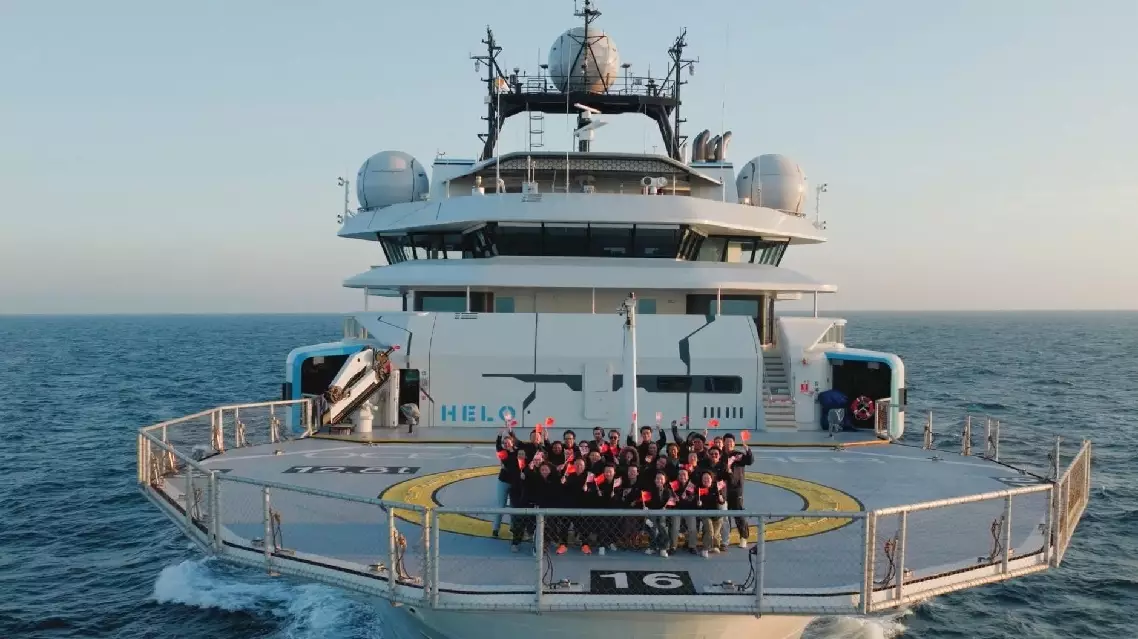
China, U.S. marine science students strengthen ties through ocean voyage