Skip to Content Facebook Feature Image

UN chief says power has polarized the world and urges leaders to cooperate

News

UN chief says power has polarized the world and urges leaders to cooperate
News

News

UN chief says power has polarized the world and urges leaders to cooperate

2026-09-23 02:34 Last Updated At:02:41

UNITED NATIONS (AP) — In a no-nonsense farewell speech, U.N. Secretary-General Antonio Guterres urged global leaders Tuesday to respond to the defining challenge today: Will the world continue on its path to fragmentation or cooperate to tackle the existential threats from climate crisis, runaway artificial intelligence and intensifying inequalities?

At the heart of these crises is power, Guterres told the annual high-level gathering at the U.N. General Assembly, pointing to the “irreversible” move toward a multipolar world, the “extraordinary transfer of power” from governments to a handful of private corporations and individuals, and the increasing handover of power from humans to machines with artificial intelligence.

More Images
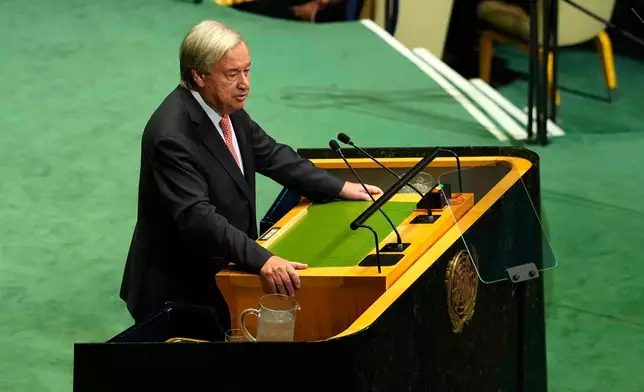
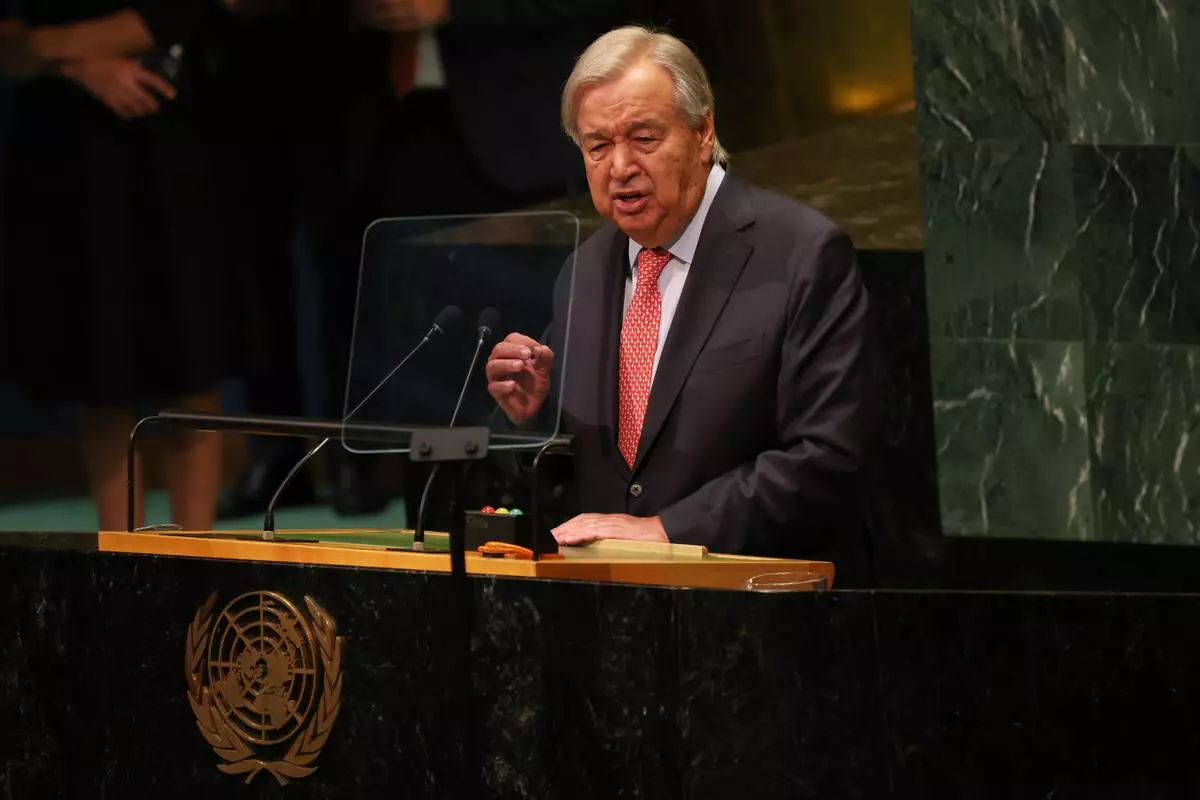
Secretary-General of the United Nations António Guterres speaks at the United Nations General Assembly (UNGA) at the UN headquarters on Tuesday, Sept. 22, 2026. (Justin Tang/The Canadian Press via AP)
Secretary-General of the United Nations António Guterres speaks at the United Nations General Assembly (UNGA) at the UN headquarters on Tuesday, Sept. 22, 2026. (Justin Tang/The Canadian Press via AP)

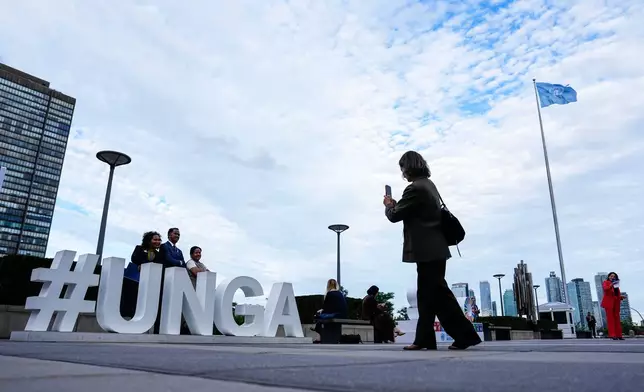
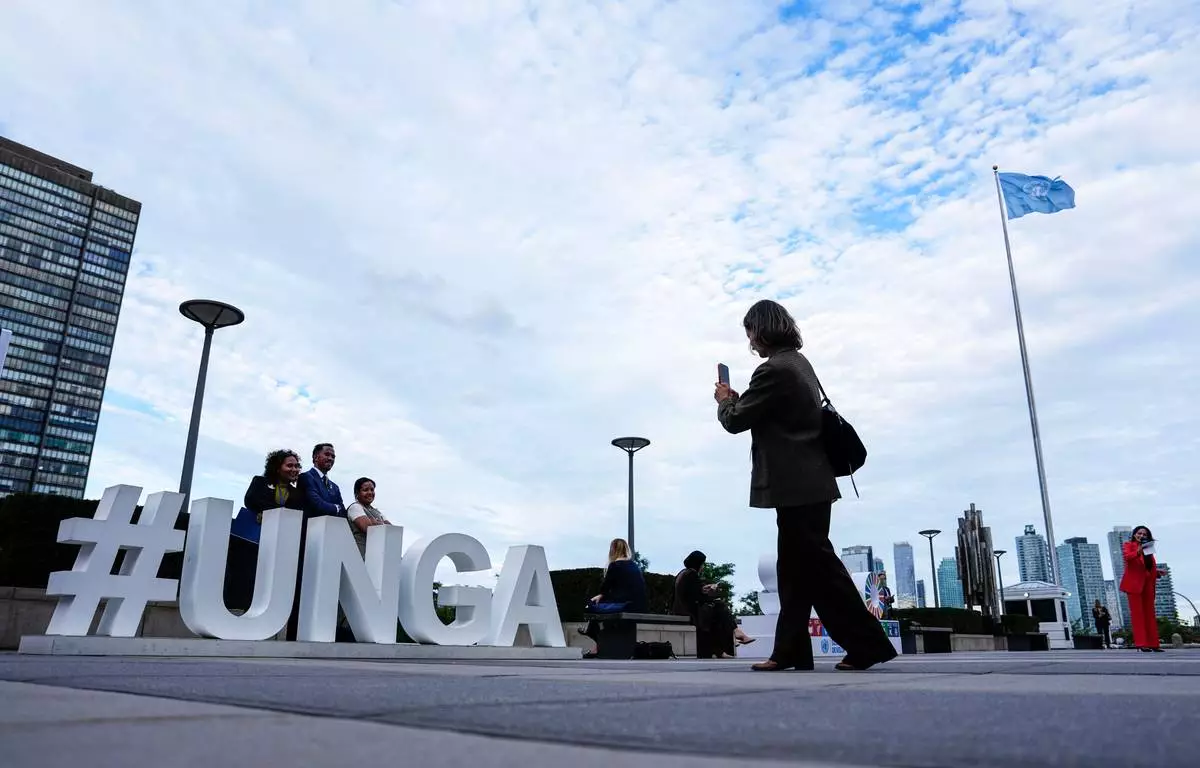
People pose as they arrive for the United Nations General Assembly (UNGA) at the UN headquarters, Monday, Sept. 21, 2026. (Justin Tang/The Canadian Press via AP)
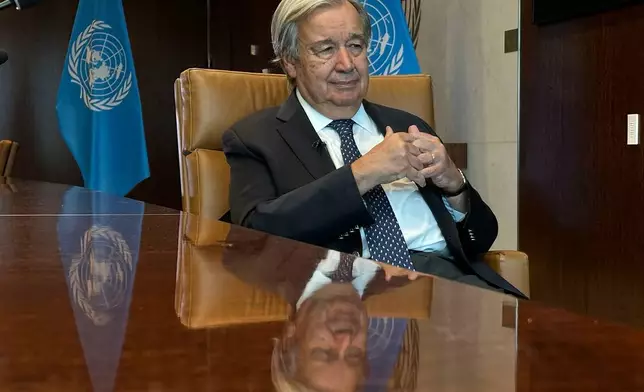
People pose as they arrive for the United Nations General Assembly (UNGA) at the UN headquarters, Monday, Sept. 21, 2026. (Justin Tang/The Canadian Press via AP)

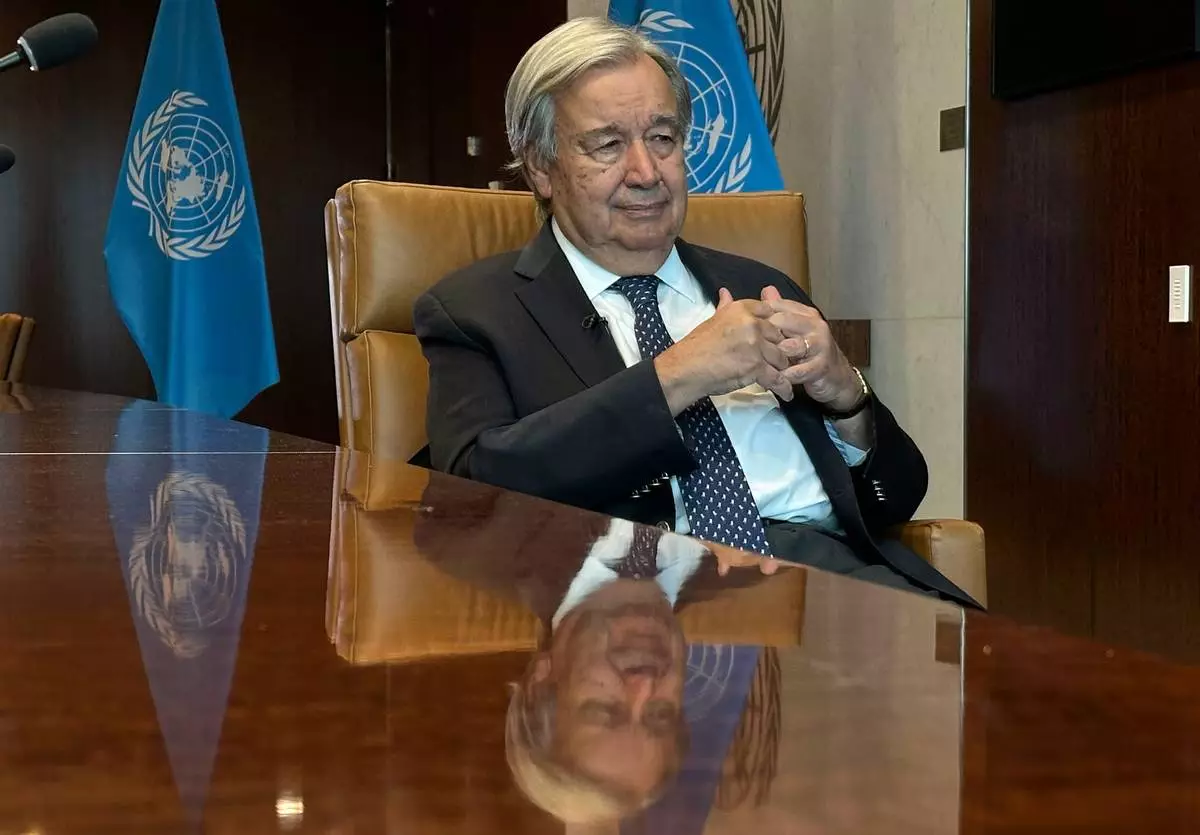
The United Nations Secretary-General Antonio Guterres speaks during an interview with The Associated Press at the United Nations headquarters, Thursday, Sept. 17, 2026. (AP Photo/David R Martin)
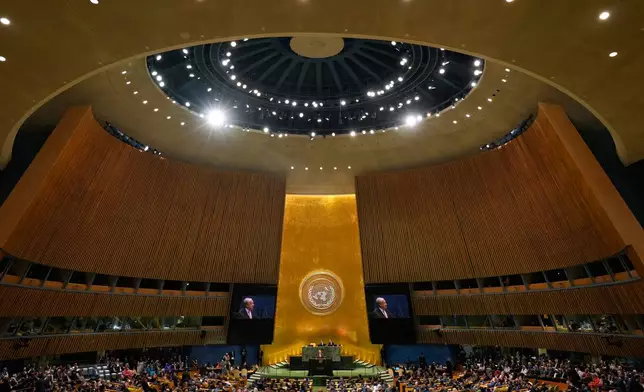
The United Nations Secretary-General Antonio Guterres speaks during an interview with The Associated Press at the United Nations headquarters, Thursday, Sept. 17, 2026. (AP Photo/David R Martin)

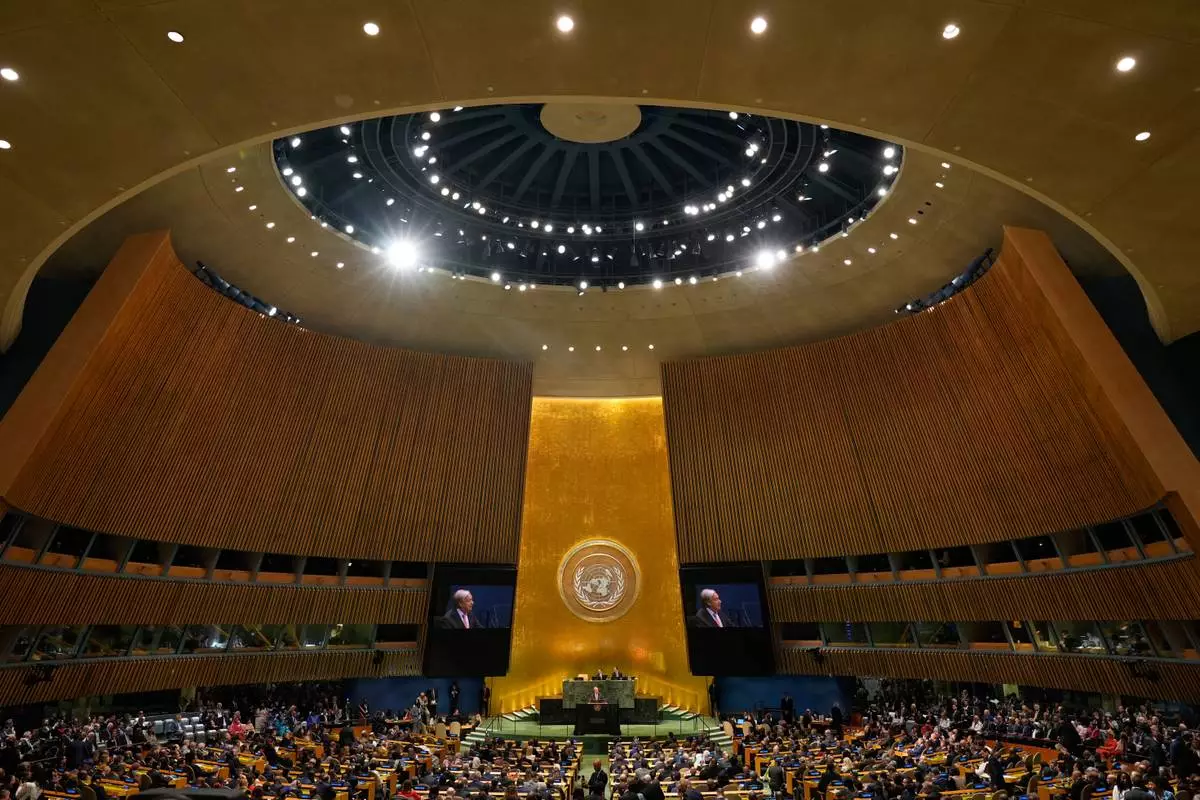
United Nations Secretary-General Antonio Guterres speaks during the 81st session of the United Nations General Assembly at United Nations headquarters, Tuesday, Sept. 22, 2026. (AP Photo/Seth Wenig)
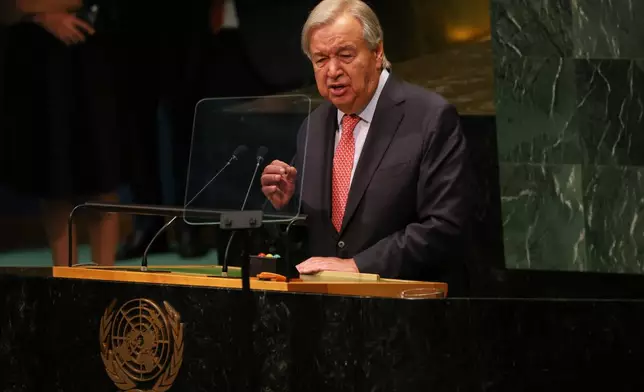
United Nations Secretary-General Antonio Guterres speaks during the 81st session of the United Nations General Assembly at United Nations headquarters, Tuesday, Sept. 22, 2026. (AP Photo/Seth Wenig)

United Nations Secretary-General Antonio Guterres during the 81st session of the United Nations General Assembly at United Nations headquarters, Tuesday, Sept. 22, 2026. (AP Photo/Heather Khalifa)

United Nations Secretary-General Antonio Guterres during the 81st session of the United Nations General Assembly at United Nations headquarters, Tuesday, Sept. 22, 2026. (AP Photo/Heather Khalifa)

Guterres urged leaders to avoid what he called “the great fracture – the division of the world into two rival blocs with separate economic, technological and security systems.”

He rebuked might-makes-right thinking, telling superpowers to recognize “that their power isn’t so super” — that “military power alone cannot security peace” and that “no power can solve today’s challenges along.”

The future will be shaped by how the world addresses “four great tests of power” – power over war and peace, power fueling climate chaos, power unleashed by artificial intelligence and “power that concentrates wealth and drives inequality,” he said

Peace and security is “the first great power test in the 21st century,” the U.N. chief said, appealing to leaders to maximize their weeklong meeting to demand an end to fighting in the Middle East, Ukraine, Sudan, Myanmar and elsewhere – and demand a return to dialogue.

The climate crisis, Guterres said, is in many ways “the most profound intergenerational power imbalance of all – one generation consuming the future of the next.”

The world faces a near certain breach of the 1.5 degree Celsius (2.7 degrees Fahrenheit) safety threshold set 11 years ago to prevent the worst of global warming, he said, and “the dangers are real, but so is the hope.” He pointed to the past decade which has fueled “one of the most promising shifts in power of our time” to clean energy.

As for artificial intelligence, “the danger is not technology. The danger is technology without accountability,” he said, and its developers are now sounding the alarm.

Guterres urged AI rivals to come together – as the Cold War rivals did after World War II – “to manage shared existential risks.”

“Let us resolve that life-and-death decisions must never be surrendered to machines,” he said. "Killer robots must have no place in our future.”

Stressing that inequality is a power problem, the U.N. chief said, “Never has humanity possessed so much wealth, knowledge and technological capability. Yet for billions, progress remains out of reach.”

He decried that for these billions, food, clean water, education, decent work, health care and dignity remain out of reach – and lamented that most U.N. goals to end poverty and promote development won’t be met by 2030.

Guterres' second five-year term will end on Dec. 31, and the future leadership of the United Nations is unclear: After three straw polls in the Security Council of the eight contenders, no clear successor to Guterres has emerged.

Guterres said the backbone “for the effective, legitimate and responsible exercise of power in the 21st century” exists in the United Nations Charter which is based on “the primacy of international law. Upholding human dignity and the pursuit of justice in all its dimensions.”

But he stressed the critical need to reform the 81-year-old United Nations, established by the victorious powers in World War II to protect succeeding generations from the scourge of war to reflect the dramatically changed 21st century world.

Guterres urged presidents, prime ministers and ministers gathered in the assembly chamber to commit to the wide-ranging reform package the U.N.’s 193 member nations have adopted and strengthen the world body’s determination “to build a future that works for everyone.”

His voice rising with emotion, Guterres closed vowing to “never, ever give up” on the values for which the U.N. stands – the rule of law, the sovereignty of nations, and human rights to name a few.

“Wherever I will be, whatever I will be doing, I will keep championing the conviction that peace is possible,” he said, before leaving the rostrum amid a sustained standing ovation. He put his hand on his heart.

Lederer has covered international affairs for The Associated Press for more than a half century. Jennifer Peltz contributed to this report.
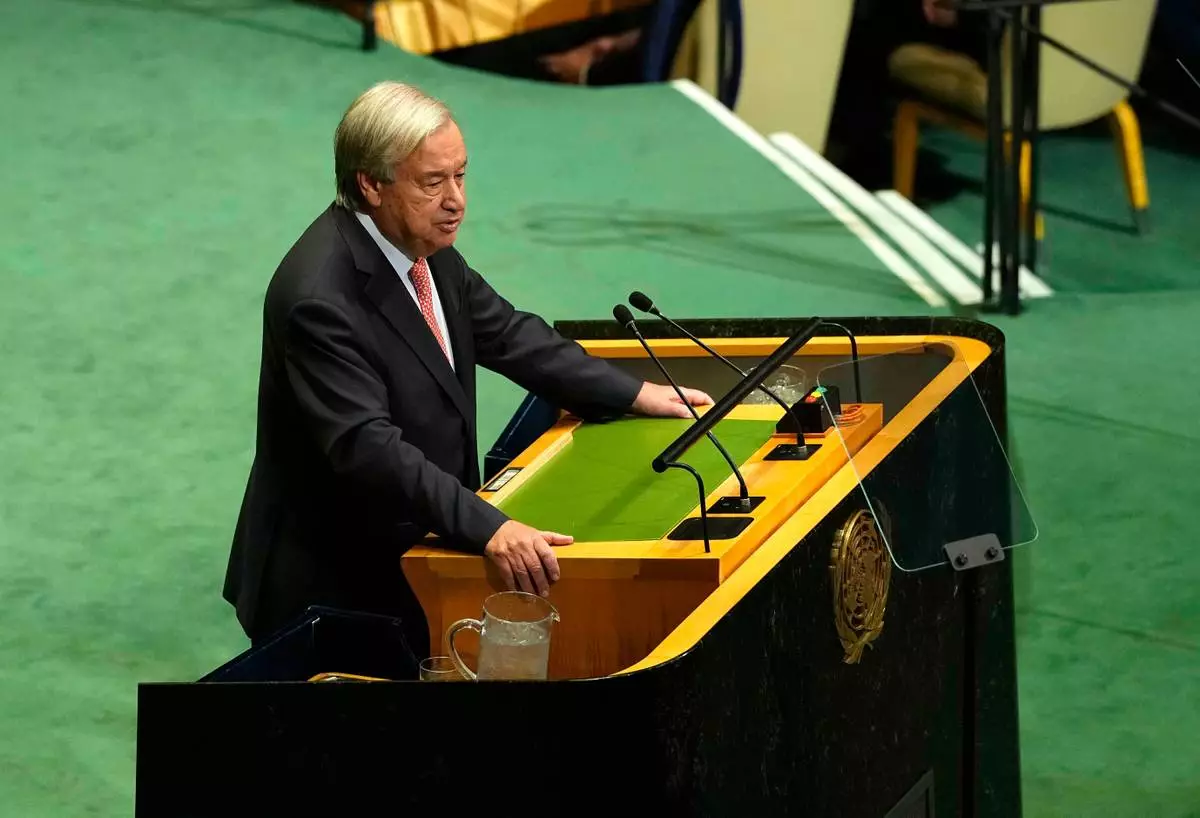
Secretary-General of the United Nations António Guterres speaks at the United Nations General Assembly (UNGA) at the UN headquarters on Tuesday, Sept. 22, 2026. (Justin Tang/The Canadian Press via AP)
Secretary-General of the United Nations António Guterres speaks at the United Nations General Assembly (UNGA) at the UN headquarters on Tuesday, Sept. 22, 2026. (Justin Tang/The Canadian Press via AP)

People pose as they arrive for the United Nations General Assembly (UNGA) at the UN headquarters, Monday, Sept. 21, 2026. (Justin Tang/The Canadian Press via AP)
People pose as they arrive for the United Nations General Assembly (UNGA) at the UN headquarters, Monday, Sept. 21, 2026. (Justin Tang/The Canadian Press via AP)

The United Nations Secretary-General Antonio Guterres speaks during an interview with The Associated Press at the United Nations headquarters, Thursday, Sept. 17, 2026. (AP Photo/David R Martin)
The United Nations Secretary-General Antonio Guterres speaks during an interview with The Associated Press at the United Nations headquarters, Thursday, Sept. 17, 2026. (AP Photo/David R Martin)

United Nations Secretary-General Antonio Guterres speaks during the 81st session of the United Nations General Assembly at United Nations headquarters, Tuesday, Sept. 22, 2026. (AP Photo/Seth Wenig)
United Nations Secretary-General Antonio Guterres speaks during the 81st session of the United Nations General Assembly at United Nations headquarters, Tuesday, Sept. 22, 2026. (AP Photo/Seth Wenig)

United Nations Secretary-General Antonio Guterres during the 81st session of the United Nations General Assembly at United Nations headquarters, Tuesday, Sept. 22, 2026. (AP Photo/Heather Khalifa)

United Nations Secretary-General Antonio Guterres during the 81st session of the United Nations General Assembly at United Nations headquarters, Tuesday, Sept. 22, 2026. (AP Photo/Heather Khalifa)
COLOMBO, Sri Lanka (AP) — A Sri Lankan court convicted 15 men on Tuesday over their involvement in the 2019 Easter Sunday bombings that killed more than 260 people, and sentenced them each to 200 years in prison, meaning they will spend the rest of their lives behind bars.

The three-judge High Court panel also ordered their property confiscated. The verdict was delivered after a lengthy trial that spanned for nearly five years.

The April 21 attacks targeted three churches and three hotels across the island nation during Easter services and celebrations. The bombings, which were inspired by the Islamic State group, were among the deadliest attacks in Sri Lanka’s history. They killed 42 foreigners and devastated communities across the country.

THIS IS A BREAKING NEWS UPDATE. AP’s earlier story follows below.

COLOMBO, Sri Lanka (AP) — A Sri Lankan court convicted 15 men on Tuesday over their involvement in the 2019 Easter Sunday bombings, which killed more than 260 people and wounded about 500.

The April 21 attacks targeted three churches and three hotels across the island nation during Easter services and celebrations. The bombings, which were inspired by the Islamic State group, were among the deadliest attacks in Sri Lanka’s history. They killed 42 foreigners and devastated communities across the country.

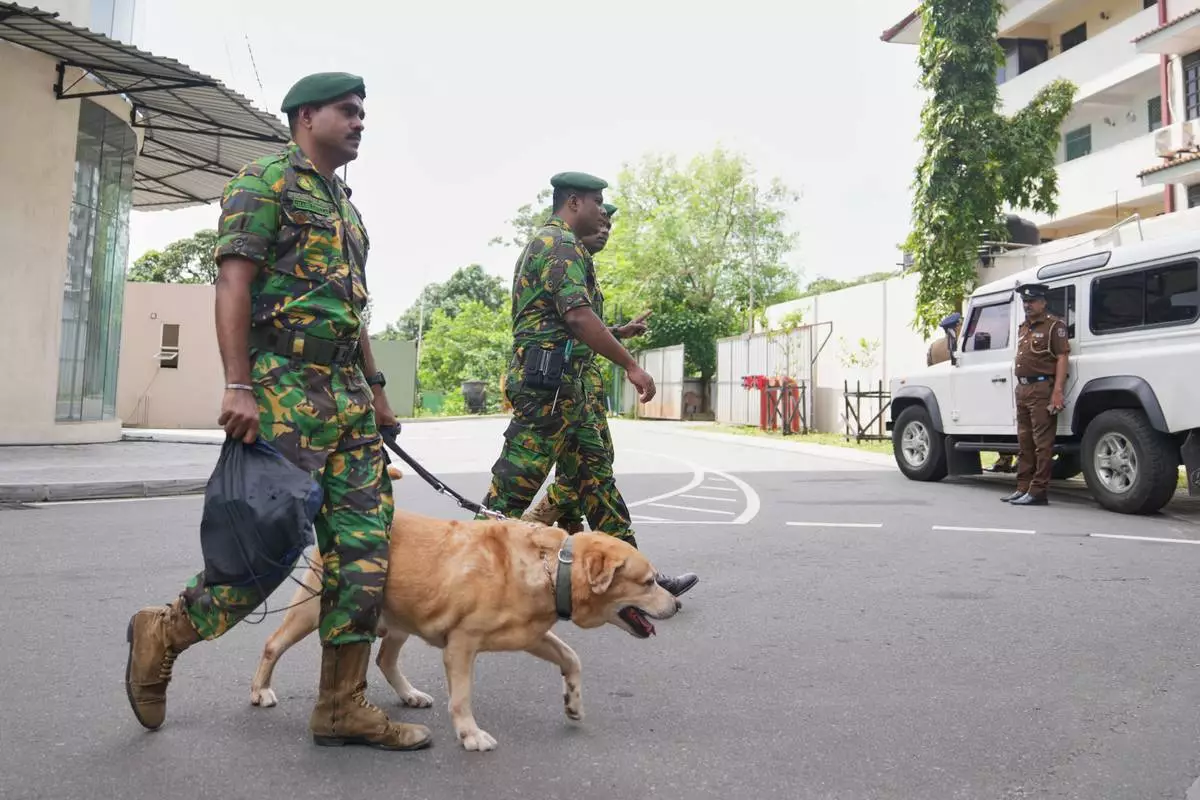
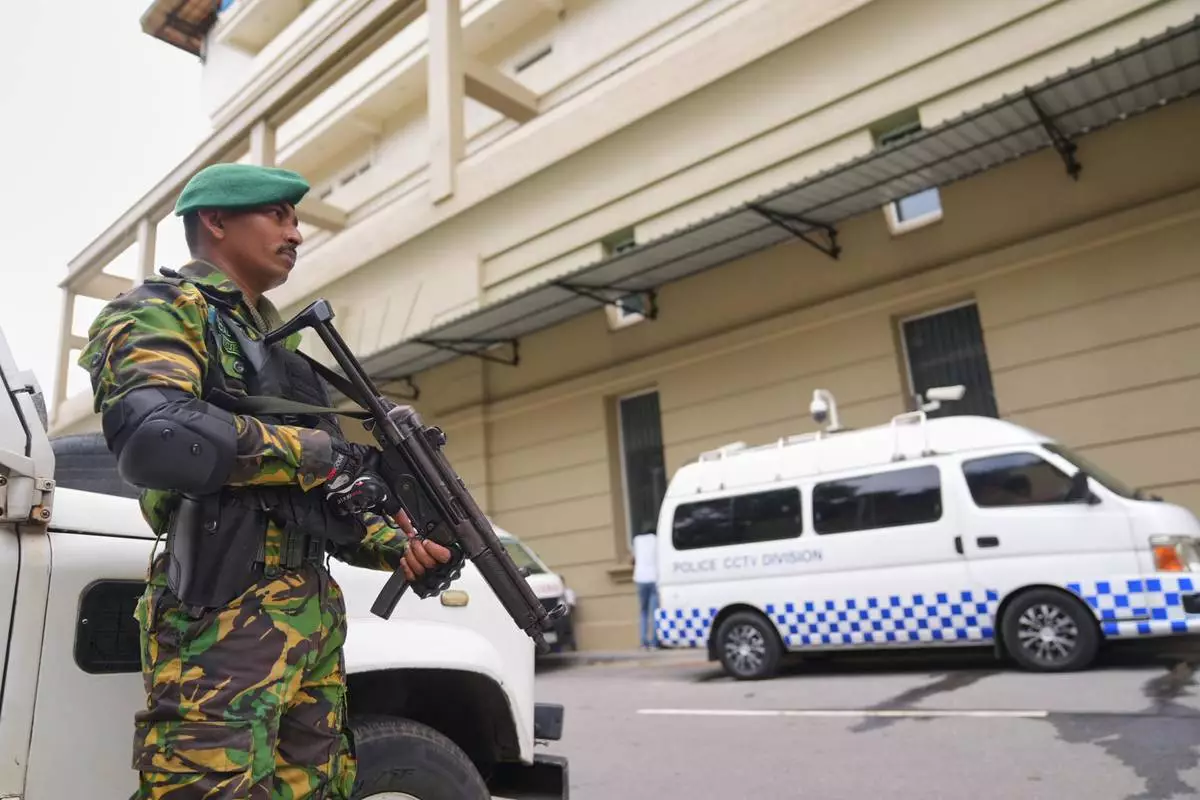
A three-judge High Court panel delivered the verdict amid tight security, with hundreds of police officers deployed around the courthouse.

Authorities filed 23,270 charges in 2021 against 24 suspects accused of planning or inspiring the attacks. The charges included murder, conspiracy to commit terrorism, and firearms and explosives offenses under the Prevention of Terrorism Act.

None of those believed to have directly participated in the attacks are alive.

Two Sri Lanka-based Islamic militant groups were accused of carrying out the bombings.

Sri Lanka’s Catholic Church has claimed, without providing evidence, that those identified so far as perpetrators are not the masterminds behind the bombings, and that there was a bigger conspiracy behind the attacks.

A parliamentary committee found that police and intelligence officials failed to act on repeated intelligence warnings of the attacks.

In July, a former police chief and a former senior defense ministry official were also sentenced to death for failing to act promptly on foreign intelligence warnings of possible attacks.

Sri Lanka has not carried out executions since 1976, meaning death sentences typically result in life imprisonment.

After the bombings, allegations emerged that the attackers had links to Sri Lanka’s state intelligence services. The country’s Defense Ministry denied any involvement.

In February, police arrested Suresh Salley, a former intelligence chief and retired army major general, in connection with the bombings. The government has alleged that Salley, who remains in custody, had prior knowledge of the attacks and actively conspired to carry them out.

Salley was a prominent military intelligence official credited with playing a major role in the campaign that ended the country’s civil war in 2009.

The bombings shook the island nation and revived memories of the 26-year conflict with the Liberation Tigers of Tamil Eelam, widely known as the Tamil Tigers, a separatist group that fought to establish an independent state for Sri Lanka’s ethnic Tamil minority.

Police commandos patrol with a sniffer dog at the High Court complex ahead of a verdict related to the 2019 Easter bombings in Colombo, Sri Lanka, Tuesday, Sept. 22, 2026.(Eranga Jayawardane)

Police commandos patrol with a sniffer dog at the High Court complex ahead of a verdict related to the 2019 Easter bombings in Colombo, Sri Lanka, Tuesday, Sept. 22, 2026.(Eranga Jayawardane)

A police commando stands guard at the High Court complex ahead of a verdict related to the 2019 Easter bombings in Colombo, Sri Lanka, Tuesday, Sept. 22, 2026.(Eranga Jayawardane)

A police commando stands guard at the High Court complex ahead of a verdict related to the 2019 Easter bombings in Colombo, Sri Lanka, Tuesday, Sept. 22, 2026.(Eranga Jayawardane)

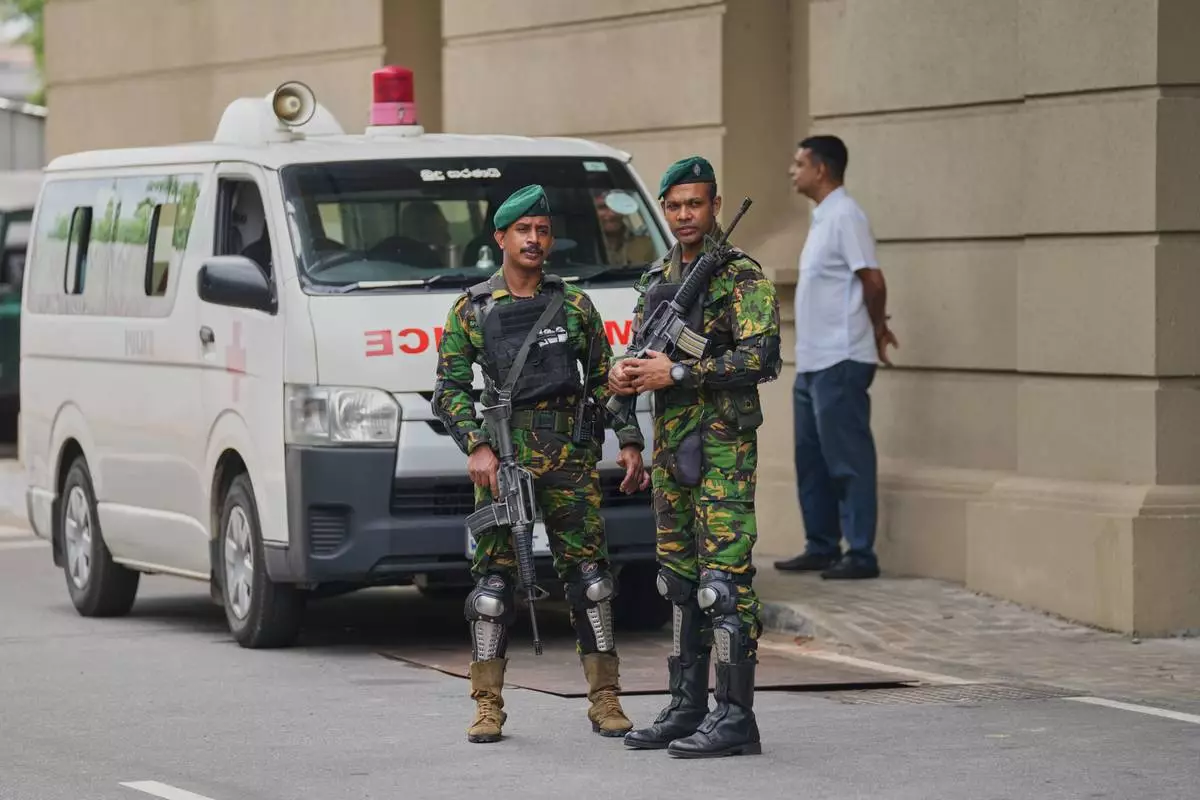
Police commandos stand guard at the High Court complex ahead of a verdict related to the 2019 Easter bombings in Colombo, Sri Lanka, Tuesday, Sept. 22, 2026.(Eranga Jayawardane)

Police commandos stand guard at the High Court complex ahead of a verdict related to the 2019 Easter bombings in Colombo, Sri Lanka, Tuesday, Sept. 22, 2026.(Eranga Jayawardane)

Recommended Articles