UNITED NATIONS (AP) — Canada is embracing its growing prominence as a champion of “middle powers” at the U.N. General Assembly, Canada's top diplomat said in an interview Tuesday as the international community's biggest annual gathering got into gear.
Prime Minister Mark Carney made a splash last winter by saying frankly that countries like his own could no longer afford wishful thinking about the international system and needed to act together. Nine months later, Foreign Minister Anita Anand said in an interview that Canada sees its “middle power strategy” bearing fruit, and the assembly’s big meeting could seed more growth.
Click to Gallery
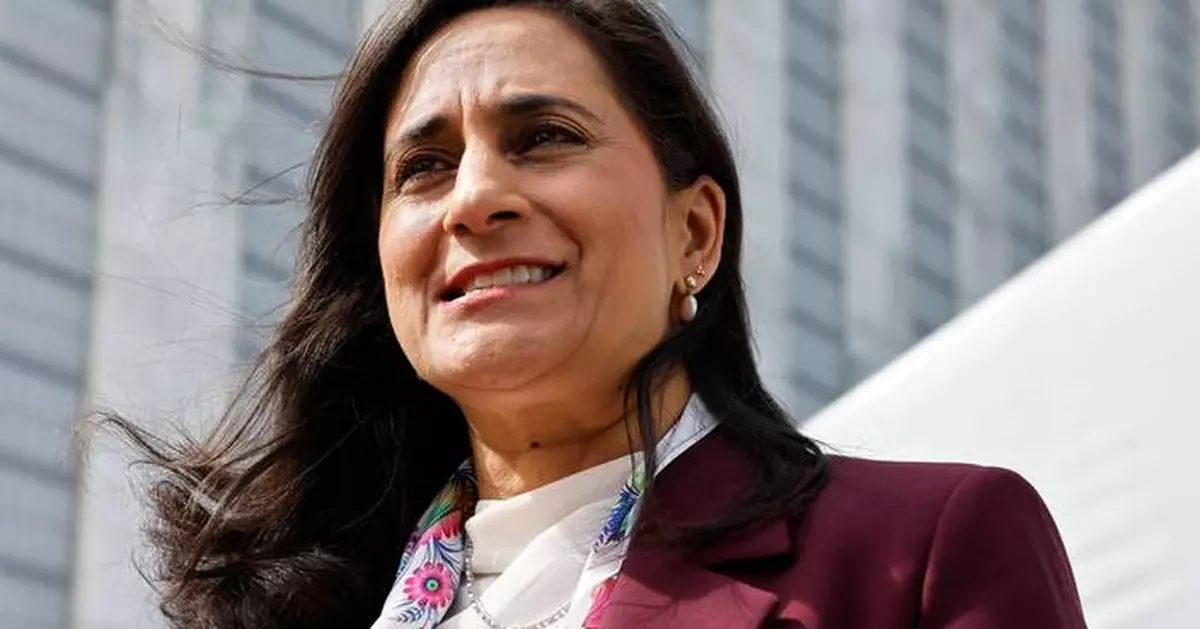
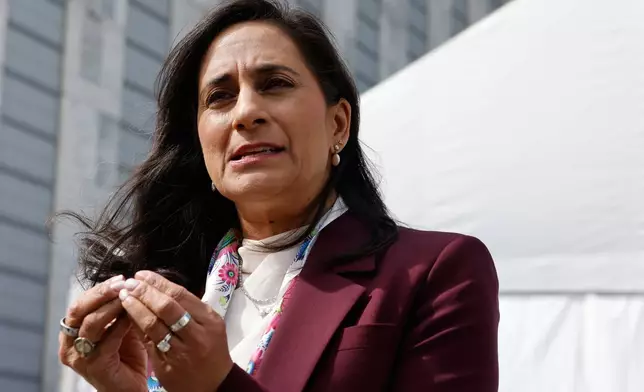
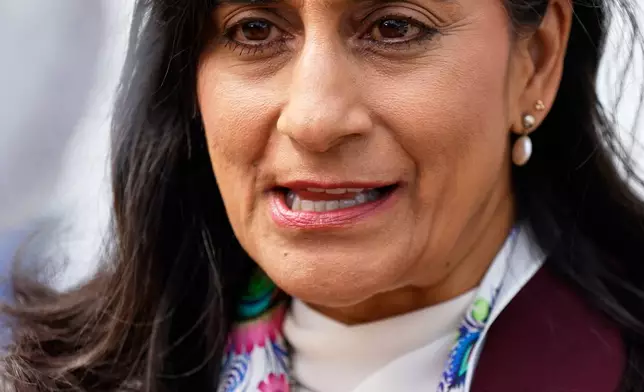
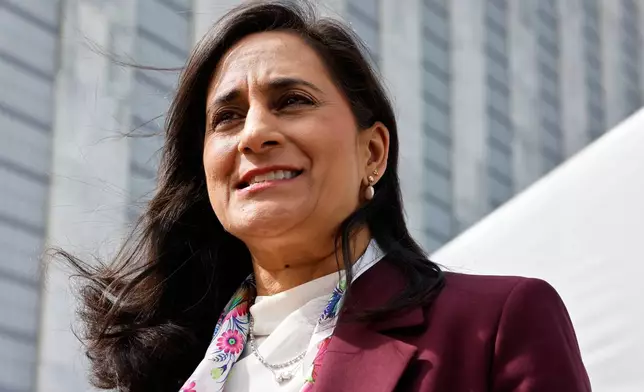
Canadian Foreign Minister Anita Anand speaks outside United Nations headquarters during the 81st session of the United Nations General Assembly, Tuesday, Sept. 22, 2026. (AP Photo/Stefan Jeremiah)
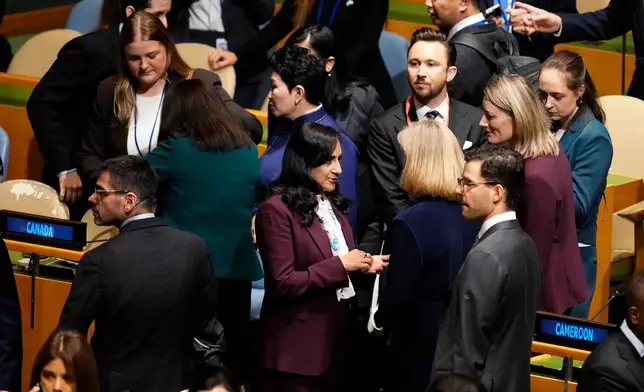
Canada Minister of Foreign Affairs Anita Anand, center, attends the United Nations General Assembly (UNGA) at the UN headquarters on Tuesday, Sept. 22, 2026. (Justin Tang/The Canadian Press via AP)
Canadian Foreign Minister Anita Anand speaks outside United Nations headquarters during the 81st session of the United Nations General Assembly, Tuesday, Sept. 22, 2026. (AP Photo/Stefan Jeremiah)
Canadian Foreign Minister Anita Anand speaks outside United Nations headquarters during the 81st session of the United Nations General Assembly, Tuesday, Sept. 22, 2026. (AP Photo/Stefan Jeremiah)
“This is, of course, a key moment because so many countries from around the world come to have conversations about their respective foreign policies. And many middle powers indeed look to Canada, look to us, to lead in this conversation," Anand said.
She spoke a day after her country co-launched a new group of advocates for U.N.-style international cooperation — “Partners for Multilateralism” — on the assembly's sidelines.
Canada is a founding member of the 81-year-old United Nations and has long contributed to its global conversation, humanitarian work and decision-making; the nation has won election to the powerful U.N. Security Council six times over the decades.
But this year has shifted Canada's presence on the international stage — and quite dramatically, as diplomacy goes.
First came Carney's speech at the World Economic Forum in January, when he said that rising, raw geopolitics were creating “a rupture in the world order" and that “middle powers must act together, because if we’re not at the table, we’re on the menu.”
Then, facing U.S. President Donald Trump 's tariffs, insults and cavalier talk of annexation, Carney let trade talks with the U.S. collapse last month rather than accede to terms he called unacceptable.
Carney, a former central bank chief, has set out to double non-U.S. trade within a decade. He convened hundreds of international investment firm executives for a Canadian investment summit last week and is hoping for free-trade deals with India, among others, by year’s end. He also is deepening ties with the European Union.
Canada's objectives — from trade to transatlantic security to Arctic defense to aiding Ukraine in Russia's four-year-old war — aren't new, “but we are bringing them into singular focus with our middle power strategy,” Anand said.
“It provides an impetus for like-minded countries to come to the table,” she said, adding: “We are all seeing the geopolitical shifts in the global environment.”
Anand is set to give Canada's main speech to the assembly on Saturday, for various scheduling reasons. The message “will be very much about implementing the middle power strategy,” said Anand, who described her country’s overall foreign policy as “principled pragmatism.”
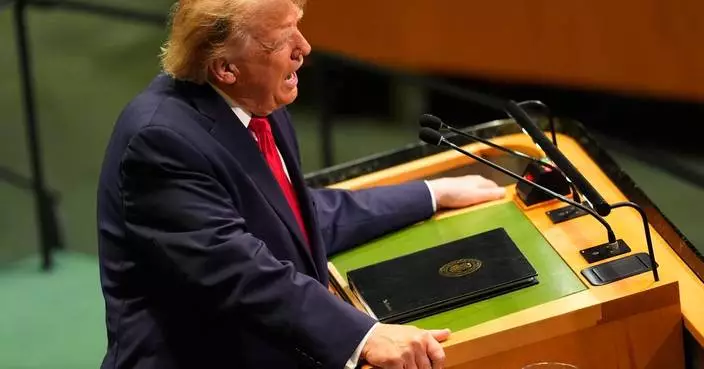
Trump, for his part, didn't mention Canada in his address Tuesday. He touted the United States' economic, military and technological might and celebrated international investments in what he called “the hottest country anywhere in the world.”
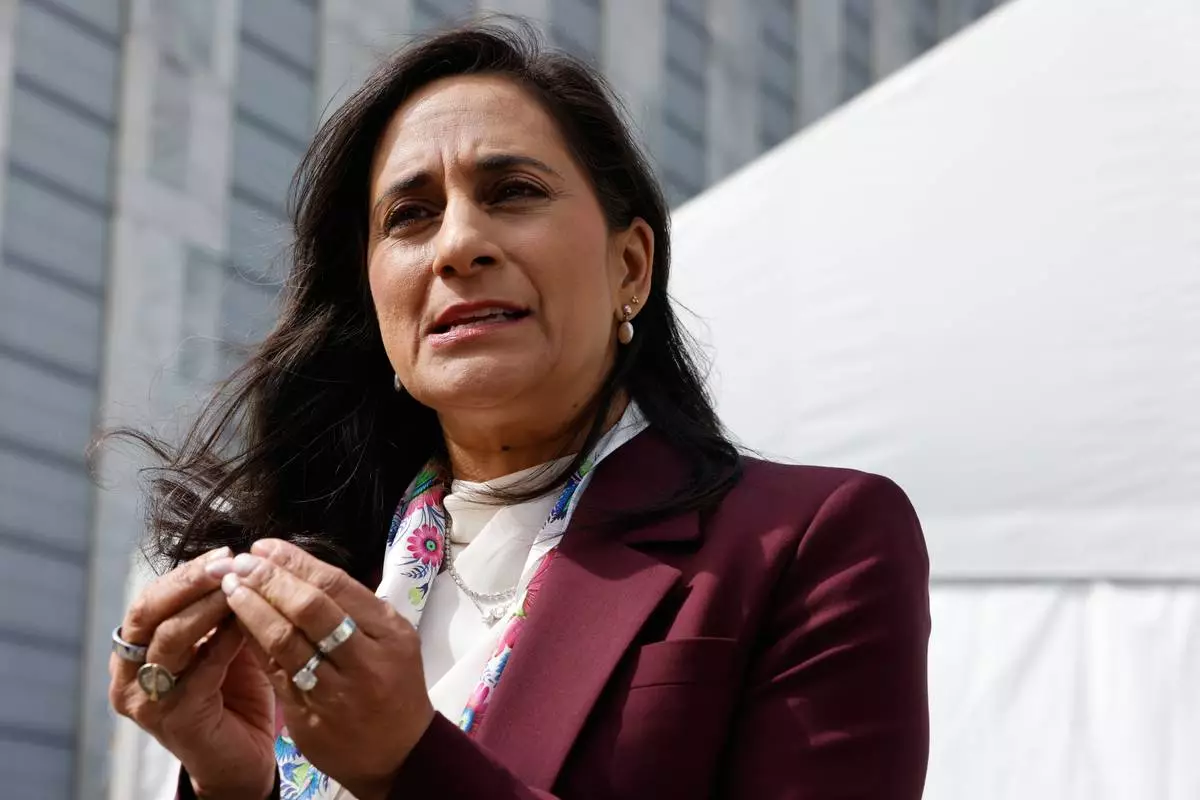
Canadian Foreign Minister Anita Anand speaks outside United Nations headquarters during the 81st session of the United Nations General Assembly, Tuesday, Sept. 22, 2026. (AP Photo/Stefan Jeremiah)
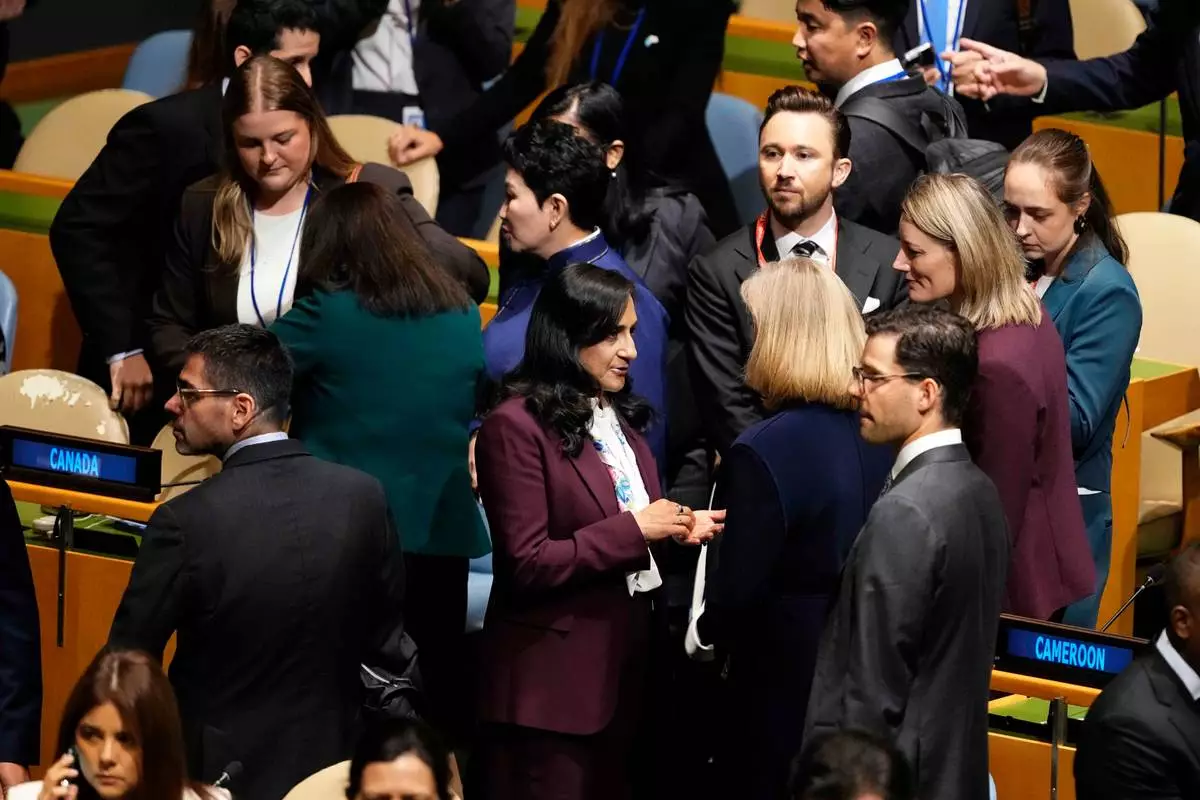
Canada Minister of Foreign Affairs Anita Anand, center, attends the United Nations General Assembly (UNGA) at the UN headquarters on Tuesday, Sept. 22, 2026. (Justin Tang/The Canadian Press via AP)
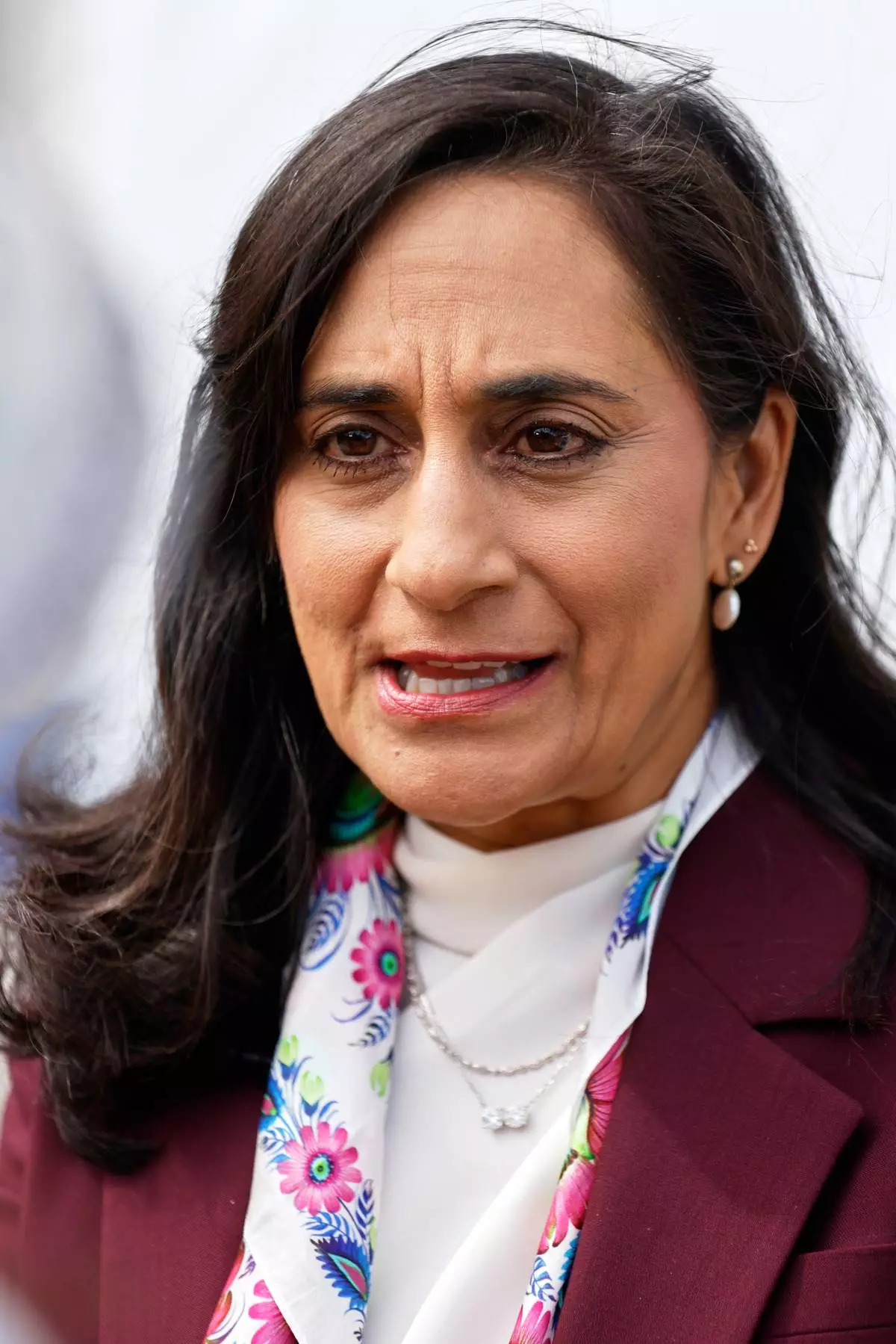
Canadian Foreign Minister Anita Anand speaks outside United Nations headquarters during the 81st session of the United Nations General Assembly, Tuesday, Sept. 22, 2026. (AP Photo/Stefan Jeremiah)
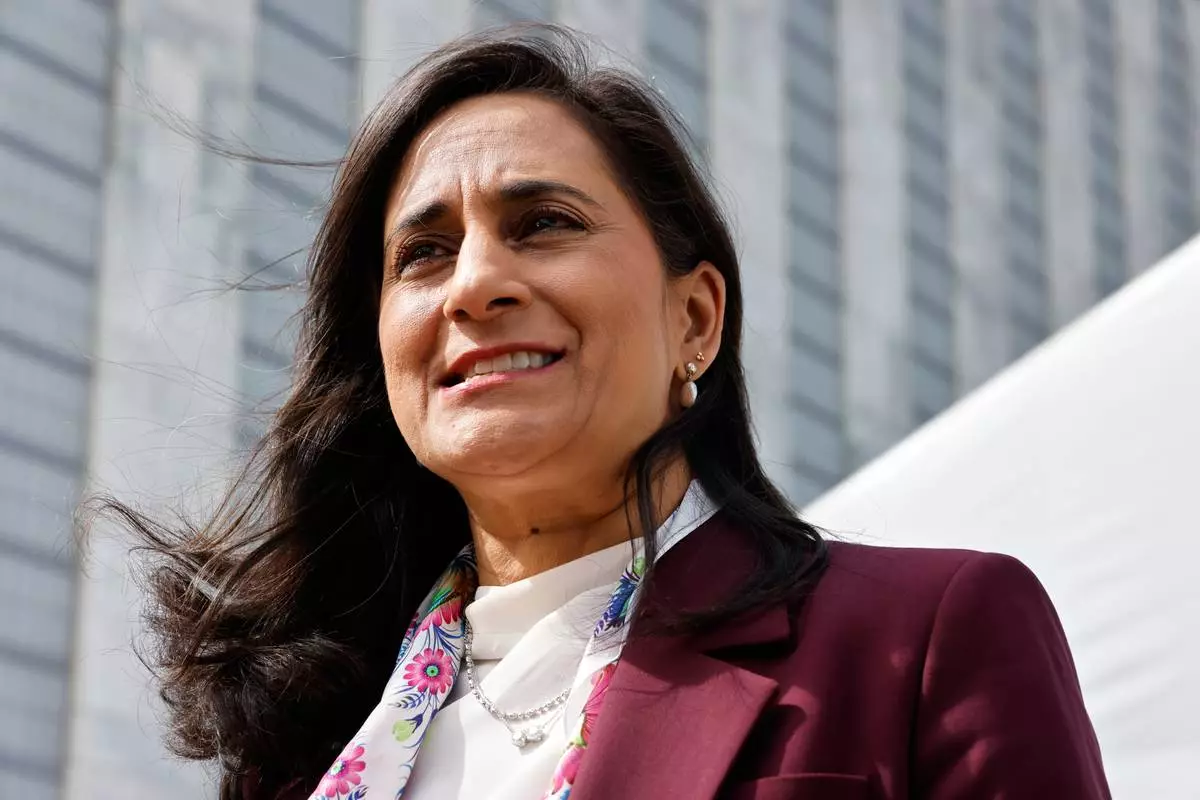
Canadian Foreign Minister Anita Anand speaks outside United Nations headquarters during the 81st session of the United Nations General Assembly, Tuesday, Sept. 22, 2026. (AP Photo/Stefan Jeremiah)
President Donald Trump made myriad false and misleading claims during his address to the United Nations General Assembly on Tuesday, many of which he has repeated frequently throughout his second term in the White House.
They covered topics such as U.S. munitions supply, drug seizures, oil and the economy.
Here's a closer look at the facts.
CLAIM: “We have more munitions than we could ever possibly even think of using, and we’re building them at levels that we have never done before.”
THE FACTS: Published reports and experts contradict this claim. Weapons stockpiles are diminishing, according to officials from the U.S. military, NATO and the Middle East, and it will take years for U.S. military contractors to replenish Tomahawk cruise missiles as well as Patriot and THAAD missile interceptors, according to defense experts.
In August, officials told The Associated Press that the U.S. military is experiencing a “beyond critical” shortage of advanced missile interceptors in Europe largely driven by President Donald Trump’s war with Iran, raising concerns about vulnerabilities in NATO countries to a potential Russian attack.
One U.S. defense official said the most concerning shortfall involves Patriot missile interceptors, which can shoot down Russia’s high-speed ballistic missiles. A NATO official confirmed low inventories of Patriot missiles among American and NATO forces in Europe. Both spoke on condition of anonymity to discuss sensitive military matters.
“The United States has enough munitions for any plausible scenario in the Iran war, but the depleted inventories have created a window of vulnerability for a potential Western Pacific conflict,” the Center for Strategic and International Studies said in a May report. “The time needed to rebuild those inventories has thus become a major concern.”
CLAIM: “When you add the United States and Venezuela together, we have more than 60% of the oil in the world.”
THE FACTS: Trump’s numbers don’t add up. In a deal announced at the end of August, the U.S. entered into a joint venture that gives it 100-year rights to 17 oil fields in Venezuela with proven reserves of 65 billion barrels of oil. It is estimated the country has reserves totaling more than 303 billion barrels of crude oil.
The deal vastly expanded the U.S. proven oil reserves by 46 billion barrels. But because Venezuela’s energy infrastructure has been severely degraded, it will take years before new investments will lead to significantly higher oil production, experts say.
But even if that were not an issue and the largest numbers were used, the combined resources would only account for about 22% of the world’s nearly 1.6 trillion barrels of oil reserves.
CLAIM: “The United States has carried out dozens of strikes on cartel drug boats, destroying 97% of the drugs coming into the ocean and sea.”
THE FACTS: Trump has made similar claims in recent months, with varying percentages. But experts say the real number can’t be known because it is impossible to determine how many drugs are not intercepted.
Asked in April for the source of Trump’s statistics after he said in a Truth Social post that 98.2% of drugs smuggled in via such routes had been stopped, the White House directed The Associated Press to Customs and Border Protection data on drug seizures.
The data showed that drug seizures made in the coastal/interior region, which includes open and coastal waters, were 98.2% lower in November 2025 than they were in July 2025. But this is not a measure of all trafficked drugs and it is only a snapshot of two specific months, not an overall trend.
“Drug seizure data measure interdiction activity, not actual trafficking volume,” Dessa Bergen-Cico, a professor of public health at Syracuse University who studies drug trafficking, told the AP at the time. “As drug policy researchers have noted, no one knows how much goes uncaught, and changes in seizure data are insufficient to make definitive claims about policy outcomes.”
Interdiction activity refers to the prevention of illicit drugs from reaching their destination.
CLAIM: “More Americans are working today by far than ever before.”
THE FACTS: It’s true that “more Americans are working today by far than ever before," but the statement needs context. The economy adds jobs most months, so U.S. payrolls are constantly hitting new highs. Jobs have increased in the U.S. in 65 of the last 80 years.
CLAIM: “Since I took office, we have created more than 1 million new private sector jobs."
THE FACTS: The U.S. has added 807,000 jobs since Trump’s second administration began, close to his claim of 1 million. But by historical standards, it’s not a particularly large increase.
CLAIM: “Since I took office, it has been my great honor to settle eight wars.”
THE FACTS: Although Trump has helped mediate relations among many nations, his impact isn't as clear-cut as he makes it seem. In at least two instances of peace he claims credit for achieving, there were no wars to end. He also began the ongoing war between the U.S. and Iran.
CLAIM: “We've secured commitments for $21 trillion in new investments from all over the planet.”
THE FACTS: This $21 trillion figure appears to be exaggerated, highly speculative, and far higher than the actual sum of domestic and foreign investments in the U.S. The White House website offers a far lower number, $11.2 trillion, and that figure appears to include some investment commitments made during the Biden administration.
Associated Press writer Ben Finley and fact-check news editor Barbara Whitaker contributed to this report.
Find AP Fact Checks here: https://apnews.com/APFactCheck.
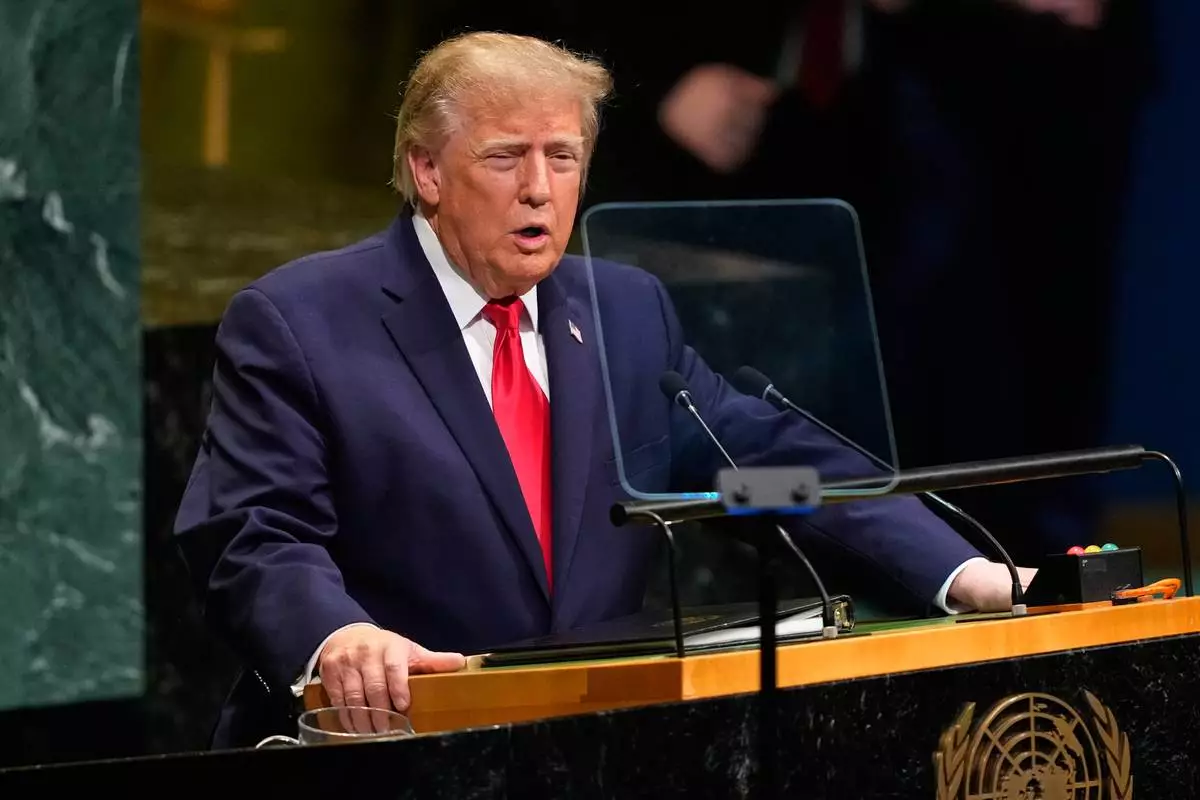
United States President Donald Trump speaks during the 81st session of the United Nations General Assembly at United Nations headquarters, Tuesday, Sept. 22, 2026. (AP Photo/Yuki Iwamura)