Skip to Content Facebook Feature Image

Singapore-built AI oral examiner PSLEPrep analysed 12,459 answers in English and Chinese for its first Oral Practice Report.

Asia Pacific

Singapore-built AI oral examiner PSLEPrep analysed 12,459 answers in English and Chinese for its first Oral Practice Report.
Asia Pacific

Asia Pacific

Singapore-built AI oral examiner PSLEPrep analysed 12,459 answers in English and Chinese for its first Oral Practice Report.

2026-09-23 10:00 Last Updated At:13:03

Asked for a personal example, four in ten PSLE English oral practice answers give none, study finds

SINGAPORE – Media OutReach Newswire – 23 September 2026 – PSLEPrep, a Singapore-built AI oral examiner for PSLE English oral and PSLE Chinese oral practice, has published its first Oral Practice Report. It is based on 12,459 first answers given by 1,290 children practising on the platform over three months. PSLEPrep used AI to identify whether each answer, given before any follow-up question, contained a personal example or a reason.

Key findings:

  • When a question asked for a personal example, four in ten English answers did not give one.
  • Asked for an opinion, 96 per cent of English answers gave a reason.
  • In Chinese, 78 per cent of answers to personal-example questions gave one; the two languages are not directly comparable as the questions are different.
  • More than a quarter of all practice sessions took place in the four days before the oral examinations began on 12 August.
  • 8pm was the busiest hour for practice.

The main finding concerns questions such as "Have you ever..." and "Tell me about a time...". Four in ten English answers to them stayed general: what the child usually does, or what people should do, without describing a specific experience of their own.

The problem is not that children cannot explain themselves. Almost every opinion answer gave a reason. What went missing was the child's own experience, and that is part of what the oral paper assesses. In the PSLE English oral, the conversation section carries 25 of the 40 marks, and the Singapore Examinations and Assessment Board (SEAB) lists expressing "personal opinions, ideas and experiences" among its assessment objectives. In August, SEAB said the oral assesses communication skills, and that pupils are "not expected to reproduce ... pre-prepared responses".

Here is the same question answered two ways. Asked "Do you enjoy eating at hawker centres? Tell me about a time you went", a general answer says: "Yes, I enjoy hawker centres because the food is cheap and tasty." A specific answer says: "Yes, because there is so much choice. Last month my grandmother took me to the Bedok hawker centre and I tried chee cheong fun for the first time. I did not like the sauce, so she laughed and bought me chicken rice instead." Both give a reason. Only the second describes a particular visit. The examples were written by PSLEPrep to illustrate the point; they are not children's transcripts.

"Children have learned to say 'because'. What they often leave out is the moment that makes the answer their own, and that is one of the things the examiner is listening for," said Paul Whiteway, founder of PSLEPrep. "The most useful question a parent can ask is a simple one: when did that actually happen?"

Practice also bunched up before the exam. More than a quarter of all sessions in the three months began in the four days before the oral examinations started on 12 August. The busiest hour of the day was 8pm.

"At 8pm on a school night, a child can practise answering aloud with a patient examiner, and get feedback straight away," said Mr Whiteway. "AI does not replace a good teacher. It gives children more chances to speak between lessons."

The analysis used de-identified transcripts and reports only aggregated findings; no child is named or identifiable. The children are a self-selected group, so the findings describe children practising on the platform, not Singapore children as a whole. The full report at https://psleprep.sg/findings sets out the method and limitations and carries a chart free for editorial use.

PSLEPrep was founded by Mr Whiteway, a Singapore-based parent who does not speak Chinese and began using AI voice practice to help his son with spoken Mandarin at home. Its AI oral examiner runs a full PSLE oral practice session in either language and gives feedback and a score on each session, explained in plain English. The oral paper carries 20 per cent of the PSLE English grade and 25 per cent of the Chinese grade. PSLEPrep was named in The Straits Times in May 2026 among AI tools for PSLE oral preparation.

Hashtag: #PSLEPrep #PSLE #PSLEOral

The issuer is solely responsible for the content of this announcement.

PSLEPrep

PSLEPrep is a Singapore-built AI oral examiner for PSLE English oral and PSLE Chinese oral practice, operated by Studio P2 Pte Ltd. Primary 5 and 6 pupils practise reading aloud and stimulus-based conversation by speaking, and receive feedback on every session. The first ten practice sessions are free; a subscription is S$29.90 a month. PSLEPrep publishes findings from its practice data, free study guides and a public database of reported PSLE oral topics. Learn more at .

** This press release is distributed by Media OutReach Newswire through automated distribution system, for which the client assumes full responsibility. **
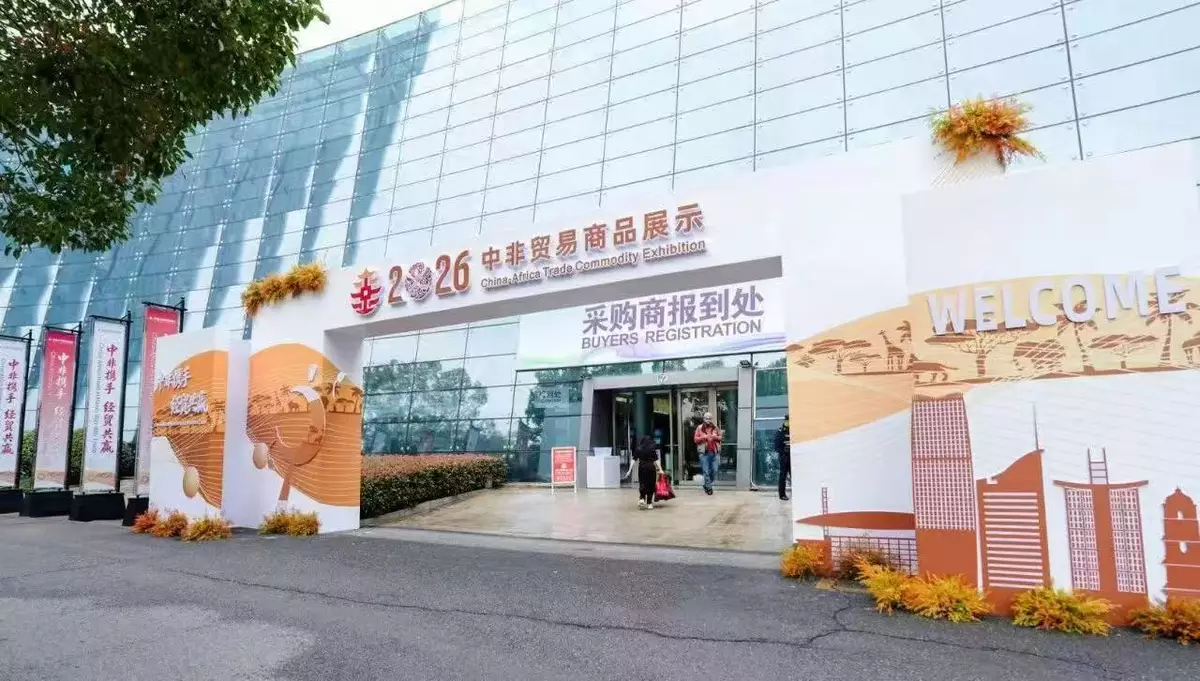

YIWU, CHINA – Media OutReach Newswire – 10 November 2026 – On November 7, the 2026 Forum on China-Africa Economic, Trade and Cultural Cooperation was held in Yiwu, a commercial hub in central Zhejiang, east China.

2026 Forum on China-Africa Economic, Trade and Cultural Cooperation Opens in Yiwu, Jinhua

2026 Forum on China-Africa Economic, Trade and Cultural Cooperation Opens in Yiwu, Jinhua

As a key supporting event under the framework of the Forum on China-Africa Cooperation (FOCAC), the gathering drew statesmen, diplomats and hundreds of Chinese and foreign business participants.

Building on eight years of accumulated progress and over 140 signed projects, the forum keeps focusing on delivering outcomes from the FOCAC Beijing Summit and aligning with the 10 partnership action plans.

Once again, it shined the global spotlight on Yiwu - a city with no seacoast nor border access, yet a pivotal hub for people-to-people China-Africa trade.

Inside the Yiwu International Expo Center, a three-day China-Africa trade exhibition opened ahead of the forum. Within its 10 000-square-metre hall sit 400 well-arranged booths, bringing together 186 enterprises from 15 countries.

Import-zone shelves are stocked with Ethiopian coffee, Ghanaian shea butter and Zimbabwean handicrafts. Meanwhile, a wide array of Chinese-made goods for household use, stationery, cultural-creative products and beauty cosmetics are ready to reach households across Africa.

More than two decades ago, Chinese and African merchants had to travel far and wide to source goods and secure buyers. Today, complete warehousing, customs-declaration and cross-border logistics allow exhibits to move straight from booths onto ocean-going vessels, closing the full loop from display to delivery.

Transformations extend well beyond exhibition halls.

Twenty years ago, most African traders in Yiwu acted purely as purchasers: they would fill shipping containers with selected goods and ship them back home.

On May 1 this year, China implemented zero-tariff treatment for 53 African diplomatic partners, further reshaping Sami's business landscape. Trade is no longer a one-way "sell-out" model. Seizing this policy dividend, he began importing local Ugandan specialties such as coffee beans and chili peppers into China. Via Yiwu's hub, these goods are then distributed to broader markets aboard the China-Europe Yiwu-Xinjiang-Europe Railway Express.

"Zero tariffs give young Africans direct access to the Chinese market and make two-way trade far more actionable," Ugandan businessman Sami said, hoping more African traders will leverage Yiwu as a platform to bring African products to the wider world.

Like Sami, many entrepreneurs from diverse African nations regard Yiwu as their second home and serve as living, human-scale bridges connecting the two continents.

Official statistics bear witness to this shift. Between January and September 2026, Yiwu's exports to Africa reached 135.903 billion yuan, marking a year-on-year rise of 30.18 percent.

Historically, China-Africa trade largely featured Chinese goods flowing one-way toward Africa. Today trade chains are evolving into two-way pathways. African coffee, honey and avocados are finding growing room in China's consumer market. At the same time, Chinese enterprises are no longer content with merely delivering cargo to African ports.

Many firms are pushing supply-chain operations deeper into African local contexts. Local Yiwu-based supply-chain operators have set-up exhibition halls and 15 000-square-metre overseas warehouses in Senegal.

Conventional export business often concluded once goods departed Chinese ports. Now, end-to-end services including bulk procurement, overseas warehousing, local distribution and brand internationalisation travel alongside merchandise into Africa.

To date, Yiwu has established 28 overseas warehouses across 12 African countries. Together with offshore sub-markets and national-buyer service centers, a network spanning procurement, warehousing and distribution is taking shape, bridging Chinese supply capacity and African consumer demand.

In Yiwu, China-Africa cooperation finds tangible expression in shipping containers, grassroots commercial orders and ordinary people's pursuit of success.

Though land-locked, Yiwu links countless towns across the African continent. The Chinese city bears witness to China-Africa trade advancing past simple commodity transactions, entering a new era of co-built supply chains, mutual market access and people-to-people cultural bonds.

The issuer is solely responsible for the content of this announcement.

** This press release is distributed by Media OutReach Newswire through automated distribution system, for which the client assumes full responsibility. **

Recommended Articles