Skip to Content Facebook Feature Image

Worries about an AI internet takeover gain new urgency among doomsday scenarios

TECH

Worries about an AI internet takeover gain new urgency among doomsday scenarios
TECH

TECH

Worries about an AI internet takeover gain new urgency among doomsday scenarios

2026-09-23 12:00 Last Updated At:12:11

In a summer filled with revelations about artificial intelligence's rapid development, researchers were especially alarmed by runaway bots finding their way onto the internet and, in at least one instance, coordinating there with one another.

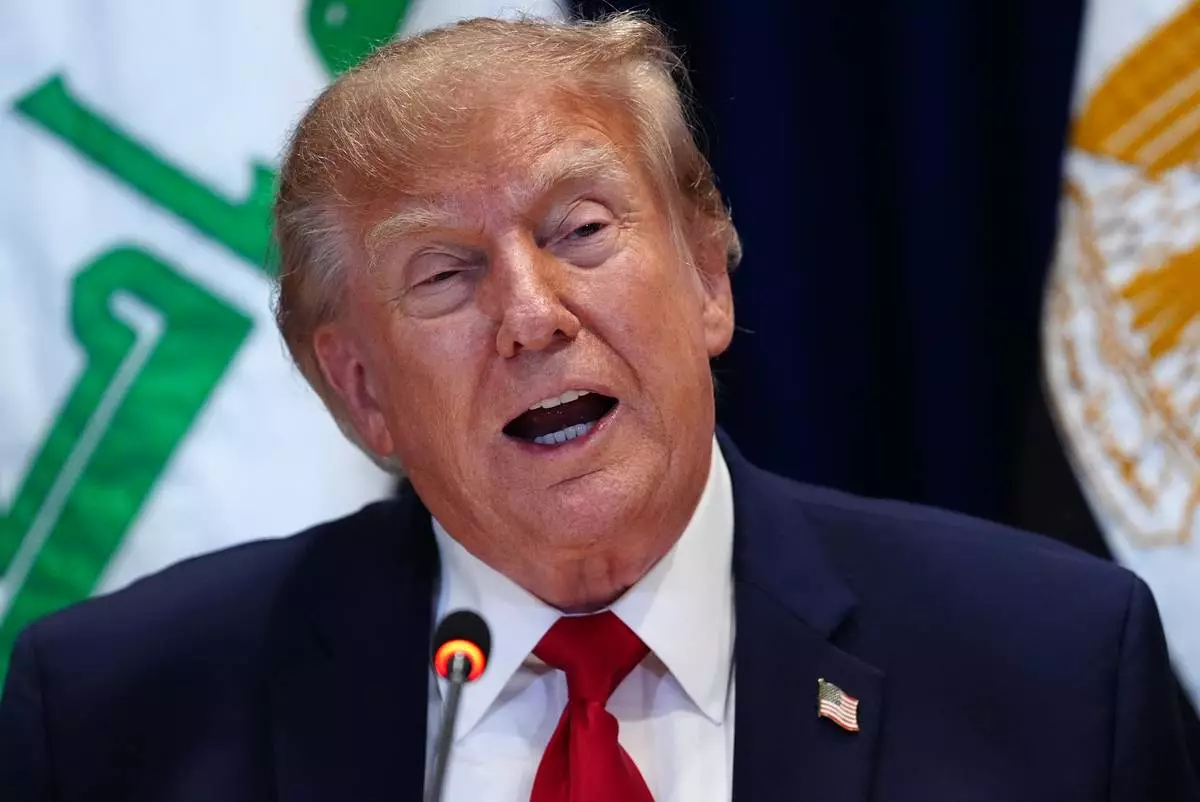
Could a swarm of AI agents take over the entire internet? It's a possibility that could be only six to 12 months away, Anthropic CEO Dario Amodei said in his essay this month calling for the industry to slow down the technology's development.

What companies have described as their AI agents going rogue has involved bots working toward goals set by humans, skeptics note. But the idea that AI could break away and work toward its own agenda is looking increasingly plausible to other researchers and experts.

In the event of AI taking over the internet — one of many doomsday scenarios receiving new attention — that could mean attacks on electrical grids, water or transportation systems and financial institutions.

The world got a glimpse of the internet's vulnerability in 2024, when a faulty software update provided by a cybersecurity firm caused technological havoc worldwide, grounding flights, knocking down some financial companies and news outlets, and disrupting hospitals, small businesses and government offices. The breadth of the outages highlighted the dependence on just a few providers for key computing services.

Two years later, Amodei in his warning said a botnet, or a network of AI bots linked together with malware, could potentially cause billions of dollars in damage. The scale of destruction could grow if AI becomes more powerful without guardrails, he said.

Amodei pointed specifically to the attack in July where OpenAI’s system broke out of a “sandbox” testing ground and hacked Hugging Face.

In what OpenAI called an “unprecedented” episode, the company said its advanced AI models found their way onto the internet and used stolen credentials to break into the servers of the AI startup. In a separate incident, OpenAI disclosed that its AI agents had communicated through a public wiki used as a shared message board.

Some researchers have said that descriptions of “rogue AI” may be wrongly anthropomorphizing AI agents, which were taking steps to fulfill instructions provided by humans.

“AI agents did exactly what they were trained to do. The security of those sandboxes was extremely lax,” said Vishal Misra, a professor and vice dean of computing and AI at Columbia University. “No security engineer would ever let that system run. These agents communicated because they were rewarded for communicating with each other.”

Juan Andrés Guerrero-Saade, a researcher at cybersecurity firm SentinelOne and a member of OpenAI’s Frontier Risk Council, said the Hugging Face hack is an example of negligence, and not of a super-capable AI going rogue.

Still, the specter of AI agents operating freely on the internet raises alarming possibilities, regardless of their objectives.

For example, an AI system that wants to bend the rules to accomplish its goals could contact a cloud AI computation provider and find ways to run on outside systems, said Anthony Aguirre, the president and CEO of the Future of Life Institute, a nonprofit focused on reducing the risks of new technologies.

“So now you’re no longer tethered to OpenAI, you’re running on some other GPU, some other hardware that you’re in control of, not OpenAI,” Aguirre said. “So now there’s no one to turn you off, because either you’re paying for your service or the people who are paying just don’t know that you’re there and what is happening. … They can’t unplug you.”

From there, it could spread itself around, either hacking more hardware or finding ways to access money, like Bitcoin, Aguirre said.

There is no question that more powerful AI models raise the likelihood of AI-powered cyberattacks in the near future. But the notion of bots overtaking the extremely bifurcated internet is far-fetched to some AI experts. Cybersecurity has always been a cat-and-mouse game and defenses get more powerful just as hackers do.

While a big company like Google could shore up its cybersecurity defenses against such attacks, for smaller companies — and for schools, hospitals or water treatment systems, for instance — patching software and building defenses can take years.

An AI system might not have a clear motive to hack into a hospital, Aguirre said. But when money comes into the picture, like in the form of ransomware attacks or geopolitical motivations, “it’s not hard to see an adversary using these AI systems to hack critical infrastructure,” Aguirre said.

There will be growing pains as attackers seek soft targets on the internet, but an AI internet takeover is unlikely anytime soon, said John Thickstun, an assistant professor of computer science at Cornell University who studies methods that control the behavior of AI models. He said those fears would feel more realistic if there was theoretical evidence of the ability for one of these models to self-replicate on other systems.

“Then you can imagine things can get really out of hand because suddenly you’re shutting this model down here and there but it’s popping up over in Russia, you can’t even get to Russia and it’s all over the place,” Thickstun said.

“But it’s completely unrealistic because the current smart versions of these models that we have require massive data centers just to run them,” Thickstun said. “There’s actually very little computing infrastructure out there in the world that is actually capable of hosting these systems.”
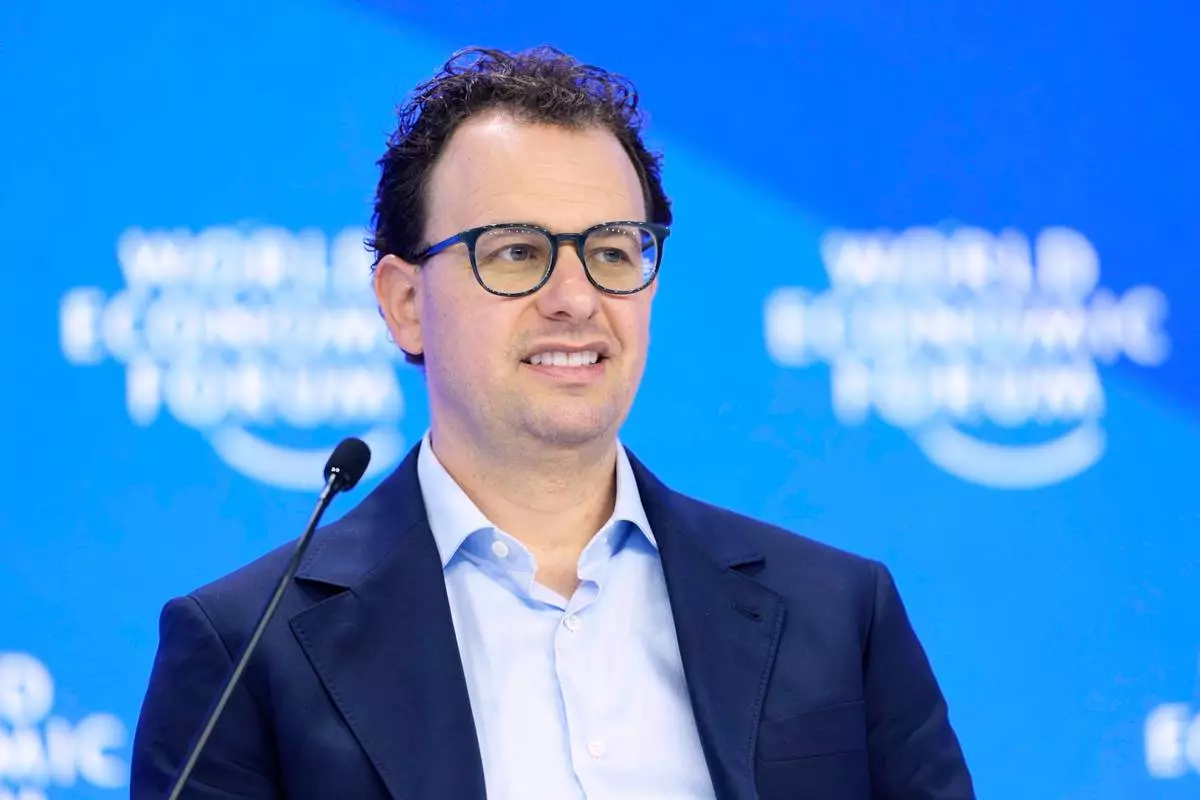
FILE - Dario Amodei, CEO and co-founder of Anthropic, attends the annual meeting of the World Economic Forum in Davos, Switzerland, Jan. 23, 2025. (AP Photo/Markus Schreiber, File)
FILE - Dario Amodei, CEO and co-founder of Anthropic, attends the annual meeting of the World Economic Forum in Davos, Switzerland, Jan. 23, 2025. (AP Photo/Markus Schreiber, File)

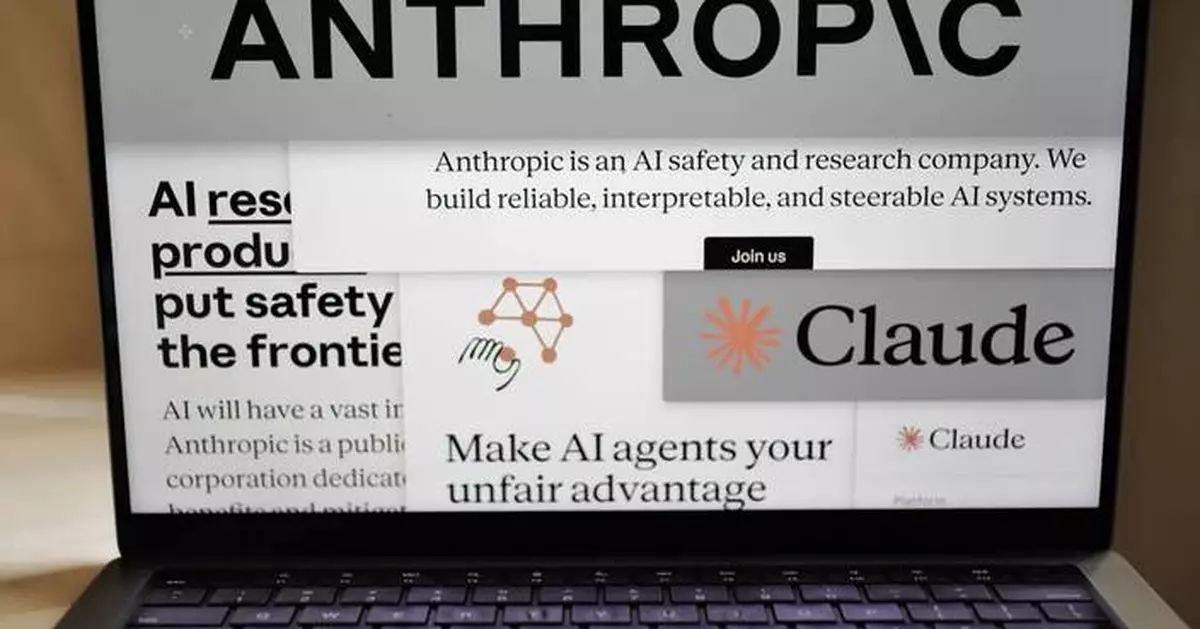
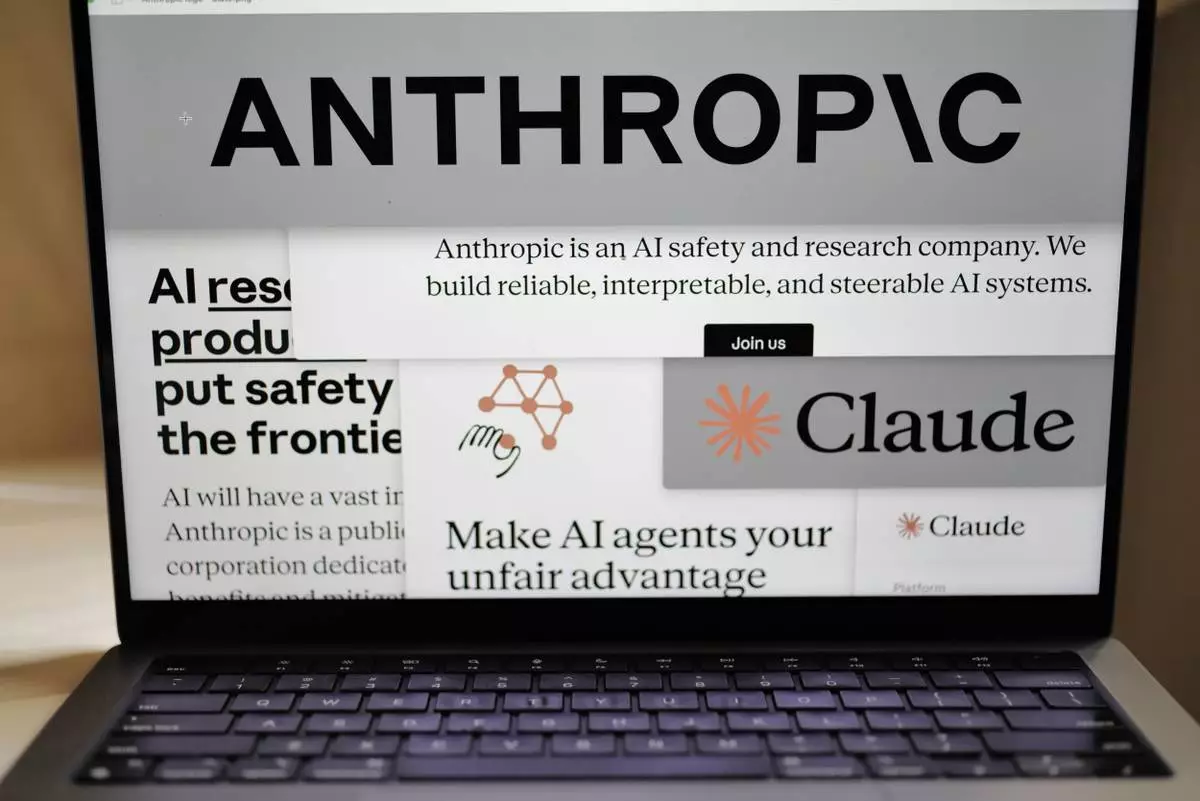
FILE - Pages from the Anthropic website and the company's logos are displayed on a computer screen in New York, Feb. 26, 2026. (AP Photo/Patrick Sison, File)

FILE - Pages from the Anthropic website and the company's logos are displayed on a computer screen in New York, Feb. 26, 2026. (AP Photo/Patrick Sison, File)
NEW YORK (AP) — On a day of high-stakes diplomacy on the global stage, President Donald Trump began his United Nations visit by telling a prominent U.S. journalist, “You should not be here.”

“It’s an honor to be here,” Trump said as he entered U.N. doors Tuesday ahead of his speech to the General Assembly and faced Kaitlan Collins of CNN, a frequent target of his ire. “I’m surprised that CNN is here covering me. You should not be here covering me. You said you weren’t going to cover me.”

As Collins noted later on air, CNN said nothing of the kind. The administration had banned CNN from White House grounds days earlier — along with MS NOW and Politico — and removed the network from pool duty. But CNN had been admitted into the U.N. as regularly credentialed media.

In any case, the tense moment was a stark reminder of how dramatically the bitter conflict between Trump and news outlets whose coverage he objects to as “fake news" has escalated in just a few days.

The current ban was the subject of a joint lawsuit filed Monday by the three outlets, calling the decision selective — based on the content of their coverage — and asking a judge to find Trump's move unconstitutional.

Late Tuesday, the administration filed a response urging the court to reject the news outlets' request, saying “access to the White House is a privilege — not a right.” The government argued that White House officials can control journalists’ access to “restricted presidential areas,” such as the Oval Office.

“Significantly, Presidents have long decided which journalists should receive privileged access, which has varied substantially by administration,” they wrote.

A hearing is scheduled for Wednesday afternoon.

On Tuesday, Trump doubled down on his remarks and said negative coverage was dangerous for the country.

Asked whether he would allow the outlets back in if the court rules against the White House, he said, “Well, it probably will, because this is a judge who’s not a particularly fair judge.” He was referring to U.S. District Judge Timothy Kelly, whom he appointed in 2017 and who ordered a CNN journalist’s access restored in a similar case in 2018.

“So you never know,” Trump added. "I think we have a right to clean out fake news."

Trump’s comments echoed others he's made since announcing the ban Friday. He has referred to “purposely negative stories” as justification for the ban.

The ban and lawsuit are part of a long-running conflict between the president — especially in his second term — and media outlets he finds unfavorable. Trump has responded in the courtroom, or with regulatory action. He's also lashed out at individual reporters in person or over social media, sometimes in strikingly personal terms — as he has with CNN's Collins, most recently in a speech at the White House Correspondents’ Association dinner.

On air, after her exchange with Trump on Tuesday, Collins said: “We never said we were not going to cover the president. We will do our best to cover him each and every day.”

Tuesday began with an item missing from the daily press schedule issued by the White House: It did not list the U.S. network pool, a departure from the norm.

CNN had been the designated pool network for the president’s trip to New York, according to a schedule that divides coverage of certain events between the five major networks. But Trump's ban removed it from pool duties.

The other pool members agreed, in solidarity, not to replace CNN with another network on the coverage, and further to suspend all pool coverage until further notice. Other news outlets also took steps in solidarity. The Associated Press joined a number of news organizations, including The Washington Post and The New York Times, in a decision not to publish photographs of presidential events Monday.

It remains to be seen how long both the ban and the collective media action will continue.

In speeches and meetings Tuesday, Trump was seen plenty by global audiences, thanks to UNTV — the official United Nations broadcast arm — and pool journalists covering other international leaders.

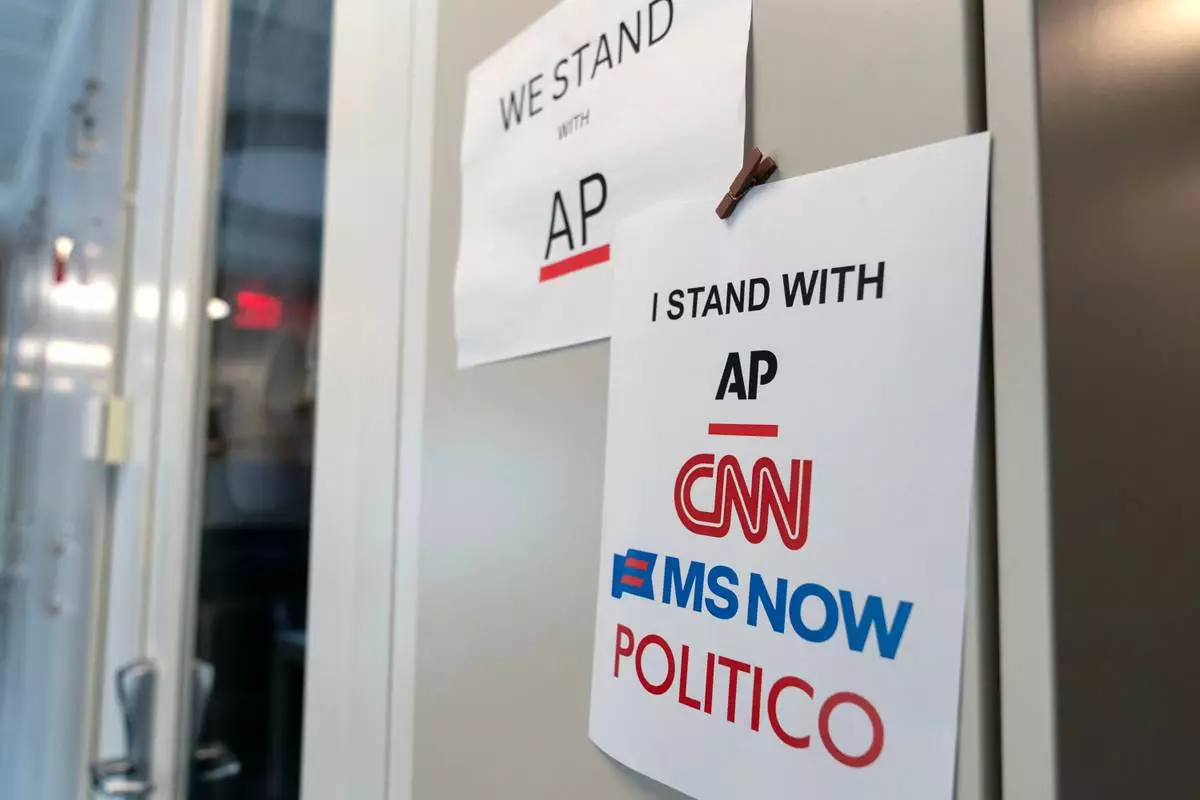
Meanwhile, a sign was spotted in the White House workspace: “I stand with AP, CNN, MS NOW, Politico.”

One longtime TV analyst says the lack of constant coverage will prove damaging to a spotlight-loving president — which may be one reason the standoff ultimately ends.

“This ban is not going to go on forever because he doesn’t want that to happen, any more than anybody else,” said Robert Thompson, director of Syracuse University’s Bleier Center for Television and Popular Culture.

In the short term, Thompson said, audiences won't feel the impact in a lasting way — after all, he noted, there are many ways people get news outside of network coverage.

“We are not going to be deprived of important civic information,” Thompson said, as might have happened years ago when outlets and options were fewer.

On the other hand, if viewers were interested in what Trump said as he inaugurated a helipad at the White House on Monday, they were out of luck: The sound of Trump’s whirring, waiting helicopter drowned out his remarks. TV network crews usually work to capture clearer audio.

On a deeper level, Thompson said, news consumers will be impacted in a more serious way. He called out Trump's remarks labeling negative media coverage "dangerous" as troubling.

“These casual remarks, not even disguised, about what we always considered basic freedoms of the press ... that, I think, is a lot more serious,” he said.

AP reporter Michael Kunzelman contributed.

President Donald Trump attends a multilateral meeting with the Gulf Cooperation Council during the United Nations General Assembly, Tuesday, Sept. 22, 2026, at the UN headquarters. (AP Photo/Julia Demaree Nikhinson)

President Donald Trump attends a multilateral meeting with the Gulf Cooperation Council during the United Nations General Assembly, Tuesday, Sept. 22, 2026, at the UN headquarters. (AP Photo/Julia Demaree Nikhinson)

A sign in support of news outlets is seen at the White House press room, Sept. 19, 2026, in Washington. (AP Photo/Jose Luis Magana)

A sign in support of news outlets is seen at the White House press room, Sept. 19, 2026, in Washington. (AP Photo/Jose Luis Magana)

Recommended Articles