PARIS (AP) — A four-day visit by Pope Leo XIV beginning Friday that will feature large public gatherings, popemobile parades and an open-air Mass in Paris presents France with a balancing act under its strict approach to secularism, known as laïcité.
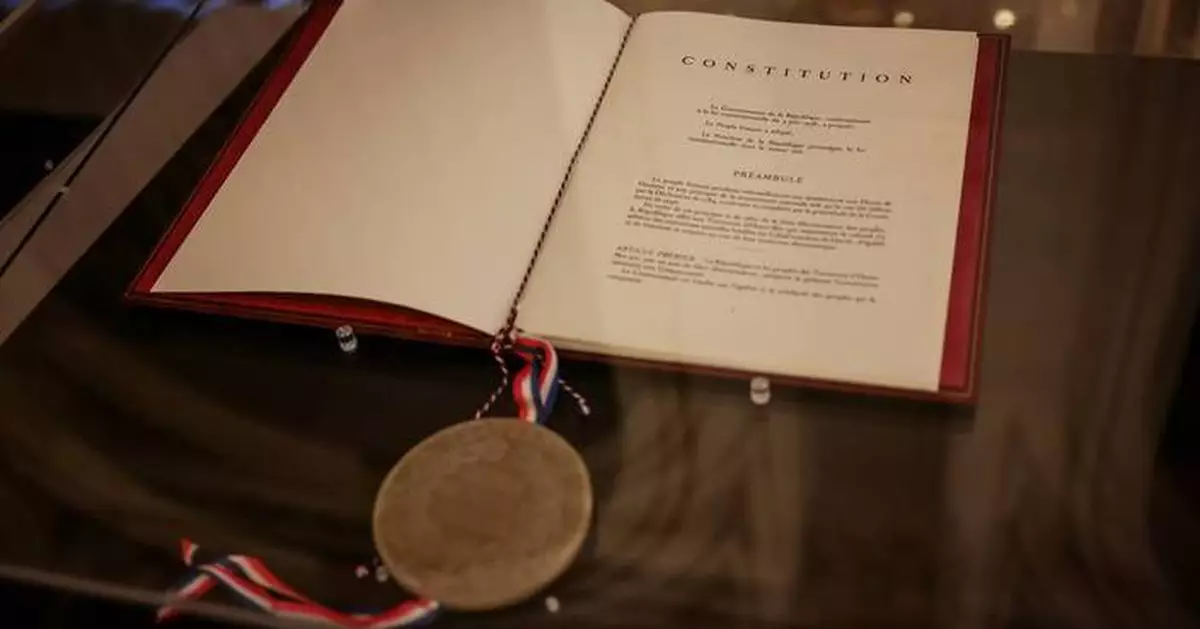
“France is an indivisible, secular, democratic and social Republic,” the country’s Constitution states.
Secularism guarantees the freedom to believe or not to believe, as well as the freedom to practice a religion as long as it does not disturb public order. It also requires the state to remain neutral toward all religions.
Here is a look at France’s distinctive model of secularism, known as laïcité (pronounced lah-ee-see-TAY).
Key rules have been defined by a historic 1905 law, primarily intended to distance the state from the then-powerful influence of the Catholic Church.
The law guarantees freedom of conscience and the free exercise of religion while requiring the state to remain neutral.
Churches built before 1905 are the property of municipalities or the state, which maintain the buildings while religious communities to use them for worship.
Most places of worship built after 1905, including most mosques, are financed and maintained by religious organizations.
A national survey carried out in 2019 and 2020 found that Catholicism was France’s largest religious affiliation, representing 29% of the population, followed by Islam at 10%. About half of respondents said they had no religious affiliation.
During his time in France, Leo will visit Paris, Saint-Denis, Lourdes and Metz. He will be received by the French president in the pope's capacity as head of Vatican City, making Friday’s meeting at the Élysée Palace an encounter between two heads of state.
Laïcité does not require the government to reject contact with religious institutions.
Macron met Leo at the Vatican in April to discuss relations with the Holy See, international affairs, peace, and interreligious dialogue, according to his office.
During Pope Francis’ visit to Marseille in 2023, Macron attended the Mass but did not participate in worship. Responding to criticism that his attendance breached France’s secular principles, Macron said he would be present as president out of respect and courtesy, not as a practicing worshipper.
The 1905 law explicitly mentions religious ceremonies, processions and other outdoor manifestations as subject to the ordinary rules governing public order. Security for such events, however, is provided and financed by the state.
Other religions also regularly receive permission to use public spaces. Still, some observers argue that holding Saturday’s Mass at Place de la Concorde and along the Champs-Élysées, near the National Assembly and the presidential palace, could be seen as a continuation of Catholicism’s privileged cultural position.
The area is usually used for the Bastille Day parade, state visits by foreign leaders and football fans' celebrations.
Transforming it into a venue for a religious event expected to attract hundreds of thousands of worshippers gives the Catholic Church exceptional visibility.
In 2008, Pope Benedict XVI celebrated Mass before about 260,000 people at Les Invalides in central Paris.
A 2004 law bars conspicuous religious symbols in French public schools. The ban covers Muslim headscarves, Jewish kippahs, oversized Christian crosses and other clothing that visibly signals a religious affiliation. Discreet symbols, such as small crosses, Stars of David or Hand of Fatima necklaces, are allowed.
The law does not apply to private schools or university students.
French officials and many educators say secularism in public schools and other institutions protects less observant and nonreligious people from pressure while leaving everyone free to worship in private. Critics, however, argue that the policy primarily targets Muslim girls who wear headscarves.
In sports, the rules are complex and vary according to the athlete’s representative role and the governing federation.
French authorities prohibit national-team athletes from displaying religious symbols while competing in an official capacity, including at the 2024 Paris Olympics.
In 2023, France’s highest administrative court said the country’s soccer federation could impose a ban on headscarves in competitions even though the measure can limit freedom of expression.
International federations may also permit clothing that the corresponding French federation prohibits domestically.
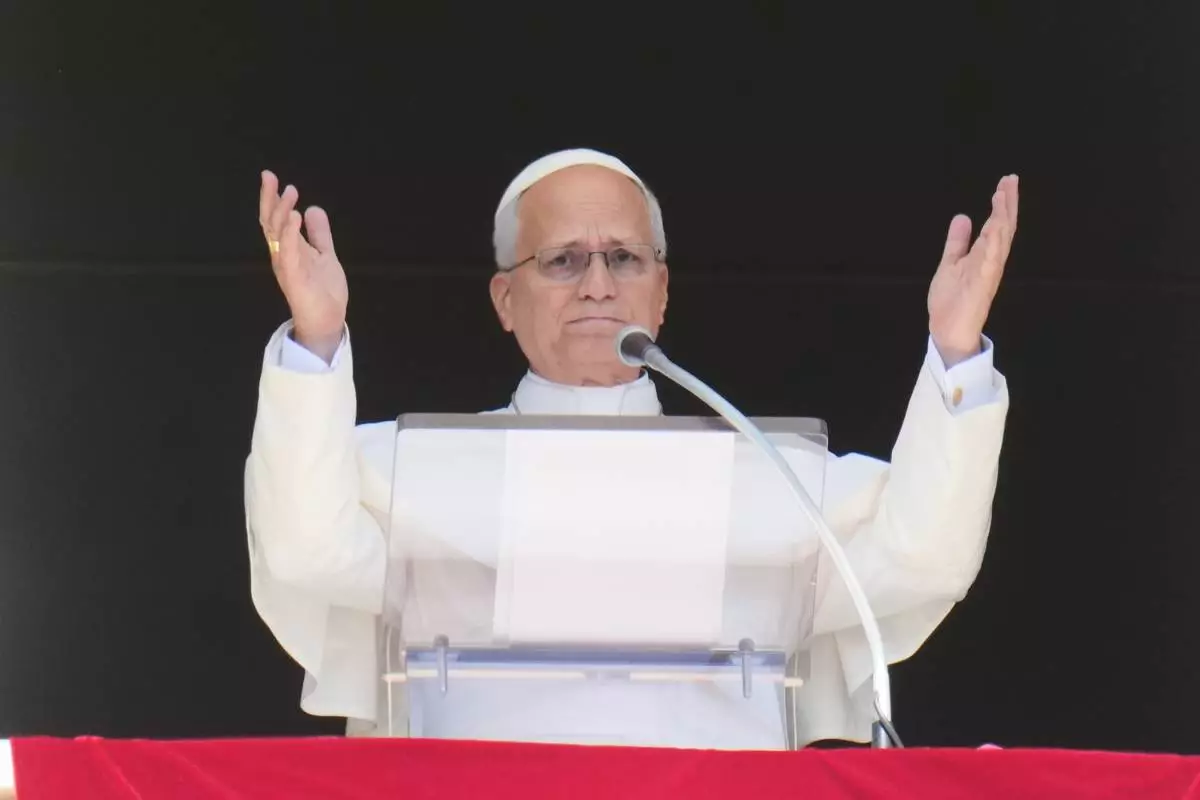
Pope Leo XIV delivers the Angelus noon prayer in St. Peter' s Square, at the Vatican, Sunday, Sept. 20, 2026. (AP Photo/Gregorio Borgia)
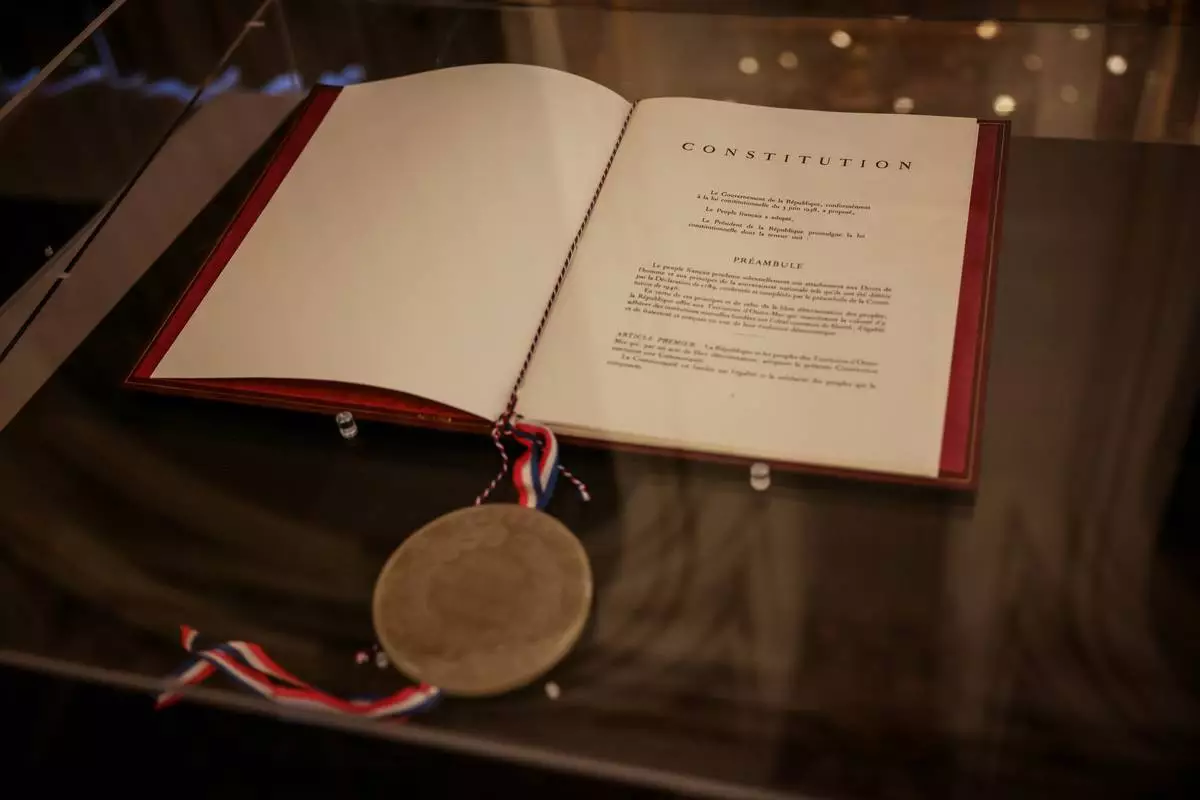
The text of the French Constitution is on display at the Elysee Palace in Paris on Saturday, Sept. 19, 2026. (AP Photo/Thomas Padilla)
SINGAPORE--(BUSINESS WIRE)--Sep 23, 2026--
PixVerse, a global AI video generation platform, today introduced R2, the latest upgrade to its real-time world model. R2's central advance is scale: a real-time world model that keeps getting more capable, more persistent, and more responsive to what a user does, without giving up the speed to run live.
This press release features multimedia. View the full release here: https://www.businesswire.com/news/home/20260922037237/en/
Most AI video is generated in one shot. A model receives a prompt, produces a fixed clip, and stops. A real-time world model works differently. Instead of returning a clip, it generates a world that keeps running while a user is in it, navigable in real time and holding its state as the session continues. PixVerse introduced the world's first real-time world model, R1, in January 2026. R2 is the next step, staying coherent over far longer sessions, remembering what happens inside a session and carrying it forward, and taking text, references, audio, and action controls into the same running world.
A World That Remembers and Responds
The core change in R2 is what a user's input can do. In earlier real-time generation, input affected the current moment and then passed. In R2, input persists: an earlier action remains true later in the same session, so the world responds to what a user does rather than resetting between moments.
Explore a living world. A player enters a generated world and moves through it in real time, controlling a character with WASD keys and shifting the camera with the arrow keys. Prompts change the world as the player goes, adding elements, altering the environment, and the character interacts with the surroundings with a sense of physical logic. Each input builds on the last rather than starting from scratch.
Shape the story. The world can develop a storyline that bends to what the player does. In Zero Mark, an interactive film-game built on R2 by creator Xiaolongbao, a creature blocks the path and asks for a gift, offering it a dragon or offering it a leaf leads to genuinely different responses. The story branches from the input rather than following a pre-written path, and the model generates each outcome live.
Characters who respond in context. Characters in the world can understand a player and respond in step with the story. In one interactive story built on R2, players talk with a character who keeps a consistent identity and memory across the exchange, draws out clues, and responds in the moment with voice, expression, and movement. It reads less like a scripted non-player character and more like someone who knows you and follows what is happening. A demo of this can be found in the official PixVerse announcement.
The Scaling Problem and R2's Answer
Scaling, the practice of feeding a model more data and compute to make it more capable, has driven much of the progress in large language models. It has been far harder to apply to real-time world models, because two of their demands pull against each other. Making a model fast enough to respond live tends to make it simpler; making it more capable tends to make it slower. Historically, teams have had to choose.
PixVerse designed R2's architecture so that speed and capability no longer have to be traded against each other. Rather than forcing that choice, R2 splits the work into two stages built on the same foundation. Omni Causal AR grows a single model's capability, learning across more data, more input types, more tasks, and longer sessions. A real-time acceleration layer then compresses that same model to run live, so gains in capability no longer come at the cost of speed. The approach also improves stability over long sessions: in PixVerse's internal evaluations, R2 reduced visual drift across a long session by 35.8%. The full technical report, including architecture and evaluation details, is available here.
"Large language models showed that scaling is a reliable path to capability," said Changhu Wang, Co-Founder and CEO of PixVerse. "R2 is our case that real-time world models can follow a similar path, that with the right architecture, a model can keep getting more capable without giving up real-time interaction. Over time, this is how a creation tool becomes an environment people can enter and shape."
From World Model to Playable Games
R2 has crossed from research demonstration into something real products can be built on.
PixVerse's game engine, first launched in July 2026, now runs on R2, letting creators build worlds that players shape as they play rather than worlds built entirely in advance.
"What's exciting is what creators have been building on our world model since we opened the beta in July," said Jaden Xie, Co-Founder and President of PixVerse. "We believe our video models will empower more creators in bringing their ideas to life."
R2 is open to explore now at https://world.pixverse.video/.
About PixVerse
PixVerse is a global AI video generation platform trusted by over 150 million users across 177+ countries. With a suite of proprietary models developed entirely in-house, PixVerse empowers anyone to create cinematic-quality video from a prompt, photo, or clip. In January 2026, PixVerse launched R1, the world's first real-time world model, transforming video into an infinite, continuous, and interactive stream. R2 builds on that foundation, scaling the real-time world model to run longer, more coherent sessions. With teams distributed across Asia and the US, PixVerse was founded in 2023 with a commitment to making video the universal language of human expression. In March 2026, PixVerse closed its Series C round, achieving unicorn status. For more information, visit pixverse.ai.
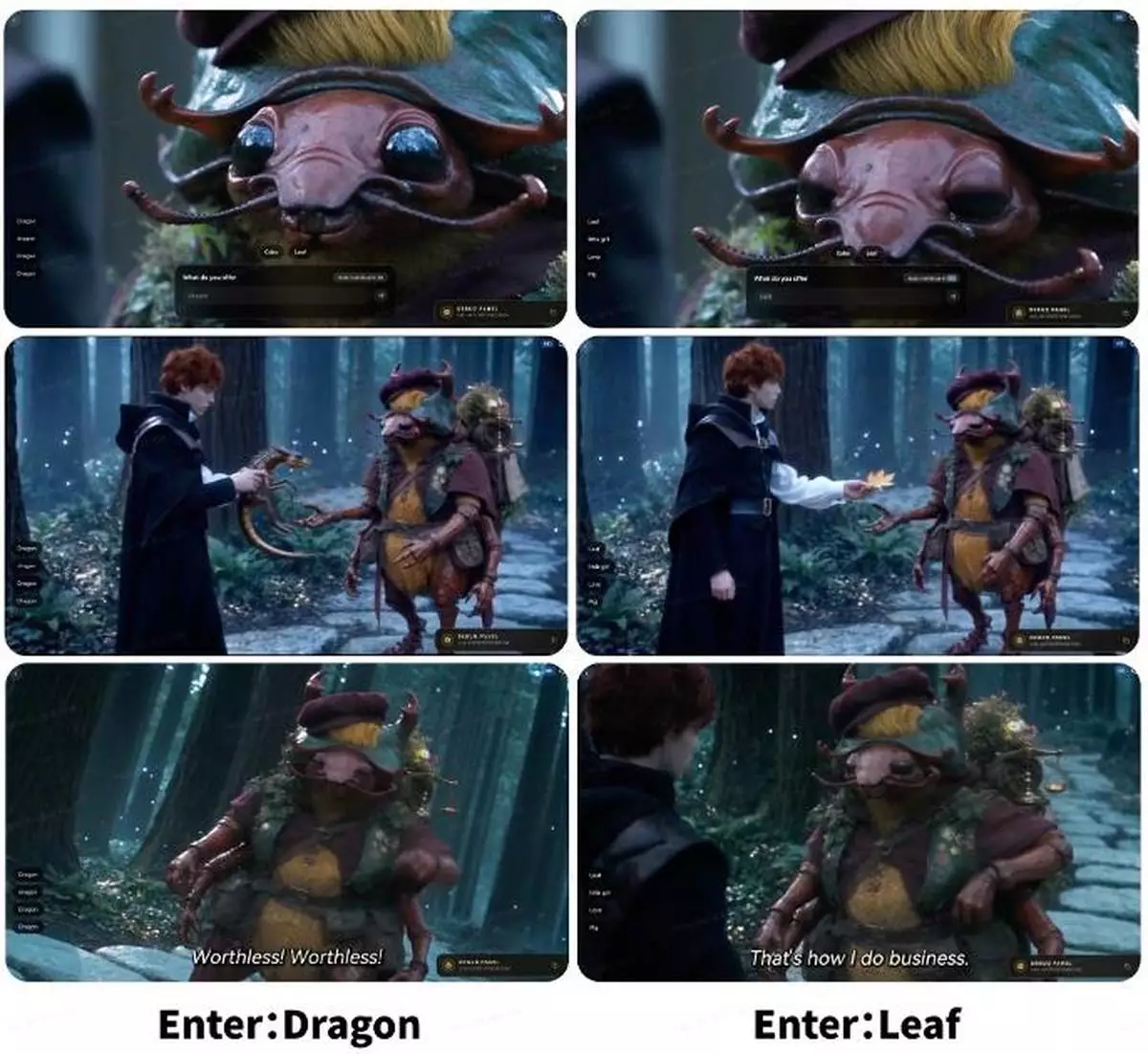
In Zero Mark, an interactive film-game built on R2 by creator Xiaolongbao, the same encounter takes two paths: offering the creature a dragon or offering it a leaf produces different responses, generated live.
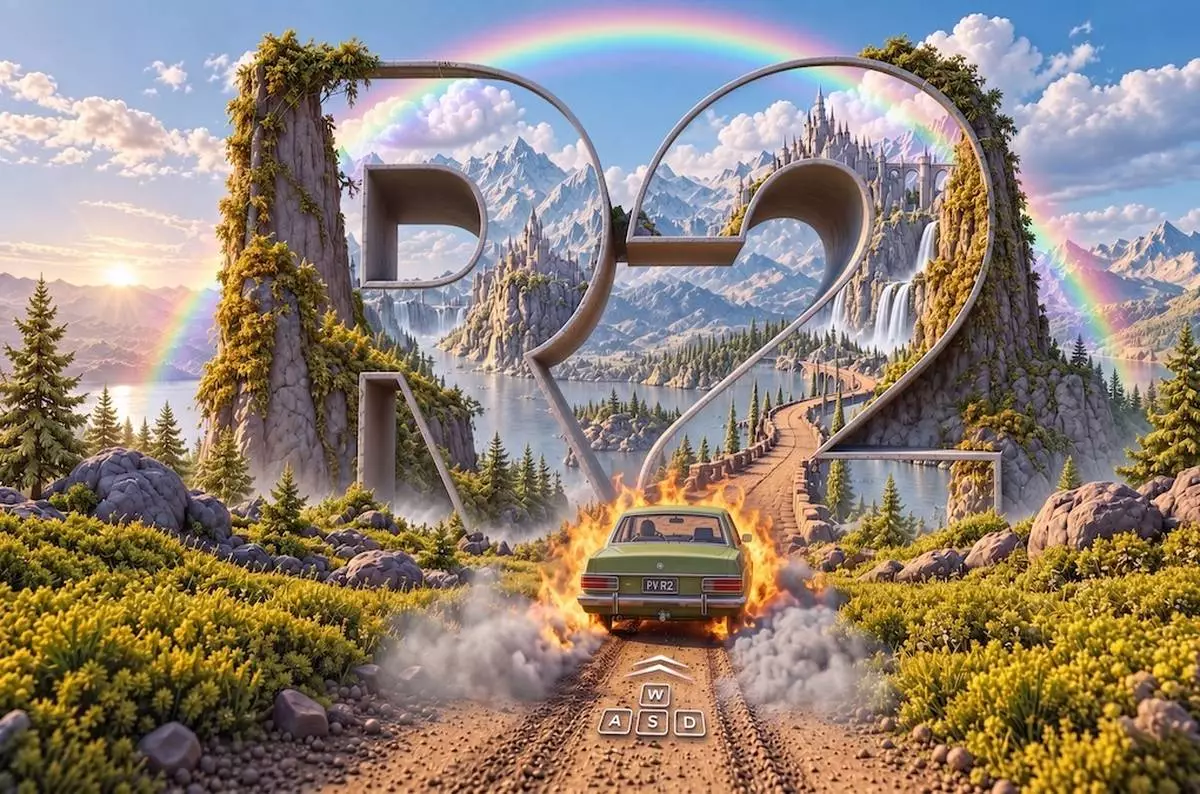
PixVerse introduces R2, its real-time world model that keeps a generated world running, persistent, and responsive as a user moves through it.