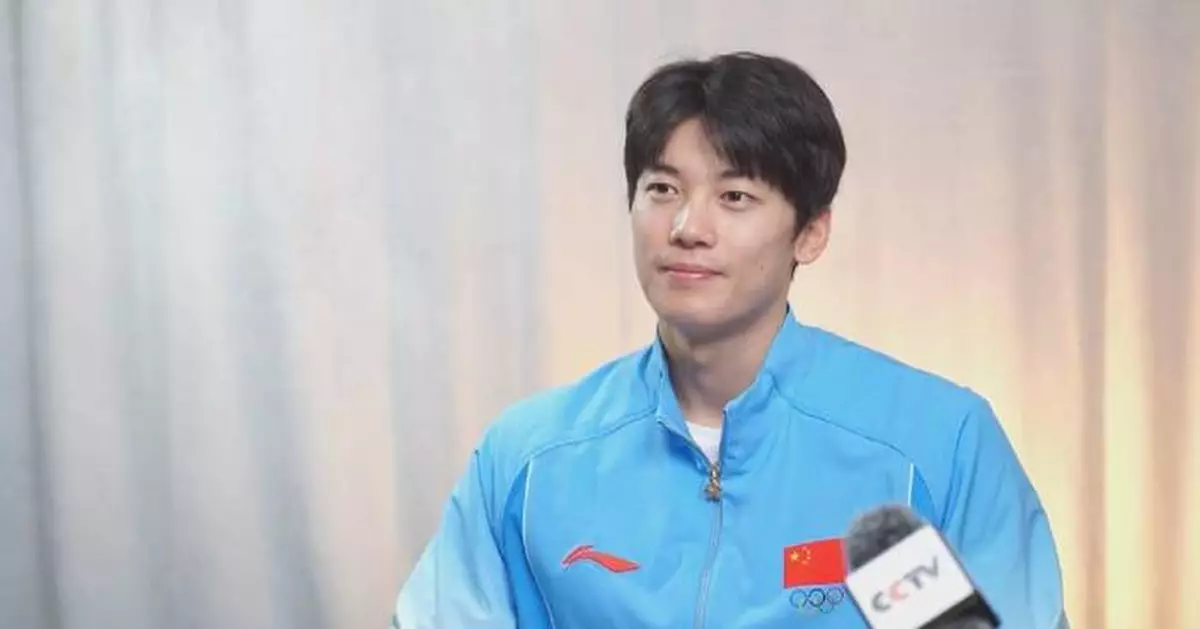
China's veteran swimmer and Olympic champion Wang Shun has completed his final appearance at the Asian Games after securing one gold and two bronze medals in Aichi-Nagoya, Japan, leaving a legacy of perseverance that spans 16 years competing for the Chinese swimming team.
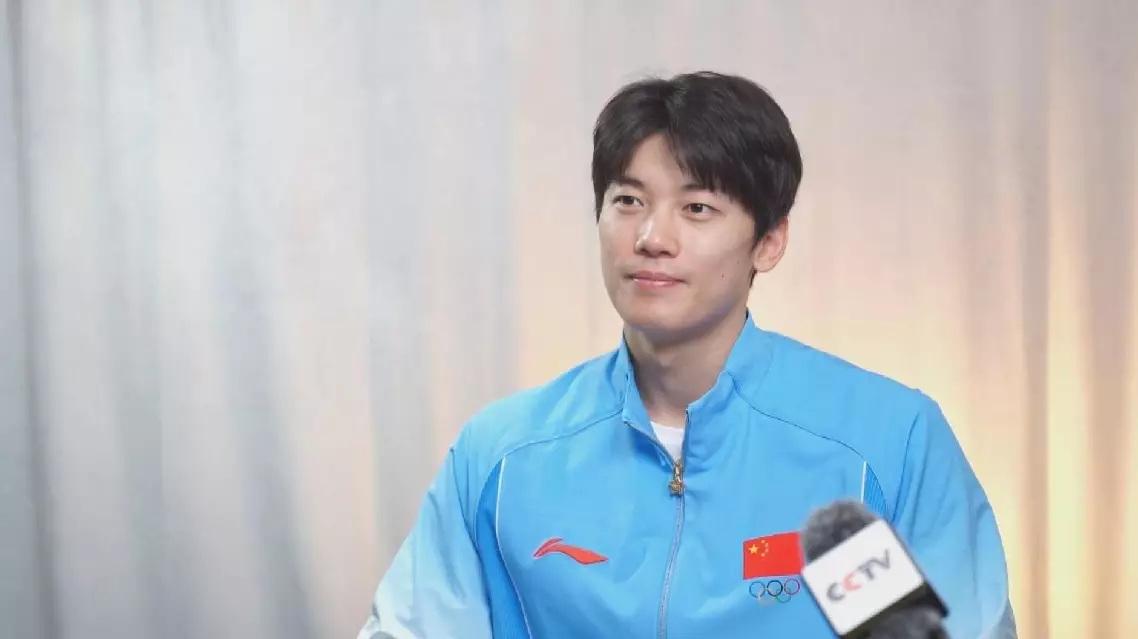
In an exclusive interview with China Central Television (CCTV) aired Thursday, the 32-year-old Wang said he has no regrets after participating in five Asian Games, as his career has come full circle over 16 years that have taken him from the team's youngest male swimmer to one of its most experienced.
"This Asian Games is my fifth time competing. From 2010 to 2026, 16 years have passed in the blink of an eye, and here is my fifth Asian Games. I've come back to this familiar place again. It's also one of the venues where I won Olympic gold at the Tokyo Olympics in 2021. So, I'm really happy. There are so many memories here," Wang said.
At the very same pool in Tokyo five years ago, Wang clinched gold in the 200m individual medley at the Tokyo Olympics. However, this time was different.
"Five years ago, for certain reasons there were no spectators, so that win felt more like it was my teammates cheering for me and applauding me. This time at the Asian Games, there were many more swimming fans, and my family -- my parents as well -- and of course, lots of friends. They all came to the venue to watch and to cheer, encourage and support the Chinese swimming team. Because competitive sport needs that kind of atmosphere. And in the 200m individual medley, when I felt everyone's cheering and chanting, for me, it also made up for the regrets of not having everyone there at the Tokyo Olympics in 2021," said Wang.
His longevity in swimming is especially remarkable given the grueling nature of his signature event, the individual medley, which requires mastering all four strokes. While other swimmers focus only on one style, Wang has to train in all four simultaneously.
When asked how he persevered through such a demanding discipline for so long, Wang pointed to a unique mindset.
"Sometimes I have a different way of thinking about it. For example, the more tired I am, the more I try to embrace and feel that fatigue. Even though my body is exhausted, when you swim a good time, your mind feels genuinely happy, especially in training. If I improve even a little, like 0.1 seconds, or if I'm a second faster than the previous cycle, that kind of joy is enough to help me get through and endure that dull period," Wang said.
As for his future, Wang is certain about one thing.
"One thing is certain. That is, even when I hang up my goggles, I will never leave sports or swimming. And I'll stay by the pool in a different capacity and continue to be part of it," said Wang.
China's Olympic champion reflects on 16-year legacy across five Asian Games