MEDINAH, Ill. (AP) — Best of friends in golf, winless as partners in team play, Scottie Scheffler and Sam Burns looked like that dubious drought might continue Thursday in the Presidents Cup.
Min Woo Lee and Sungjae Im had the advantage on four straight holes along the back nine and finally converted for a 1-up lead. And then the Americans took over at just the right time. Burns hit an 8-iron to 2 feet on the 14th. Scheffler closed out the International side with a superb bunker shot on the 18th to secure par for a 1-up victory.
Click to Gallery
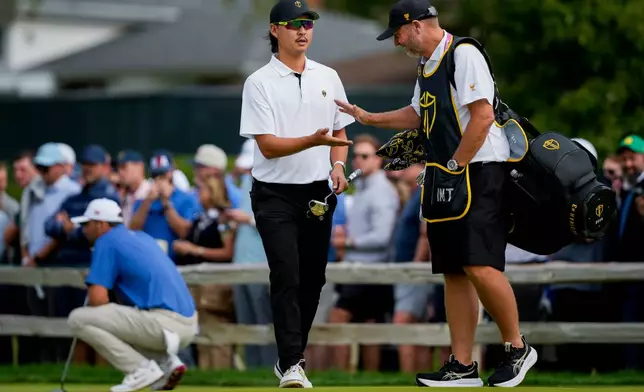
International teams' Min Woo Lee, of Australia, celebrates his birdie on the second hole with his caddie during the first round four-ball match at the Presidents Cup golf tournament at Medinah Country Club, Thursday, Sept. 24, 2026, in Medinah, Ill. (AP Photo/Matt Slocum)
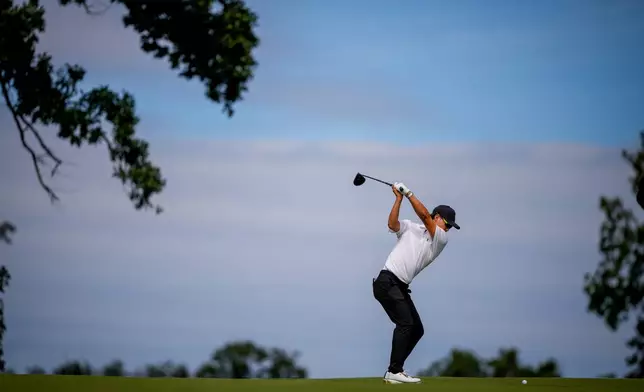
International teams' Min Woo Lee, of Australia, hits from the sixth fairway against the USA team during the first round four-ball match at the Presidents Cup golf tournament at Medinah Country Club, Thursday, Sept. 24, 2026, in Medinah, Ill. (AP Photo/Matt Slocum)
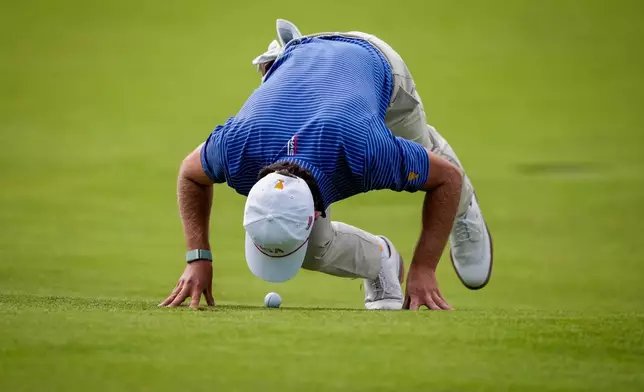
USA teams' Jackson Koivun looks at his ball on the eighth fairway during the first round four-ball match at the Presidents Cup golf tournament against the International team at Medinah Country Club, Thursday, Sept. 24, 2026, in Medinah, Ill. (AP Photo/Matt Slocum)
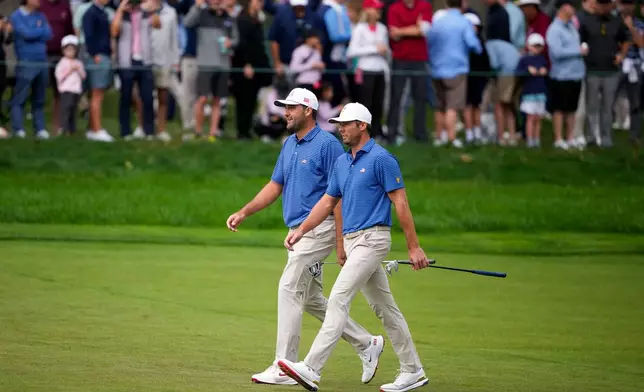
USA teams' Scottie Scheffler and Sam Burns, right, walk up the first fairway during the first round four-ball match at the Presidents Cup golf tournament against the International team at Medinah Country Club, Thursday, Sept. 24, 2026, in Medinah, Ill. (AP Photo/Matt Slocum)
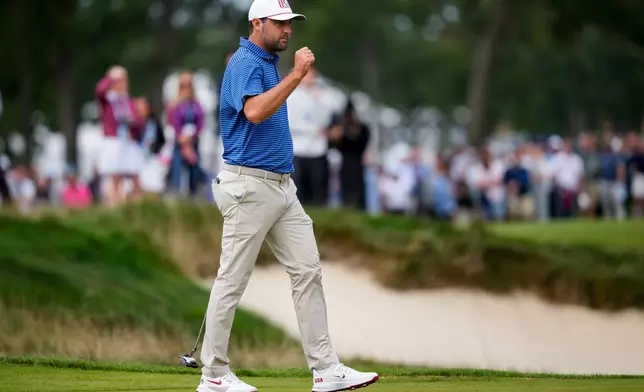
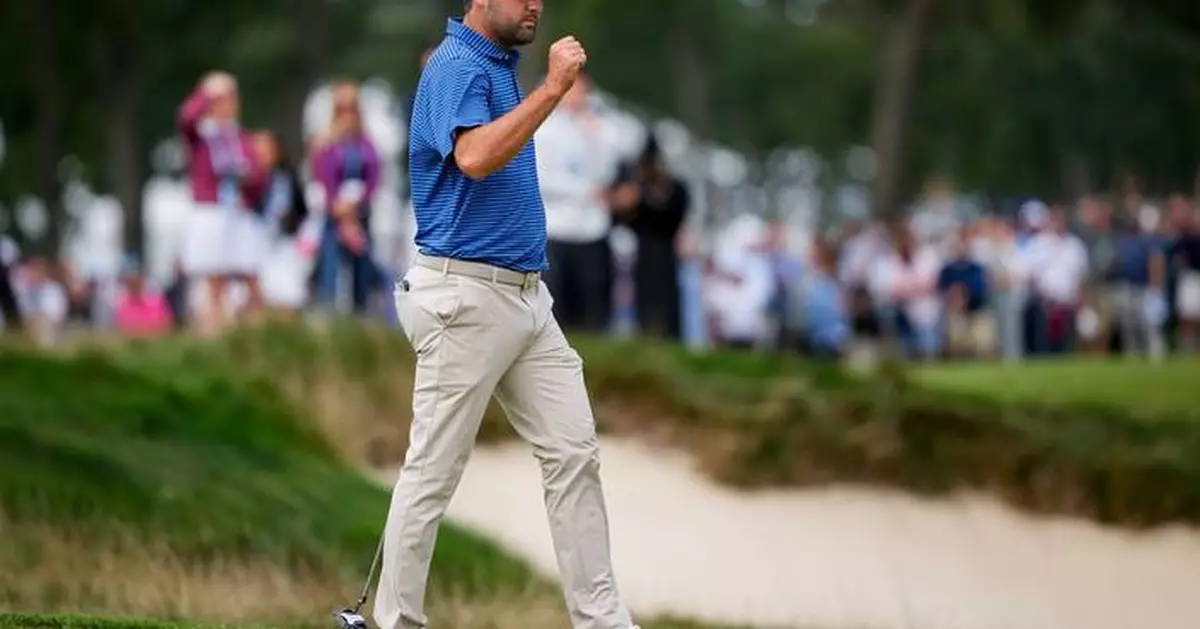
USA teams' Scottie Scheffler reacts to making his birdie putt on the first hole against the International teams during the first round four-ball match at the Presidents Cup golf tournament at Medinah Country Club, Thursday, Sept. 24, 2026, in Medinah, Ill. (AP Photo/Matt Slocum)
The lead fourballs match was the swing match as the Americans took a 3-2 lead.
“We certainly haven’t had the results that we’ve hoped for,” Burns said. “I feel like at times in the past we’ve played pretty well and just gotten beat. So it probably just was a little bit of a sigh of relief to finally get a point and just kind of let that out.”
It was the ninth time in the last 10 Presidents Cup the Americans won the opening session in a competition they have turned into an exhibition with 10 straight victories and only one loss since these matches began in 1994.
The Internationals showed plenty of fighting spirit, right down to the last hole in the lead match. Both captains came away pleased.
“A session win is a session win. We’re going to take it any way we can get it,” Snedeker said.
“We would have loved to have won the session,” International captain Geoff Ogilvy said. “But 2-3, we had a chat when we got back to the room, and I’m proud of the boys and I’m proud of how they played today. They’re all pretty excited to get out there tomorrow.”
Five matches of foursomes are scheduled for Friday at Medinah Country Club. Burns and Scheffler are out first against Canadians Corey Conners and Nick Taylor.
Jackson Koivun also wasted little time getting a point on the board. The 21-year-old Koivun, who turned pro just over three months ago, teamed with Justin Thomas in a 4-and-3 victory over Conners and Nico Echavarria, who managed only three birdies in the easier better-ball format.
Burns already delivered one big moment by making an 18-foot birdie putt on the par-3 ninth with Lee in tight for a sure birdie. But his 8-iron from 172 yards on the 14th swung momentum so much that Scheffler called it the “shot of the match.”
“I was basically out of the hole after my second shot. Sam was essentially was playing two-on-one there,” Scheffler said. “So for him to step up there and hit a really nice shot, I think you can definitely feel the momentum. He was put in a tough spot there, and he responded the way he knows how.”
The Internationals picked up two wins behind Hideki Matsuyama and Ryo Hisatsune — the first time for two Japanese players in the Presidents Cup since 1998 — and Tom Kim and Si Woo Kim in the anchor match.
“It’s been a long time. I’ve been waiting for another guy from Japan to come play with me, and I was really happy today,” Matsuyama said.
The Americans got their other win behind Wyndham Clark and Collin Morikawa, who never trailed against Adam Scott and Ryan Fox in a 3-and-2 win.
For so much of a cloudy afternoon at Medinah, two wins apiece looked certain for the Americans and the Internationals. Up for grabs was the opening match, which was tight the entire way.
Scheffler and Burns, 0-3-1 as partners in the Presidents Cup and Ryder Cup, birdied the opening four holes. The Internationals ran off four straight birdies of their own to square the match through five holes. It was clear for so much of the day this would decide who had the lead.
Im and Lee, whose putting hurt them along the back nine, each missed par putts on the 17th to fall behind. Lee went long of the green, and Im gassed his 40-foot birdie putt some 15 feet by the hole. They couldn't catch up on the closing hole.
Koivun is the first player to win a Walker Cup point and a Presidents Cup point just over a year apart. He was part of Auburn's NCAA title team in June. He won his first PGA Tour title in the 3M Open in his third start. And now he's part of a dominant American team.
He said he told Thomas that “once I get my first tee shot out of the way, I’m going to be good.” His second tee shot went out-of-bounds, though Thomas saved it with a beautiful bunker shot to halve the hole. Koivun's wedge to 7 feet for birdie on the par-5 sixth gave them a 3-up lead, and the Internationals never seriously threatened the rest of the way.
Thomas improved to 7-0 in fourballs at the Presidents Cup.
“First two holes, definitely a little shaky,” Koivun said. “But after that kind of found a groove. Me and J.T., we played really well out there. He picked me up when I didn’t play too hot, so thankful for that, but we had a fun time.”
See AP’s full golf coverage here
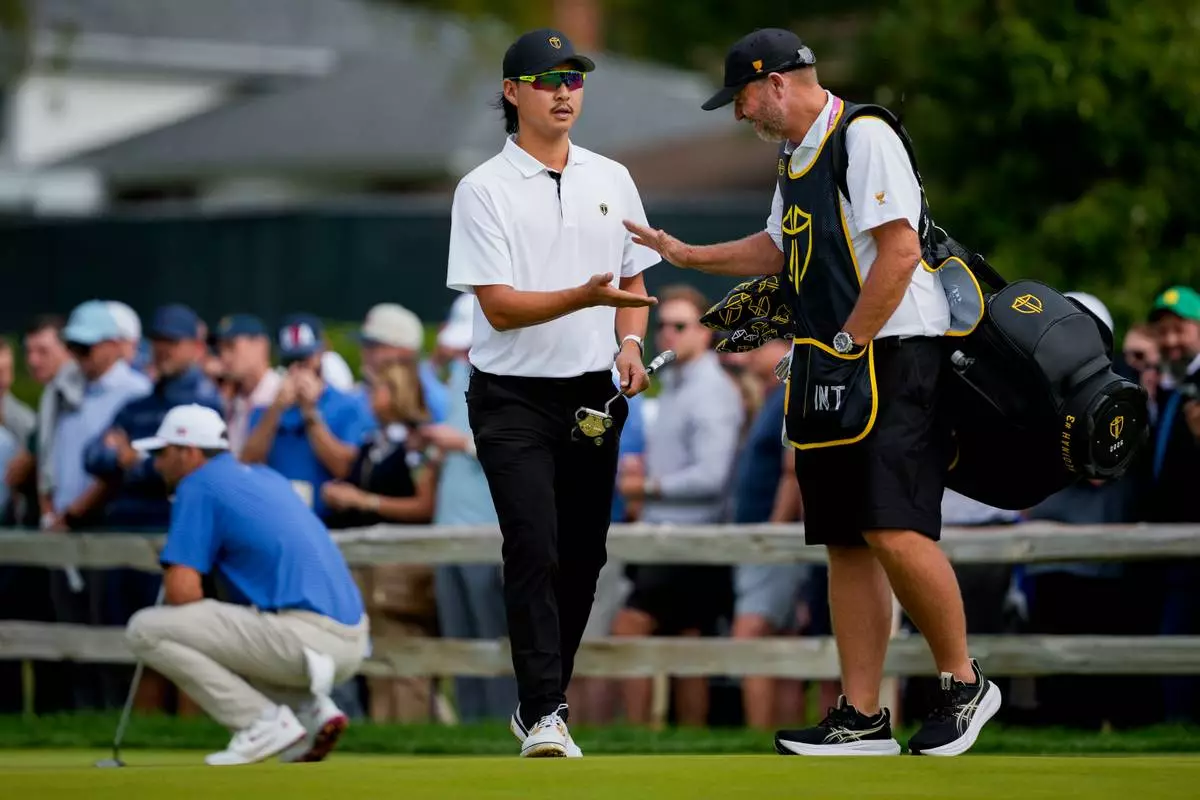
International teams' Min Woo Lee, of Australia, celebrates his birdie on the second hole with his caddie during the first round four-ball match at the Presidents Cup golf tournament at Medinah Country Club, Thursday, Sept. 24, 2026, in Medinah, Ill. (AP Photo/Matt Slocum)
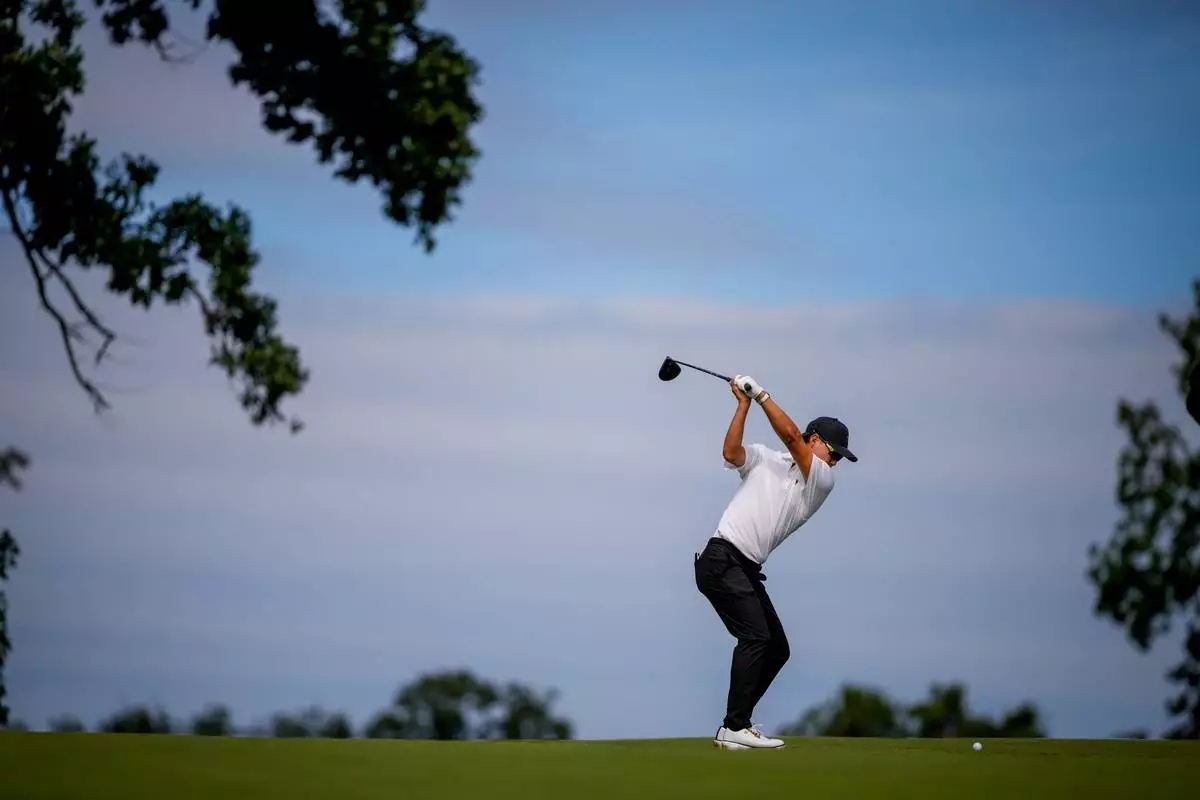
International teams' Min Woo Lee, of Australia, hits from the sixth fairway against the USA team during the first round four-ball match at the Presidents Cup golf tournament at Medinah Country Club, Thursday, Sept. 24, 2026, in Medinah, Ill. (AP Photo/Matt Slocum)
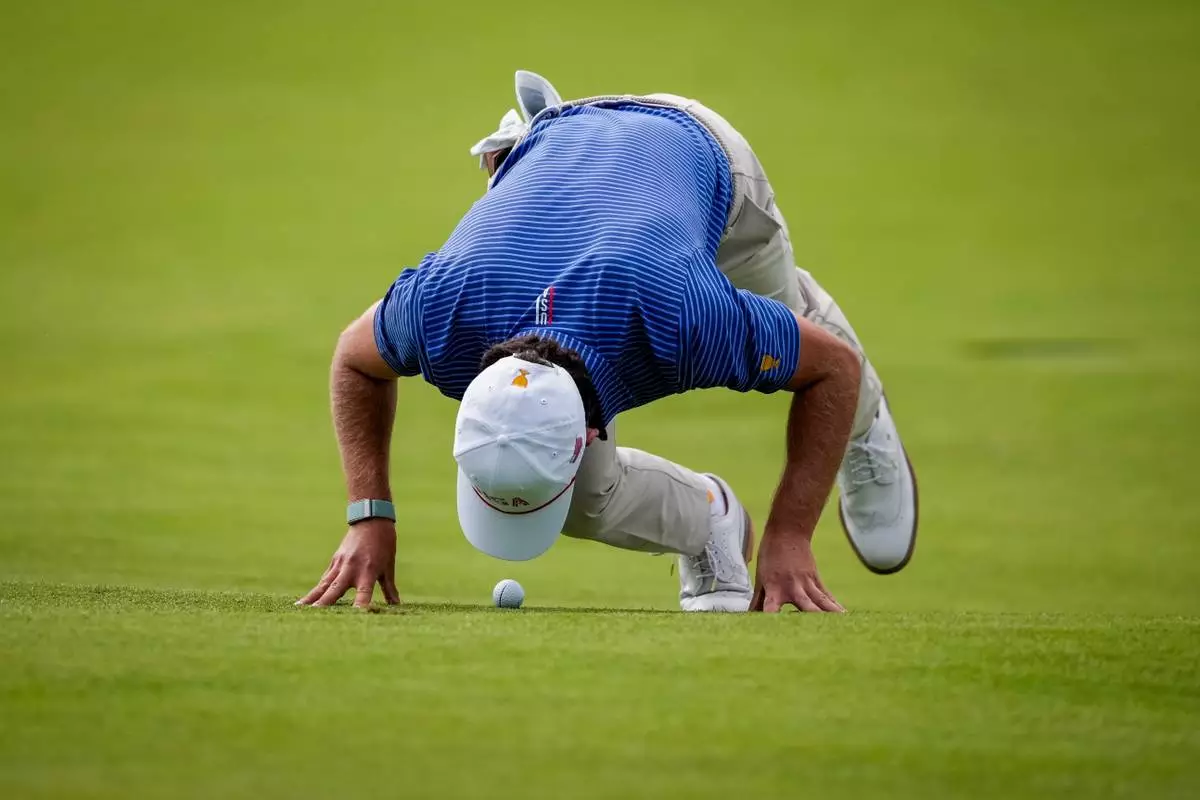
USA teams' Jackson Koivun looks at his ball on the eighth fairway during the first round four-ball match at the Presidents Cup golf tournament against the International team at Medinah Country Club, Thursday, Sept. 24, 2026, in Medinah, Ill. (AP Photo/Matt Slocum)
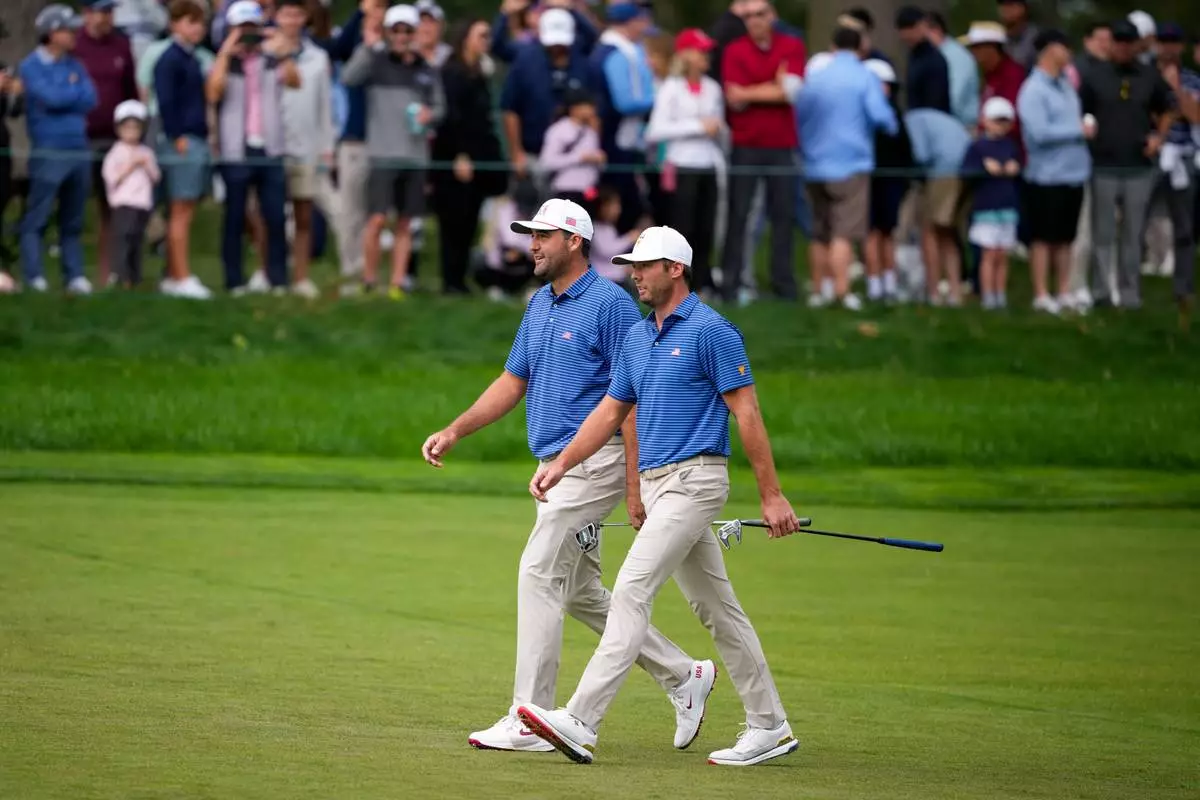
USA teams' Scottie Scheffler and Sam Burns, right, walk up the first fairway during the first round four-ball match at the Presidents Cup golf tournament against the International team at Medinah Country Club, Thursday, Sept. 24, 2026, in Medinah, Ill. (AP Photo/Matt Slocum)
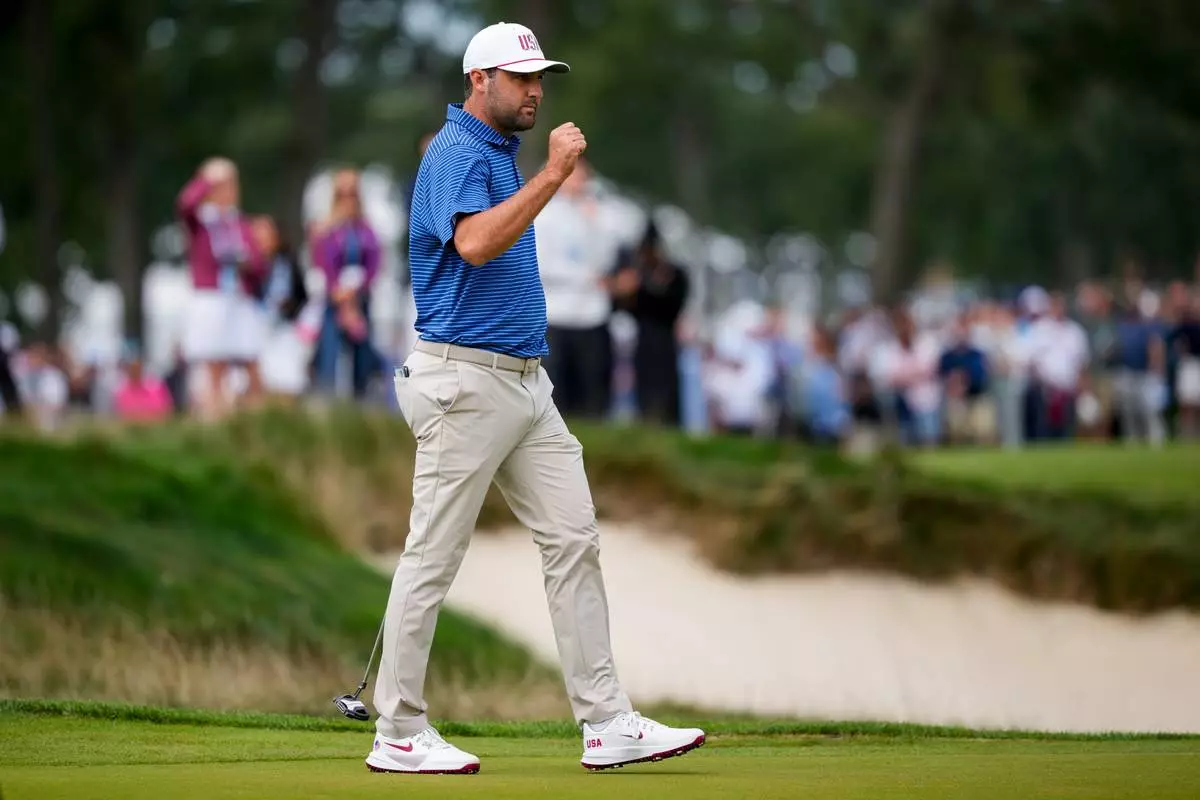
USA teams' Scottie Scheffler reacts to making his birdie putt on the first hole against the International teams during the first round four-ball match at the Presidents Cup golf tournament at Medinah Country Club, Thursday, Sept. 24, 2026, in Medinah, Ill. (AP Photo/Matt Slocum)