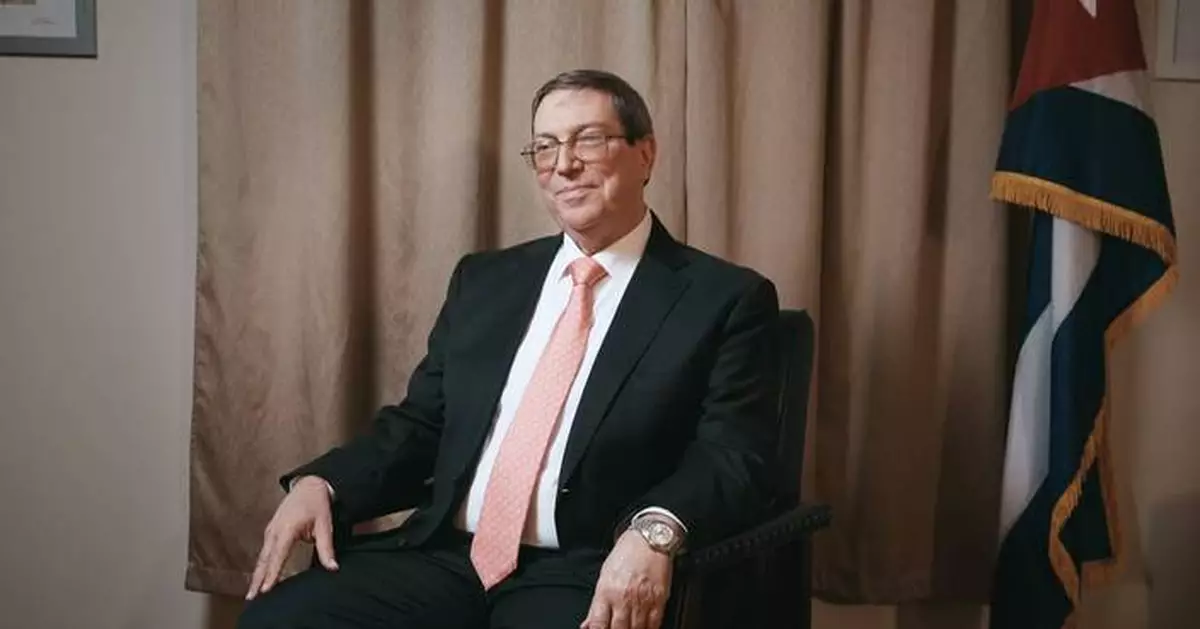
UNITED NATIONS (AP) — The Trump administration was considering imposing new restrictions on Cuban officials who travel to the United Nations, another step to squeeze the government in Havana as its top diplomat accused the United States on Thursday of unleashing collective punishment on Cuba’s people with its intensifying measures.
Even as a sizable Cuban delegation was approved to come to the U.N. General Assembly this week, the State Department is now weighing “strict controls” on the officials who plan to return next month for an annual U.N. vote on the decadeslong U.S. economic embargo on Cuba.
That is according to U.S. officials and an internal document obtained by The Associated Press. The officials spoke on condition of anonymity because a decision on the details of what the restrictions will entail has not yet been finalized.
Potential plans to further restrict officials in New York for diplomatic work come as Cuban Foreign Minister Bruno Rodríguez bemoaned the “lack of progress” in negotiations between Havana and Washington. He also blasted the oil blockade that the Trump administration imposed on the Caribbean island nation in January.
“What defines the present status of the Cuba-U.S. relations is the brutal tightening of the economic and financial blockade and the total oil siege imposed on our country, which is equivalent to a naval blockade,” Rodríguez said in Spanish during an AP interview on the sidelines of the annual U.N. General Assembly gathering of world leaders.
His comments, made through a translator, follow President Donald Trump's wide-ranging U.N. address Tuesday, when he again called Cuba a “failed state" and said he was “seeking a fundamental change in the situation in Cuba.”
His administration has been trying to force changes to Cuba’s political system by cutting off fuel to the island, leading to massive power outages that affect basic activities such as cooking, water supply, and internet and telephone service.
“Communism will never be coming to America, but freedom will be coming to Cuba," Trump said at the U.N.
Rodríguez, who has served as foreign minister since 2009, said that while no meetings now are scheduled with U.S. officials, “Cuba remains willing to keep these channel of contacts open.”
He refused to say when the last talks took place, noting that while past conversations have been “respectful,” the public statements and policy decisions made by U.S. officials afterward have been “extremely aggressive."
Millions of people have lost access to electricity as Cuba’s power grid has collapsed at least six times since the U.S. energy blockade began at the start of the year. The restrictions prevent Cuba from importing fuel needed to operate its thermoelectric power plants or replacement parts to maintain infrastructure that in many cases has become obsolete.
Other U.S. measures have included imposing more economic penalties on industries in the already heavily sanctioned country and broadening enforcement of laws that bar Americans who visit the island from dealings with government-owned or -affiliated businesses.
"These measures hamper some processes that could lead to discussion of things in the common interests of both nations," Rodríguez said.
Havana has recently integrated historic economic reforms, opening up the island to the private sector. Officials, including Rodríguez, have said these are not concessions to the U.S., but they are moving in the direction the Trump administration wants.
Rodríguez and other members of his government are planning to return to New York next month for the annual U.N. General Assembly vote on the U.S. economic embargo against Cuba — a vote that has historically condemned American policy toward the island by overwhelming margins.
Cuban officials already face heavy restrictions in New York and Washington due to their U.S. designation as a state sponsor of terrorism, with travel and commuting limited to a 25-mile radius of the U.N. headquarters in Manhattan.
But any new U.S. travel restrictions could make it more difficult or impossible for Cuban officials to attend the vote, which has been taking place for more than three decades.
Last year, Washington’s isolation on the issue was softened as countries like Argentina, Ukraine and Hungary — all closely allied with the Trump administration — rejected the Cuban-backed effort even as friction has grown in the region around American military actions there.
While General Assembly resolutions are not legally binding, they reflect world opinion.
Rodríguez told the AP last year that the U.S. had mounted a pressure campaign to influence the vote. He said then that Havana had heard from other countries, mainly in Europe, that the State Department was encouraging them to vote against the resolution.
In response, a State Department spokesperson said last year that “the Cuban regime does not deserve the backing of America’s democratic allies.”
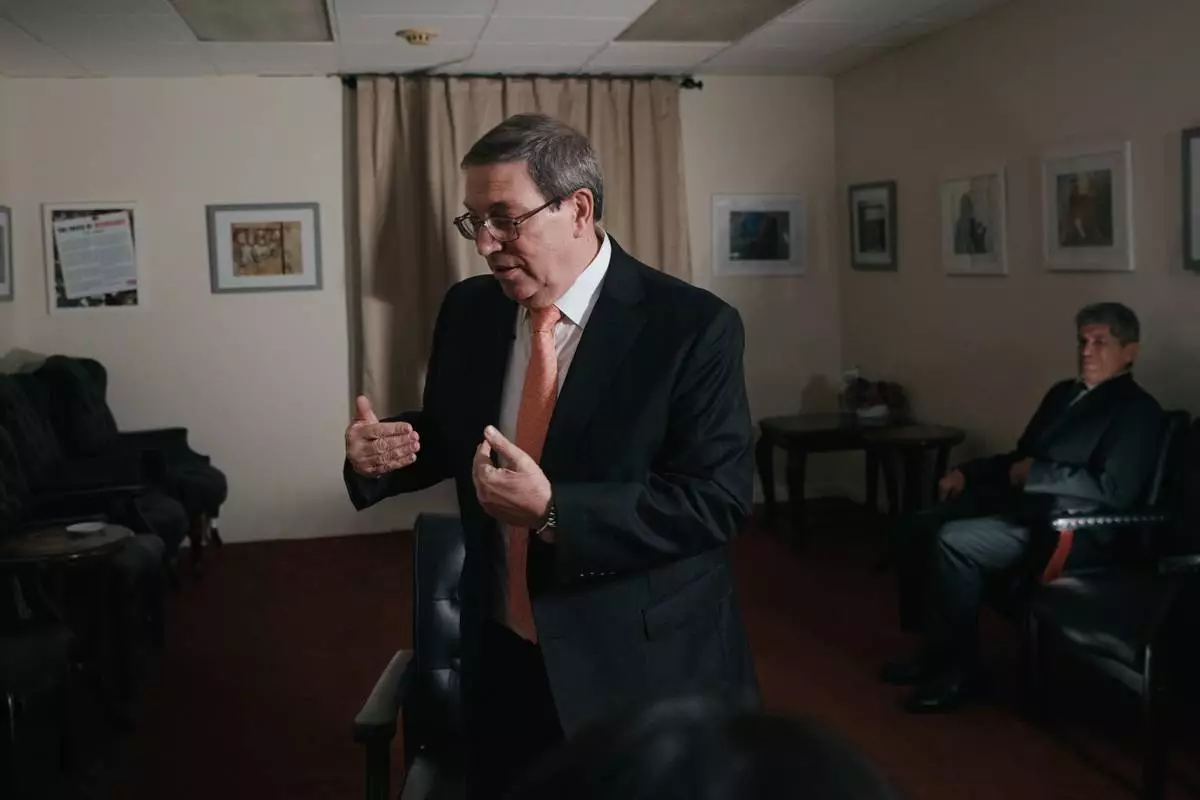
Cuban Foreign Minister Bruno Rodríguez speaks during an interview at the Permanent Mission of Cuba on Thursday, Sept. 24, 2026, in New York. (AP Photo/Andres Kudacki)
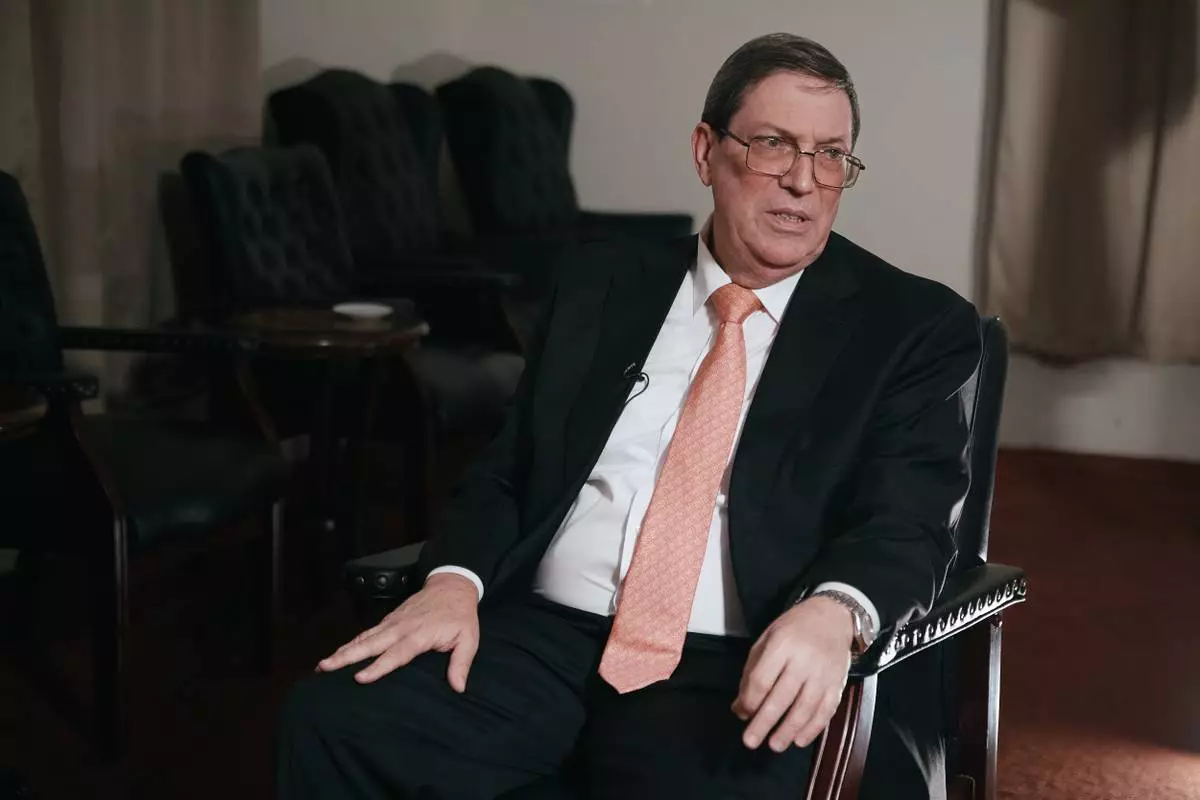
Cuban Foreign Minister Bruno Rodríguez is photographed at the Permanent Mission of Cuba on Thursday, Sept. 24, 2026, in New York. (AP Photo/Andres Kudacki)
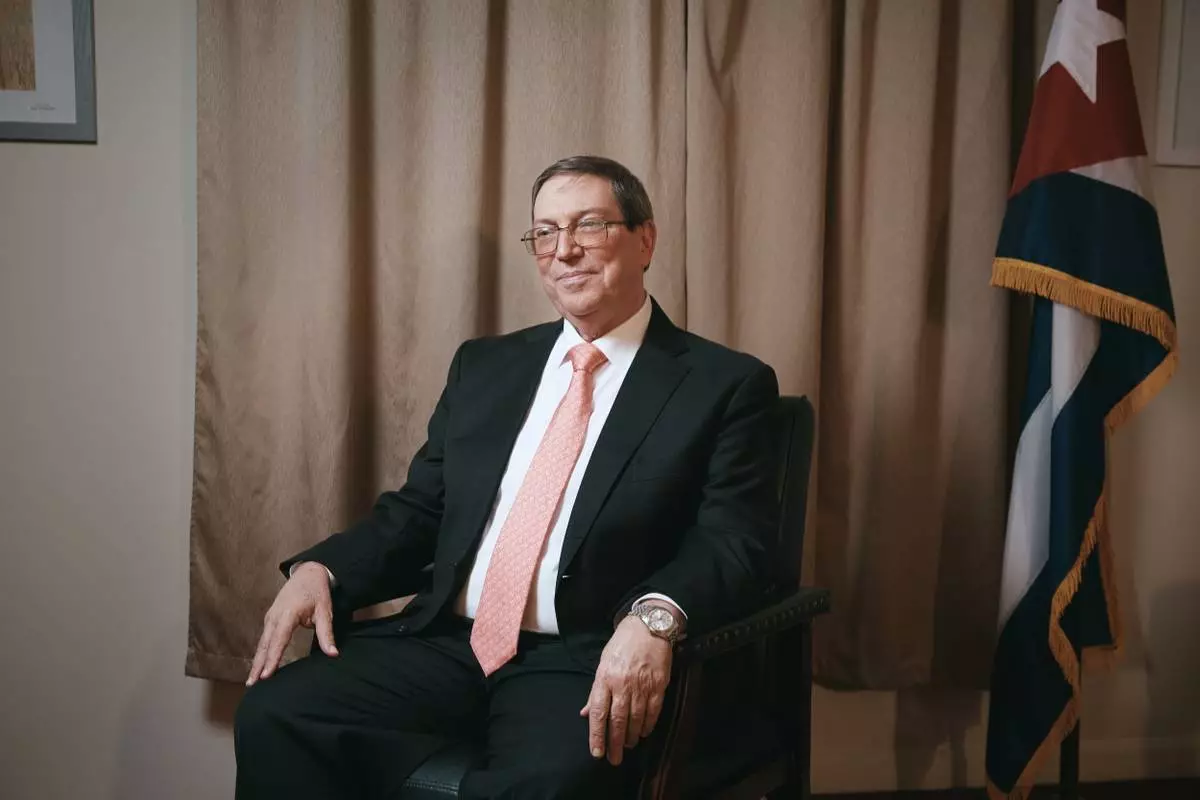
Cuban Foreign Minister Bruno Rodríguez poses for a portrait at the Permanent Mission of Cuba on Thursday, Sept. 24, 2026, in New York. (AP Photo/Andres Kudacki)
MEXICO CITY (AP) — Residents along Mexico’s west coast stacked sandbags to fortify beachfront shops and evacuated their homes, while Hawaii’s Big Island and Maui braced for potentially catastrophic flooding, as two separate storms swirled in the Pacific on Thursday.
Heavy rains from powerful Hurricane Polo could cause life-threatening flooding and landslides in Mexico, according to the U.S. National Hurricane Center. In places like the port city of Lazaro Cardenas, seawater swept through homes Thursday and left wooden planks and furniture strewn on the streets.
Polo has gone back and forth between Category 4 and 5, both major-hurricane strength. The strongest winds were expected to remain offshore as the storm’s center skirts the coast before moving out to sea. But Polo was forecast to hook back toward Mexico’s coast farther north on Saturday.
Far off the southern tip of Hawaii’s Big Island, Tropical Storm Nolo was gathering strength, and forecasters expect it to become a hurricane soon. Hawaii is likely to see heavy rains starting late Thursday and winds reaching hurricane levels by early Saturday. Nolo could dump more than 2 feet (60 centimeters) of rain across islands still recovering from a string of storms.
The series of powerful storms comes as the weather phenomenon El Niño prompts major environmental shifts across the world, fueling drought in some areas and flooding in others. El Niño traditionally dampens the Atlantic hurricane season, while it tends to rev up tropical cyclone activity in the Pacific with moist air and little wind shear.
Hawaii has been battered this year by major flooding in the spring, an earthquake and two other hurricanes since mid-August.
“In my 20 years of experience here, I’ve never seen three hurricane watches for the islands in the same year,” said John Bravender of the National Weather Service in Honolulu.
Mexican authorities were opening shelters and clearing people from beaches, while coastal residents tried to protect businesses from getting swept away. People in high-risk areas were being evacuated, though authorities didn’t immediately say how many.
Much of the worry from locals comes from hurricanes in past years that devastated cities along the Pacific coast. Hurricane Otis in 2023 unexpectedly plunged Acapulco into turmoil for weeks.
“So many people said it wouldn’t happen and then it did. After that, you’re left on edge,” said Gonzalo Ramírez, a bartender in the city.
Polo posed the biggest threat to Guerrero and Michoacán, neighboring states in southwest Mexico that share a long coastline scattered with small ports, tourist towns and fishing villages. Much of the area is marked by poverty, and residents routinely complain they are left to fend for themselves during natural disasters.
Mexican authorities have deployed 15,000 security personnel across the coast and suspended schools.
In Lázaro Cárdenas, a port city in Michoacán that was hit with high surf, locals and government officials were clearing out piles of wooden planks from a number of destroyed ramadas and shoveling thick mud coating much of the town.
Alicia Contreras said the walls and roof of her restaurant had been severely damaged by 15-foot (4.5-meter) waves. As officers and family helped pick through the damaged house, Contreras worried how she would economically recover.
“This is huge because we have no other source of income. Now we’re just surviving,” Contreras said.
Forecasters said Tropical Storm Nolo might grow into a major hurricane and could drop 20 inches (50 centimeters) of rain on the Big Island, with even higher amounts possible through Saturday.
The island of Maui could also be hit with life-threatening floods and mudslides, the hurricane center said.
While the Big Island is expected to bear the brunt of the storm, its full path remains uncertain, according to Bravender, the weather service's warning coordination meteorologist in Hawaii.
Most concerning, he said Thursday, is that the heaviest rain is likely to fall over the same southeastern region of the Big Island hit in August by Hurricane Lala and where grounds are still wet from additional precipitation.
“There are several communities that were isolated, flooded, roads that were washed out,” he said. “It’s that same area that is most under threat,” Bravender said.
Hawaii officials told residents to put together emergency kits and the governor issued an emergency proclamation, activating more than 230 Hawaii National Guard members. Schools were closed for the rest of the week.
Hawaiian Electric, the state’s primary utility, said crews that had been helping restore power in Kauai after this month’s Hurricane Lowell would return to Oahu, Maui and the Big Island in preparation for the coming storm.
A third storm in the Pacific, Hurricane Odalys, was centered far from land roughly 1,110 miles (1,785 kilometers) west-southwest of the southern tip of Mexico’s Baja California peninsula.
In the northern Atlantic Ocean, Tropical Storm Fay re-formed early Thursday, the U.S. hurricane center said. It was nearly 1,000 miles (1,600 kilometers) west-southwest of the Azores.
Aoun Angueira reported from San Diego. Associated Press journalists John Seewer in Toledo, Ohio, Hannah Schoenbaum in Salt Lake City and Jeriel Vargas Ambriz in Lázaro Cárdena, Mexico, contributed.
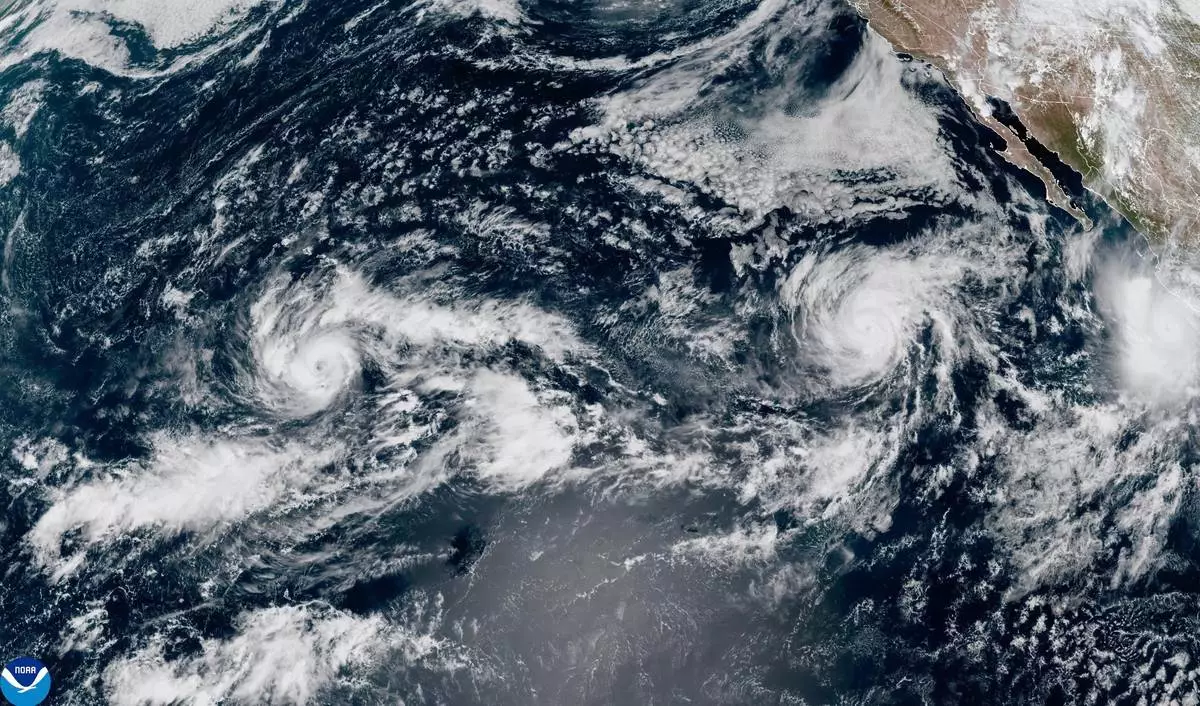
This satellite image provided by NOAA shows Tropical Storm Nolo, left, south of Hawaii; Hurricane Odalys, middle, and Hurricane Polo, right, off the coast of Mexico, in the Pacific Ocean on Thursday, Sept. 24, 2026. (NOAA via AP)
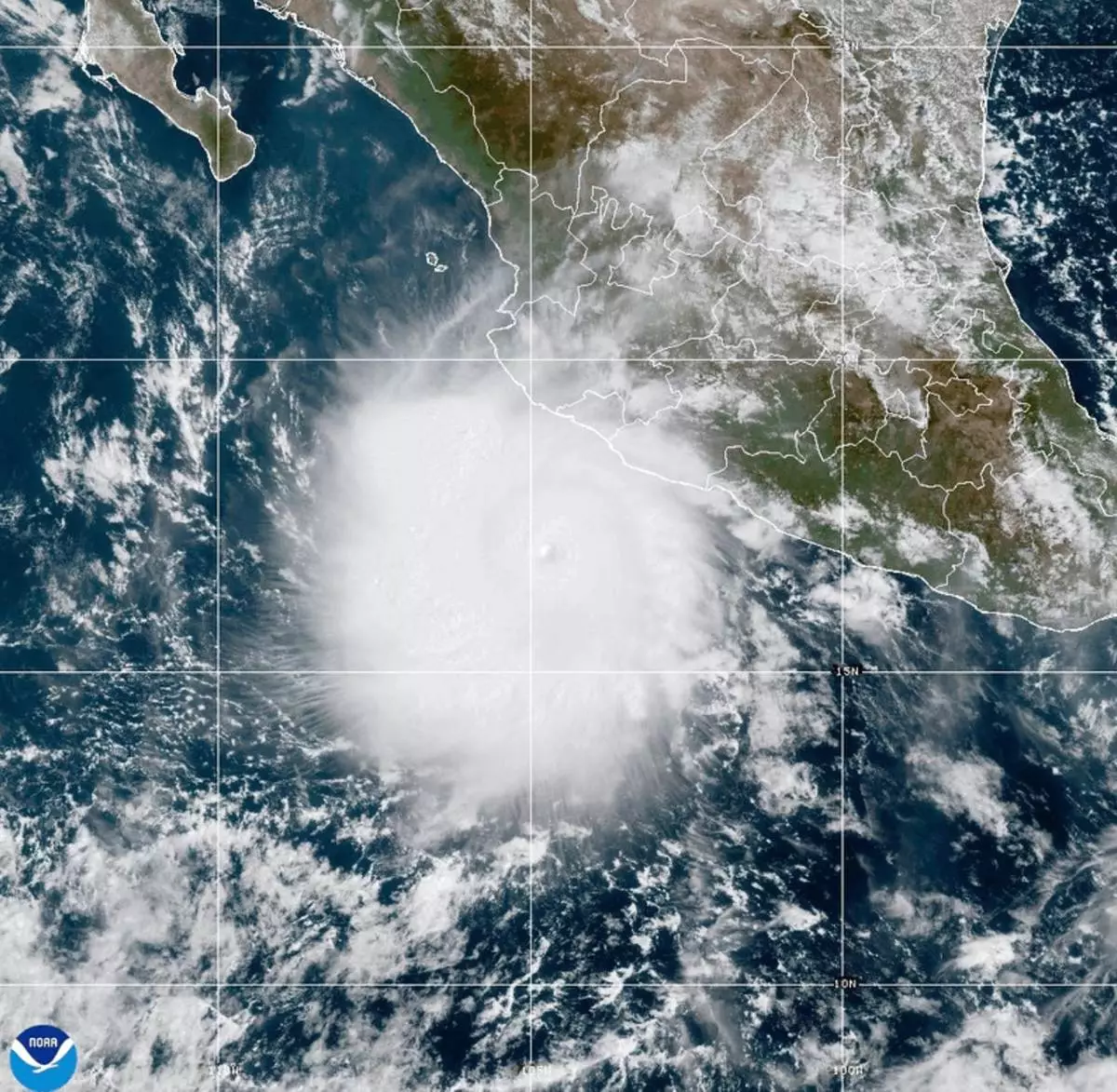
This photo provided by NOAA shows Hurricane Polo moving away from the southwestern coast of Mexico on Thursday, Sept. 24, 2026. (NOAA via AP)
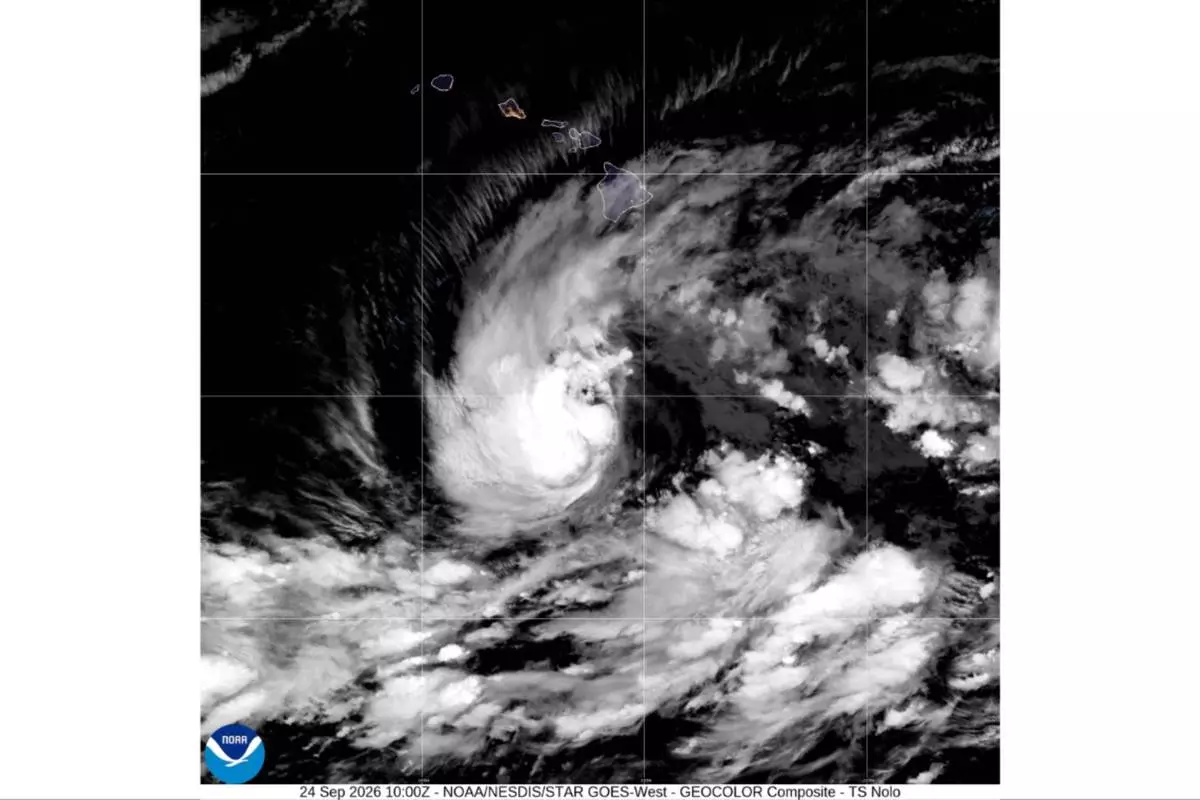
This satellite image from the National Oceanic and Atmospheric Administration shows Tropical Storm Nolo in the Pacific Ocean, Thursday, Sept. 24, 2026. (NOAA via AP)
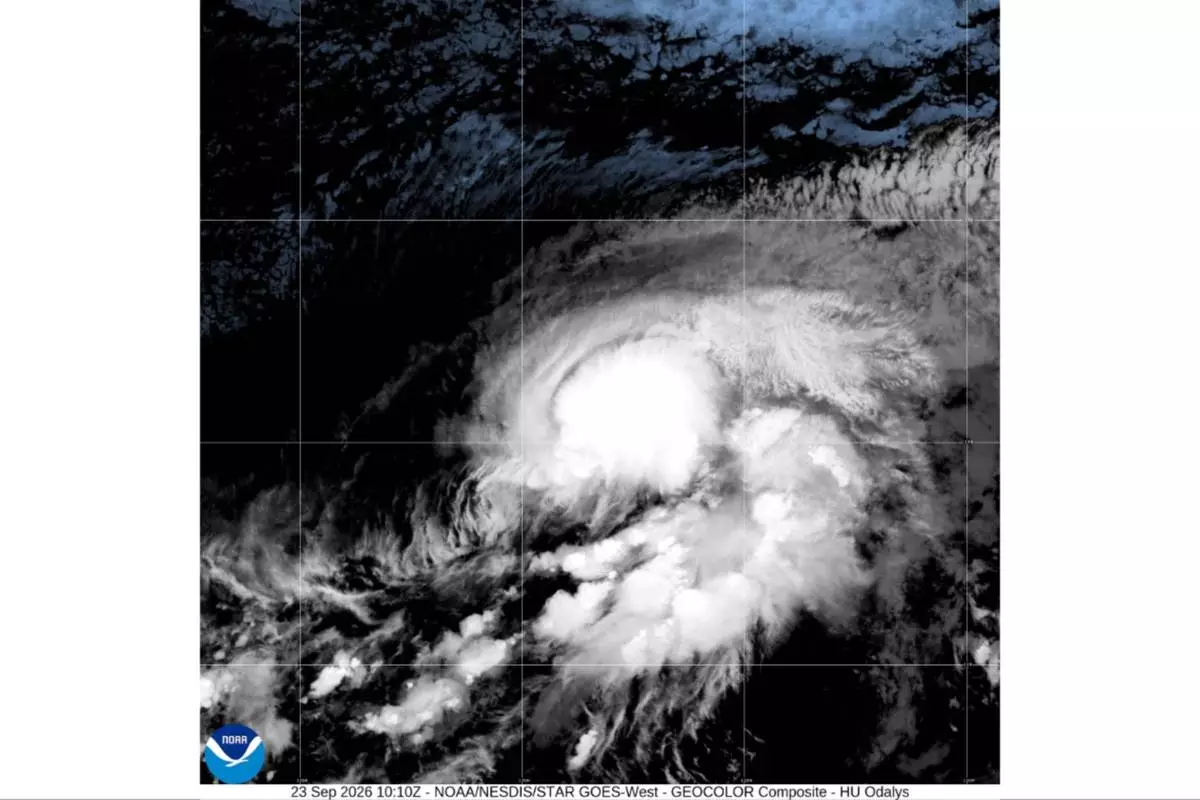
This satellite image from the National Oceanic and Atmospheric Administration shows Hurricane Odalys in the Pacific Ocean, Wednesday, Sept. 23, 2026. (NOAA via AP)
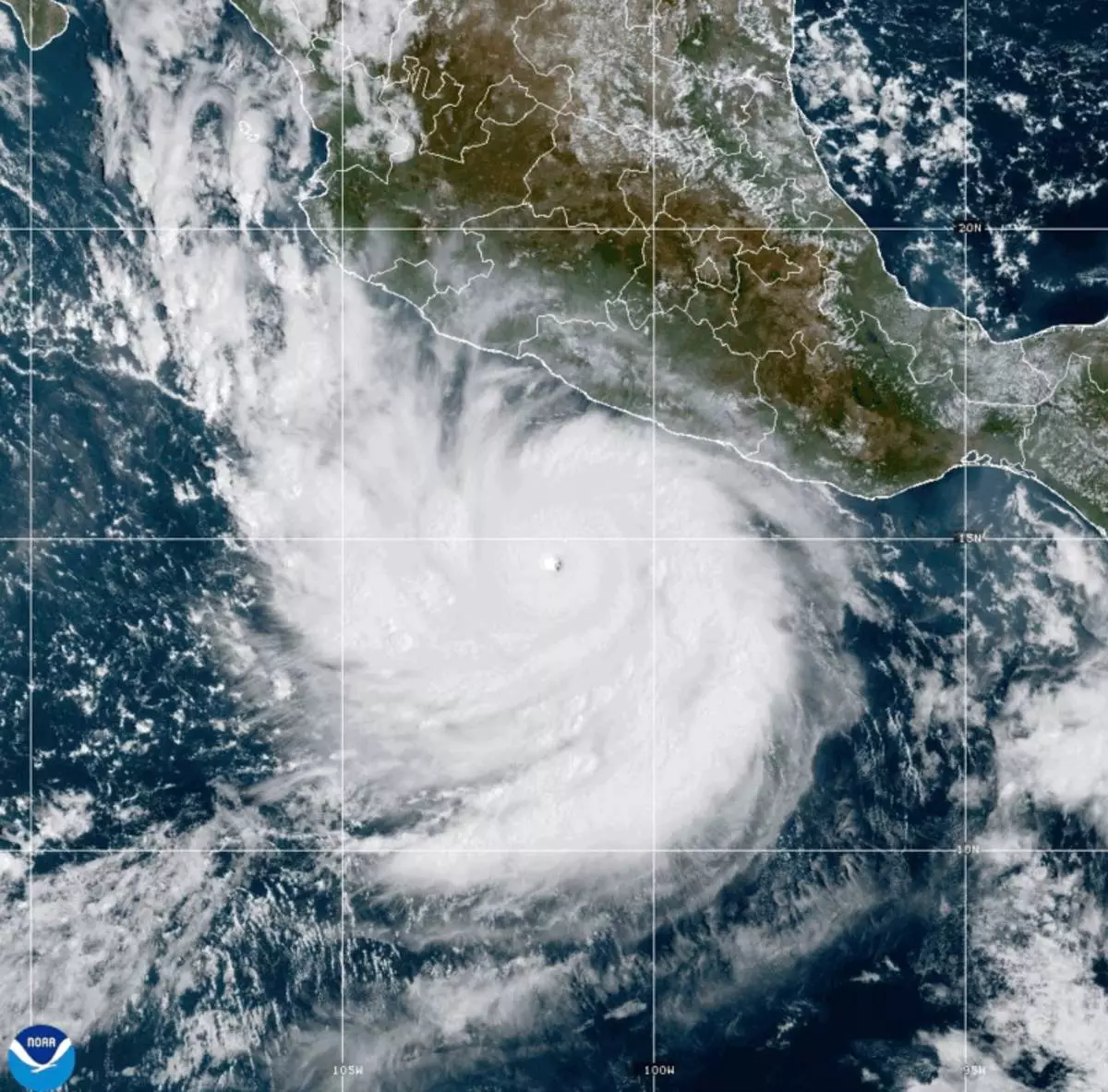
This photo provided by NOAA shows Hurricane Polo strengthening in the Pacific Ocean off the coast of Mexico on Tuesday, Sept. 22, 2026. (NOAA via AP)