Iran has offered to reopen the Strait of Hormuz and resume talks on its nuclear program in seven days if the United States lifts its naval blockade of Iranian ports, waives sanctions on Iranian oil sales and observes a ceasefire that would include Lebanon.
Iran's Foreign Minister Abbas Araghchi detailed the proposal in a private gathering on Thursday on the sidelines of the U.N. General Assembly in New York, according to one attendee.
Click to Gallery
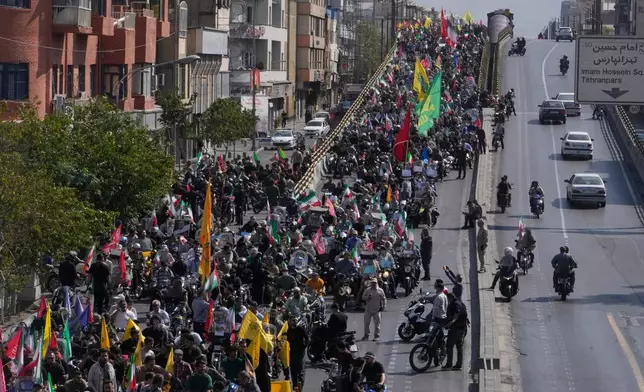
Motorcyclists ride during a state-organized motorcycle parade called "Janfada," meaning "Sacrifice for Iran,", in Tehran, Iran, Friday, Sept. 25, 2026. (AP Photo/Vahid Salemi)
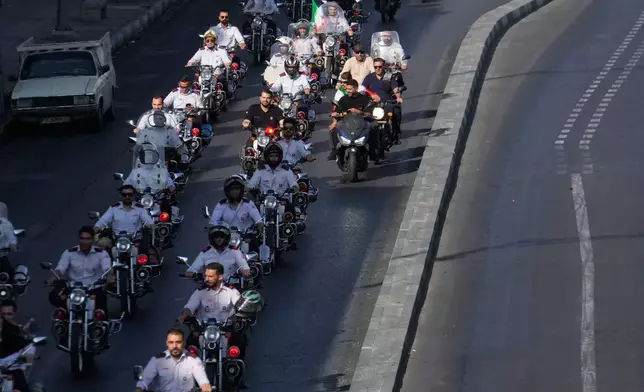
Firefighters ride motorcycles during a state-organized motorcycle parade called "Janfada," meaning "Sacrifice for Iran,", in Tehran, Iran, Friday, Sept. 25, 2026. (AP Photo/Vahid Salemi)
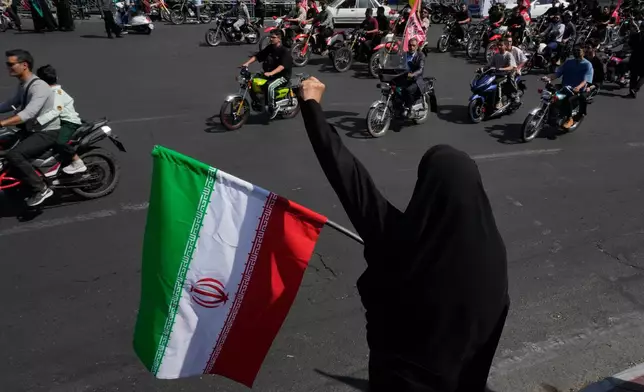
A woman chants slogan as she holds an Iranian flag while motorcyclists ride during a state-organized motorcycle parade called "Janfada," meaning "Sacrifice for Iran,", in Tehran, Iran, Friday, Sept. 25, 2026. (AP Photo/Vahid Salemi)
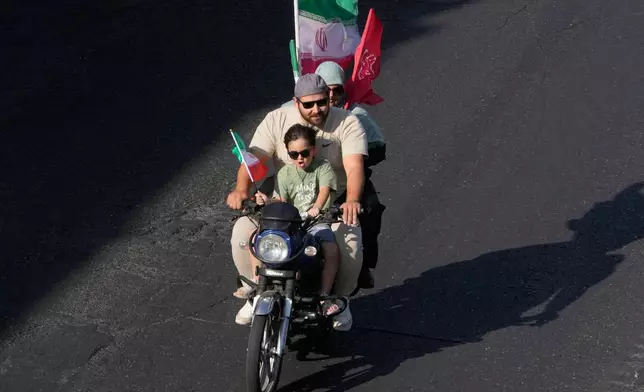
A family ride on a motorcycle during a state-organized motorcycle parade called "Janfada," meaning "Sacrifice for Iran,", in Tehran, Iran, Friday, Sept. 25, 2026. (AP Photo/Vahid Salemi)
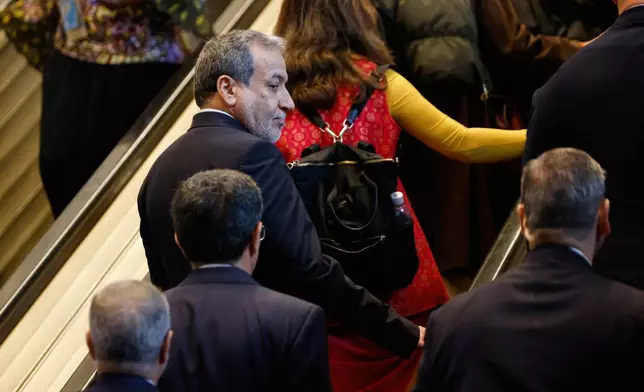
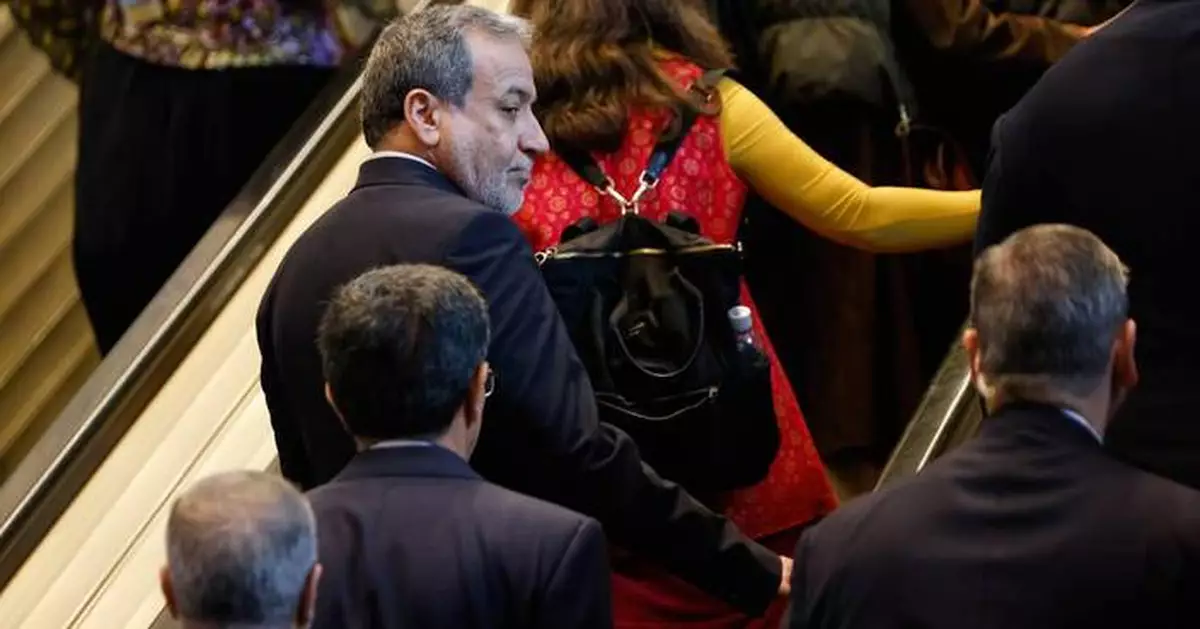
Iran's Foreign Minister Abbas Araghchi arrives ahead of the 81st session of the United Nations General Assembly at United Nations headquarters, Tuesday, Sept. 22, 2026. (AP Photo/Stefan Jeremiah)
Trita Parsi, executive vice president of the Quincy Institute think tank, said Araghchi suggested that a speedy agreement would help U.S. President Donald Trump ahead of November's midterm elections. The arrangement would also relieve enormous economic pressure on Tehran as the U.S. piles on additional sanctions.
Iran's disruption of the strait — through which a fifth of the world's traded oil and gas transited before the war — has emerged as its main point of leverage. The effects have been felt far beyond the Middle East.
There was no immediate comment from Iran's U.N. mission or other Iranian officials. A person familiar with the matter, speaking on condition of anonymity to discuss private deliberations, told The Associated Press that Saudi Arabia was skeptical of the latest push for a deal.
The White House did not immediately respond to a message seeking comment on Iran’s proposal.
The proposal, conveyed to the U.S. by mediators, strongly resembles the so-called Memorandum of Understanding reached in June, but with an accelerated timetable. The earlier agreement, which called for a 60-day interim period, quickly collapsed as Iran resumed attacks on shipping in the strait.
Trump has said he is in no rush to reach a deal, even as high oil prices fuel inflation. On the Iranian side, there are questions as to whether the hard-liners who dominate the security forces would accept compromises championed by moderates like President Masoud Pezeshkian.
“If Trump calculates this arrangement is worthwhile and can bring political benefit before the midterms and reduce gas prices, perhaps we'll see flexibility not seen in previous weeks,” Parsi said. But he noted “deep suspicion,” especially around the prospect of Iran merely buying time to ship out more of its oil and ease its economic pain.
In the latest sign of diplomatic movement, Pezeshkian hosted the prime minister of Qatar early Friday. Qatar has been a key mediator, including during hours of indirect Iran-U.S. talks at the U.N. this week.
It was not clear how long Pezeshkian and Araghchi would stay in the U.S. after Pezeshkian addressed the annual U.N. gathering of world leaders on Wednesday, ending his speech by saying Iran remained open to diplomacy.
U.S. Secretary of State Marco Rubio, on the same day, said “if there’s an opportunity to exchange ideas and messages, we will.”
After multiple failed attempts at a deal, however, suspicion is high on both sides. The U.S. and Israel have attacked Iran twice while it was engaged in nuclear talks, and the U.S. and Iran accuse each other of having swiftly violated the June agreement.
“The Iranians already know that the chances of this not being accepted by Trump are much higher than the opposite,” Hamidreza Azizi, senior Iran analyst at the International Crisis Group think tank, wrote on X.
“They want to show that they were ready for diplomacy and that it was the United States that, for the third time, decided to attack in the middle of a diplomatic track — something that people within (Iran’s) strategic community have been anticipating over the past few days.”
The proposal would include Lebanon, where Israel and the Iran-backed Hezbollah have been mostly observing a ceasefire. It's not clear, however, if it would include the revived conflict between Yemen's Iran-backed Houthi rebels and Saudi Arabia, which has put even more pressure on global markets.
Iran appears to think the Houthis' newly enhanced ability to threaten the Bab el-Mandeb strait on the Red Sea — another trade chokepoint on the other side of the Arabian Peninsula — could push Trump to make a deal.
Maj. Gen. Yahya Rahim Safavi, a military adviser to Iran's new supreme leader, told state television that the Americans “face a new problem called the Bab el-Mandeb Strait.”
He added: “I think the process that is unfolding is in our favor, and the Americans will be forced to accept Iran’s conditions.”
With the Houthis' latest surge in attacks, Saudi Arabia was skeptical of Araghchi’s latest push for a deal with the U.S., according to the person familiar with the matter.
The kingdom, along with other Gulf states, had advocated over the summer for a return to negotiations, saying they could live with an agreement that gave Iran a temporary role in managing the Strait of Hormuz, the person said.
But the Saudi calculations changed as the Houthis seized Yemen’s strategic Red Sea coast from pro-government forces and a vital Saudi pipeline came under attack.
Earlier this month, Gulf leaders planned to gather in Oman to discuss an emerging agreement between Oman and Iran on the Strait of Hormuz, which runs between the two countries. But the meeting was canceled after Saudi Arabia called for amendments, only some of which were accepted by Iran, the person said.
Iran's leaders have sought to project unity, but some hard-liners want to continue or escalate the war to secure bigger U.S. concessions and have criticized Pezeshkian and Araghchi's diplomatic steps this week.
Firebrand lawmaker Ebrahim Rezaei wrote on X that merely meeting with “the aggressor enemy” showed weakness. Iran’s Assembly of Experts, a panel of Shiite clerics who appoint the supreme leader, said “there is no path other than resistance.”
The head of Iran’s powerful Revolutionary Guard, Brig. Gen. Ahmad Vahidi, highlighted the U.N. speech by “the esteemed president” while focusing on Pezeshkian’s comments that Iran doesn’t fear war.
Iran's parliament speaker, Mohammad Bagher Qalibaf, who served as chief negotiator in earlier talks with the United States, provided a rare public acknowledgment of the internal divide.
“There is a view that speaks of war but offers no prospect or mechanism for bringing it to a powerful conclusion,” he wrote on social media. “At the opposite end is a current that makes the error of underestimating national capabilities.”
He added: “The first error keeps the country in a state of permanent crisis, while the second hands national resources and dignity over to the enemy.”
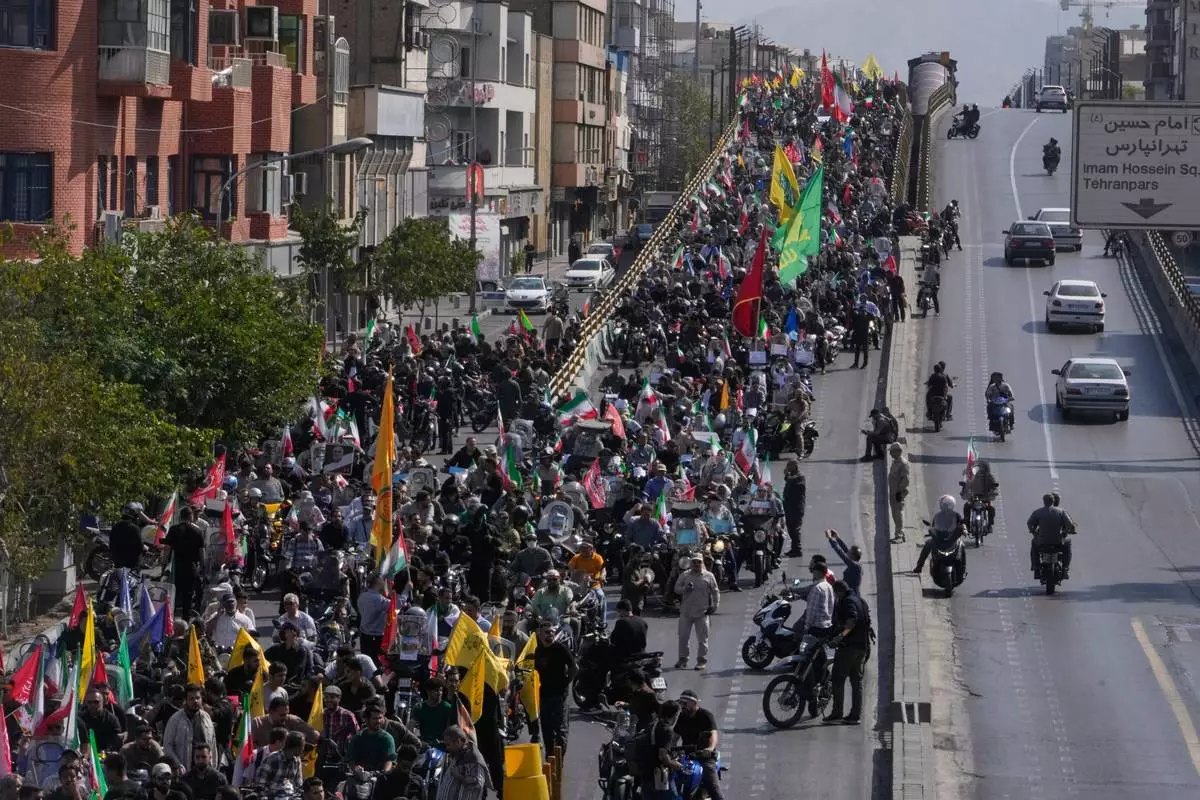
Motorcyclists ride during a state-organized motorcycle parade called "Janfada," meaning "Sacrifice for Iran,", in Tehran, Iran, Friday, Sept. 25, 2026. (AP Photo/Vahid Salemi)
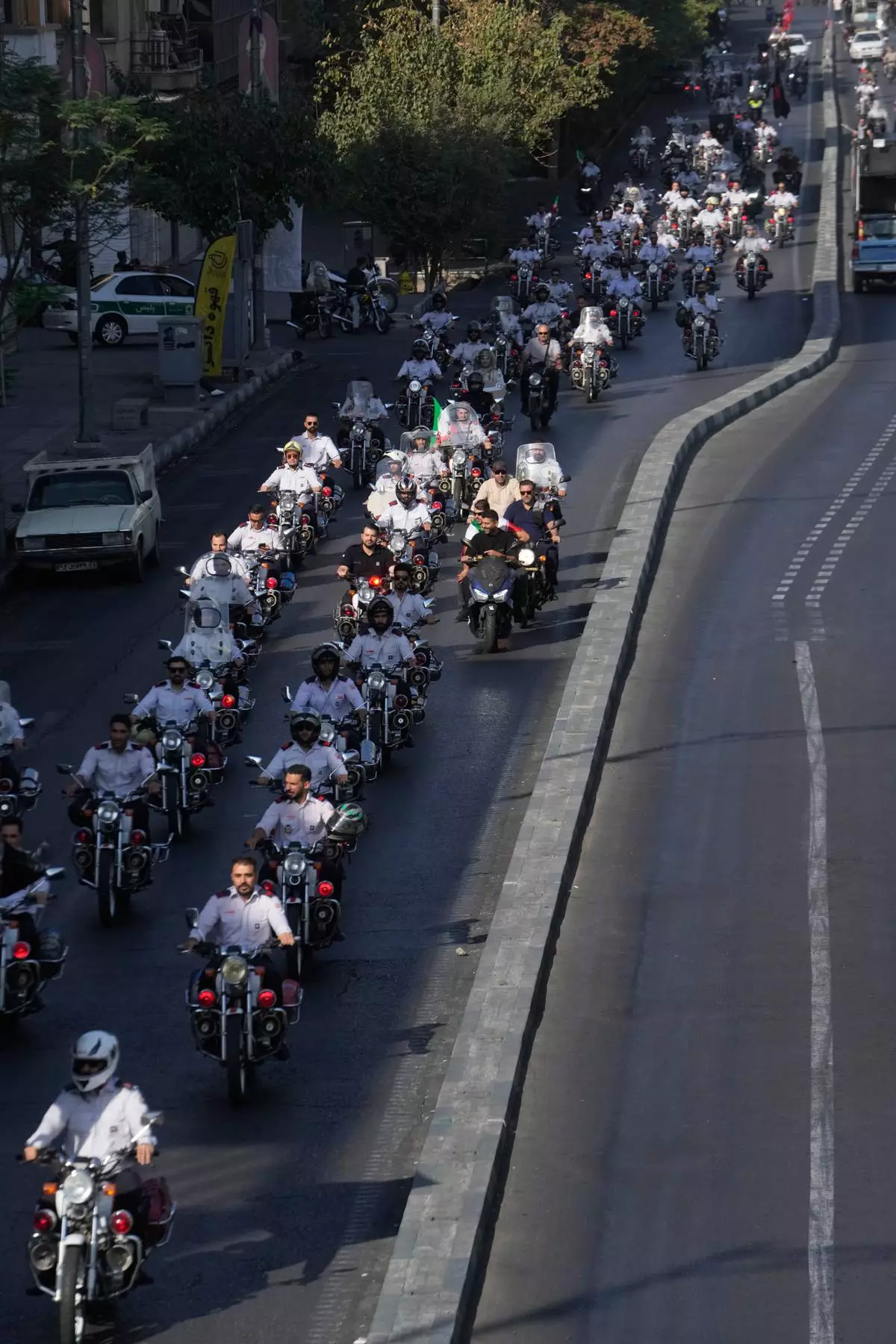
Firefighters ride motorcycles during a state-organized motorcycle parade called "Janfada," meaning "Sacrifice for Iran,", in Tehran, Iran, Friday, Sept. 25, 2026. (AP Photo/Vahid Salemi)
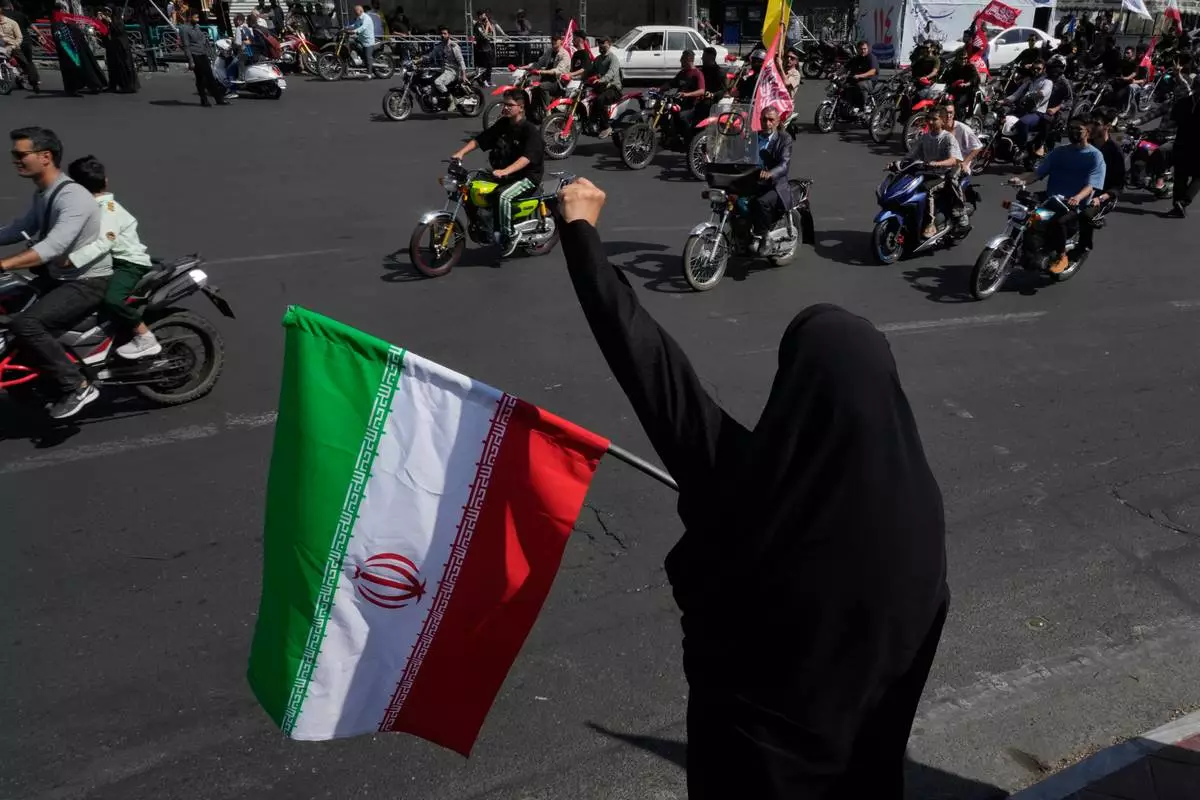
A woman chants slogan as she holds an Iranian flag while motorcyclists ride during a state-organized motorcycle parade called "Janfada," meaning "Sacrifice for Iran,", in Tehran, Iran, Friday, Sept. 25, 2026. (AP Photo/Vahid Salemi)
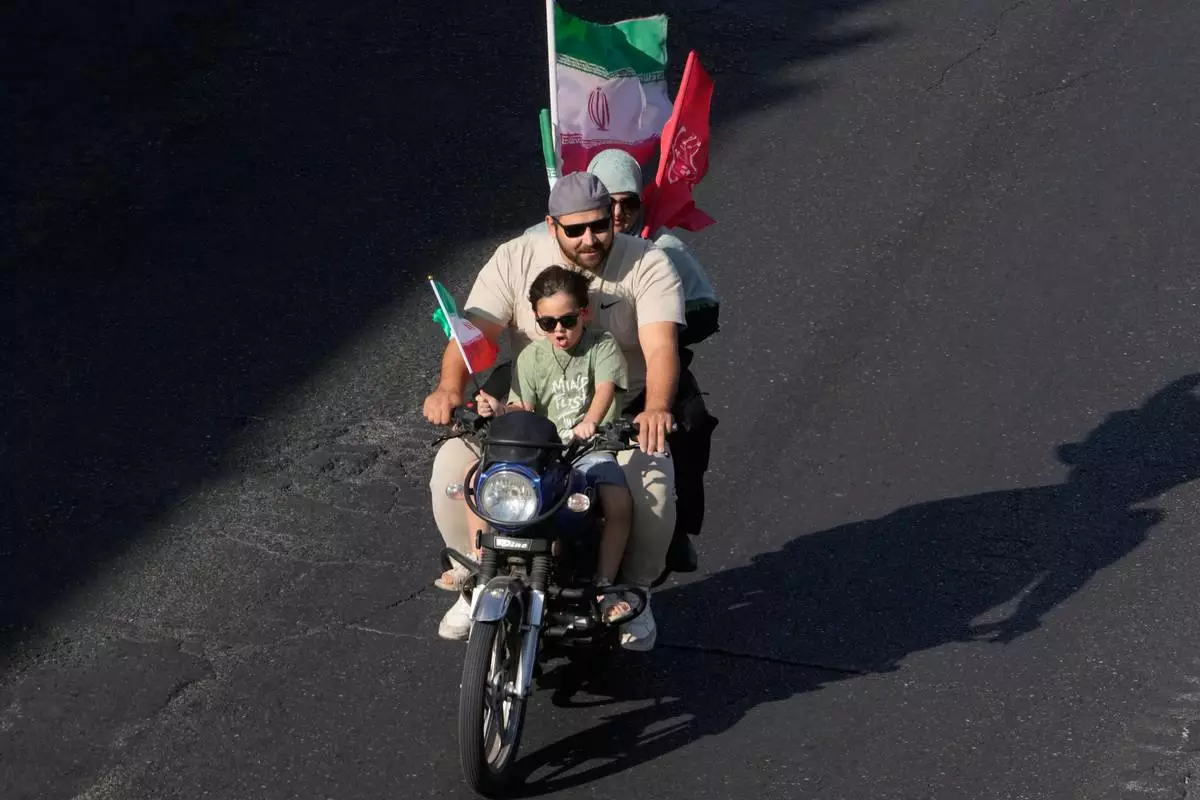
A family ride on a motorcycle during a state-organized motorcycle parade called "Janfada," meaning "Sacrifice for Iran,", in Tehran, Iran, Friday, Sept. 25, 2026. (AP Photo/Vahid Salemi)
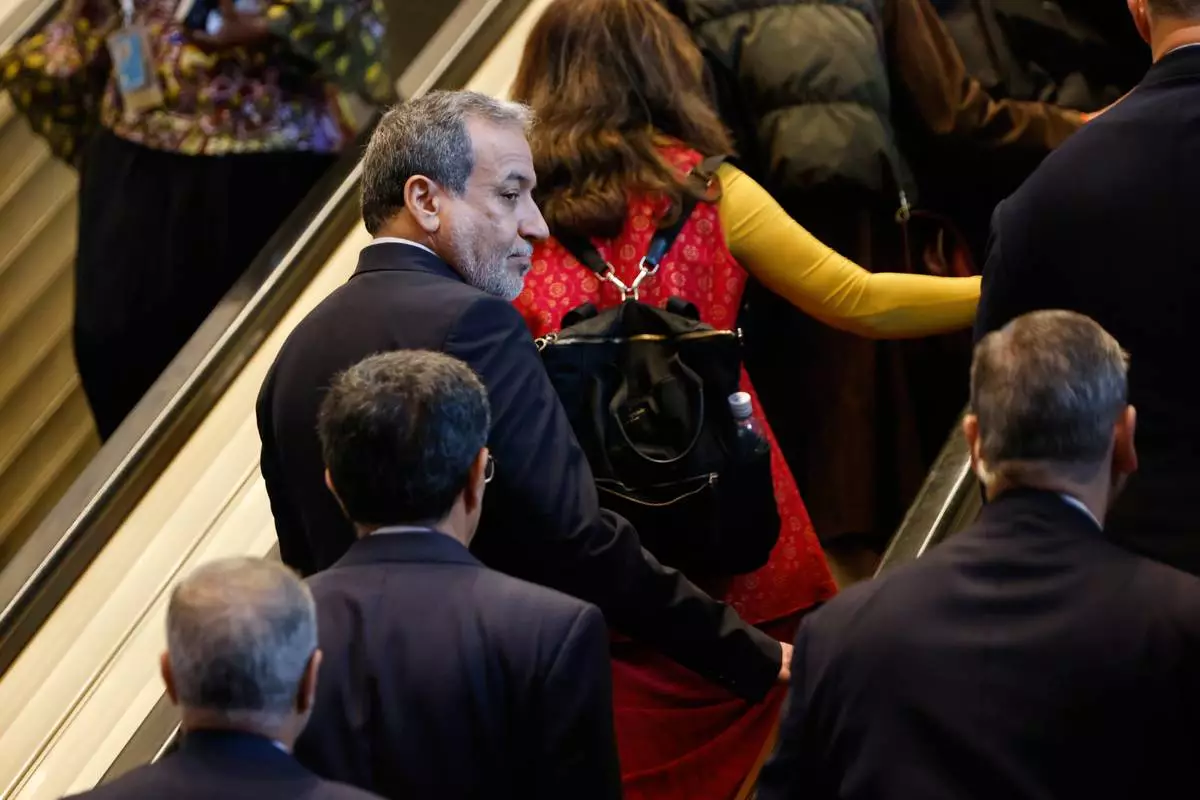
Iran's Foreign Minister Abbas Araghchi arrives ahead of the 81st session of the United Nations General Assembly at United Nations headquarters, Tuesday, Sept. 22, 2026. (AP Photo/Stefan Jeremiah)