A U.S. government-funded TV advertisement promoting President Donald Trump alongside common Republican political talking points aired for a third straight day Friday with expanded spending and reach, even as it received bipartisan criticism.
The ad’s cost has jumped from $14,000 to $430,000 as it runs on a variety of network TV channels in markets across the country, according to AdImpact, which tracks media spending. The actual amount spent could be significantly more, depending on whether networks classified the ad as a political ad.
The 30-second spot features clips of Trump talking about defeating communism interspersed with onscreen text promoting the “largest tax cuts in history," “reigniting American manufacturing” and a call to “defend law and order and police.” The ad's soundtrack includes a chorus singing “love me” repeatedly and ends with a message disclosing it was paid for by the U.S. government.
Politicians of both parties on Thursday questioned whether the ad was appropriate, since laws prohibit taxpayer funds from being used for “publicity or propaganda” and limit the partisan political activities of government employees. Republicans running to defend their majorities in Congress in November's midterm elections have created ads with similar messaging about communism, the economy and crime.
Additionally, another ad paid for by the U.S. government began airing Friday, though information about how much it cost was not immediately available. The ad was airing on Newsmax, with a spot on at least two programs, Carl Higbie Frontline and Greg Kelly Reports, according to AdImpact.
The ad, lasting a minute, includes scenic videos of Mount Rushmore at night with quotes and clips from Trump's Fourth of July weekend speech there honoring the country's 250th anniversary.
“We know that this is not an ending,” Trump says in the ad. “This is only the beginning of the golden age of America.”
Several House Democrats with senior committee roles on Thursday demanded that the first ad be taken off the air, calling it “the sort of government propaganda one might expect in North Korea.” North Carolina Sen. Thom Tillis, a Republican who is not running for reelection, called the ad “inappropriate” and likened it to something he would expect from the former right-wing Hungarian Prime Minister Viktor Orban.
The White House defended the ad and said it is “educational and unapologetically patriotic.” It didn’t answer an inquiry about what part of the government supplied the funds.
“These public service announcements are about reminding Americans to love their country and understand what makes it worth defending, at home, at our borders, and abroad,” the White House statement said.
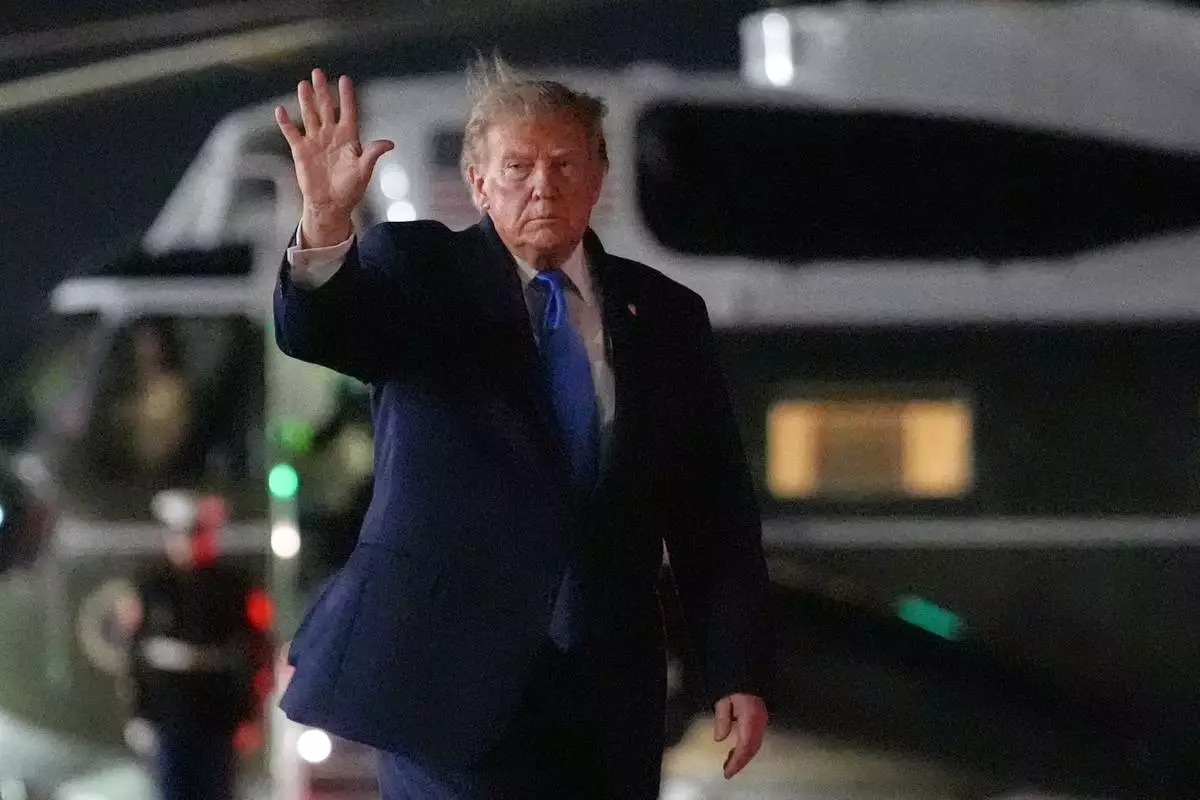
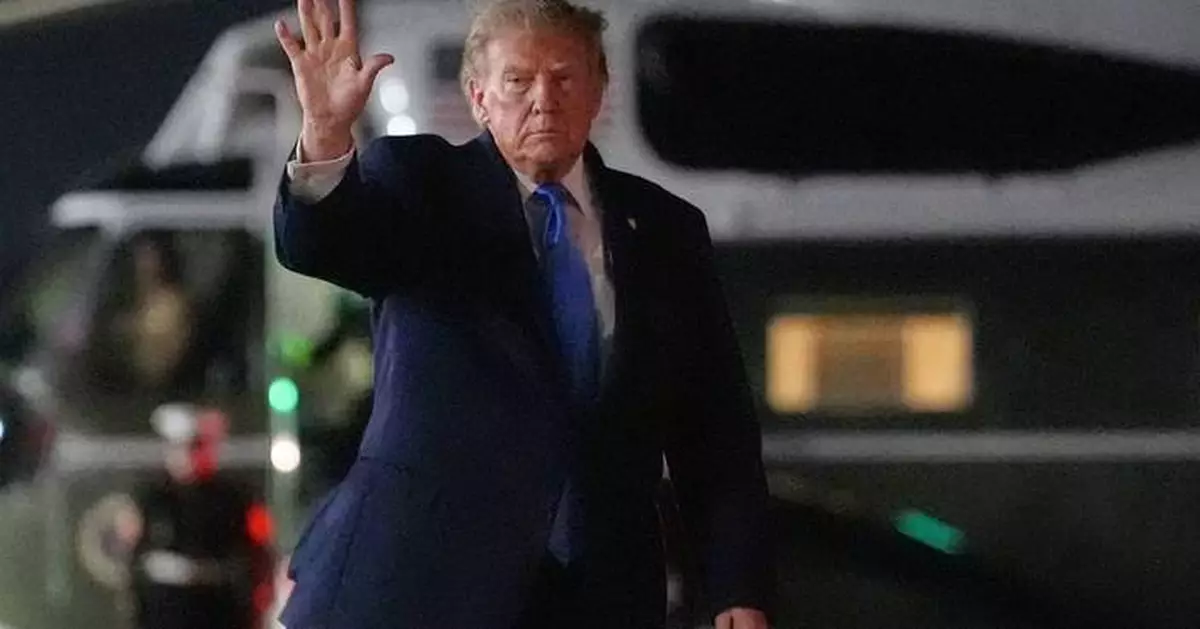
President Donald Trump walks from Marine One to board Air Force One at John F. Kennedy International Airport, Tuesday, Sept. 22, 2026, in New York. (AP Photo/Julia Demaree Nikhinson)
Full results released Friday from Russia's first wartime parliamentary election showed that the tightly orchestrated vote had further cemented the Kremlin's overwhelming political control of the country.
United Russia, the main Kremlin party, will get more than three-fourths of the seats in the State Duma, a record high, according to returns released by the Central Election Commission.
Virtually any genuine opposition parties or candidates were excluded from running in the Sept. 18-20 election. A massive state media campaign and tight control over the voting process allowed the Kremlin to strengthen its political dominance despite Russia's economic troubles and long-range Ukrainian drone attacks.
Nearly 60% of the 111 million eligible voters turned out in the three-day balloting, the most for a parliamentary election in more than a decade. Authorities had spread the voting over three days and allowed online voting in some regions to boost participation.
The parliamentary election was the first since President Vladimir Putin launched the full-scale invasion of Ukraine in 2022, and the first to include residents of four regions of that country that were seized and illegally annexed by Moscow later that year.
Voting also was held in Crimea, which was illegally annexed by Russia in 2014. Kyiv denounced the voting in those regions as illegal.
Russia didn’t invite election observers from the Organization for Security and Cooperation in Europe.
Election commission chief Ella Pamfilova said United Russia got 349 out of 450 seats in the State Duma, the lower chamber. It polled 58% of the ballot for the 225 seats apportioned by parties and also won 209 single-seat races that fill the other half of the chamber.
On Wednesday, Putin declared that the election results were a show of public support for his policies.
Several smaller parties representing the “systemic opposition” that vote in line with the Kremlin on all key issues won 97 seats, and the remaining four seats were filled by regional officials who ran without a party affiliation.
Pamfilova said 46 Ukraine war veterans were elected, including 41 from United Russia.
“The experience of our heroes is in demand; the voting results have clearly confirmed this,” Kremlin spokesman Dmitry Peskov said. “They will make a maximum contribution to the shaping of various initiatives.”
The liberal Yabloko party, the only registered political entity that dared to publicly criticize the war, was removed from the ballot last month by Russia’s Supreme Court. It only had a few dozen candidates in the single-seat races and none of them won a seat.
Ahead of the campaign, some anti-war politicians were imprisoned or forced to flee abroad.
As the election commission announced the full results, Russian media reports said independent political analyst Alexander Kynev, who closely followed the campaign, had been arrested on drug charges, which he denied. He could face from 10 to 20 years in prison if convicted.
Earlier this year, Kynev has been designated as “foreign agent” by the Justice Ministry, a label that carries strong pejorative connotations in the country and brings additional government scrutiny.
The election took place against the backdrop of incessant Ukrainian drone attacks. Officials said air defenses downed over 1,100 Ukrainian drones, including 450 drones heading for Moscow on the final day of voting in what Mayor Sergei Sobyanin described as “the largest ever” attack on the capital. The attack, which damaged an oil refinery and a residential building, killed three people and injured 38 in the wider Moscow region, officials said.
Pamfilova said six poll workers were killed in Ukrainian attacks and 75 polling stations were damaged or destroyed by shelling.
The first session of the newly elected lower house has been set for Wednesday. Russian media reports said its speaker, Vyacheslav Volodin, is expected to retain his position.
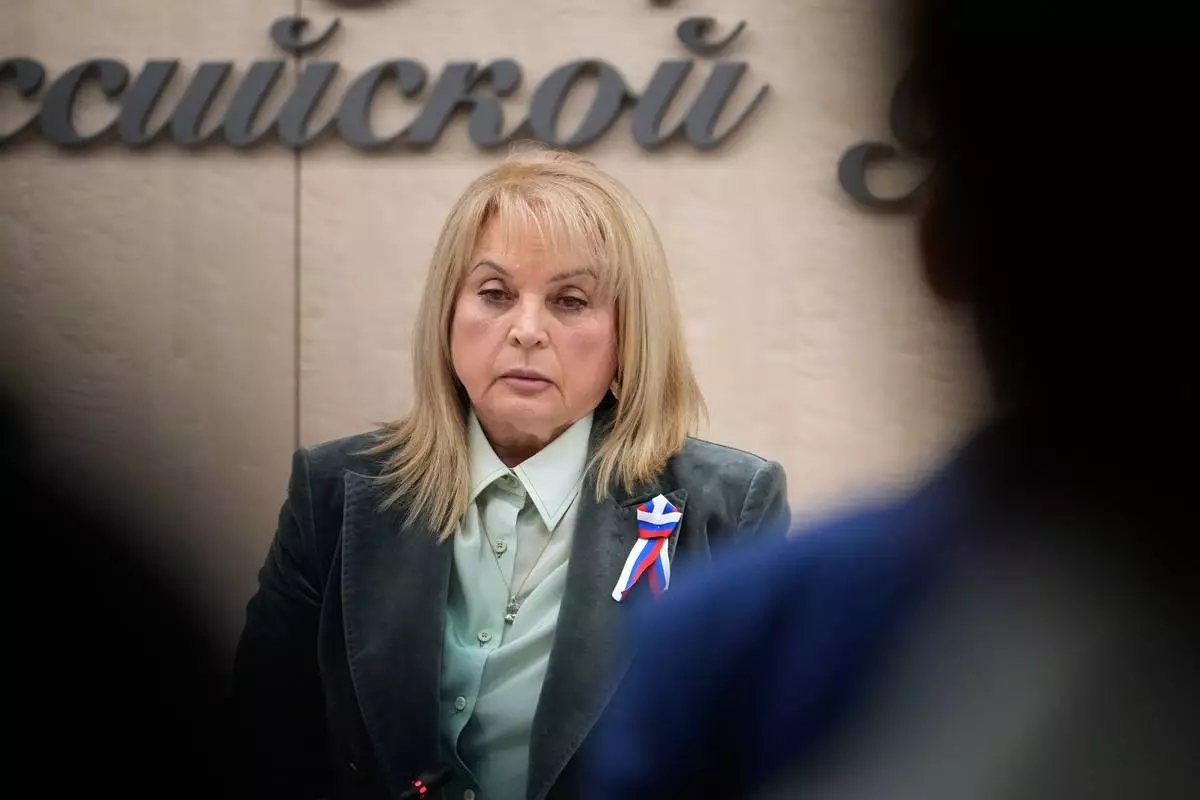
Ella Pamfilova, head of Russia's Central Election Commission, holds a moment of silence in memory of the deceased members of the electoral commissions, during reporting of the official results of Russia's parliamentary elections at the commission's meeting in Moscow, Russia, Friday, Sept. 25, 2026. (AP Photo/Alexander Zemlianichenko)
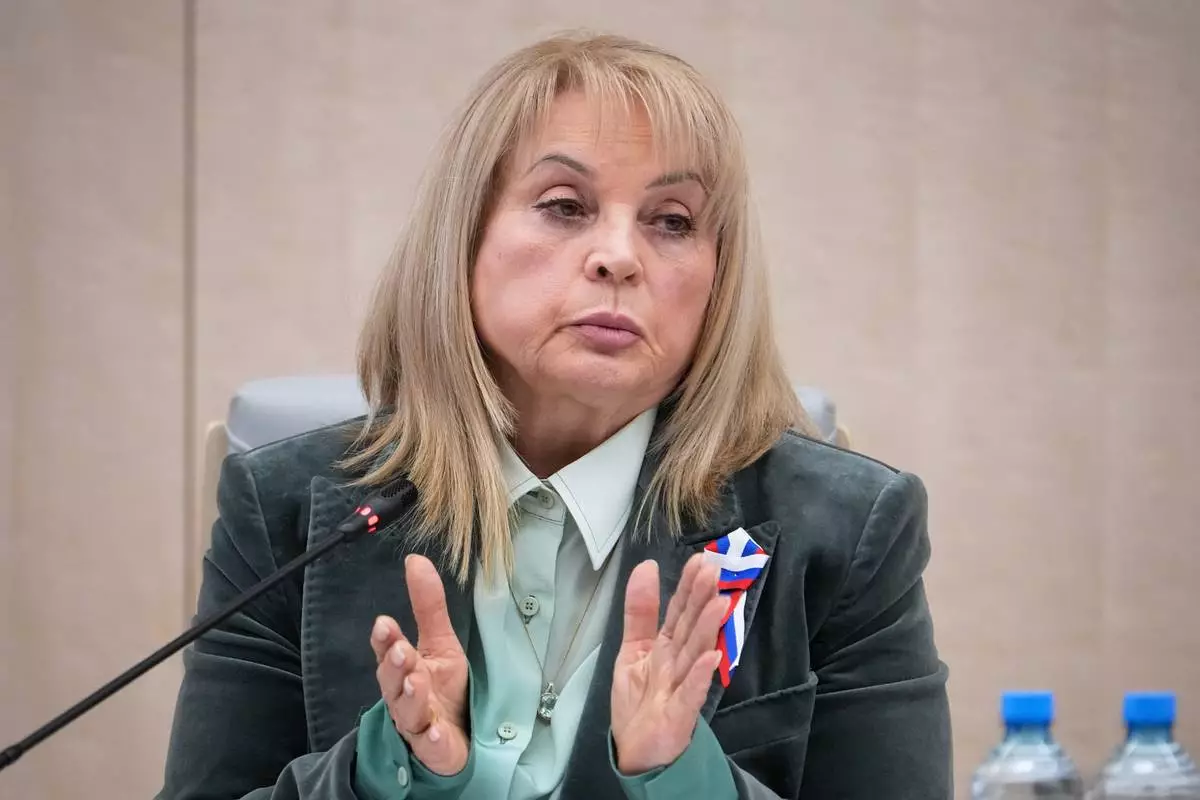
Ella Pamfilova, head of Russia's Central Election Commission, applauds after reporting the official results of Russia's parliamentary elections at the commission's meeting in Moscow, Russia, Friday, Sept. 25, 2026. (AP Photo/Alexander Zemlianichenko)
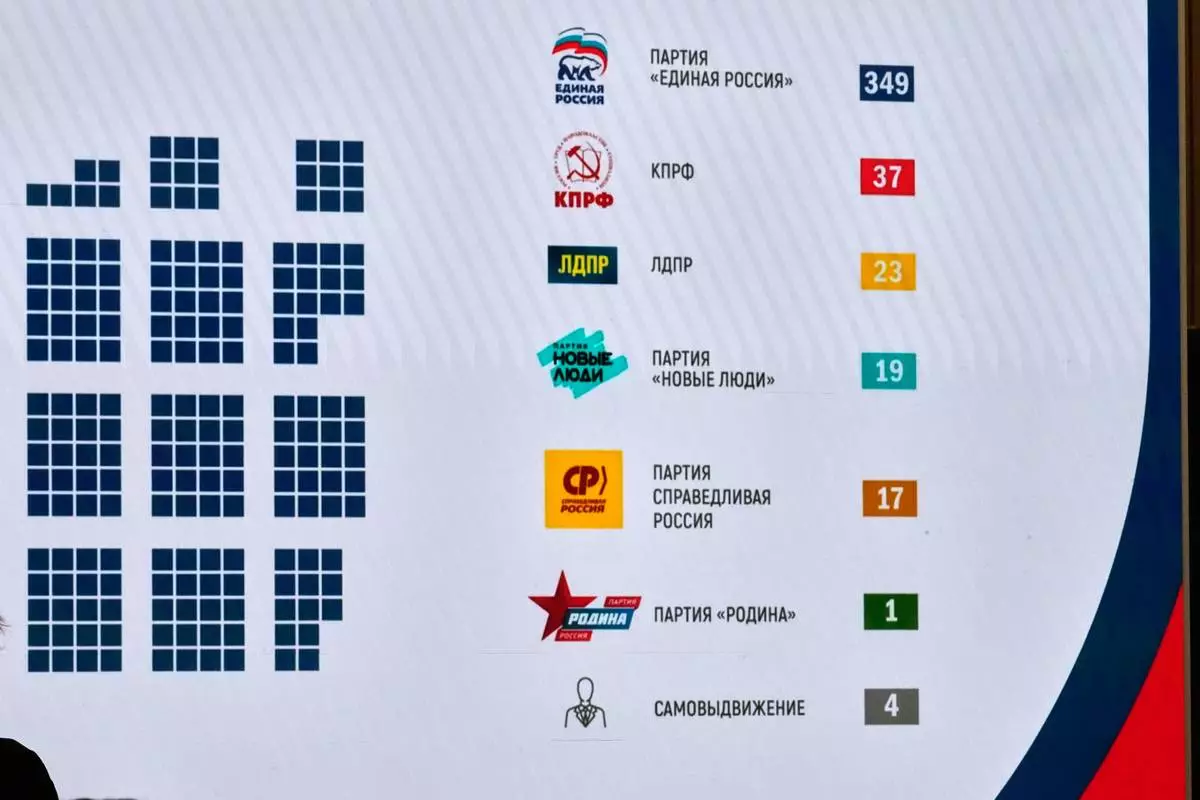
The official results of Russia's parliamentary elections are seen on the screen during the Central Election Commission meeting in Moscow, Russia, Friday, Sept. 25, 2026. (AP Photo/Alexander Zemlianichenko)
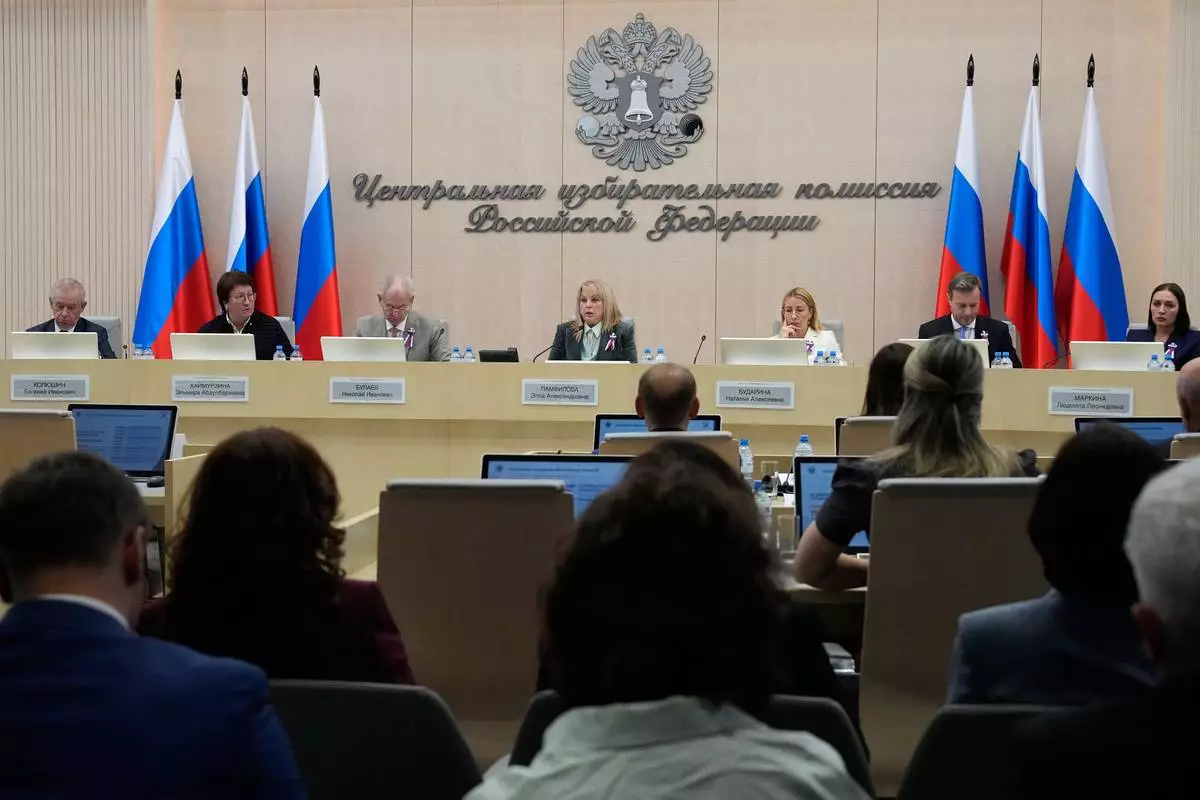
Ella Pamfilova, head of Russia's Central Election Commission, center, reports the official results of Russia's parliamentary elections at the commission's meeting in Moscow, Russia, Friday, Sept. 25, 2026. (AP Photo/Alexander Zemlianichenko)