NEW YORK (AP) — Longtime climate warrior Al Gore sees victory within Earth's grasp. But he worries that it could still slip through humanity's fingers.
“While we're in grave danger, but I think there is a possibility that 2026 will be looked back upon in the history books as the beginning of a positive tipping point,” Gore said in a sit down interview with The Associated Press during New York Climate Week. He sees a good chance the world is peaking its use of coal, oil and gas, which cause global warming, as solar and other renewable power is overtaking dirtier fossil fuels.
History makes the former U.S. vice president hopeful. He compared the effort to make a cleaner world to the U.S. civil rights movement, Nelson Mandela's anti-apartheid movement and women's equality efforts as “the other great morally based challenges that humanity has confronted in the past.
“And in all of those prior movements,” he said, "there were times when the advocates felt despair but they kept going because courage is not the absence of fear, it's the determination to go forward in spite of it."
Nature makes him nervous because Earth's warming is accelerating and with it extreme weather, such as heat waves and the deadly glacier collapse and flooding that killed 1,300 people in Nepal.
“I’m temperamentally optimistic, but the dangers are extremely grave, getting more so all the time,” said, Gore, often accused of being a doomsayer by nonscientist political opponents. “We’re seeing these extreme events come fast and furious. They’re worse as well as more frequent. ... It’s like a nature hike through the book of Revelation.”
“This is a close race between the unfathomable risk we are taking, the unacceptable damages we are enduring on one hand, and the incredibly exciting advance of all the clean, cheap, job-producing alternatives that people not under the sway of the fossil fuel industry are adopting in droves,” Gore said.
He ticked off factoids such as Africa installing 100,000 solar panels per day, that 91% of the new U.S. electricity generation was renewable and that 30% of all new car s sold globally this year will be electric. And, he said, in Pakistan the common dowry now includes three solar panels.
Who will win the race? “The answer is in our hands,” Gore said. “The last chapter of this story won’t come for a while, but I think we really are at a turning point."
Ten years ago, 55% of the world's investment was in fossil fuels and 45% in renewables. Now it's 65% renewables, Gore said. He said society changes when a new technology becomes cheaper than the old one, much like cellphones supplanting, then replacing landlines.
Three climate scientists basically agreed with Gore's assessments of both increasing dangers, but also still had an optimistic outlook.
"I agree with Al Gore that we have incredible progress on exponential rise in adoption and decline in price for renewable electric green solutions," said Johan Rockstrom, director of the Potsdam Institute for Climate Impacts Research in Germany. “But the dilemma, so far, is that they largely meet growing energy demand. We are not yet bending the curve on oil, gas and coal.”
Climate Analytics CEO Bill Hare of Australia said he's generally optimistic like Gore “about what we can achieve particularly with the rapid development of clean technology." But, he said, "I am the at the same time fearful that this is not fast enough and is being held back by the fossil fuel industry.”
Even though change isn't fast enough, the University of Pennsylvania's Michael Mann said Gore's tone is crucial: “Doomism, despair and disengagement is the greatest threat at this point. We must not fall victim to it.”
Gore is having none of that. At 78, he thinks he'll see meaningful bends in the carbon pollution curve in his lifetime. But even if it takes longer, that's OK, Gore said, paraphrasing the Jewish Talmud:
“You are not required to finish the work, but you are required to undertake it.”
The Associated Press’ climate and environmental coverage receives financial support from multiple private foundations. AP is solely responsible for all content. Find AP’s standards for working with philanthropies, a list of supporters and funded coverage areas at AP.org.
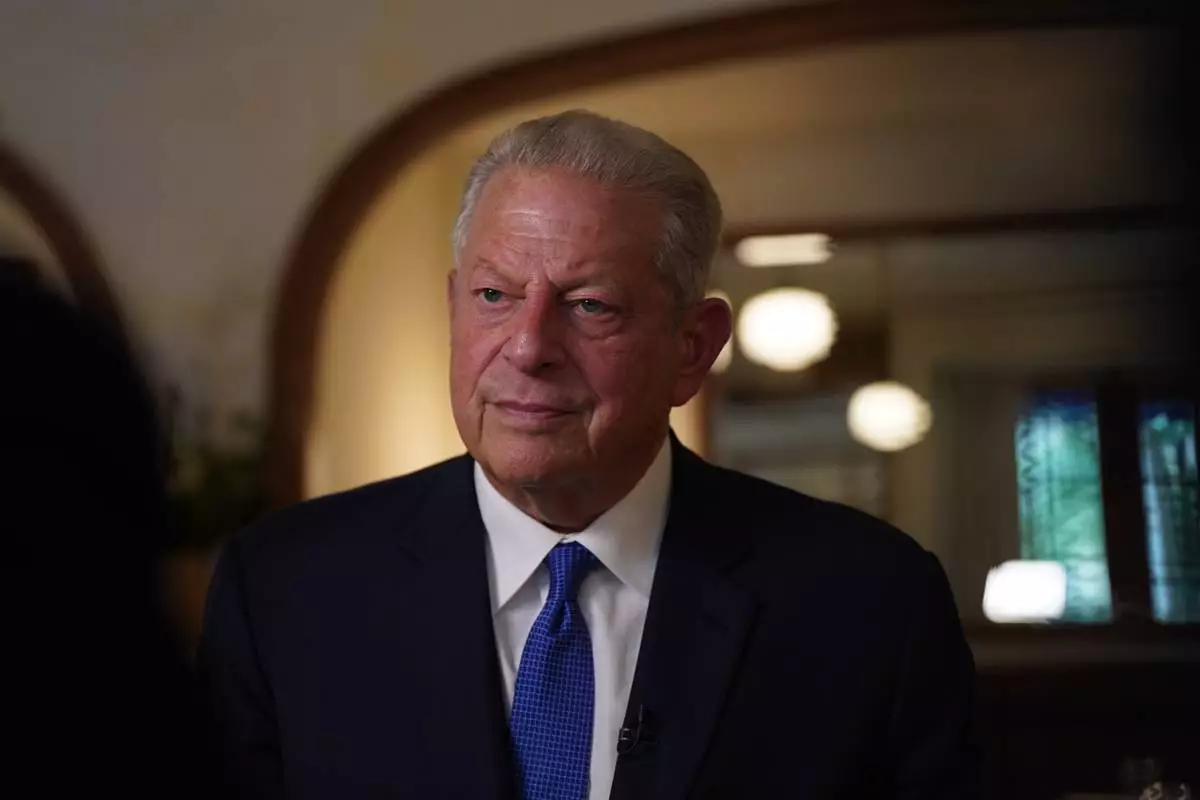
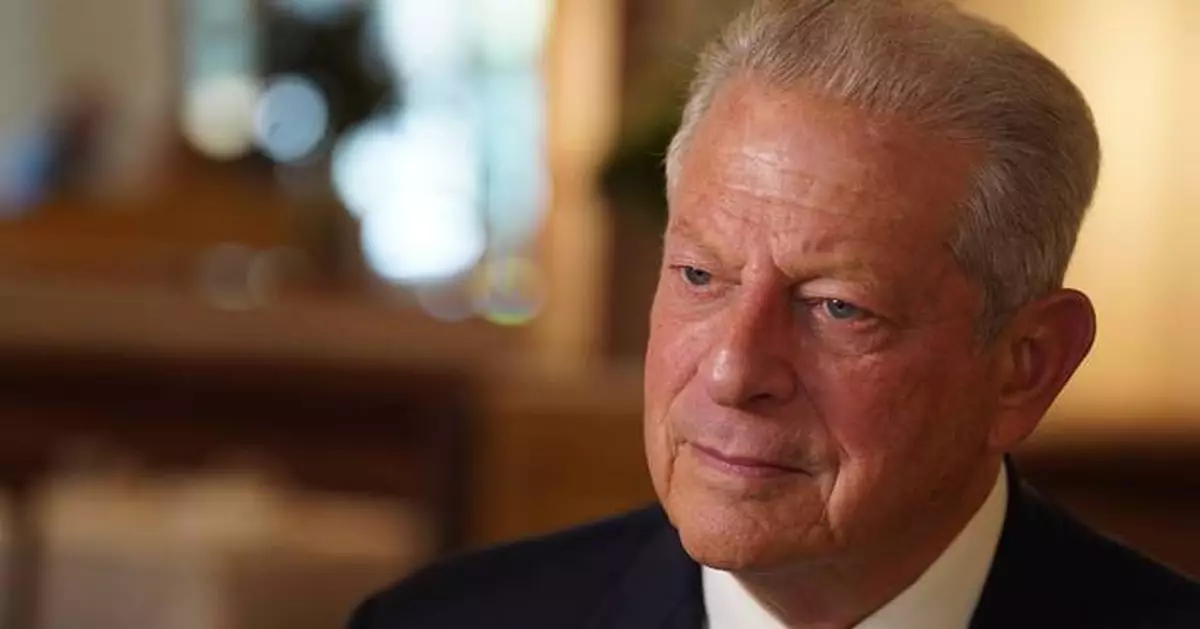
Former Vice President Al Gore listens during an interview in New York on Monday, Sept. 21, 2026. (AP Photo/Mary Conlon)
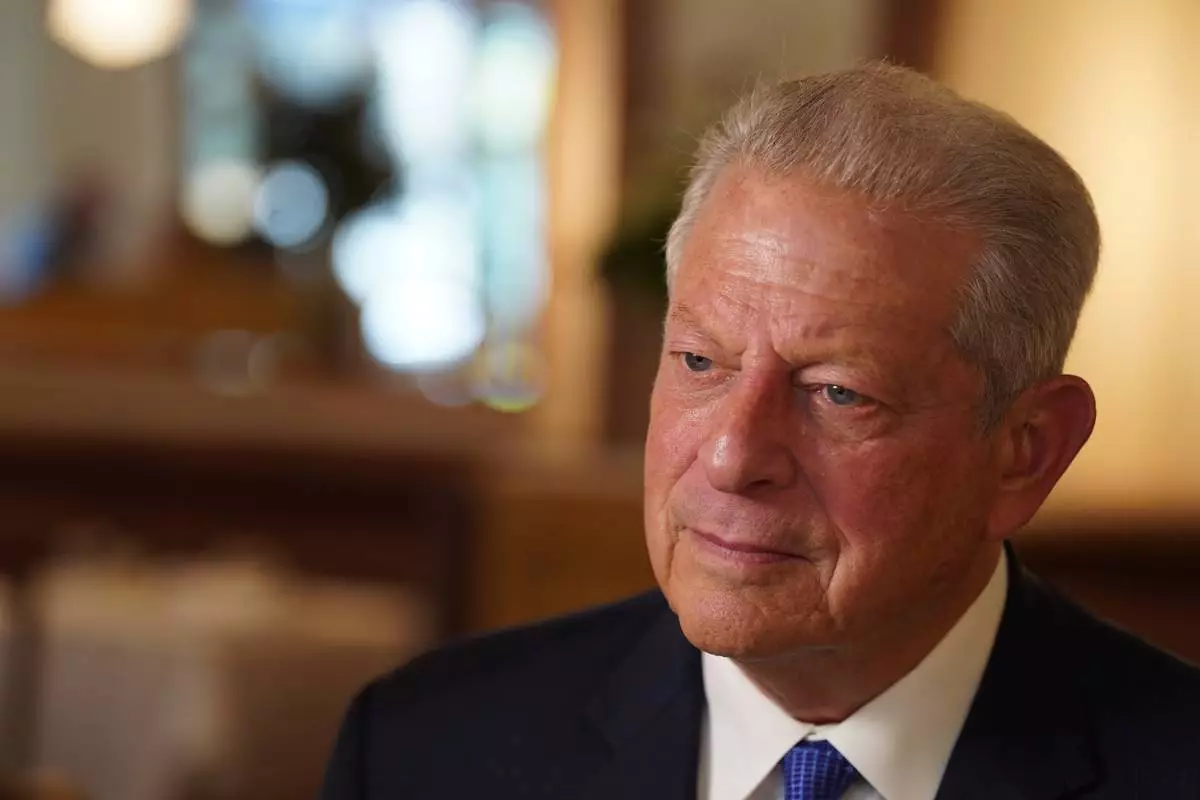
Former Vice President Al Gore listens during an interview in New York on Monday, Sept. 21, 2026. (AP Photo/Mary Conlon)
Word of an offer from Iran to reopen the Strait of Hormuz and resume talks on its nuclear program is emerging from the sidelines of the U.N. General Assembly. Meanwhile, Saudi Arabia’s top cleric issued a rare statement, calling on the kingdom’s troops to defend the country from neighboring Yemen’s Iran-backed Houthi rebels.
In New York, where the wars in Iran and Gaza have dominated the U.N. agenda, the leaders of Iraq, Lebanon and Egypt were scheduled to address world leaders later Friday.
Here is a look at the latest news from the Middle East. More coverage of the U.N. General Assembly is available here.
Iran would reopen the Strait of Hormuz and resume talks on its nuclear program in seven days if the U.S. lifts its naval blockade, waives oil sanctions and observes a ceasefire that includes Lebanon, under a proposal discussed by the Iranian foreign minister at a private gathering on the sidelines of the U.N. General Assembly.
Trita Parsi, executive vice president of the Quincy Institute think tank, who attended the event, said Foreign Minister Abbas Araghchi detailed the plan to those gathered Thursday. Iranian officials haven't commented.
The proposal resembles an agreement reached in June that later collapsed.
U.S. President Donald Trump has said he’s in no rush to reach a deal, though the White House said Friday that U.S. officials are having positive and constructive conversations with mediators. Still, on the Iranian side, some question whether hard-liners who dominate the security forces will accept compromises championed by relative moderates like President Masoud Pezeshkian.
With Saudi oil facilities, cities and ships off its coast coming under escalating attacks, the kingdom's top religious authority has called on soldiers to be prepared to defend the country from Iran-backed Houthis.
Grand Mufti Sheikh Saleh al-Fawzan, who traditionally avoids weighing in on politics in a country that holds enormous influence among Muslims worldwide, issued the strongly worded statement. Al-Fawzan addressed his message to soldiers defending the kingdom's borders and members of the Saudi-led coalition fighting the Houthis in Yemen, peppering it with Quranic verses and religious edicts.
“Protecting this great nation, guarding its borders, defending against aggression and punishing those who want to harm any inch of it is one of the greatest duties,” he said.
The head of Yemen's internationally recognized government, Rashad al-Alimi, likewise urged Yemenis to rally behind Saudi-backed armed forces and allied groups in their fight with the Houthis.
Al-Alimi, who chairs the country’s Presidential Leadership Council, also called on Yemenis fighting alongside the Houthis to defect, announcing a general amnesty.
In a statement approved by its 15 members, the U.N.’s most powerful body condemned Houthi attacks on Saudi Arabia and against commercial shipping in the Red Sea and the Bab el-Mandeb Strait.
The council called for “practical cooperation,” including with Yemen’s internationally recognized government, to prevent the Houthis from obtaining weapons, military material and training enabling them to carry out attacks.
It reminded all countries of their obligation to implement the U.N. arms embargo against the Houthis.
Israel’s military said two of its soldiers were killed in northern Gaza on Thursday while inspecting an unexploded Israeli drone near a military post. They were the first Israeli soldiers killed in Gaza in months.
Five other Israeli soldiers have been killed since last October’s ceasefire that attempted to halt a more than two-year war between Israel and the militant Hamas group.
While the heaviest fighting has subsided, almost daily Israeli fire has continued. Israeli forces have carried out repeated airstrikes and frequently fire on Palestinians near military-held zones and have killed 1,408 Palestinians, according to Gaza health officials.
The human toll of renewed hostilities in Yemen has stretched beyond the battlefield, overwhelming a health system already battered by years of war.
More than 130,000 people have fled their homes as fighting escalates between the Houthis and Saudi-backed government forces. Fewer than 10% of health centers in affected areas are equipped to provide the care that wounded people need, according to the World Health Organization. Years of war have left hospitals with little capacity.
UNICEF says at least 15 children have been killed and another 14 wounded in the past three weeks. The agency’s representative in Yemen, Akhil Iyer, said Friday the conflict is also causing more children to go hungry in Yemen, where at least 2.2 million children under five were already projected to suffer from acute malnutrition before the escalation of violence.
This report will be updated throughout the day as new developments emerge.

A young man holds a Saudi flag while standing through the sunroof of a vehicle during celebrations marking Saudi Arabia's 96th National Day in Riyadh, Saudi Arabia, Wednesday, Sept. 23, 2026. (AP Photo/Baraa Anwer)
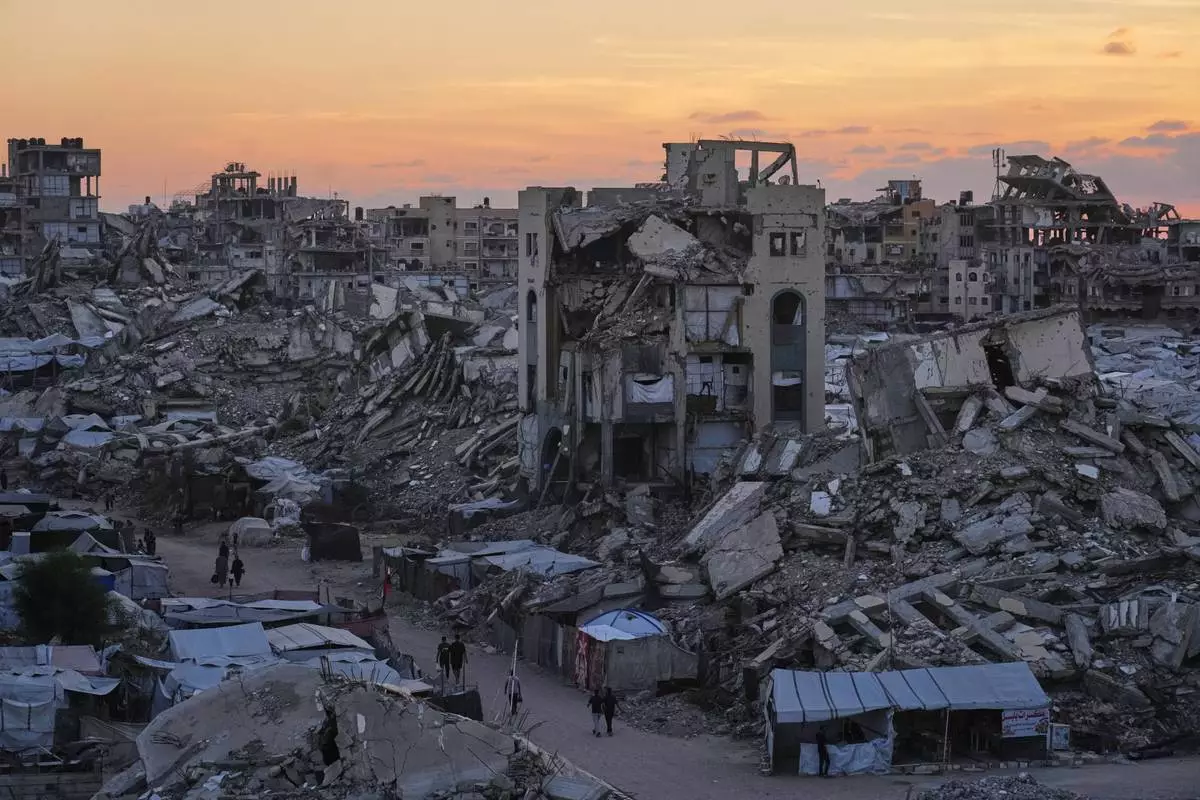
Palestinians walk amid war-damaged buildings in Gaza City, Wednesday, Sept. 23, 2026. (AP Photo/Jehad Alshrafi)

This image taken from undated video released by the Ansar Allah Media Office, the media arm of Yemen's Houthi rebels, on Tuesday, Sept. 22, 2026, shows, according to the group, Houthi fighters firing rifles during clashes with Saudi-backed forces at an undisclosed location in Yemen. (Ansar Allah Media Office via AP)

Men perform the traditional Saudi sword dance known as the ardah during celebrations marking Saudi Arabia's 96th National Day in Riyadh, Saudi Arabia, Wednesday, Sept. 23, 2026. (AP Photo/Baraa Anwer)