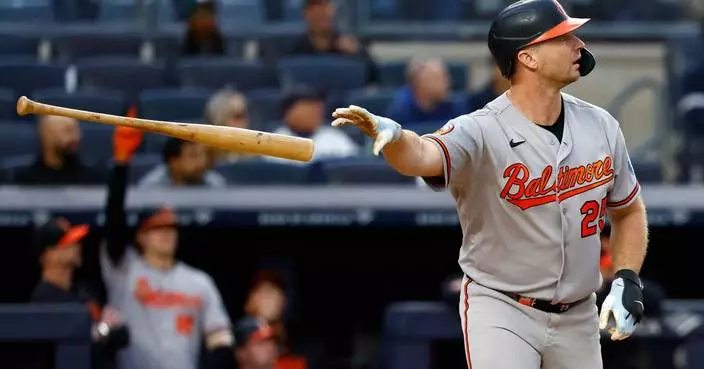
NEW YORK (AP) — Anthony Volpe made his first career big league appearance at third base for the New York Yankees in the opener of a doubleheader against the Baltimore Orioles on Friday.
Christian Encarnacion-Strand hit a drive off the third-base bag and over Volpe in the ninth inning of New York's 10-2 loss. That was the only ball hit toward Volpe.
“Not a lot of action over there but there's something to be said for being in there, thinking through the situations and moving and setting up how you're supposed to." manager Aaron Boone said.
Volpe started at shortstop for the first time since Aug. 1 in the second game and could appear at third again if the Yankees play on Sunday, when rain is forecast.
“We'll see,” Boone said. “He's worked a lot over there. He played a little bit down there in Triple-A so just because he didn't get a ball in the game, I just wanted him moving around so we have some options."
Volpe had started 11 games at second base since his recall from Triple-A Scranton/Wilkes Barre on Sept. 10.
During his last stint in Triple-A after rookie George Lombard Jr. replaced him as the Yankees shortstop, Volpe started three games at third. Volpe did not commit an error in three chances while batting 284 with 10 homers and 21 RBIs in 28 games.
Volpe was New York’s opening day shortstop for the 2023-25 seasons, then began this season on the injured list while recovering from offseason surgery to repair a torn labrum in his left shoulder. After his 20-day minor league rehab assignment ended May 3, Volpe was optioned to Triple-A and returned to the Yankees 10 days later when José Caballero fractured his right middle finger.
Volpe. 25, hit a grand slam and drove in a career-high five runs in a memorable return to the big leagues Sept. 10. He is hitting .241 with two homers and 26 RBIs in 68 games this year.
Attempting to return from injuries to calf muscles in both legs, Giancarlo Stanton took on-field batting practice against a minor league pitching and Ryan Weathers, who hopes to come off the injured list for the postseason.
Stanton saw 20 pitches in four at-bats along with Trent Grisham, sidelined since straining his right hamstring Sept. 4. Stanton struck out three times against a minor league pitcher and struck out against Weathers, who is recovering from a strained right forearm.
Stanton hit on the field at Yankee Stadium for the second straight day. He took swings for about 40 minutes against a high-velocity pitching machine on Thursday.
Stanton hasn’t played since April 24 because of strained calf muscles in both legs after starting the season with a .256 batting average, three homers and 14 RBIs in 24 games. If the right-handed-hitting Stanton is on New York’s roster for the best-of-three World Card Series that starts Tuesday, he likely would be a possible pinch hitter.
“A lot of that comes down to how many position players, we go with,” Boone said. “So those will kind of be kind those conversations that happen in earnest the next couple of days. We’ll talk to G, see where he’s at mentally, physically and all that and then we’ll do the best we can to make the right decision.”
Weathers may be an option for the postseason bullpen. He was 5-8 with a 3.60 ERA in 25 starts before feeling pain forearm pain on Aug. 22 against Toronto.
“I think postseason, for sure," Boone said. “Whether it’s the first round or not, that will be the conversations we have in the next day or two.”
Boone said the Yankees may not decide on their 26-man Wild Card Series roster until Monday night. The roster must be submitted to Major League Baseball by 10 a.m. Tuesday.
Right-hander Fernando Cruz was transferred to the 60-day injured list and is done for the season
Cruz hasn’t pitched in a game since Aug. 25 because of right elbow discomfort caused by a partially torn ulnar collateral ligament.
Cruz opted against Tommy John surgery on his elbow and said Tuesday, he was in a good position to return in the next couple of weeks.
See AP’s full MLB coverage here
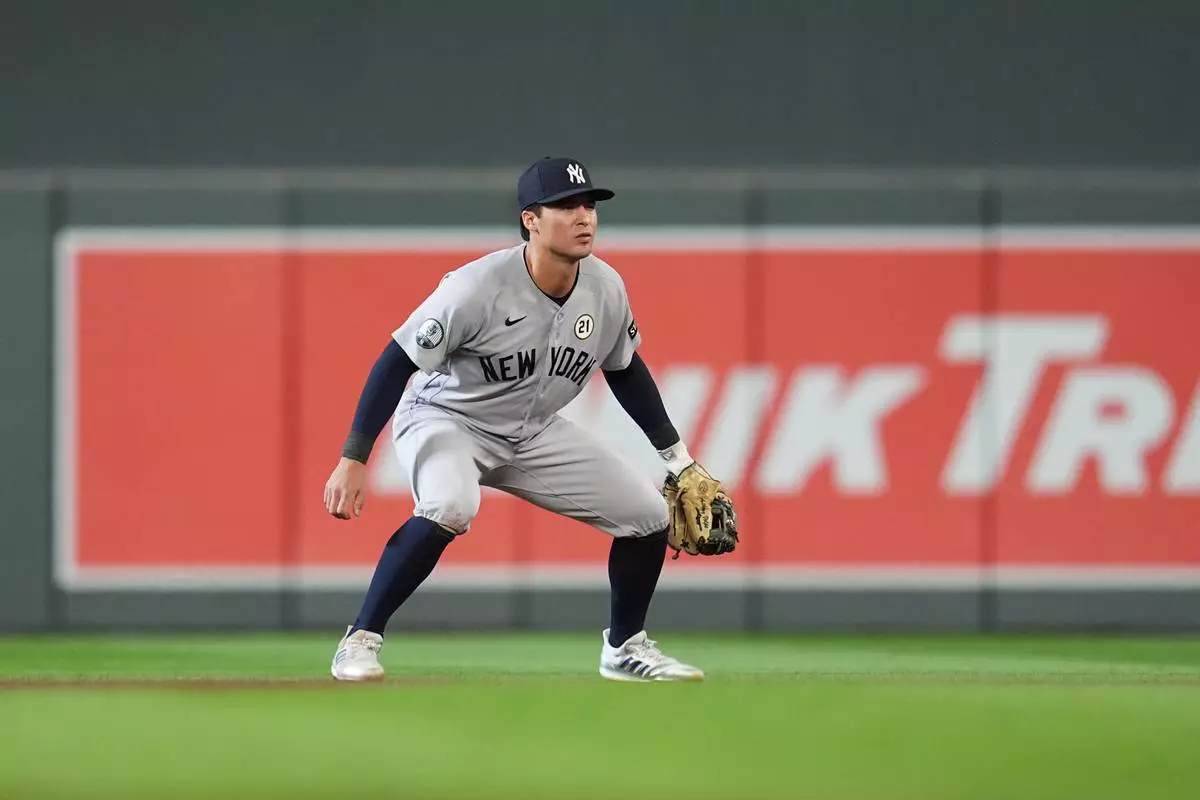
New York Yankees second baseman Anthony Volpe lines up for play during the fifth inning of a baseball game against the Minnesota Twins Tuesday, Sept. 15, 2026, in Minneapolis. (AP Photo/Abbie Parr)
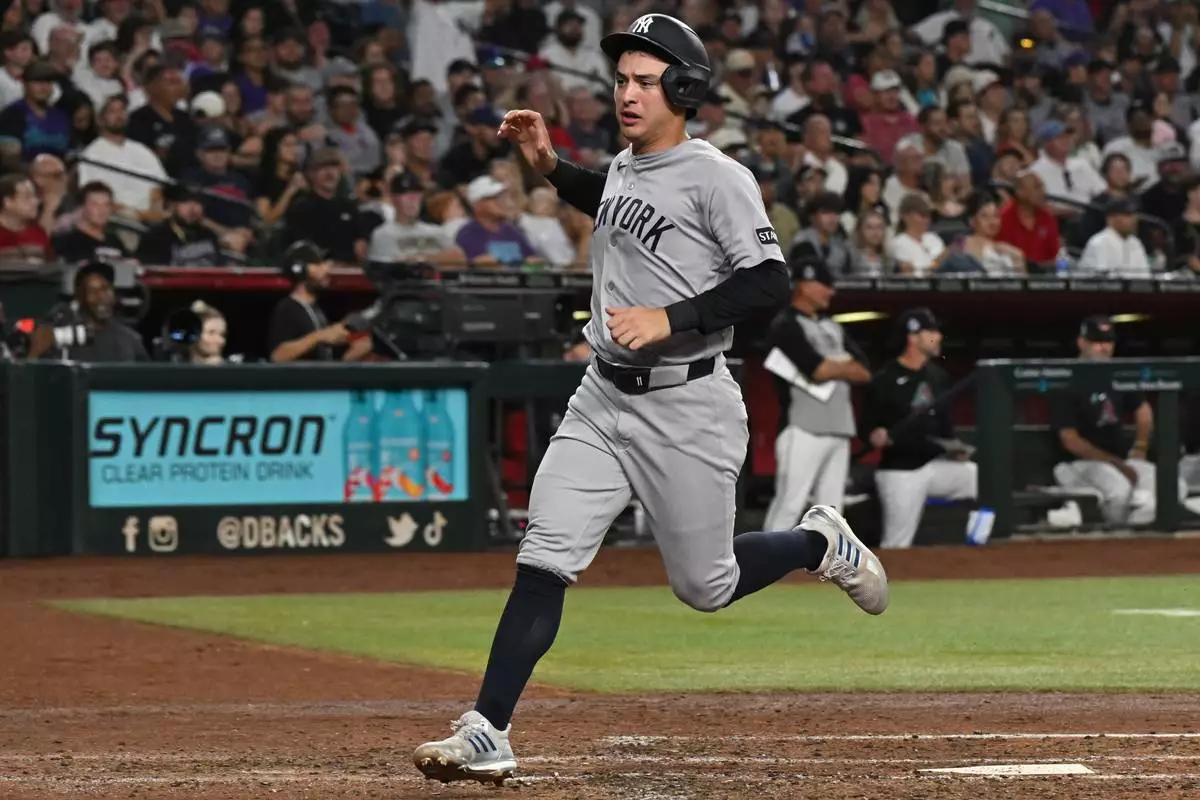
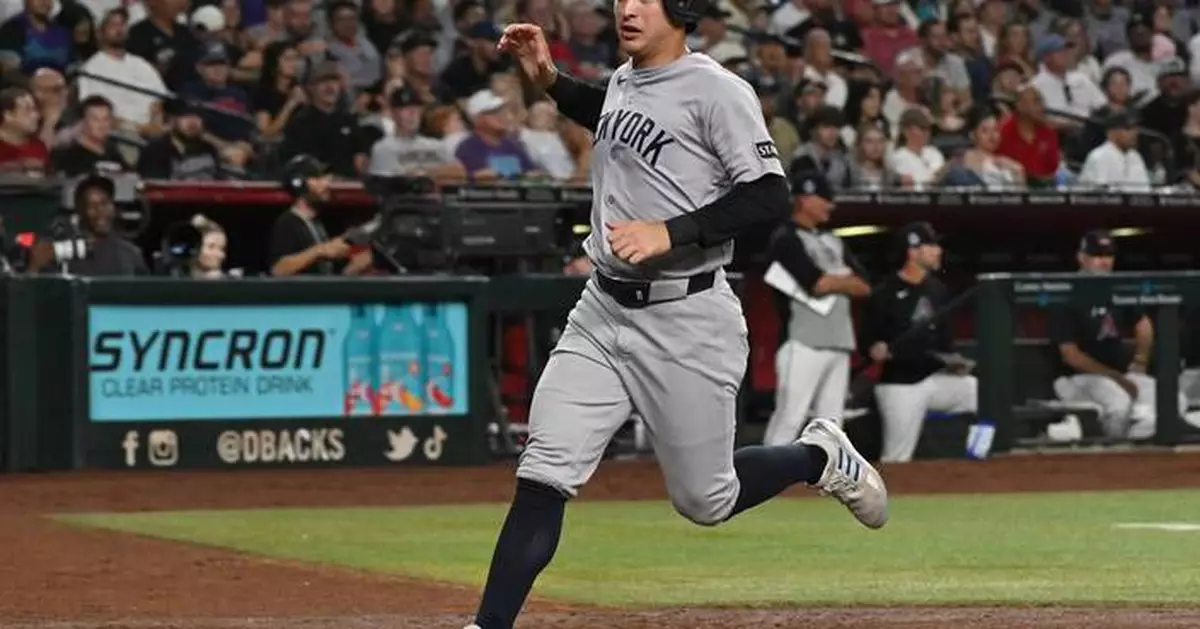
New York Yankees Anthony Volpe scores during the fifth inning of a baseball game against the Arizona Diamondbacks, Saturday, Sept. 19, 2026, in Phoenix. (AP Photo/Caitlin O'Hara)
NEW YORK (AP) — The Supreme Court on Friday lifted restrictions on a controversial federal voter database before November’s elections, granting President Donald Trump a temporary win in his aggressive campaign against noncitizen voting.
The court's three liberal-leaning justices publicly dissented from the decision.
The emergency order allows states, for now, to use the Trump administration's revamped version of a Department of Homeland Security program, called Systematic Alien Verification for Entitlements, or SAVE, in their efforts to verify the eligibility of voters on their rolls. It's a program that has drawn scrutiny for its use of voters' sensitive personal data and its tendency to wrongly flag some eligible voters as noncitizens.
States' use of the SAVE program is voluntary, limiting the ruling's impact on the midterm elections. Existing law also blocks most states from systematically purging voters from their rolls within 90 days of an election, said David Becker, an election law expert who leads the Center for Election Innovation and Research. He said DHS itself has admitted the data is not perfect.
Maine Secretary of State Shenna Bellows, a Democrat who has refused to participate in the SAVE program, said the ruling will have no effect in her state because it “does not force states to change the way we run our elections.”
The plaintiffs and their lawyers in the case called the ruling “profoundly disappointing” and said it puts “millions of Americans at risk of being unlawfully targeted by the administration’s unreliable voter purge database” before the midterms.
On X, James Percival, the general counsel for DHS, responded to a post about the decision with, “Yes, you read that right. We had to file an emergency petition in the Supreme Court just so we could use government data to help states stop noncitizens from illegally voting.”
The White House did not immediately respond to a message seeking comment.
The court’s order puts on hold a federal judge’s June ruling that had deemed the Republican administration’s recently revamped version of SAVE illegal. U.S. District Court Judge Sparkle L. Sooknanan had blocked the use of the tool, saying it violated Americans’ privacy rights and could result in voters being wrongly removed from the rolls.
A federal appeals court let her order stand.
But the Supreme Court majority found that a 1996 law explicitly allows DHS to obtain information on citizenship and immigration from other federal agencies. The federal government also has “an obligation to respond” to states seeking to verify citizenship.
“The order below prevents the Federal Government from using the program it believes is best suited to the task,” the majority wrote in the unsigned order.
Justice Ketanji Brown Jackson dissented, joined by Justices Elena Kagan and Sonia Sotomayor. The database has long been seen to fall under federal privacy laws, she wrote, and there are real risks that legitimate voter registrations could be mistakenly revoked.
“The harm caused by burdening or disenfranchising even a few lawful voters outweighs the nonexistent harm that the Government experiences when it is prevented from taking an action that it likely lacks the authority to take,” Jackson wrote.
The plaintiffs pledged to do “everything in our power” to ensure the district court decision stands.
The SAVE program was created under an immigration law mandating that DHS help federal, state and local agencies prevent government benefits from going to noncitizens. The Trump administration last year moved to significantly expand its search abilities. Since then, at least 67 million registrations have been scanned through the program, but critics worry it could purge valid voters from the rolls.
Some registrants have already been wrongly flagged. In Travis County, Texas, for example, officials said they investigated 97 voters flagged by SAVE as apparent noncitizens and found that at least 10% of them — and likely up to 21% — were U.S. citizens. The county urged the Supreme Court to reject the administration’s appeal, while the state of Texas submitted its own brief defending the database.
In Denton, Texas, north of Dallas, voter Anthony Nels was disappointed that the Supreme Court allowed the continued use “of a system that harms people’s constitutional right to vote.”
Last year, after Texas ran its voter registrations through the SAVE system, Nels, 29, was flagged as a potential noncitizen, even though the South Africa native had become a U.S. citizen more than a decade ago. His local election office temporarily canceled his registration while he obtained a new passport to replace an expired one.
“This just seems like another illegitimate way to affect upcoming and future elections,” he said in a text to The Associated Press.
Stephen Richer, the Republican former top election official in Arizona's largest county, said the Supreme Court's ruling could be a positive step “if used responsibly.”
“That being said, the SAVE program has been shown time after time to be a highly-imperfect tool, so election administrators should only use it as a starting point, not as a definitive indicator of citizenship,” he wrote on social media.
Even though the use of the SAVE program was blocked for months ahead of Friday's ruling, the administration has said in court filings that it has continued using Social Security Administration data "in certain cases to verify information and help determine whether illegal voting may have occurred."
DHS in August launched its own investigation to find noncitizen voters on state rolls, according to a federal whistleblower statement that said the effort is rushed, filled with errors and potentially violates state laws. DHS has defended that investigation as being conducted “diligently and professionally.”
Homeland Security Secretary Markwayne Mullin also suggested over the summer that there could be as many as 250,000 noncitizens registered to vote across four states, an unsubstantiated claim that puzzled state election officials who said the numbers dramatically exceeded their own findings. In one of those, Nevada, DHS said it had identified 185 noncitizens on the voter rolls, but the state attorney general's office wrote to the agency earlier this week, saying a records check found that all of them were, in fact, U.S. citizens.
The effort to create a national voter list is one of the many steps Trump has taken during his second term to try to overhaul how elections are run. Most of those steps have been blocked by various courts, in part because the Constitution gives states and Congress the authority to set election rules, but provides no such power to the president. In mid-September, the Supreme Court rejected Trump’s bid from Trump to restrict mail ballot procedures before the midterms.
Trump has remained fixated on the idea that massive numbers of noncitizens are voting in U.S. races, but all evidence says otherwise.
Ahead of the 2024 presidential election, Georgia’s secretary of state found that 20 of the state’s 8.2 million registered voters were not U.S. citizens. In Ohio, prosecutors secured indictments against nine people for voting as noncitizens over the span of 10 years. The state has some 8 million registered voters. Even with the Trump administration laser-focused on the issue in his second term, DHS said its investigations into potential noncitizens on voter rolls nationwide had led to 160 arrests.
Those numbers are supported by a mountain of research at the national and state level that has found the percentage of noncitizens on voter rolls is a tiny fraction of the nation's nearly 228 million registered voters.
Hanna reported from Topeka, Kansas, and Whitehurst reported from Washington. Associated Press writer Jessica Hill in Las Vegas also contributed.
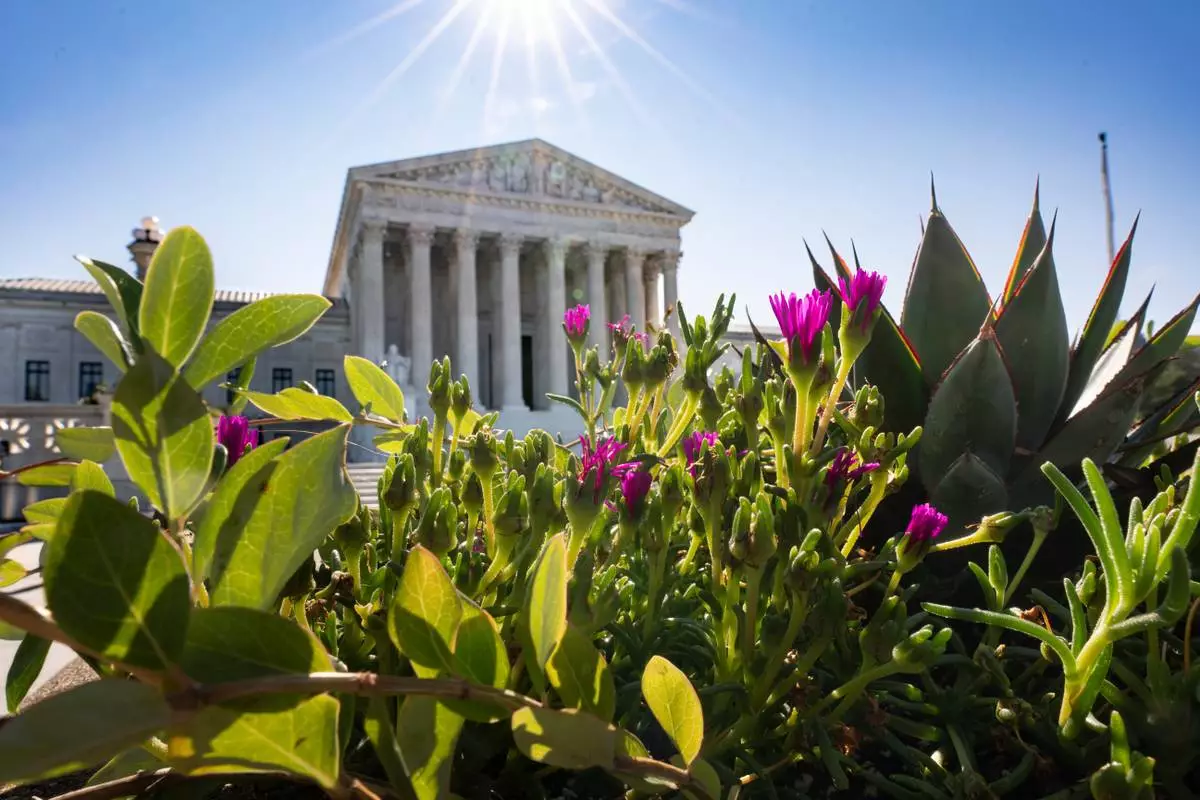
FILE - The Supreme Court is seen on Capitol Hill in Washington, Aug. 25, 2026. (AP Photo/J. Scott Applewhite, file)