John Easterbrook, grandson of late U.S. General Joseph Stilwell, said remembering and undersading the wartime ties like the one his grandfather developed can anchor mutual U.S.-China friendships today.
Speaking in an interview with China Global Television Network (CGTN) aired Friday, Easterbrook reflected on his grandfather's historical contributions and the broader impact of U.S.-China wartime cooperation.
His remarks came as Chinese President Xi Jinping paid a three-day state visit to the United States at the invitation of U.S. President Donald Trump. The trip follows Trump's state visit to China in May, the first by a U.S. president in nearly nine years.
At the welcome banquet hosted by Trump, Xi recalled how the Chinese and American people fought side-by-side against Fascist aggression more than 80 years ago.
During World War II, Stilwell was serving in the China-Burma-India Theater, supporting China's resistance against Japanese aggression.
"Stilwell was in the CBI Theater to fight the Japanese. He wanted to provide American assistance to anyone who would fight the enemy. Efforts to do this led to the Dixie Mission of American observers sent to Yan'an. Through reports from this group, Stilwell knew that the Red Army was indeed fighting the Japanese. This led to a long-distance friendship developing between Stilwell and Marshal Zhu De. The shared wartime experiences certainly resulted in friendships of long ago. And indeed, remembering and understanding them are a foundation for mutual friendships of today," said Easterbrook.
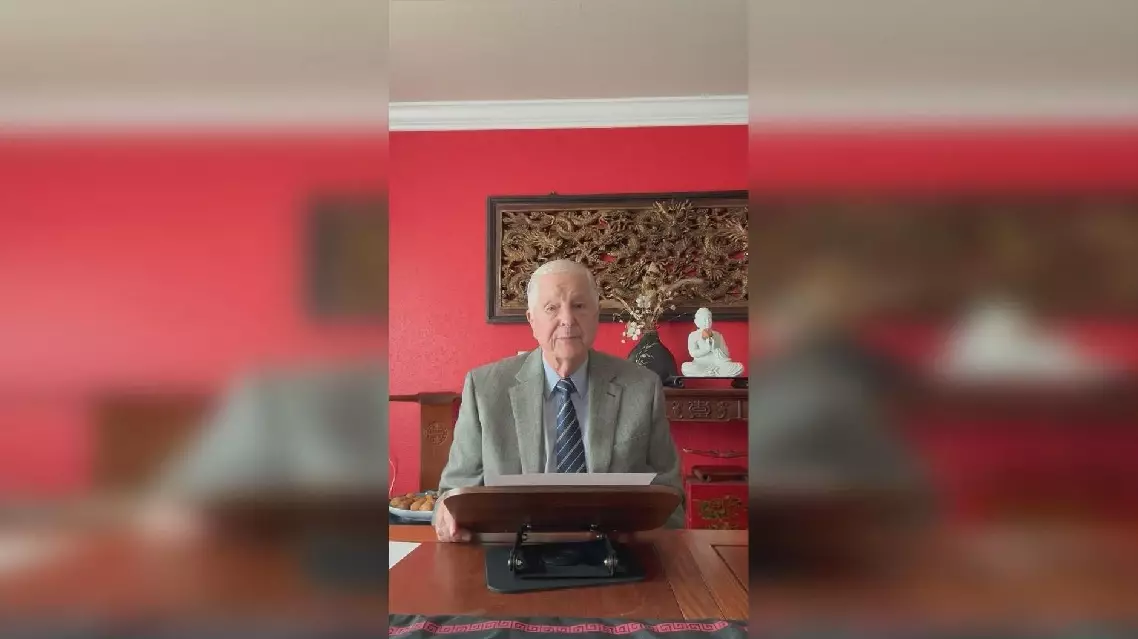
Remembering and understanding wartime ties foundation for China-US friendship: Stilwell's grandson
Head-of-state diplomacy between China and the U.S. provides a vital foundation for stable, long-term business ties, according to Sean Stein, president of the U.S.-China Business Council (USCBC).
His remarks follow the conclusion of Chinese President Xi Jinping’s three-day state visit to the United States on Friday. The summit builds on momentum established earlier this year in Beijing, where Xi and U.S. President Donald Trump agreed to foster "constructive strategic stability" over the coming years.
Speaking in an interview with China Media Group, Stein pointed to that ongoing diplomatic framework as a game-changer for international business cooperation.
"I think when the two presidents met in May, there are a couple of things that were important. The first is the two sides embraced constructive strategic stability as the basis of the relationship. And that was a really needed to let business happen, to let people to people happen. So that set a floor under the relationship and something to work for. So that was really important. The second thing is that from our view, President Trump brought a bunch of U.S. CEOs and said, hey, we want them to be more successful, want them to do more business with China. So please help open your door to American business,” said Stein.
"And that was important, in my view, more for the U.S. side than the Chinese side because we've been in an environment where some people in Congress, for example, will say, oh, American companies, why are you sending your CEO to China? Or American companies, why are you continuing to year after year? Why do you keep investing in China? Why do you keep growing in China? And this is a way of saying because not only is it good for us, but even the U.S. president takes us to China to say we should be doing more business and developing more relationships in China. So as important as that was on the Chinese side, I think what's missed is how important it was on the U.S. side to send a message that the U.S. wants to do business with China," Stein added.
Beyond the immediate signal sent by the CEO delegation, Stein reflected on the concept of constructive strategic stability and what it means for long-term business planning.
"I hope that it's not just three years. I hope that it's beyond. I think that this is a really good model for how the two countries should think about this relationship. I worry that the two sides haven't fully agreed on the same definition. So I think the two sides have got more discussion to do, but from the business community, we are strong proponents of a constructive, strategically stable relationship because that's where the two countries really get benefit from trade, from exchange, from investment. An investment decision isn't a decision for one year or two years, it's a decision for 20 years or more. But that's not just American companies investing in China, that's Chinese companies investing in the U.S. or choosing to form a joint venture with an American company. That's all long term. And so for us, this concept of constructive strategic stability is really foundational," Stein said.
The USCBC has long served as a bridge between the world's two largest economies. The organization's role was highlighted when President Xi sent a congratulatory letter to the council in late 2024, shortly after Stein assumed the presidency.
When Xi met with representatives of the international business community the following March, Stein asked a friend to convey his appreciation on his behalf.
Recalling the moment, Stein said this reflected how both sides value the council's work.
“That was a really touching moment and I told Raj Subramaniam, he's the CEO of FedEx. I was like, you know, in your remarks, let's thank President Xi for the letter that he just sent. Yeah, that's a great idea. So we wrote it into his remarks and then while he made his remarks, he thanked President Xi for the letter. I believe that the U.S.-China Business Council, we've been around for 54 years and our job is promoting better business and trade relations between the two countries. I think we are maybe the only organization that's received multiple letters from Chinese presidents going way back and Chinese leaders, but also from American leaders. And so what we think that means is that both sides value our work as a bridge," he said.
Xi's latest trip to Washington marked his first state visit to the United States in 11 years. During the visit, Xi and U.S. President Donald Trump agreed to build a constructive relationship of strategic stability based on respect, fairness and reciprocity.
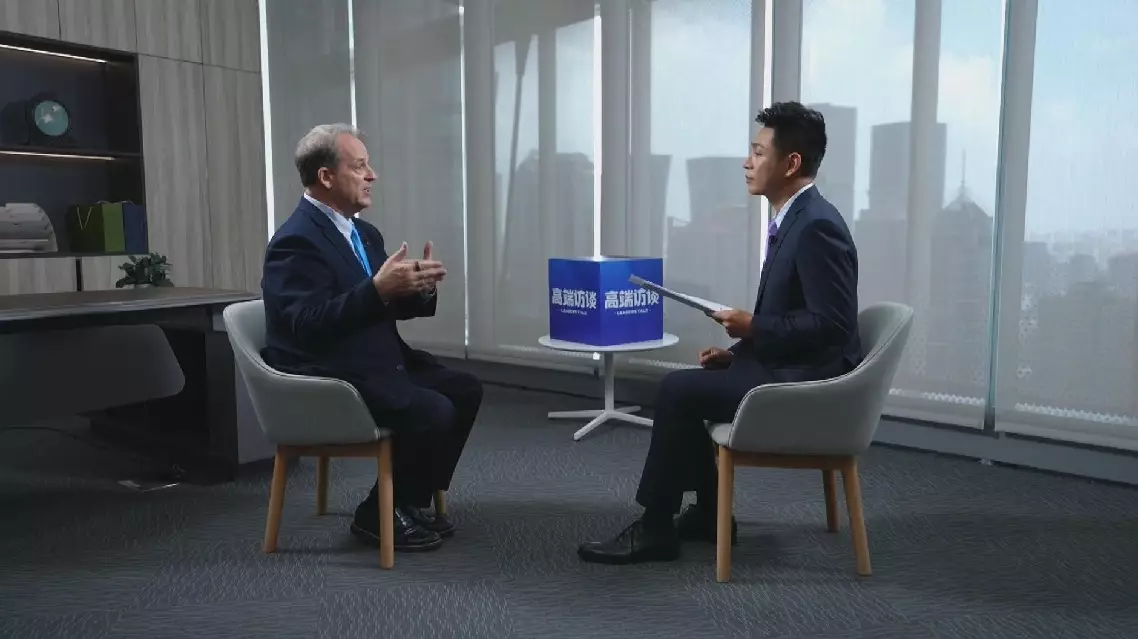
US-China summit lays vital foundation for business: USCBC chief