Once plagued by water quality problems, the Liangma River in Beijing has been transformed into a vibrant urban space where people connect with nature and leisure.
Years of ecological protection efforts along the historic waterway have notably improved the quality of life in this part of the Chinese capital.
It's amazing to think how much work has gone into changing this from apparently a smelly backwater into something really beautiful.
The Liangma River's transformation stands as a testament to Beijing's broader urban ecological efforts, turning a once-neglected waterway into a thriving community space and a symbol of the city's green evolution.
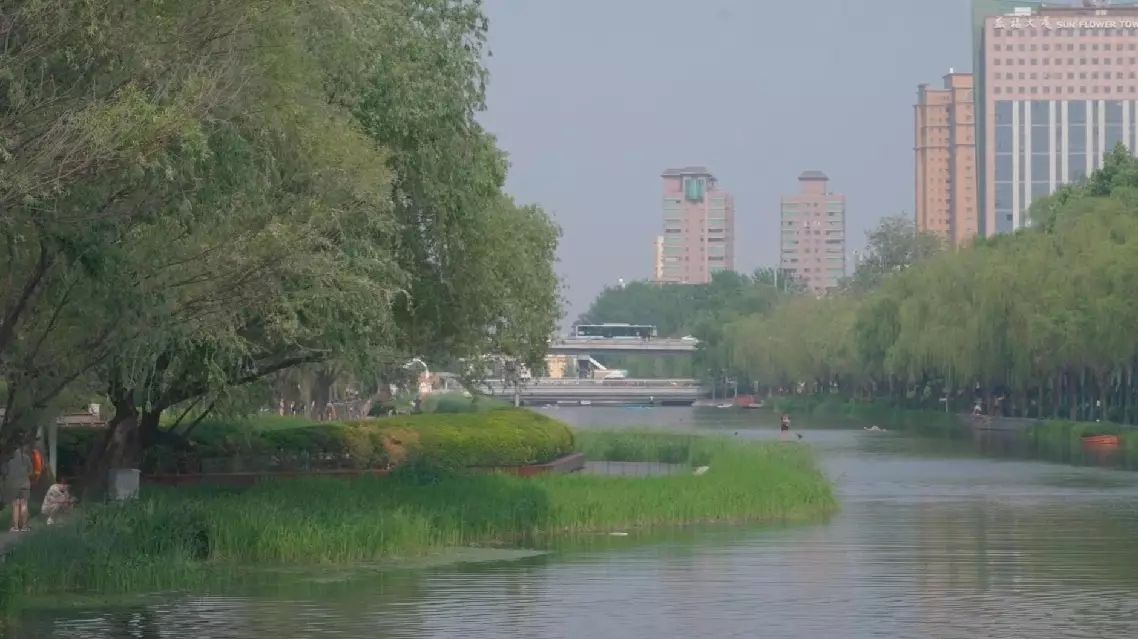
Beijing's revitalized historic waterway becomes lifestyle destination
Chinese experts followed a careful selection process in deciding which pair of giant pandas would be sent for a 10-year stay at Zoo Atlanta in the United States, according to an official with the Chengdu Research Base of Giant Panda Breeding.
Pandas Ping Ping and Fu Shuang departed from southwest China's Chengdu on a chartered flight at 02:55 Sunday, heading for U.S. as part of an international cooperation program, according to the National Forestry and Grassland Administration.
The male panda, Ping Ping, born on March 17, 2020, is easily recognizable due to his large, dark eye rims. He has a stocky build, moves nimbly, and has demonstrated proficiency in climbing trees, often resting among the branches. (8501085)
Fu Shuang, the female panda, born on October 18, 2020, is characterized by a small tuft of fluffy fur on her head and a full, protruding forehead. With a round appearance, she is quick to react, and very capable of foraging for food. (8501085)
Li Mingxi, deputy director of the Chengdu Research Base of Giant Panda Breeding, said four main factors are considered when selecting pandas for international cooperation: age, genetics, health and temperament.
"First, we can't choose a panda that's too young, because it has no life experience, its ability to take care of itself is relatively poor, and it would be more susceptible to external influences. Of course, we also can't choose one that's too old, since being too old would make it hard for it to live there for ten years. So we usually choose pandas between four and six years of age," Li explained.
"Genetics is another consideration. As the two pandas carry the hopes of people in both China and the United States. The hope is that they will reproduce and eventually return to China as a family. Health is also essential. The pandas selected for cooperation need to be healthy and energetic enough to begin their 10-year stay in a new environment. Temperament is the fourth factor. The pandas should have gentle personalities," said the deputy director.
Li said that before the journey, the pandas also underwent transport acclimation training to help reduce anxiety and stress.
"Before leaving China, the two pandas were quarantined in a closed environment to reduce potential exposure to outside factors, particularly disease. During the one-month quarantine period, the pandas underwent comprehensive observation, assessment and intensified training. Traveling from China to the United States involves multiple stages of transportation and more than 10 hours on a plane. Since giant pandas are relatively sensitive to noise, and noise is the biggest challenge during transportation, the training focused on helping them adapt to sounds they might encounter during the journey," Li said.
To better accommodate the bears, Zoo Atlanta has also carried out the recommendations of Chinese experts and installed significant renovations.
The upgraded facilities feature a significantly expanded indoor exhibit area, new enrichment features such as climbing structures, rock platforms and a pool, and an upgraded monitoring system that provides more comprehensive real-time information on conditions inside and outside the enclosures.
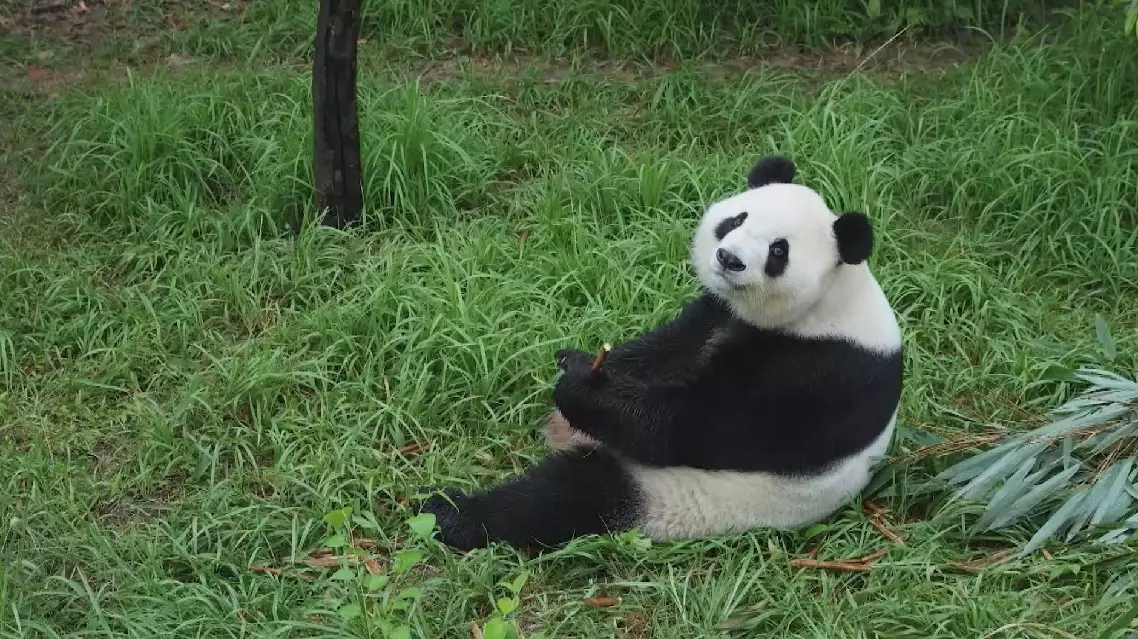
Pandas on way to US zoo were selected for genetics, temperament: expert