TOKYO (AP) — Asian shares were trading mixed Monday after a cooldown in oil prices last week helped U.S. stocks close out their first winning week in the last three.
Japan's benchmark Nikkei 225 was little changed, inching down less than 0.1% to 66,333.53.
Australia's S&P/ASX 200 added 0.3% to 8,688.60. South Korea's Kospi dipped 2.3% to 6,916.30. Hong Kong's Hang Seng rose 0.7% to 24,684.09, while the Shanghai Composite lost 1.7% to 3,820.82.
In energy trading, benchmark U.S. crude gained 1% to $93.33 a barrel. Brent crude, the international standard, rose 1.8% to $106.19 a barrel.
Last week, Brent oil had momentarily dropped to $97-levels. The price is volatile because of uncertainty about when the war with Iran will allow oil to flow freely again from the Middle East, including access to the Strait of Hormuz.
On Wall Street, the S&P 500 added 0.5% to break a three-day losing streak marked by big swings due to rising yields in the bond market. The Dow Jones Industrial Average added 478 points, or 0.9%, and the Nasdaq composite climbed 0.5%.
Weighing on Wall Street last week were rising expectations for high inflation in the U.S. That's potentially dangerous for the economy because they could encourage behavior that leads to a vicious cycle that makes the cost of living spiral even higher.
The yield on the 10-year Treasury briefly jumped to 5.22% last Friday, up from 5.18% late Thursday, and was near its highest level since 2007. High yields slow the economy by making it more expensive for everyone to borrow money, while undercutting prices for stocks and other investments.
The 10-year yield has been jumping since the start of the war with Iran, when it was at 3.97%. But yields eased later in trading on Friday as the price of oil pulled lower, and the 10-year yield fell back to 5.15%. That helped stocks on Wall Street regain strength.
All told, the S&P 500 rose 39.28 points to 7,743.41. The Dow Jones Industrial Average jumped 478.64 to 51,828.62, and the Nasdaq composite gained 129.34 to 27,068.72.
In currency trading in Monday's trading in Asia, the U.S. dollar rose to 157.76 Japanese yen from 157.19 yen. The euro cost $1.1392, little changed from $1.1393.
AP Business Writer Stan Choe contributed to this report.
Yuri Kageyama is on Threads: https://www.threads.com/@yurikageyama

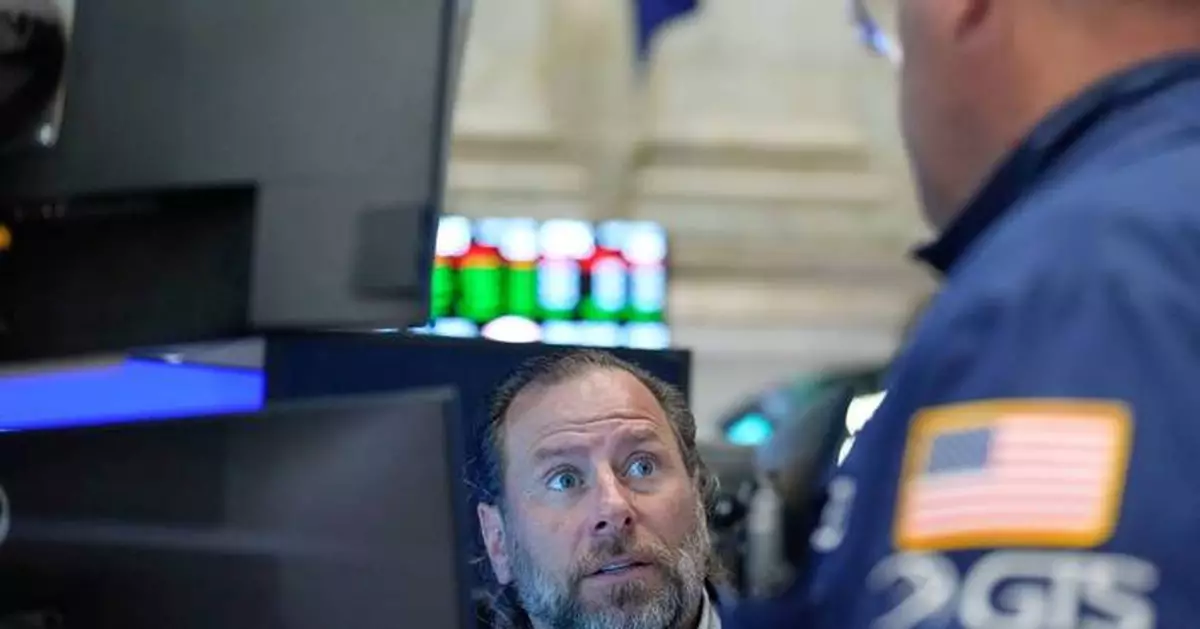
Michael Pistillo works on the floor at the New York Stock Exchange in New York, Monday, Sept. 14, 2026. (AP Photo/Seth Wenig)
BELGRADE, Serbia (AP) — Serbia’s populist President Aleksandar Vucic resigned Sunday to pursue a bid to become prime minister in an upcoming early parliamentary election that will test his firm rule in the Balkan country, which was rattled by nearly two years of protests.
Vucic’s second presidential term would otherwise end in May next year. He is banned by the Serbian Constitution from seeking a third term and said he was resigning to lead his right-wing Serbian Progressive Party in the Oct. 25 ballot.
The governing populists face a major challenge at the ballot box from a youth-backed movement that led the protests triggered by the Nov. 1, 2024, train station canopy collapse that killed 16 people in the northern city of Novi Sad.
University students demanded accountability for the tragedy. Their struggle for justice and against corruption has grown into a strong movement that will attempt to oust Vucic’s government after 14 years in power. Vucic himself has been either prime minister or president for the past 12 years.
“I am resigning the duty of the President of the Republic,” Vucic said, reading the text of his resignation.
The ballot in October will be held against a backdrop of high political tensions as Vucic’s populists seek to remain in office despite widespread popular discontent. His decision to run for prime minister is seen as a carefully planned maneuver to retain a top position, and to boost his party’s chances against the student movement.
Before signing his resignation, Vucic briefly addressed his supporters outside the presidency building in Belgrade. He said “tonight is a very special occasion for me, my last evening in this beautiful building.”
“But I look to the future with joy, new victories await us,” he told the crowd as they chanted his name. “Let’s beat them (opponents) more convincingly than ever before.”
Vucic in recent weeks has toured the country tirelessly in a live coverage on pro-government media. He has opened new roads, offered assistance money and cheaper medicines, and visited voters in their homes. More recently, Vucic was filmed driving in his brother’s car to some of the events.
The prime minister in Serbia is formally more powerful than the president. But Vucic still took a dominant role during his two five-year terms, sometimes presiding over government sessions and routinely announcing all important decisions and plans.
The Independent Bureau for Social Research, or BIRODI, has filed a complaint alleging that Vucic has abused a public institution as president to promote his party, which he has dismissed. There has been no response from the anti-corruption authorities that are under government control.
After Vucic’s resignation, the acting president will be a close ally and former prime minister, Ana Brnabic, who is the outgoing speaker of Serbia’s 250-member Parliament.
Vucic said the first round of the early presidential election must be held by the end of this year because of a 90-day deadline.
Vucic and his party have been accused of rampant corruption, organized crime links and a clampdown on democratic freedoms, including the critical media. The SNS party has gradually taken control over all state institutions since coming to power in 2012, while denying abuse of office and repeatedly pledging to fight graft.
The student-backed election list includes little-known experts, professors, teachers, athletes and other individuals from all walks of life. Groups of students have been touring the country on bicycles as part of their campaign calling for the rule of law and an end to corruption.
Analysts say the student group and Vucic are polling close, heralding a tight race and a referendum-like atmosphere. Also running are Vucic’s allies, the Socialist Party, a pro-EU opposition alliance and several smaller groups.
Vucic said that as of Monday, he will be “everywhere in Serbia to listen to the people.” While praising his government's achievements, Vucic contended that “I have made mistakes but I have worked diligently like hardly anyone in this position.”
Vucic also said he had pardoned 49 people before leaving the office, including 23 who have been prosecuted for alleged offenses during the protests. They include a group of anti-government activists who fled Serbia after being accused of anti-state activities.
Authorities have pushed hard against protesters with police violence and detentions as Vucic, without offering evidence, accused his opponents and critical media of intending to “destroy the state” under unspecified foreign influence.
He told Serbia’s state-run RTS Television earlier on Sunday that foreign powers and unidentified people in the country plan to stir unrest on election night.
Serbia’s efforts to join the European Union have stalled under Vucic because of democratic backsliding and a refusal to join sanctions against Russia over the war in Ukraine.
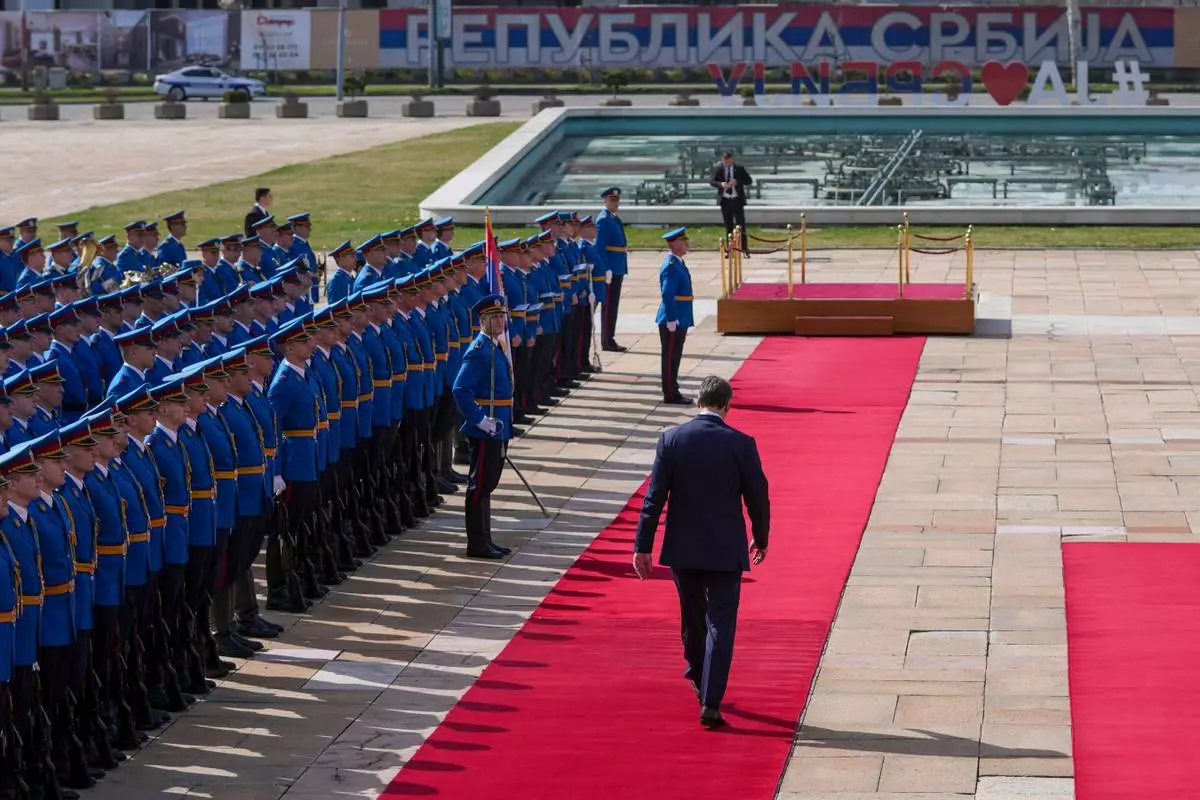
FILE - Serbian President Aleksandar Vucic walks on the red carpet before a welcoming ceremony for Burundi President Evariste Ndayishimiye at the Serbia Palace in Belgrade, Serbia, March 12, 2025. (AP Photo/Darko Vojinovic, File)
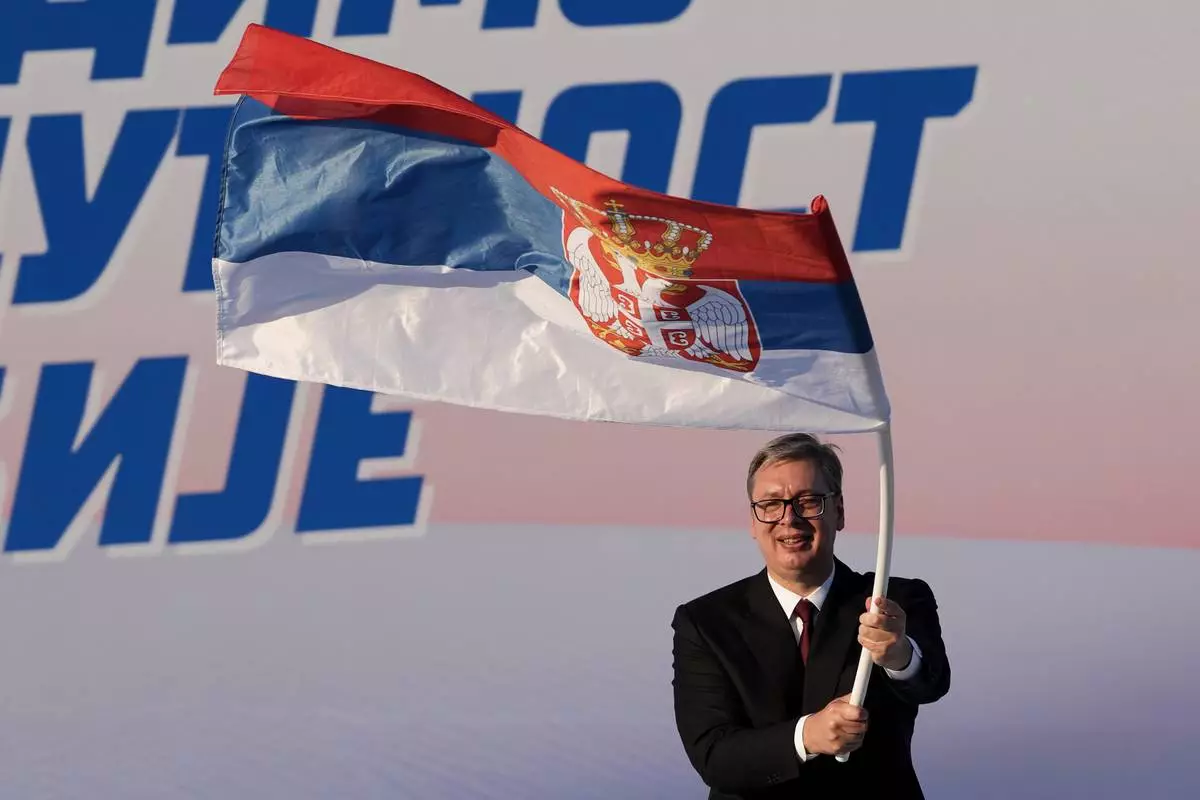
FILE - Serbian President Aleksandar Vucic waves a Serbian flag during a rally of the ruling Serbian Progressive Party (SNS) in Belgrade, Serbia, on June 27, 2026. (AP Photo/Darko Vojinovic, File)
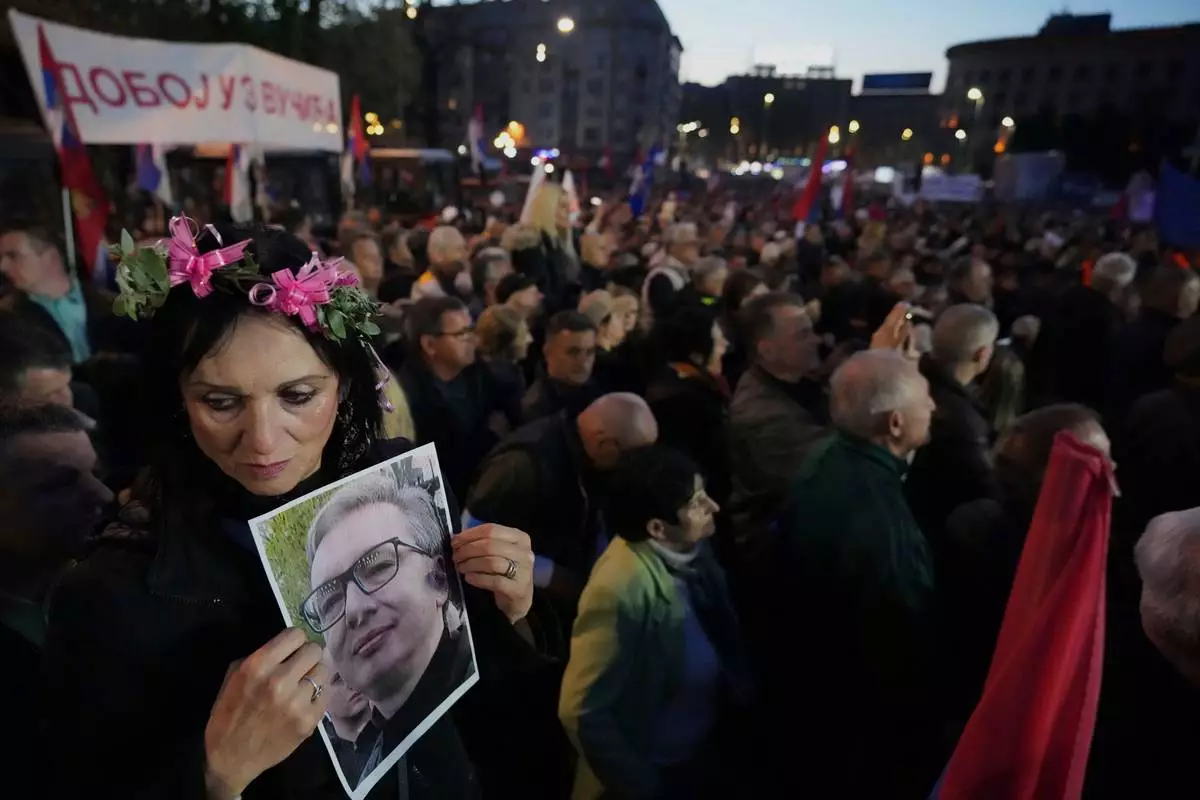
FILE - A supporter of Serbia's President Aleksandar Vucic holds his photo during a rally in Belgrade, Serbia, April 12, 2025. (AP Photo/Darko Vojinovic, File)
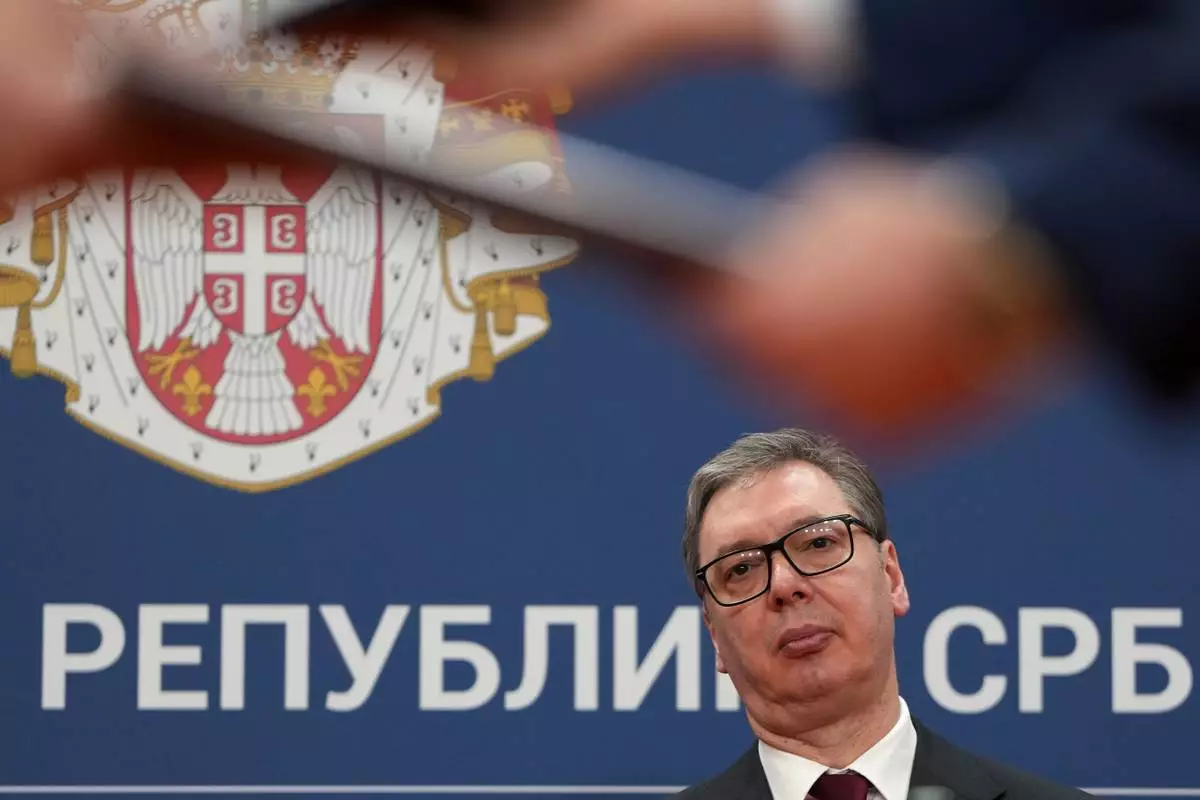
FILE - Serbian President Aleksandar Vucic looks on as documents are exchanged after the signing of an agreement following talks with Azerbaijan President Ilham Aliyev at the Serbia Palace in Belgrade, Serbia, Feb. 15, 2026. (AP Photo/Darko Vojinovic, File)