Skip to Content Facebook Feature Image

SpaceX's supersized Starship launches into orbit for the first time

News

SpaceX's supersized Starship launches into orbit for the first time
News

News

SpaceX's supersized Starship launches into orbit for the first time

2026-09-28 21:54 Last Updated At:22:01

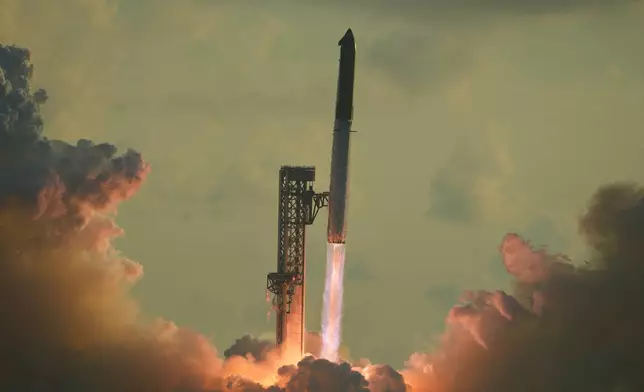
SpaceX launched its enormous Starship into orbit for the first time Monday, aiming for six full laps around Earth to prove its readiness for NASA’s Artemis moon program.

The spacecraft almost didn't achieve the long-desired goal after one of its engines shut down too soon. But with everything else working well and the bad engine no longer needed, flight controllers decided after several tense minutes to proceed as planned.

More Images
SpaceX's mega rocket Starship makes a test flight from Starbase, Texas, Monday, Sept. 28, 2026. (AP Photo/Eric Gay)
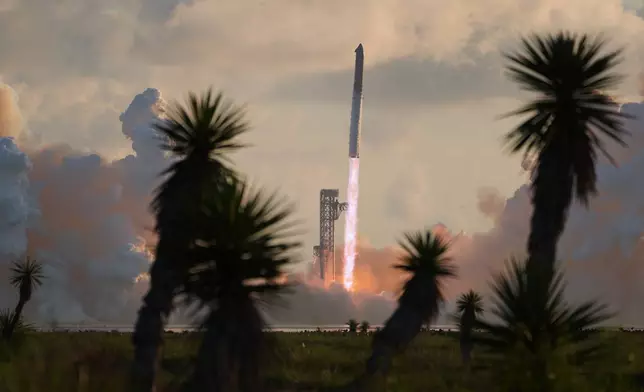
SpaceX's mega rocket Starship makes a test flight from Starbase, Texas, Monday, Sept. 28, 2026. (AP Photo/Eric Gay)

SpaceX's mega rocket Starship makes a test flight from Starbase, Texas, Monday, Sept. 28, 2026. (AP Photo/Eric Gay)
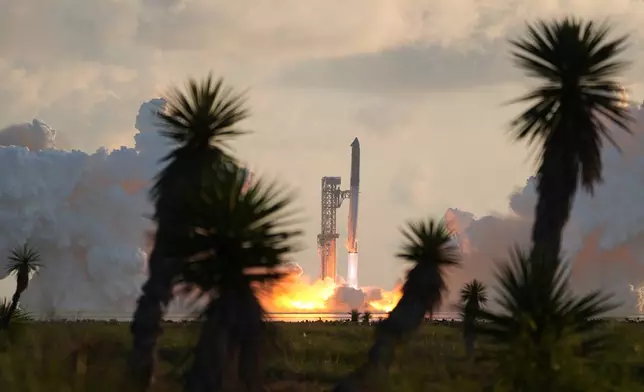
SpaceX's mega rocket Starship makes a test flight from Starbase, Texas, Monday, Sept. 28, 2026. (AP Photo/Eric Gay)

SpaceX's mega rocket Starship makes a test flight from Starbase, Texas, Monday, Sept. 28, 2026. (AP Photo/Eric Gay)

SpaceX's mega rocket Starship makes a test flight from Starbase, Texas, Monday, Sept. 28, 2026. (AP Photo/Eric Gay)

SpaceX's mega rocket Starship lifts off for a test flight from Starbase, Texas, Monday, Sept. 28, 2026. (AP Photo/Eric Gay)
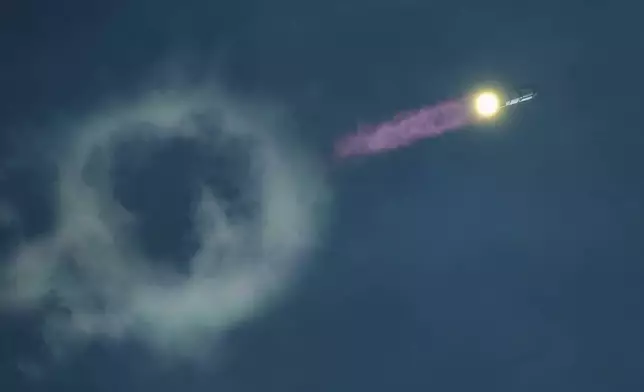
SpaceX's mega rocket Starship lifts off for a test flight from Starbase, Texas, Monday, Sept. 28, 2026. (AP Photo/Eric Gay)

SpaceX's mega rocket Starship makes a test flight from Starbase, Texas, Monday, Sept. 28, 2026. (AP Photo/Eric Gay)
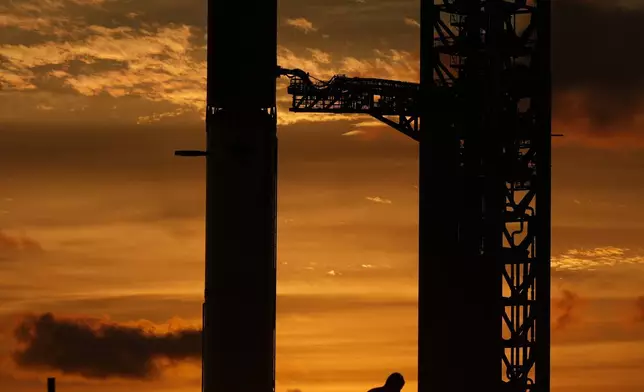
SpaceX's mega rocket Starship makes a test flight from Starbase, Texas, Monday, Sept. 28, 2026. (AP Photo/Eric Gay)

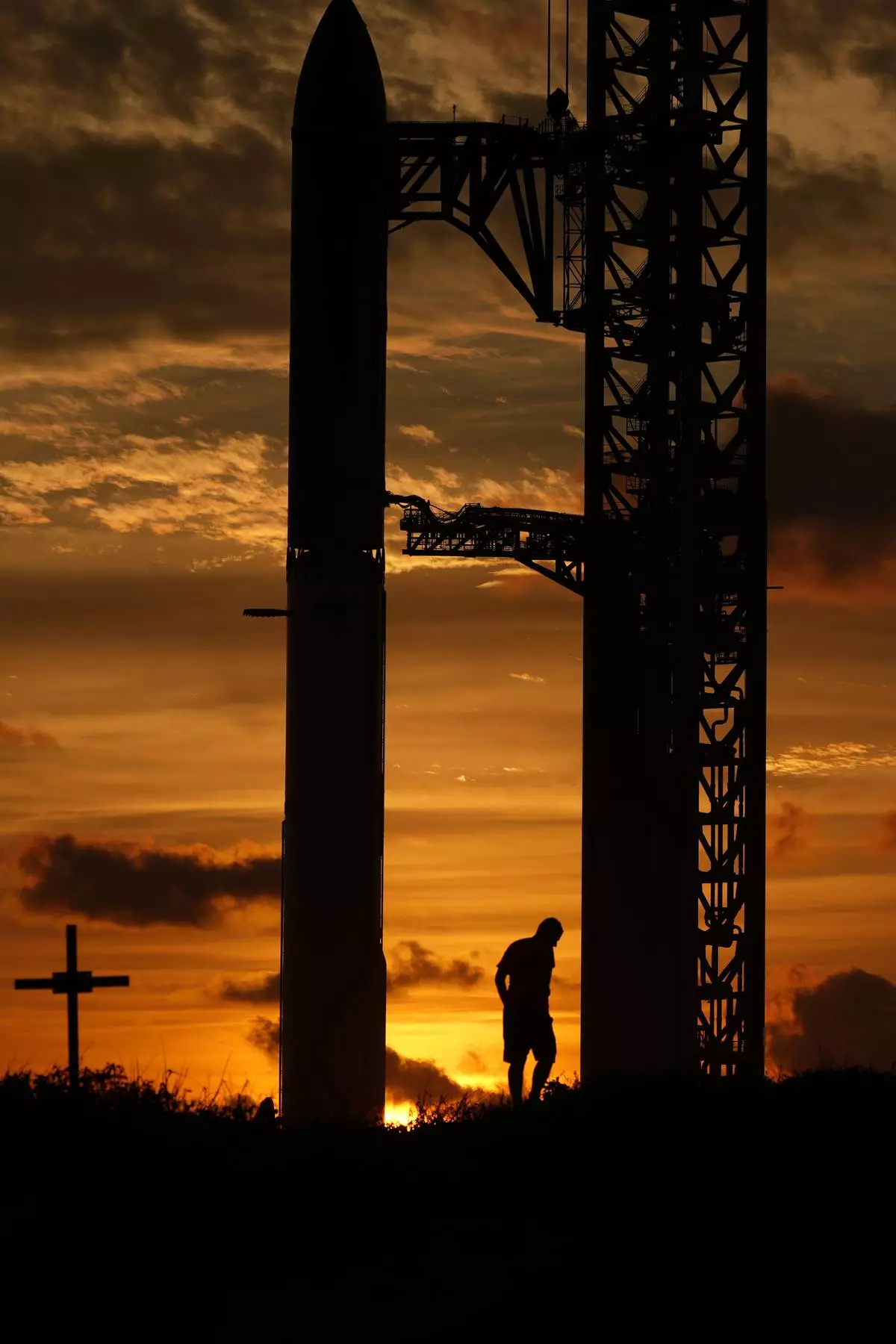
A man watches at sunset as SpaceX's mega rocket Starship is prepared for a test flight from Starbase, Texas, Sunday, Sept. 27, 2026. (AP Photo/Eric Gay)
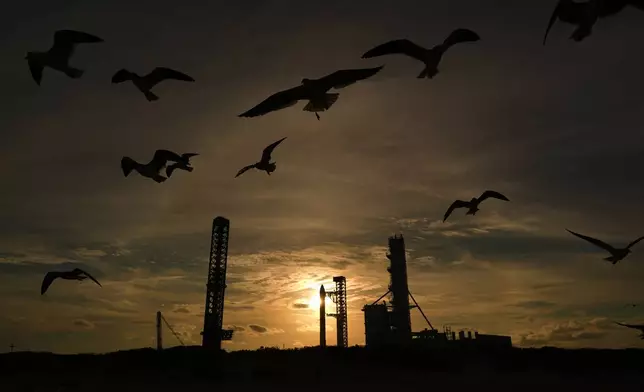
A man watches at sunset as SpaceX's mega rocket Starship is prepared for a test flight from Starbase, Texas, Sunday, Sept. 27, 2026. (AP Photo/Eric Gay)

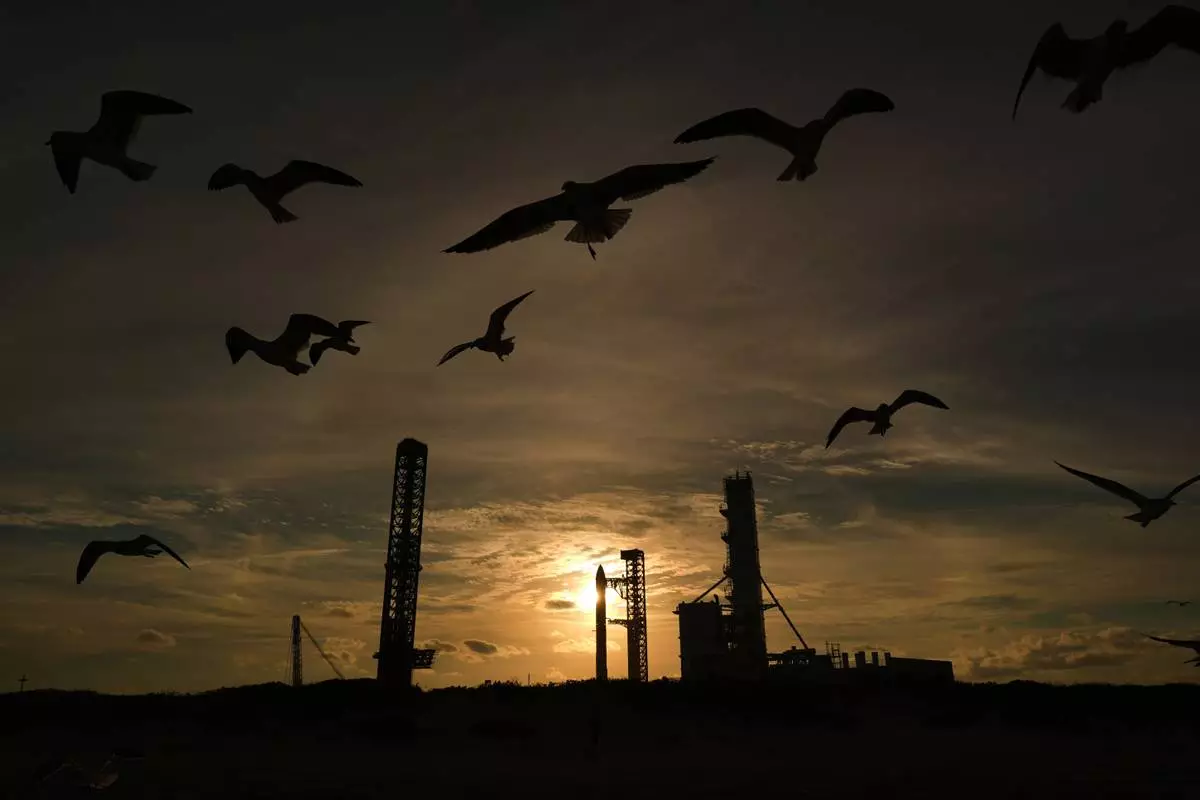
Seagulls fly near the site of SpaceX's mega rocket Starship as it is prepared for a test flight from Starbase, Texas, Sunday, Sept. 27, 2026. (AP Photo/Eric Gay)

Seagulls fly near the site of SpaceX's mega rocket Starship as it is prepared for a test flight from Starbase, Texas, Sunday, Sept. 27, 2026. (AP Photo/Eric Gay)

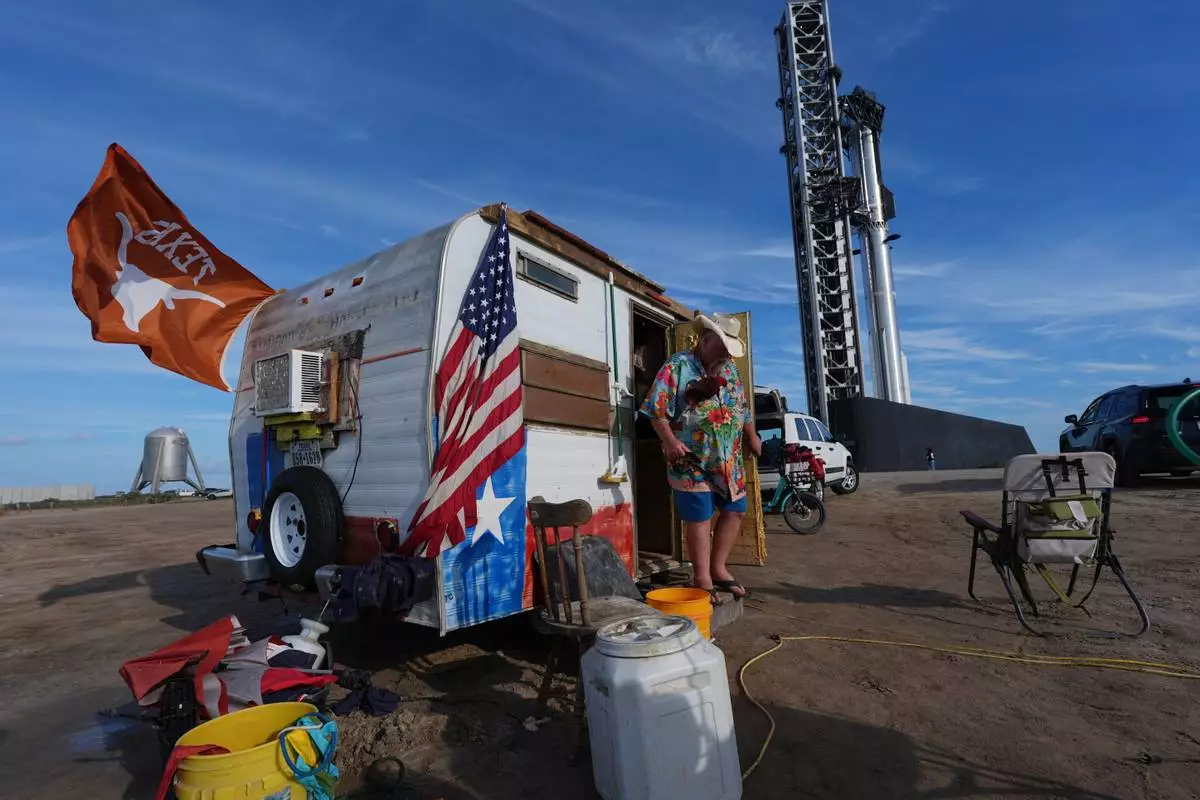
David Orr camps out near the site where SpaceX's mega rocket Starship, behind right, is preparing for a test flight from Starbase, Texas, Sunday, Sept. 27, 2026. (AP Photo/Eric Gay)

David Orr camps out near the site where SpaceX's mega rocket Starship, behind right, is preparing for a test flight from Starbase, Texas, Sunday, Sept. 27, 2026. (AP Photo/Eric Gay)

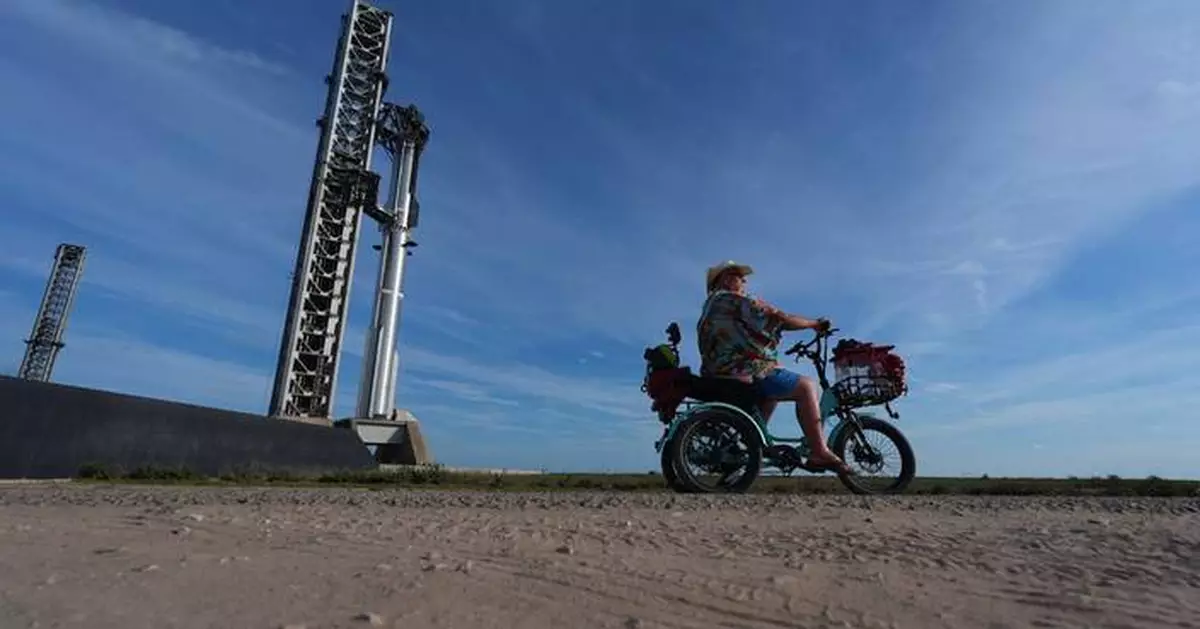
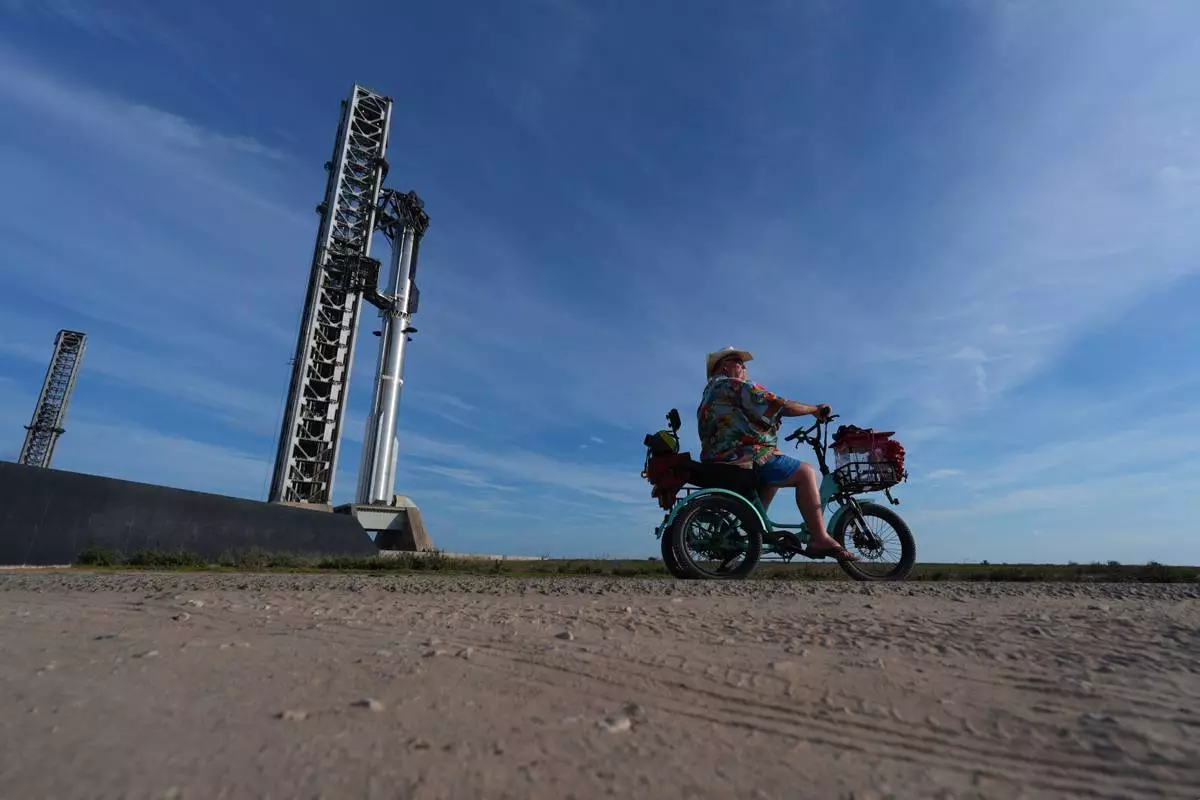
David Orr rides his bike past SpaceX's mega rocket Starship as it is prepared for a test flight from Starbase, Texas, Sunday, Sept. 27, 2026. (AP Photo/Eric Gay)

David Orr rides his bike past SpaceX's mega rocket Starship as it is prepared for a test flight from Starbase, Texas, Sunday, Sept. 27, 2026. (AP Photo/Eric Gay)

“Starship is orbital,” Mission Control announced to cheers.

Founder Elon Musk’s showpiece rocket — the biggest and most powerful ever built — carried 26 of the latest and most advanced Starlink satellites to join the 11,000 older models already providing internet service. They popped out of the spacecraft one by one, drawing more cheers from the SpaceX crowds looking on from the launch site at Starbase, Texas.

It was Starship’s 14th full-scale launch from Texas’ southern tip in three years. The earlier test flights ventured no farther than the Indian Ocean halfway around the world, often crashing in flames and briefly skimming space.

This time, SpaceX was intent on circling the globe from an altitude of 170 miles (275 kilometers) — not just once but six times over almost 10 hours, ending with a Pacific splashdown near Chile.

The first-stage booster wasn’t meant to return to the Starbase launch site either, instead dropping into the Gulf of Mexico within minutes of the morning liftoff.

SpaceX wants to ensure that everything works before flying Starship back to Starbase. If the spacecraft breaks apart over land and rains debris onto people, “our popularity would diminish very rapidly,” Musk said at a business summit earlier this month. “That’s why we’re being extremely cautious here.”

If all goes well with this orbital debut, the next Starship will return to the launch pad with giant mechanical arms grabbing the hovering spacecraft. If the catch works — Musk gives it even or slightly better odds — then SpaceX will refly the spacecraft by year’s end or early next year.

The 407-foot (124-meter) rocket was designed from the start to be fully reusable — a key to lowering launch costs. SpaceX managed to salvage the last Starship from the Indian Ocean in July. Engineers modified the newly launched Starship’s heat shield based on hands-on inspections from the recovered spacecraft, which is being tugged back to Starbase.

SpaceX is pressing hard to certify Starship for orbital flight, a vital step toward moon and Mars travel.

NASA’s Artemis III mission is coming up as soon as next summer, a triple-launch docking exercise in orbit around Earth between an Orion capsule full of astronauts and competing lunar landers. Jeff Bezos’ Blue Moon will blast off first, then Orion — which will close in for a linkup — then Musk’s Starship for a docking with Orion once Blue Moon unleashes.

The next mission — Artemis IV slated for no sooner than 2028 — would have astronauts landing on the moon in either Blue Moon or Starship, whichever is ready first. Subsequent moonshots will alternate between the two billionaires’ landers.

Musk originally developed Starship for Mars, intending to launch scores of them with the red planet’s first settlers. For now, he plans to focus on the moon and use Starship to haul satellites into orbit by the truckload, phasing out the company’s frailer Falcon 9 rocket within several years. A second Starship launch site is nearing completion at Florida’s Kennedy Space Center and a third is planned for Louisiana.

The Associated Press’ health and science coverage receives financial support from the AP Fund for Journalism and private foundations. AP is solely responsible for all content. Find AP’s standards for working with philanthropies, a list of supporters and funded coverage areas at AP.org.
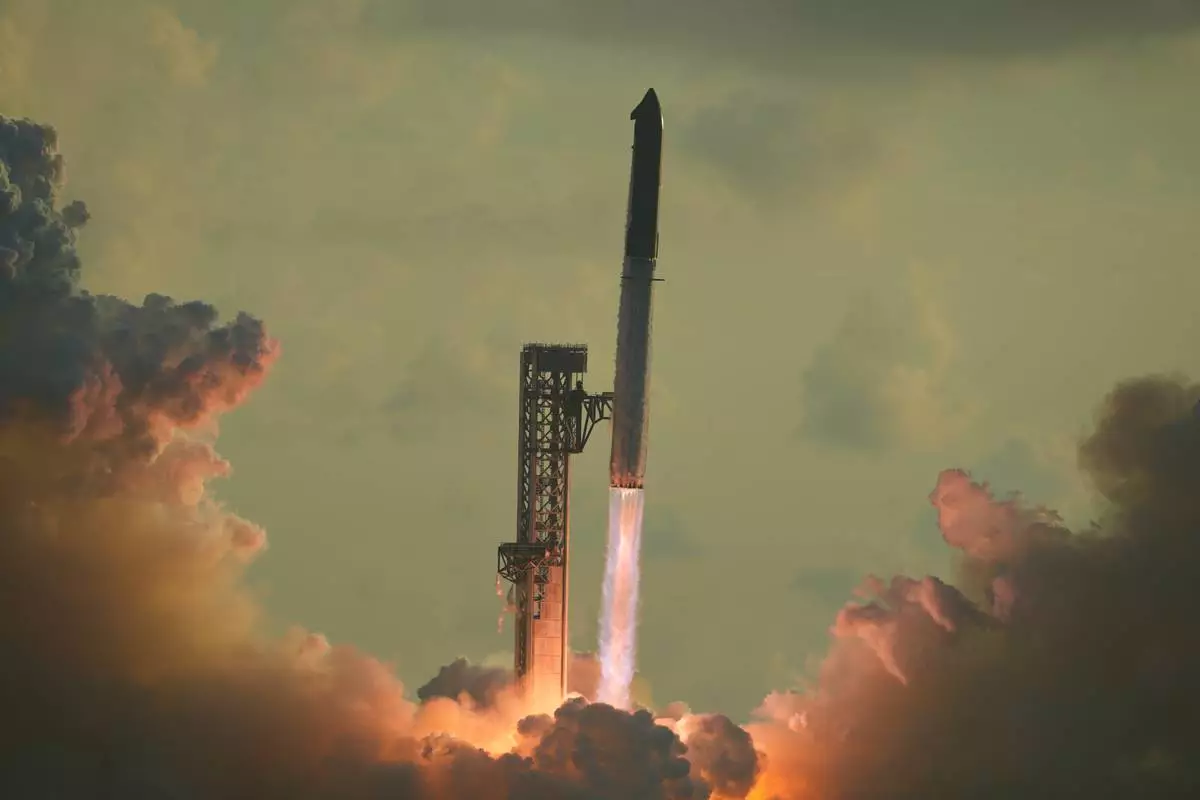
SpaceX's mega rocket Starship makes a test flight from Starbase, Texas, Monday, Sept. 28, 2026. (AP Photo/Eric Gay)
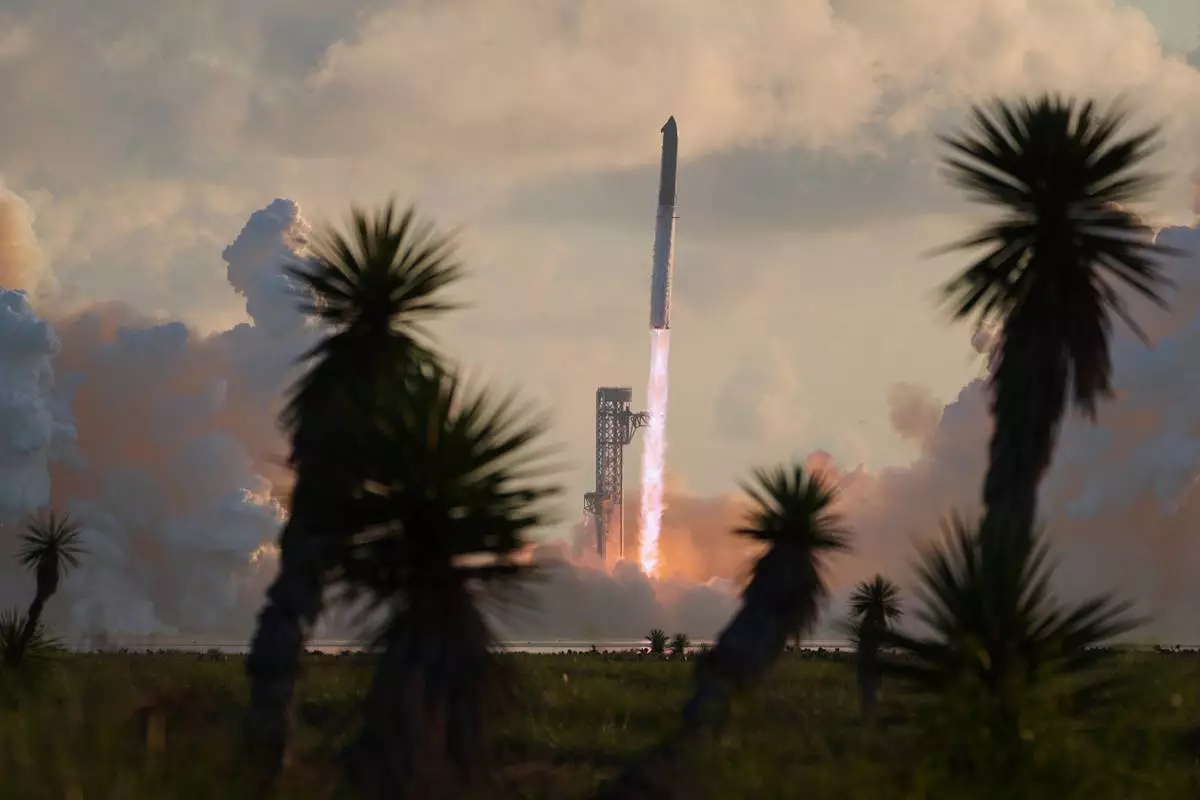
SpaceX's mega rocket Starship makes a test flight from Starbase, Texas, Monday, Sept. 28, 2026. (AP Photo/Eric Gay)
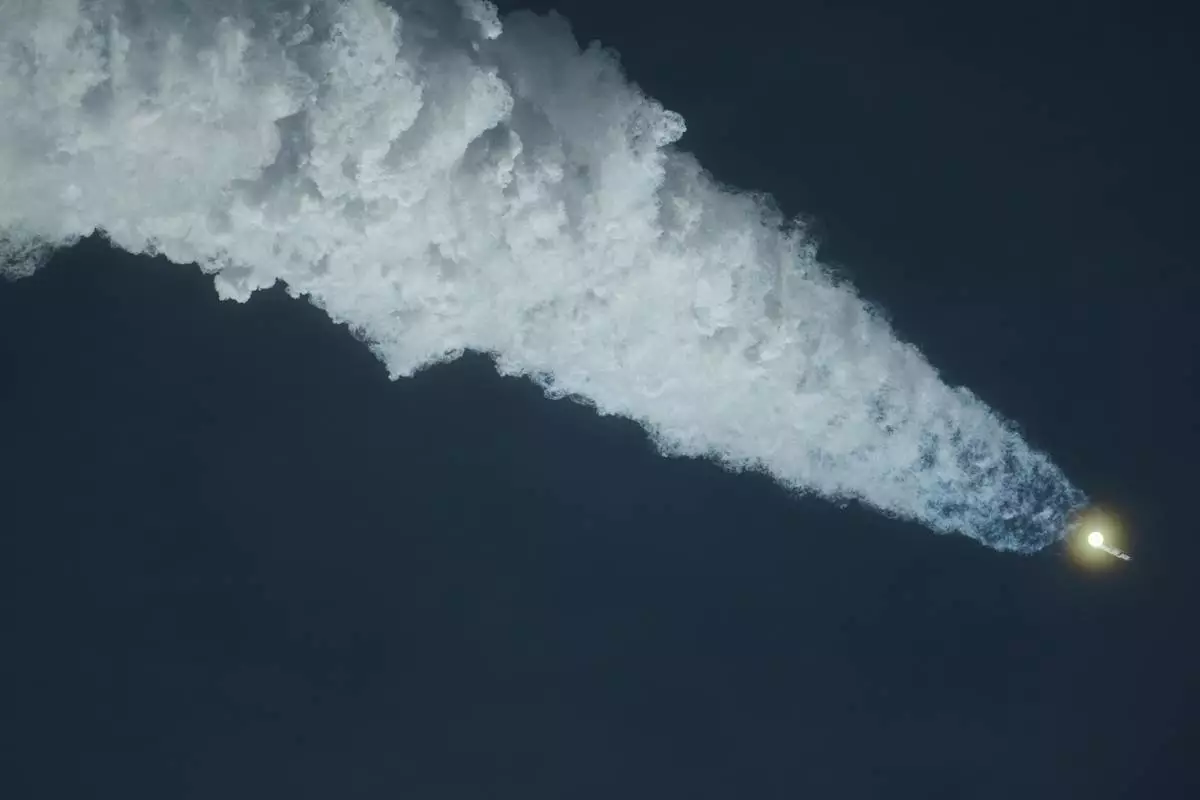
SpaceX's mega rocket Starship makes a test flight from Starbase, Texas, Monday, Sept. 28, 2026. (AP Photo/Eric Gay)
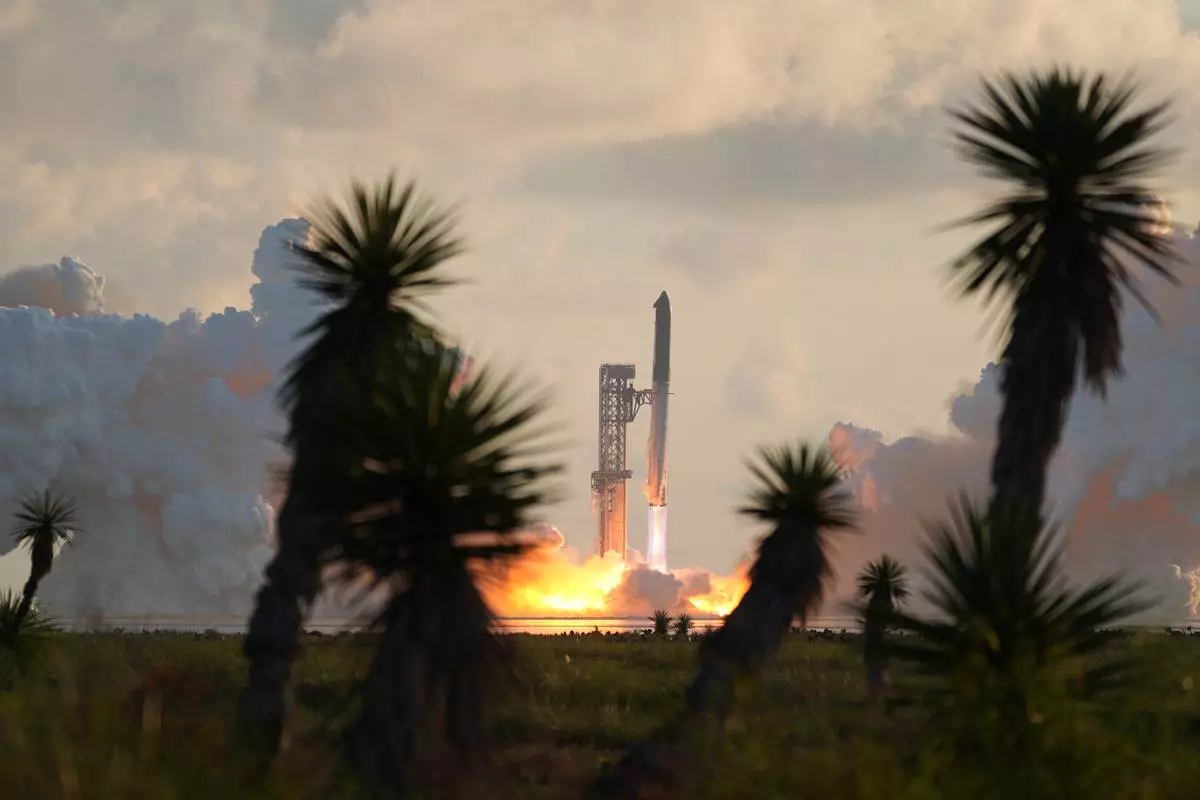
SpaceX's mega rocket Starship makes a test flight from Starbase, Texas, Monday, Sept. 28, 2026. (AP Photo/Eric Gay)

SpaceX's mega rocket Starship makes a test flight from Starbase, Texas, Monday, Sept. 28, 2026. (AP Photo/Eric Gay)

SpaceX's mega rocket Starship makes a test flight from Starbase, Texas, Monday, Sept. 28, 2026. (AP Photo/Eric Gay)

SpaceX's mega rocket Starship lifts off for a test flight from Starbase, Texas, Monday, Sept. 28, 2026. (AP Photo/Eric Gay)
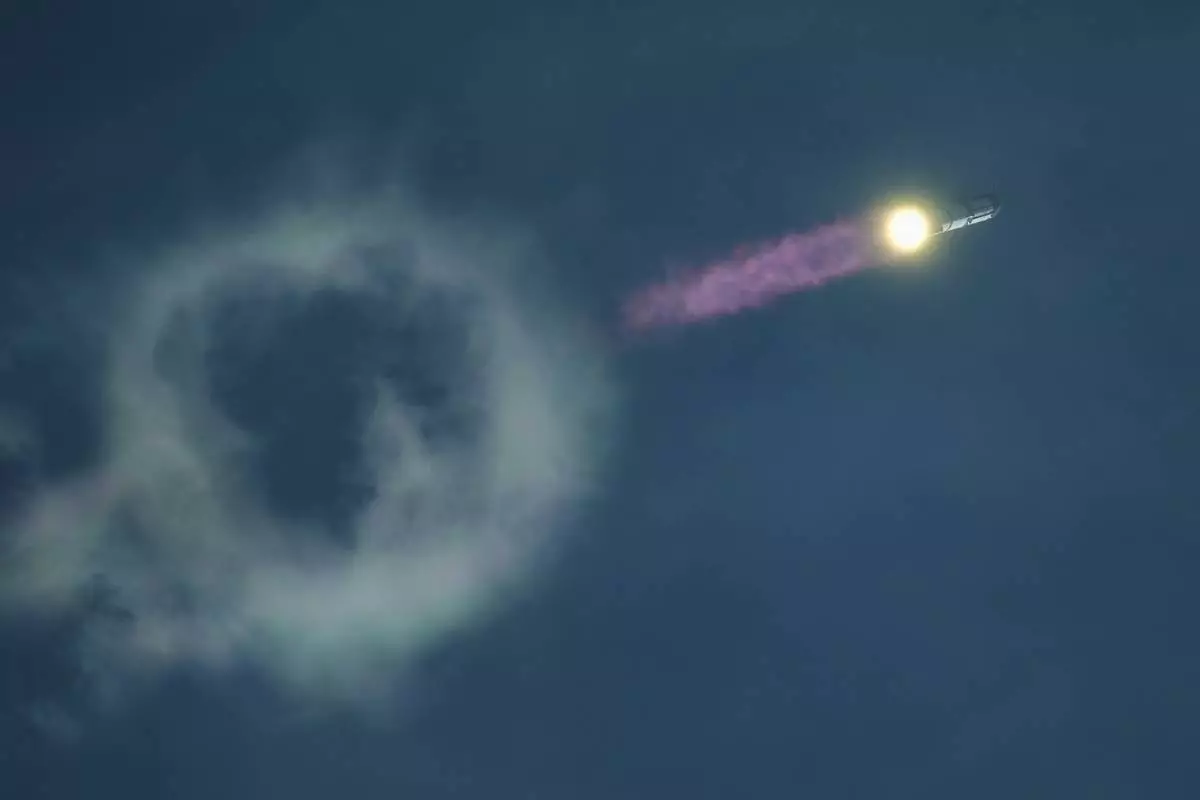
SpaceX's mega rocket Starship lifts off for a test flight from Starbase, Texas, Monday, Sept. 28, 2026. (AP Photo/Eric Gay)

SpaceX's mega rocket Starship makes a test flight from Starbase, Texas, Monday, Sept. 28, 2026. (AP Photo/Eric Gay)
SpaceX's mega rocket Starship makes a test flight from Starbase, Texas, Monday, Sept. 28, 2026. (AP Photo/Eric Gay)

A man watches at sunset as SpaceX's mega rocket Starship is prepared for a test flight from Starbase, Texas, Sunday, Sept. 27, 2026. (AP Photo/Eric Gay)
A man watches at sunset as SpaceX's mega rocket Starship is prepared for a test flight from Starbase, Texas, Sunday, Sept. 27, 2026. (AP Photo/Eric Gay)

Seagulls fly near the site of SpaceX's mega rocket Starship as it is prepared for a test flight from Starbase, Texas, Sunday, Sept. 27, 2026. (AP Photo/Eric Gay)
Seagulls fly near the site of SpaceX's mega rocket Starship as it is prepared for a test flight from Starbase, Texas, Sunday, Sept. 27, 2026. (AP Photo/Eric Gay)

David Orr camps out near the site where SpaceX's mega rocket Starship, behind right, is preparing for a test flight from Starbase, Texas, Sunday, Sept. 27, 2026. (AP Photo/Eric Gay)
David Orr camps out near the site where SpaceX's mega rocket Starship, behind right, is preparing for a test flight from Starbase, Texas, Sunday, Sept. 27, 2026. (AP Photo/Eric Gay)

David Orr rides his bike past SpaceX's mega rocket Starship as it is prepared for a test flight from Starbase, Texas, Sunday, Sept. 27, 2026. (AP Photo/Eric Gay)

David Orr rides his bike past SpaceX's mega rocket Starship as it is prepared for a test flight from Starbase, Texas, Sunday, Sept. 27, 2026. (AP Photo/Eric Gay)

SEOUL, South Korea (AP) — North Korea likely planted the land mines that injured three South Korean soldiers last week along the heavily fortified border separating the countries, South Korea’s military said Monday. The preliminary finding could further inflame tensions between the rivals.

The South’s Joint Chiefs of Staff announced the preliminary finding after inspecting the site with the U.S.-led United Nations Command.

Relations between the Koreas have deteriorated sharply in recent years amid North Korea’s accelerating nuclear weapons program and the collapse of U.S.-led diplomacy aimed at resolving the nuclear standoff.

Three South Korean military officers were injured in two consecutive explosions Sept. 21 near the military demarcation line (MDL) in the western section of the Demilitarized Zone (DMZ), a heavily fortified border buffer zone between the Koreas.

The explosions occurred during an operation to establish a patrol route through an area that had rarely been visited for decades, officials said. The route was intended to allow future inspections with the U.N. Command after South Korea detected “terrain changes” last year that may have resulted from North Korean mine-laying.

South Korean officials initially said the blasts appeared to have been caused by mines but did not attribute them to North Korea.

Kwon Dae-won, vice chairman of South Korea’s Joint Chiefs of Staff, said there was a “very high possibility” that North Korean mines caused the explosions, which occurred about 10 meters (11 yards) south from the military demarcation line.

He said there was no record of South Korean or allied forces laying mines in the densely vegetated area. Blast marks, debris and what appeared to be a third suspected North Korean mine at the scene also pointed to the North, he said.

If the final investigation reaches the same conclusion, Kwon said: “We will hold North Korea fully responsible for this. Our military will take appropriate and corresponding measures.” He did not elaborate.

North Korea has denied responsibility for numerous previous incidents blamed on it by Seoul and described the allegations as plots to stir anti-Pyongyang sentiment.

The latest incident came more than a decade after South Korea blamed the North for land mine explosions that maimed two South Korean soldiers and sharply raised tensions between the countries in August 2015.

The Joint Chiefs of Staff said forensic analysis detected TNT and unidentified brown substances on a bulletproof helmet, protective vests and rifles belonging to soldiers involved in the operation. The absence of metal fragments or shrapnel indicated that South Korean or allied mines did not cause the explosions, it said.

The blasts occurred after the battalion commander leading the 18-member team decided to end the mission and withdraw because the unit was too close to the demarcation line, the Joint Chiefs said.

The first explosion occurred as a soldier stepped forward while the team prepared to withdraw. A second followed shortly afterward as the commander and an intelligence officer approached the wounded soldier.

Some soldiers said they saw what appeared to be a third North Korean mine as they withdrew to a safe area, from which the troops were airlifted for treatment and medical examinations.

The DMZ, which is 248 kilometers (155 miles) long and 4 kilometers (2.5 miles) wide, is one of the world’s most heavily fortified borders. An estimated 2 million mines are buried in and around the zone, which is also guarded by barbed-wire fences, tank traps and combat troops on both sides.

The zone is a legacy of the 1950-53 Korean War, which ended with an armistice rather than a peace treaty.

In recent months, North Korea has added mines, anti-tank barriers and other front-line fortifications. The activity has fueled concern in South Korea about the growing presence of North Korean soldiers near the DMZ.

South Korea fired warning shots in April 2025 after a group of North Korean soldiers crossed the demarcation line in the eastern section of the DMZ. The soldiers retreated after South Korea broadcast audio warnings and fired the shots, and there was no exchange of fire.

In June 2024, North Korean troops crossed the border three times, prompting South Korea to fire warning shots.

North Korean mines have occasionally been carried into South Korea by swollen rivers, killing or injuring civilians.

After the 2015 mine explosions, the Koreas traded threats, staged weapons demonstrations and resumed border propaganda broadcasts. Days of talks eventually pulled them back from the brink. North Korea issued a vague expression of regret over the soldiers’ injuries without clearly accepting responsibility.

Last week's explosions came as South Korea’s liberal government sought to help revive diplomacy between Pyongyang and Washington as part of broader efforts to reduce tensions on the Korean Peninsula.

Since early 2024, North Korea has taken an increasingly hard-line stance toward South Korea, declaring its neighbor a permanent enemy and moving to abandon the concept of shared statehood in favor of a hostile “two-state” system.

North Korea has intensified tensions with a series of military displays this month, including short-range ballistic missile launches, live-fire missile and artillery exercises, and the commissioning of a new warship. Leader Kim Jong Un has continued to showcase his expanding nuclear program despite U.S. calls to revive diplomacy.

Last month, U.S. President Donald Trump scaled back a major military exercise with South Korea in an apparent effort to restart diplomacy with Kim, who views such drills as rehearsals for invasion.

North Korea has so far rebuffed Trump’s outreach. It says Washington must first abandon its “hostile policy” — a term Pyongyang mainly uses to describe U.S.-led sanctions and joint U.S.-South Korean military exercises — and drop denuclearization as a precondition for talks.

— AP writer Hyung-jin Kim contributed to this report.

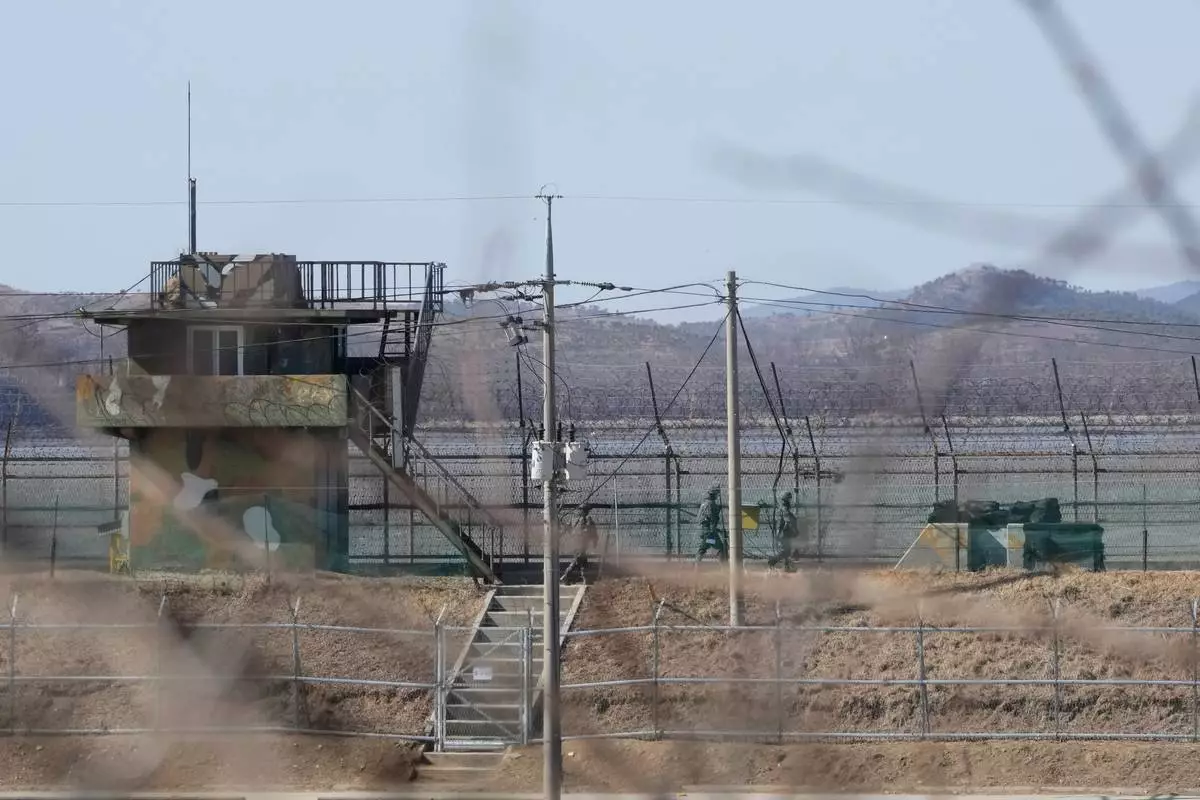
FILE - South Korean army soldiers patrol along the barbed-wire fence in Paju, South Korea, near the border with North Korea, on Feb. 18, 2025. (AP Photo/Ahn Young-joon, File)

FILE - South Korean army soldiers patrol along the barbed-wire fence in Paju, South Korea, near the border with North Korea, on Feb. 18, 2025. (AP Photo/Ahn Young-joon, File)

Recommended Articles