It’s a saga that has gripped English soccer and beyond: Did Manchester City engage in large-scale rule-breaking in an effort to transform itself into a global superpower that has won multiple Premier League titles and the Champions League?
The answer, it appears, is yes.
Click to Gallery
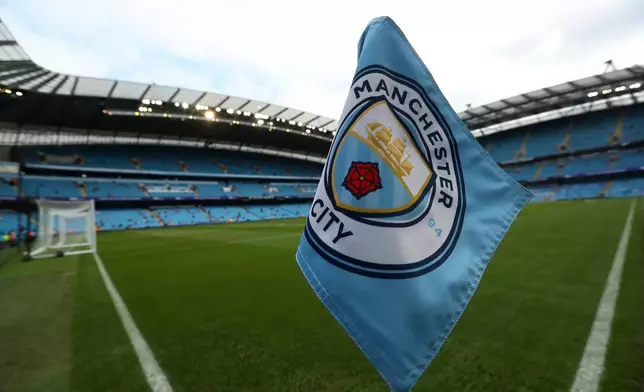
FILE - The club logo decorates a corner flag before the English Premier League soccer match between Manchester City and Newcastle United at the Etihad Stadium in Manchester, England, Saturday, Sept. 1, 2018. (AP Photo/Jon Super, File)
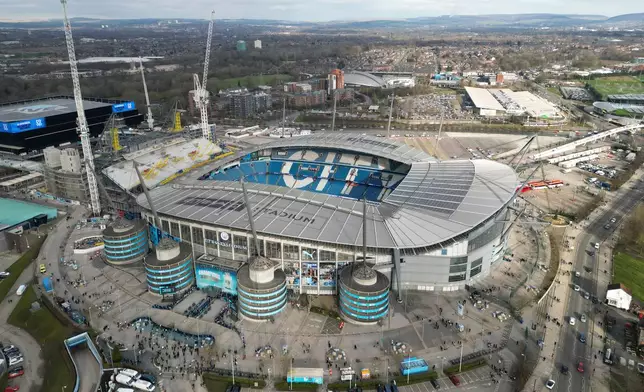
FILE - A general view of the Etihad Stadium ahead of the English FA Cup soccer match between Manchester City and Plymouth Argyle, Manchester, England, Saturday, March 1, 2025. (AP Photo/Jon Super, File)
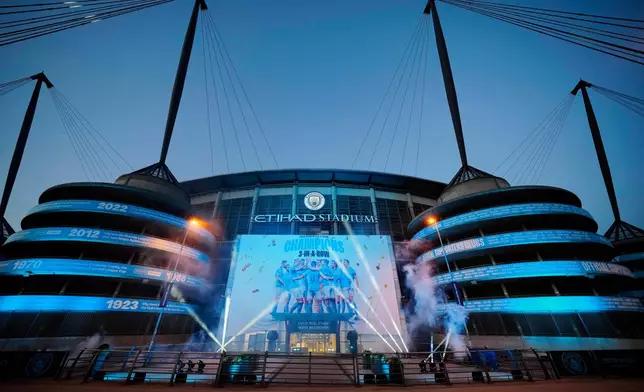
FILE - A banner celebrating their title win is illuminated outside Manchester City's Etihad stadium in Manchester, England, Saturday, May 20, 2023. (AP Photo/Jon Super, File)
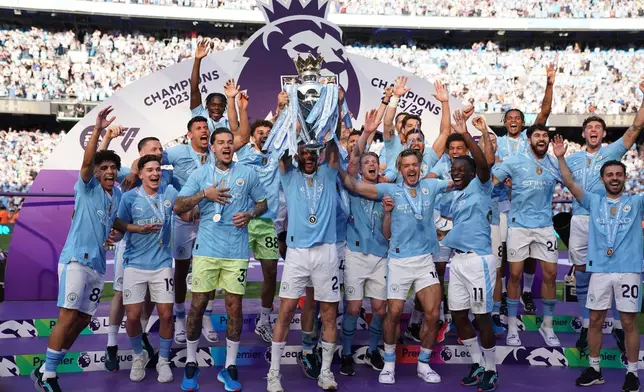
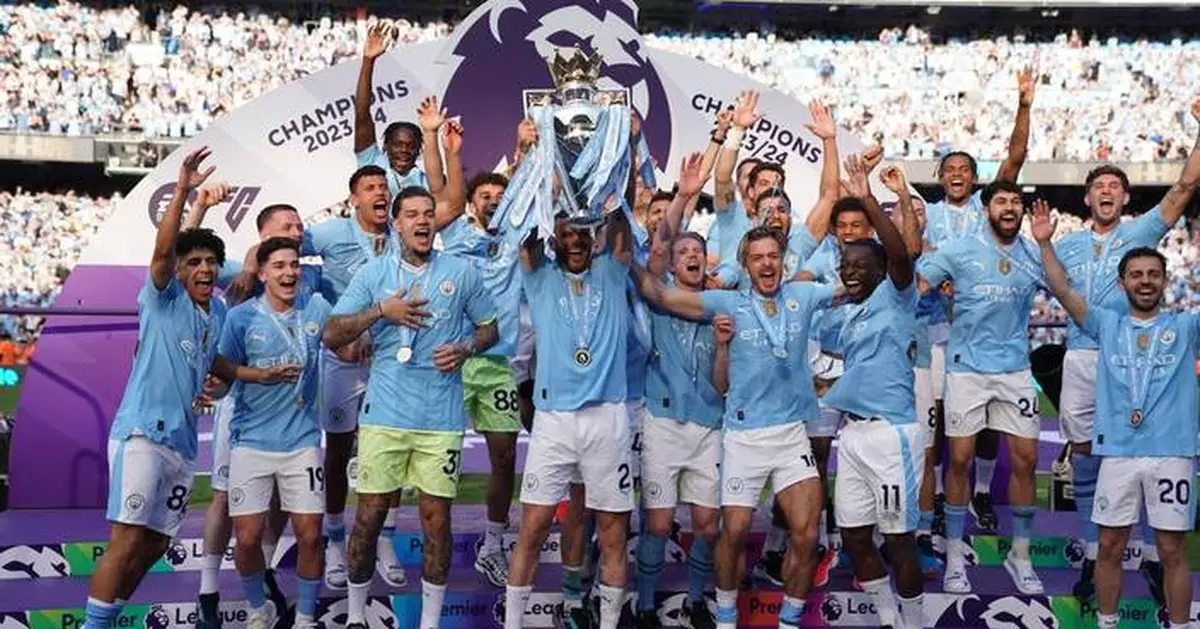
FILE - Manchester City players celebrate with the Premier League trophy after the English Premier League soccer match between Manchester City and West Ham United in Manchester, England, Sunday, May 19, 2024. (AP Photo/Dave Thompson, File)
In a stunning development Friday, several media outlets — including the BBC — reported that City has been found guilty of almost all of the 115 charges leveled against the Abu Dhabi-controlled club by the Premier League for alleged breaches of financial rules for much of the last two decades.
There still has been no official announcement of the verdict that could have seismic ramifications in the English game for years to come. City, after all, has been the dominant force in the country since 2012, with its expensively assembled squads — featuring top players like Sergio Aguero, Kevin De Bruyne and Erling Haaland — winning eight Premier League titles, many domestic cups and the Champions League in 2023.
In that period, the likes of Liverpool, Arsenal and Manchester United — the neighbor in whose shadow City lived for so long — were mostly left trophyless.
“I think it’s going to be the biggest case of its kind in English football history, without a doubt,” said Dave Powell, a soccer finance expert and lecturer at the University Campus of Football Business in Manchester.
Here’s a closer look at the case that everyone in soccer is talking about, and what could happen next:
In February 2023, the Premier League went to battle against its own champion team in unprecedented fashion, releasing a long statement detailing a list of 80 alleged breaches of its financial rules by City from 2009-18, the first nine seasons under Abu Dhabi ownership.
The violations included failing to provide accurate financial information and submitting inflated figures for sponsorship deals out of Abu Dhabi; hiding payments that supplemented salaries of managers and players; and breaching financial rules established by the Premier League and UEFA, European soccer's governing body, aiming to keep clubs financially stable by not spending beyond their means.
The league also accused City of 35 more breaches relating to its alleged failure to cooperate with the investigation from December 2018.
The charges stemmed from purported internal emails from City published by German outlet Der Spiegel which, it claimed, detailed schemes by the club to allegedly cover up true sources of income in a bid to comply with financial fair play regulations. The information published by Der Spiegel was unearthed by the “Football Leaks” website, whose founder is Rui Pinto — a Portuguese computer hacker.
The club did not dispute the authenticity of any initial published emails but said they were “out-of-context materials purportedly hacked or stolen from City Football Group and Manchester City personnel and associated people” and that it was an “organized and clear” attempt to damage City's reputation.
When the Premier League announced its charges in 2023, City said it was “surprised” by the allegations and that it welcomed an investigation by an independent commission “to impartially consider the comprehensive body of irrefutable evidence that exists in support of its position.”
In responding Friday to the media reports that said it was guilty of most of the charges, City said its position “remains consistent” with previous comments about a case that was “ongoing, with significant elements to be completed, and subject to strict confidentiality.”
“The club has diligently respected due process for eight years,” City said, “on the basis that the Premier League board and executive would behave as an independent, impartial and fair-minded regulator, free from partisan influence.”
In a letter to the team's fans, City chairman Khaldoon Al Mubarak said the “confidence and intent in proving the club’s innocence is just as strong as when this began.”
The soccer world waits for the official publication of the verdict — it could run to hundreds of pages — from the independent commission that heard the case in late 2024. For now, the Premier League is maintaining a public silence.
Then comes the sanction, which will handed out after a hearing by the same commission that reached the verdict. When that is announced is set to depend on the completion of an appeal that City will lodge, a person with knowledge of the situation has told The Associated Press. The person spoke on condition of anonymity to respect confidentiality elements of the process.
According to Rule W64 of the Premier League handbook, there is a range of sanctions available to the commission, from a fine, to a points deduction to expulsion from the league.
For context, Everton was given a record 10-point deduction in 2023 — later reduced to six — for overspending in one financial period (three years up to the end of the 2021-22 season). City's charges are much, much wider — and unlike Everton, include a refusal to cooperate.
An appeal must come within 14 days of the decision and will lead to a three-person Appeal Panel being set up. Sky Sports is reporting that City could go to the High Court in London if it feels the process in the case was unfair and/or impartial.
UEFA previously accused City of overstating sponsorship revenue to comply with Financial Fair Play regulations, based on the same documents published by Der Spiegel. In 2020, UEFA ruled the club had committed “serious breaches” of those regulations from 2012-16 in handing out a two-year ban from its competitions.
That ban was overturned by the Court of Arbitration for Sport, which said some of UEFA's allegations were not proven and others were “time-barred.” CAS, instead, imposed a 10 million euro ($11.3 million) fine on City for failing to cooperate with independent investigators.
If the verdict goes against City as reported, there would likely be compensation claims from many clubs who could argue they had been impacted by City's rule-breaking.
A precedent was set just this year, with Everton ordered to pay more than 35 million pounds ($47 million) in compensation to Burnley, which successfully argued to a disciplinary commission that it would have survived relegation at Everton's expense in the 2021-22 campaign had its rival been given its six-point penalty for the financial breaches that season.
It's unclear if City could be stripped of its Premier League titles, though a line in the competition's handbook — that the commission can “make such other order as it thinks fit” — leaves such an option on the table, in theory. Relegation from the Premier League would surely lead to the breakup of its squad of superstars.
Away from the field, any verdict implying rule-breaking or cheating would be a major blow to the reputation of Abu Dhabi, whose purchase of a top soccer club in England has been described by some as a soft-power strategy at a time when other Gulf states have invested heavily in the sport.
The ownership would be losing a loyal friend, too.
“I said to them, if you lie to me, the day after I'm not here,” then-City manager Pep Guardiola — the coaching mastermind behind most of City's title wins — said in 2023. “I will be out and you will not be my friend anymore.”
AP Sports Writer Graham Dunbar contributed to this story.
See AP’s full soccer coverage here
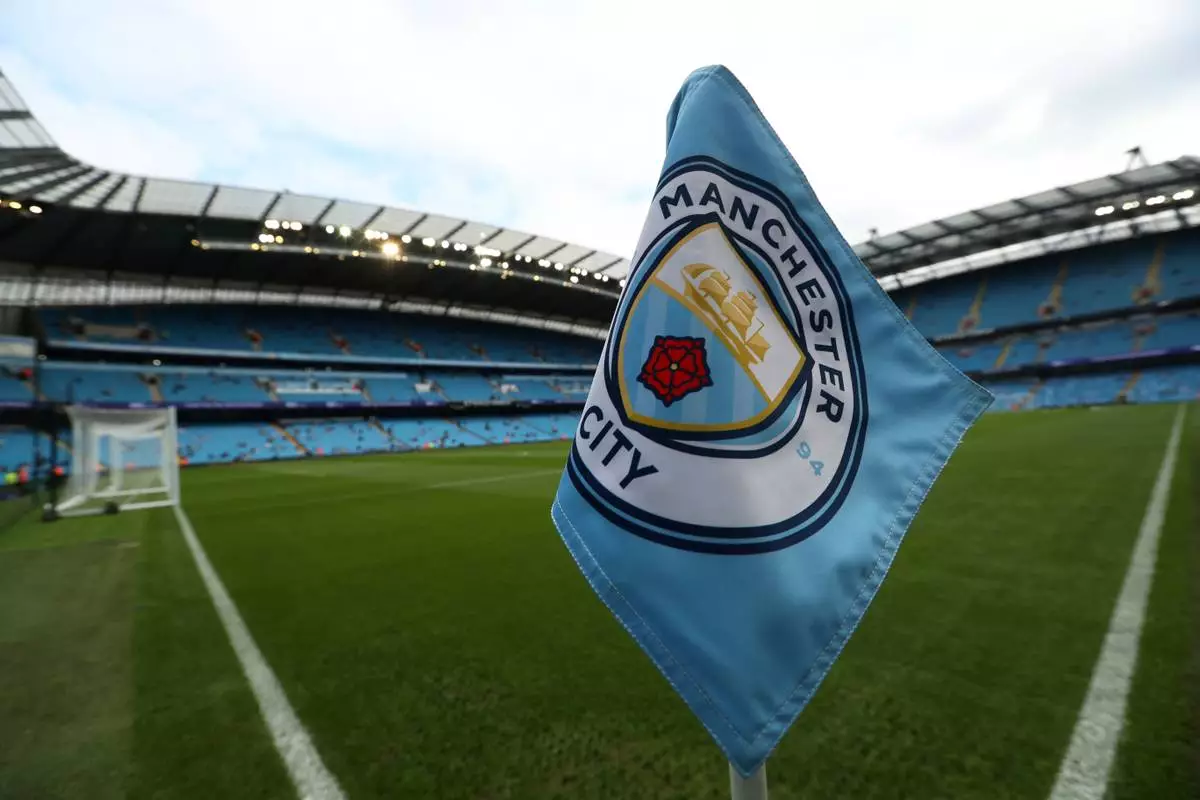
FILE - The club logo decorates a corner flag before the English Premier League soccer match between Manchester City and Newcastle United at the Etihad Stadium in Manchester, England, Saturday, Sept. 1, 2018. (AP Photo/Jon Super, File)
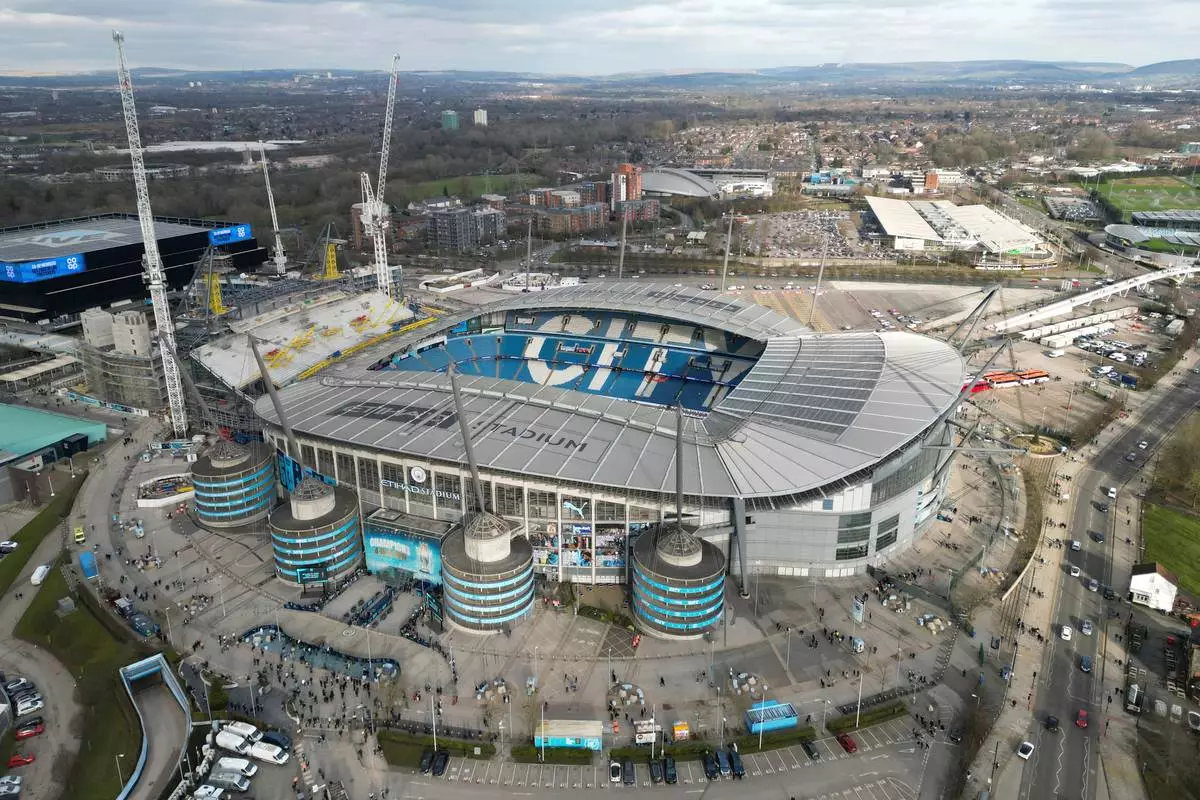
FILE - A general view of the Etihad Stadium ahead of the English FA Cup soccer match between Manchester City and Plymouth Argyle, Manchester, England, Saturday, March 1, 2025. (AP Photo/Jon Super, File)
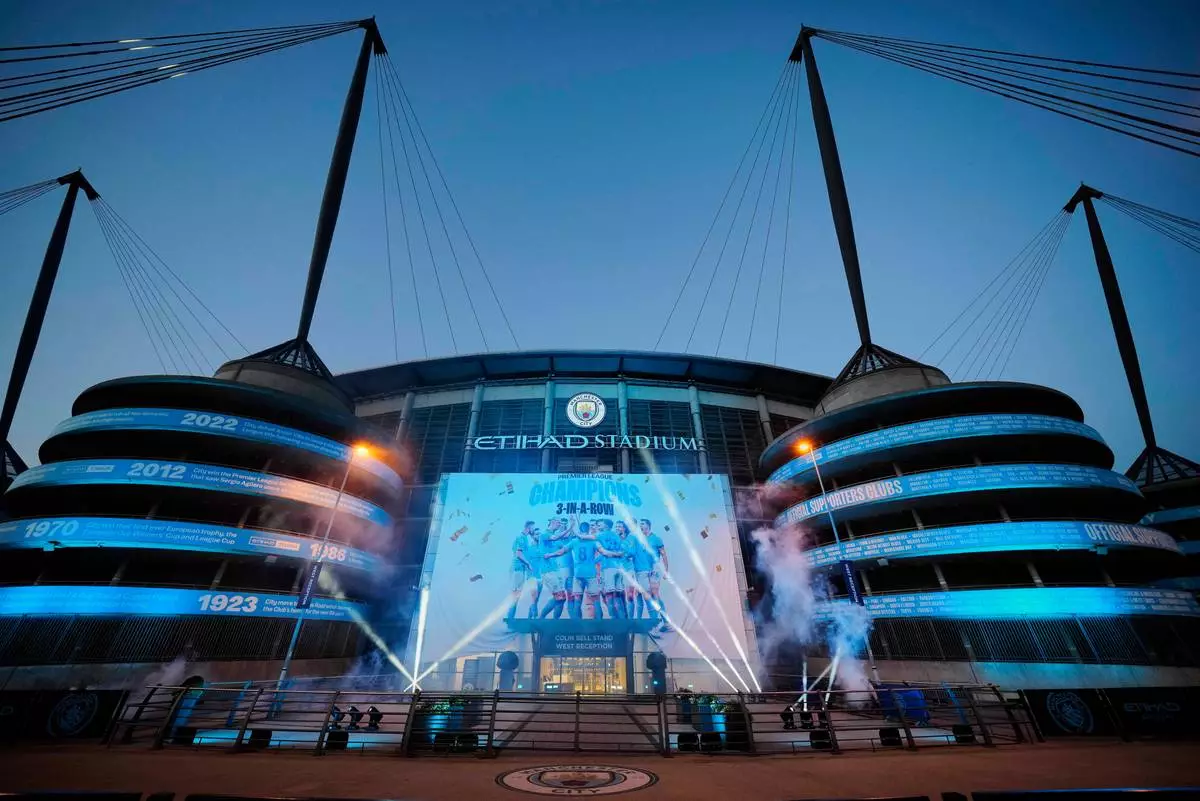
FILE - A banner celebrating their title win is illuminated outside Manchester City's Etihad stadium in Manchester, England, Saturday, May 20, 2023. (AP Photo/Jon Super, File)
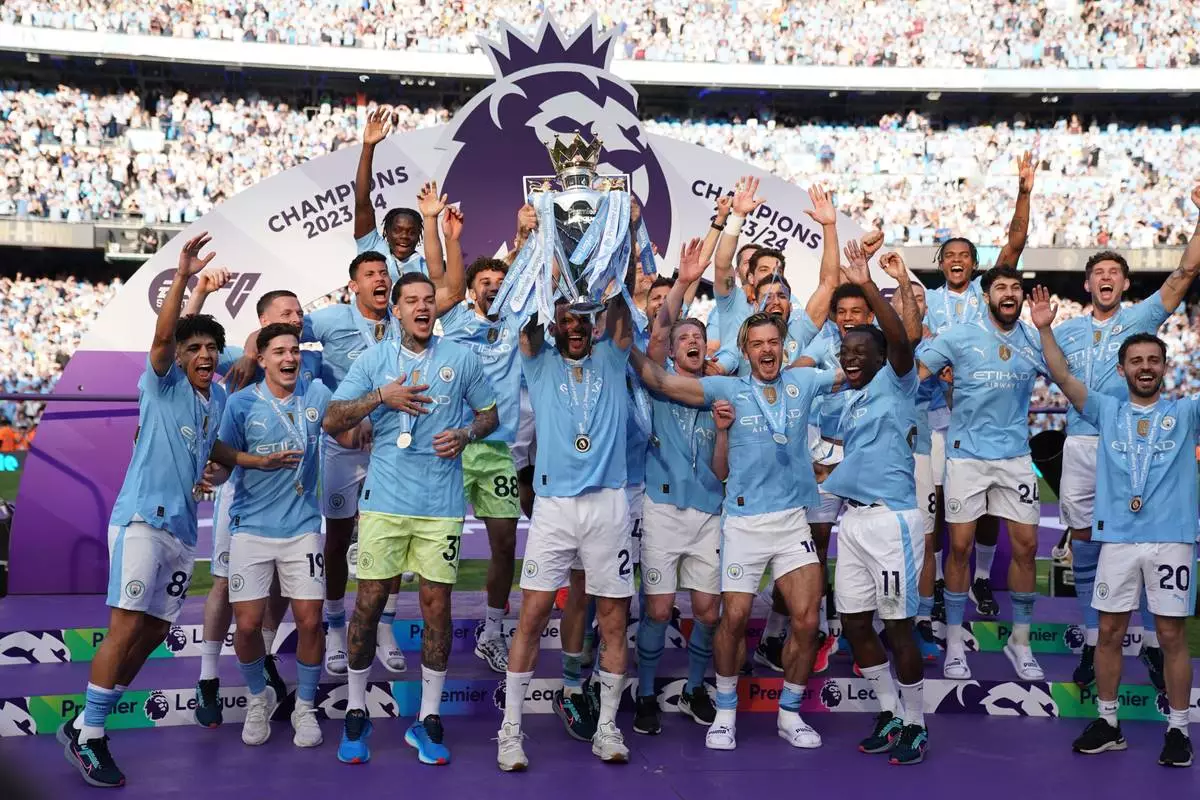
FILE - Manchester City players celebrate with the Premier League trophy after the English Premier League soccer match between Manchester City and West Ham United in Manchester, England, Sunday, May 19, 2024. (AP Photo/Dave Thompson, File)