Nvidia’s board has cleared the way for the company to spend $150 billion more in share buybacks as the chipmaking giant looks to make use of more of its stellar revenue growth fueled by demand for its high-end artificial intelligence chips.
The Santa Clara, California, company said Monday the share buyback increase, which it touted as the largest ever, brings its stock repurchase program to $235 billion.
Nvidia said it expects to “execute” the share buyback plan through its fiscal year that ends in Jan. 30, 2028.
Companies use repurchases, in part, to return cash to investors and support the stock’s price. Earnings per share can increase because there are fewer shares outstanding. Buybacks also signal confidence from leadership about a company’s financial prospects.
“NVIDIA’s growth is being driven by a once-in-a-generation platform shift to AI and accelerated computing,” said Jensen Huang, Nvidia's founder and CEO. “Our cash generation gives us the capacity to invest in the technologies that advance this transformation and return capital to shareholders. This authorization reflects our confidence in the long-term opportunity ahead.”
Shares in Nvidia climbed 2.3% in morning trading Monday. The stock is up about 24% so far this year.
Nvidia’s high-end chips have emerged as the leading building blocks for AI, and are highly sought after. The company reported quarterly profits of $59.69 billion late last month.
While AI has powered stock market gains and U.S. economic growth in recent years, there’s been growing skepticism about whether AI will justify the trillions of dollars being spent to develop the technology.
The AI industry is also faces increasing pushback amid objections to the expansion of data centers and fears that the rapid speed of AI adoption could lead to widespread job losses worldwide.
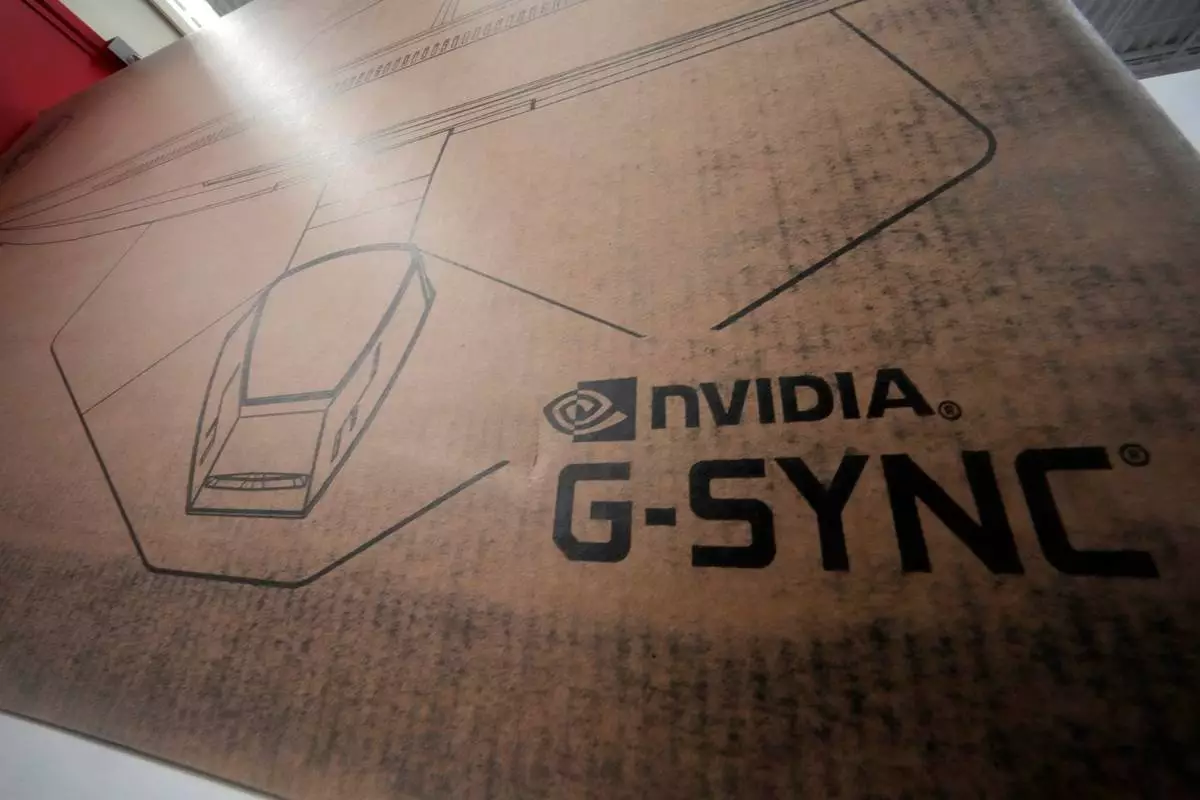
FILE - This is the NVIDIA logo on a gaming computer screen box at a Best Buy store in Pittsburgh on Monday, Jan. 23, 2023. (AP Photo/Gene J. Puskar, file)
CAIRO (AP) — Mediators are still working with Iran and the United States on brokering a deal to end the fighting and open the Strait of Hormuz — even after U.S. President Donald Trump publicly rejected Iran's latest proposal, three regional officials and a senior U.S. official told The Associated Press.
The indirect talks were expected to resume on Monday and come as the conflict that's caused global economic damage and badly battered Iran enters its eighth month. Multiple efforts to allow safe shipping on one of the world's most crucial waterways have failed.
The officials divulged that the behind-the-scenes efforts continue even after Trump spurned an Iranian proposal to reopen the strait in a week if the U.S. agreed to lift its blockade of Iranian ports, release frozen Iranian assets and waive sanctions on Iranian oil sales, among other conditions.
Iranian Foreign Minister Abbas Araghchi, however, remained in New York after last week's gathering of world leaders at the U.N. General Assembly. He said he was awaiting “definitive” word from mediators of Trump's rejection. Qatar has been mediating.
Despite Trump’s often bellicose rhetoric, he remains open to pursuing a non-military resolution to the conflict if one can be achieved, said the senior U.S. official.
But the official stressed there's a measure of doubt about whether Iran can be persuaded to ultimately meet Trump's conditions for a deal.
The officials were not authorized to comment publicly and spoke on the condition of anonymity about the behind-the-scenes diplomatic negotiations.
Two of the officials speaking to the AP confirmed that mediators are working with both sides on a proposal that would include reopening the strait and lifting the U.S. blockade, and then removing sanctions.
According to the draft text being discussed, the strait would reopen in accordance with a separate deal that Iran has been discussing with Oman, on the other side of the strait, and it would include no tolls — something Tehran has pursued. That deal seeks to temporarily manage shipping traffic on what was seen as an international waterway before the war.
Despite Trump’s public comments, the U.S. has not officially rejected the current proposal, indicating that his remarks may have been a negotiating tactic, according to the officials.
One regional official said the U.S. is seeking Iranian concessions on its nuclear program, including allowing inspectors to enter the country. Under the Memorandum of Understanding the two sides signed in June that collapsed within days, Iran's nuclear program was meant to be discussed over a 60-day period.
One official reported positive signals coming from both sides. A second reported “slight progress” over the weekend. The third said mediators are still trying “to soften” the positions of both sides.
The White House did not immediately respond to a request for comment.
While Iran’s latest proposal echoes the June deal, a key difference is speed.
Araghchi told a closed-door meeting on the sidelines of the U.N. General Assembly last week that Tehran had pitched the deal as benefiting Trump in the midterm elections. Araghchi later told journalists that “the seven-day timeline will start as soon as the United States accepts this plan.”
Both the U.S. and Iran have been hurting economically — the U.S. from high oil prices as Iran attacks ships on the strait, and Tehran from the naval blockade and a growing number of U.S. sanctions that bottle up its oil sales. Brent crude, the international standard, is above $108.
For months, the two sides have been trying to outlast the other, while regional countries endure missile and drone attacks as Tehran claims to target U.S. military assets in the region.
Reflecting Iran's impatience, a rare statement on Monday attributed to the theocracy's Supreme Leader Ayatollah Mojtaba Khamenei noted the “painful blows” that enemy forces have received near the strait. “Before long, the Arabian Sea, too, will be rid of them,” the statement added.
Tehran's latest proposal again sought to end the fighting on all fronts, including in Lebanon. But a new front has emerged in recent weeks as Iran-backed Houthi rebels in Yemen are now perched on another crucial waterway, the Bab el-Mandeb Strait at the southern entrance to the Red Sea. That has further pressured global energy markets.
Iran argues that the Houthis have their own demands, and that their conflict with neighboring Saudi Arabia is separate from the U.S.-Iran war, but Iranian officials said they are willing to help in finding a settlement between the Houthis and the Saudis, one of the officials said.
Lee reported from Washington. Associated Press writers Collin Binkley in Washington and AP Middle East editor Victoria Eastwood contributed to this report.
AP STANDARDS: The AP only uses anonymous sources when the information is vital to the news report and not opinion or speculation. The information must be unavailable except under the conditions of anonymity imposed by the source. The source must be reliable, in a position to have accurate information and approved by news managers.
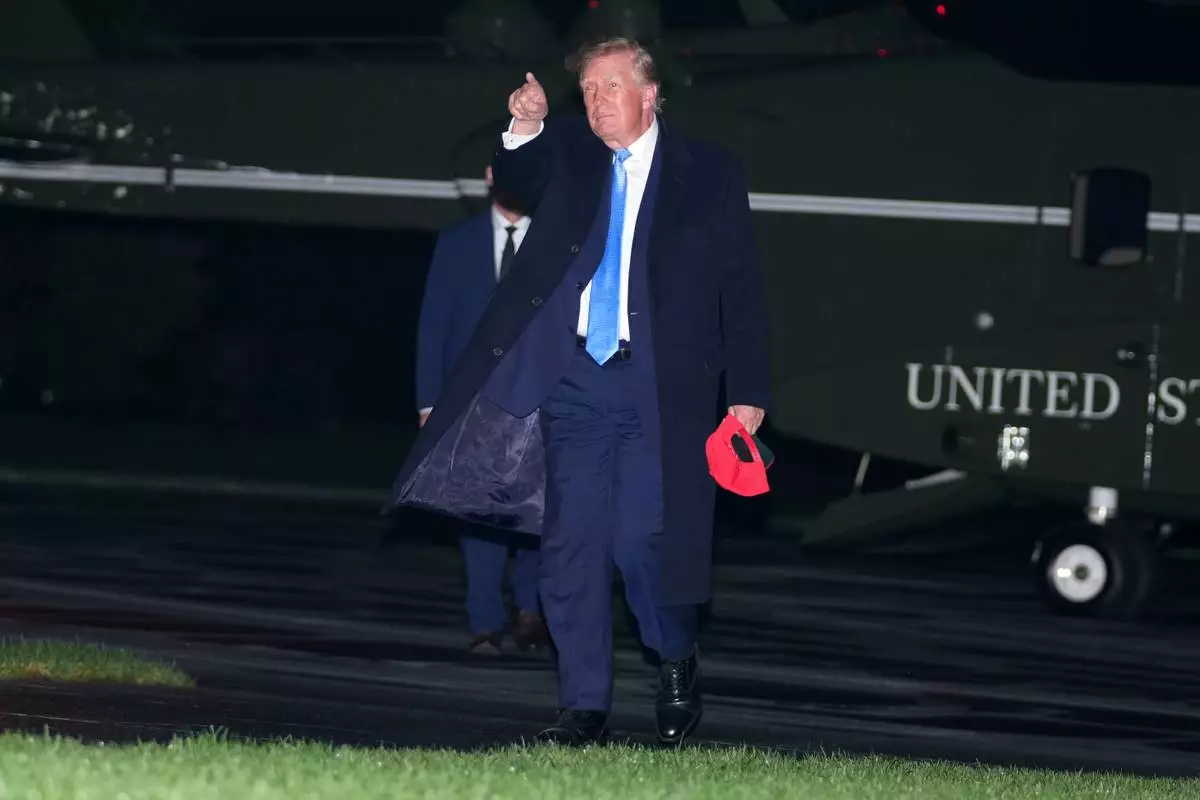
President Donald Trump walks on the South Lawn of the White House after arriving on Marine One, Sunday, Sept. 27, 2026, in Washington. (AP Photo/Allison Robbert)
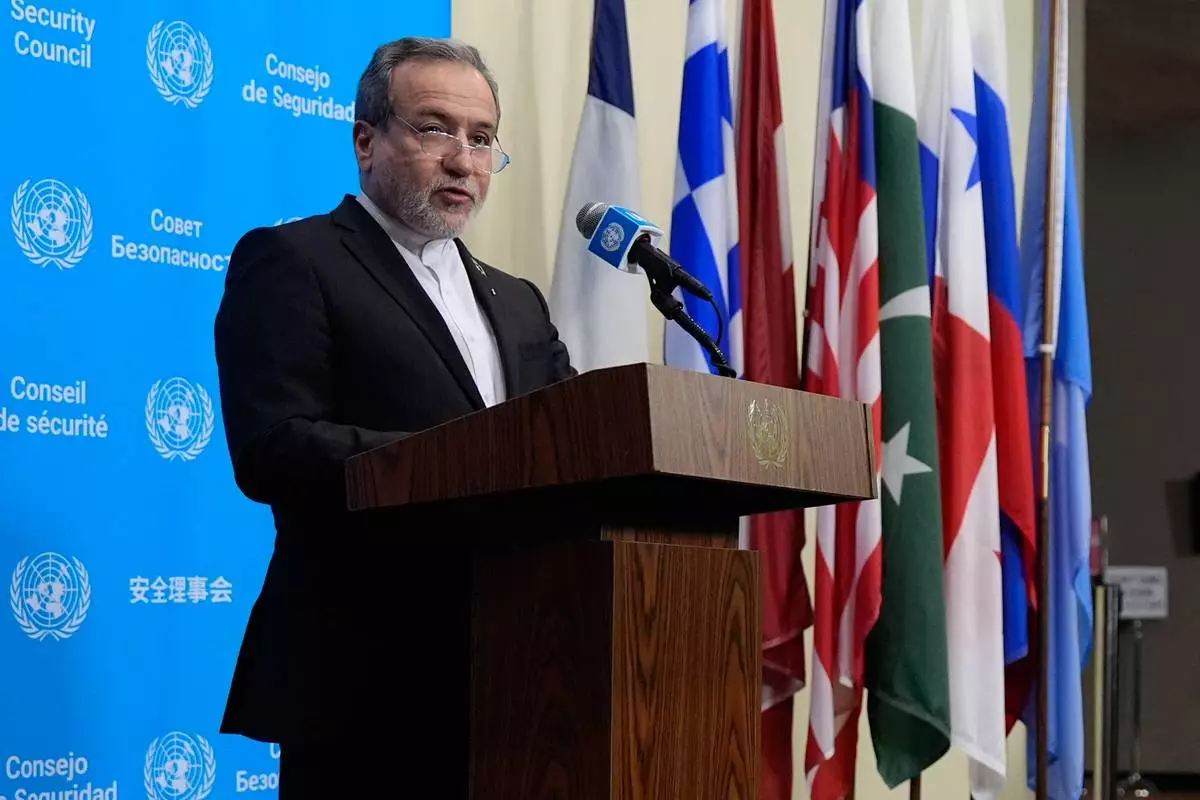
Iran's Foreign Minister Abbas Araghchi speaks to the media during the 81st session of the United Nations General Assembly at United Nations headquarters, Friday, Sept. 25, 2026. (AP Photo/Yuki Iwamura)