BOSTON (AP) — Jayson Tatum’s one constant during his development into a star with the Boston Celtics has been having Jaylen Brown as a teammate.
That partnership ended this offseason when the Celtics front office decided to trade Brown -- the 2024 NBA Finals MVP – to the Philadelphia 76ers in what was largely a cost-cutting move that broke up the duo most responsible for leading Boston to the 2024 NBA championship.
Click to Gallery
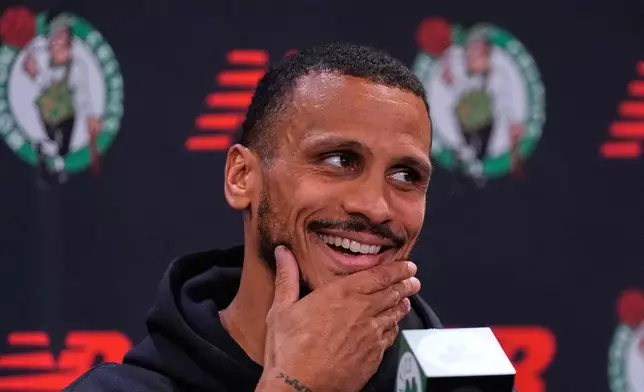
Boston Celtics head coach Joe Mazzulla listens to a reporter's question during the NBA basketball team¥s media day, Monday, Sept. 28, 2026, in Boston. (AP Photo/Charles Krupa)
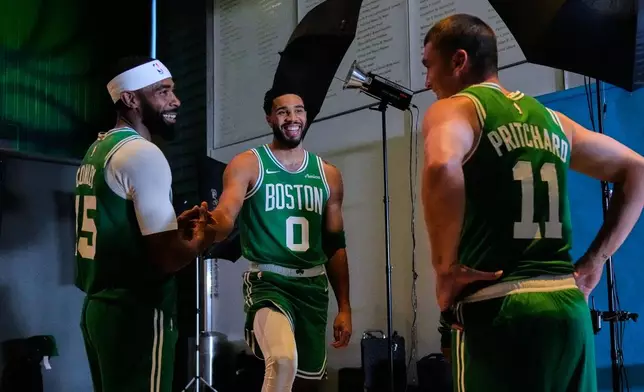
Boston Celtics' Jayson Tatum, center, talks with teammates Mike Conley, left, and Payton Pritchard (11) during the NBA basketball team's media day, Monday, Sept. 28, 2026, in Boston. (AP Photo/Charles Krupa)
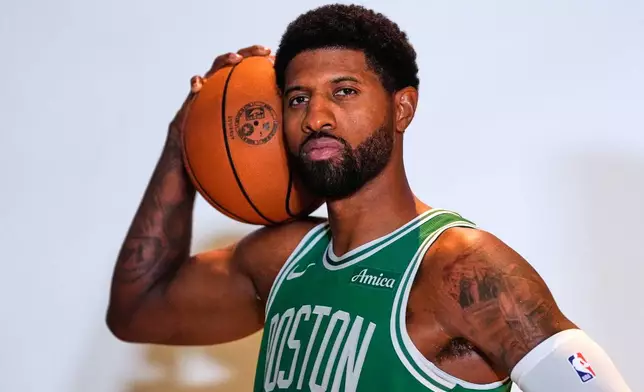
Boston Celtics' Paul George poses during the NBA basketball team's media day, Monday, Sept. 28, 2026, in Boston. (AP Photo/Charles Krupa)
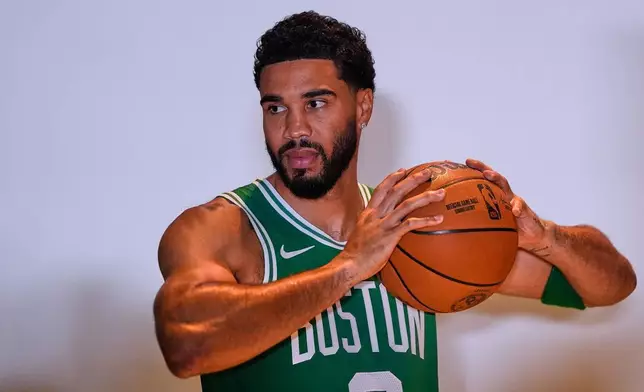
Boston Celtics' Jayson Tatum poses during the NBA basketball team's media day, Monday, Sept. 28, 2026, in Boston. (AP Photo/Charles Krupa)
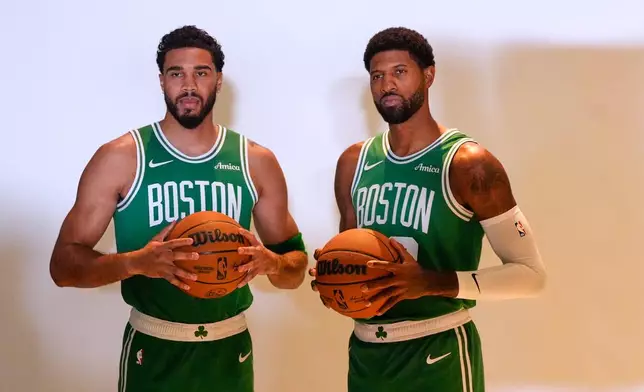
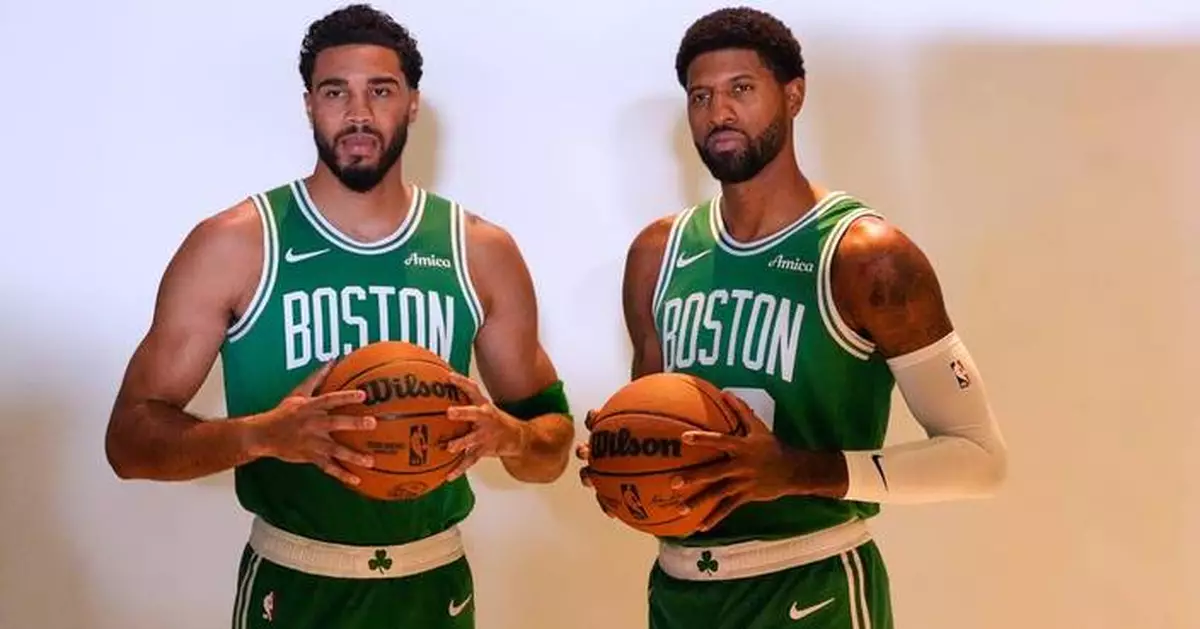
Boston Celtics' Jayson Tatum, left, and Paul George, right, pose together during the NBA basketball team's media day, Monday, Sept. 28, 2026, in Boston. (AP Photo/Charles Krupa)
“The business of the NBA comes and plays a part at some point. And I’ve seen it in my almost 10 years in this league,” Tatum said during the Celtics media day on Monday. “For me it’s more so being grateful for what we accomplished and what he means for this city and to this organization. Just the ups and downs in our career that we were able to grow and learn from and made us the players that we are today. So really just being thankful for those nine years.”
The closeness of the Tatum and Brown’s off-court relationship — or lack thereof -- was a topic of conversation throughout their time together as teammates, especially as it became clearer that having two $300 million contracts on the books would be unsustainable for the team’s salary cap health going forward.
The choice was ultimately to keep Tatum, sending Brown to an interdivision rival that has suddenly vaulted to a contender in the Eastern Conference after also picking up LeBron James this offseason.
It has cast a brighter spotlight on Tatum, a six-time All-star and five-time All-NBA selection, as the unequivocal leader of the Celtics as he enters his first full season after tearing his Achilles tendon during the 2025 NBA playoffs.
He said he’s ready to take on the challenge of leading new-look version of the Celtics, that got back Paul George in the trade and added big man Mitchell Robinson and guard Mike Conley Jr.
“Yeah, very comfortable. This is Year 10,” Tatum said. “Leadership is about a lot of different things. Awareness is the biggest one. Self-awareness, awareness of the group. And just understanding we all have roles and we’re just kind of simply in this together. So it looks different from person to person.”
Celtics coach Joe Mazzulla said the style of the team won’t necessarily change without Brown.
“I don’t think that it’s necessarily the phrase ‘without Jaylen,‘” Mazzulla said. “Every year you’re getting new players, old players, the same players that you have coming back expand their games and they look differently. So it’s not as much what it looks like without one person or the other as much as it’s what’s our roster, how can we take advantage of the strengths and talent that we have.”
Tatum reached the 16-month mark since he had surgery on his Achilles tendon and he said he’s ready to go after having to miss Game 7 of Boston’s first-round playoff matchup against the Sixers last season.
“I feel great having this offseason to get stronger,” he said. "Get more explosive and just work on my body in totality. So, obviously feel much better than I did this time last year and I’m excited and thankful for that.”
If anyone knows what it’s like to try to return to the court after a major injury, it’s George. He missed nearly all of the 2014-2015 NBA season while with the Indiana Pacers after sustaining a compound fracture in his right leg during a Team USA scrimmage.
He reiterated that he sees his role this season as filing whatever holes there are on the court.
“Obviously, JT is the guy,” George said. “I’m there to support him in all facets. I’ve always prided myself on being able to not just do one thing, kind of wearing whatever hat that I needed to while still producing at a high level. That’s kind of how I view being here.”
Two years ago, during Boston’s conference semifinals loss to the New York Knicks, Mazzulla employed an intentional foul strategy against Robinson, a historically bad shooter at the line.
Mazzulla joked Monday that he’d miss fouling Robinson now that he was one of his players.
Robinson, who said he’s worked on his career 50.8% free throw shooting this offseason, said that his history with Mazzulla required a conversation between the two.
“At first, we had a little issue because I’m like, ‘You've got to say sorry for fouling me,’” Robinson joked. “He apologized, and now we’re on the same team, so it’s going to be great, just building together and stuff like that. ... I feel like it’s going to be epic.”
See AP’s full NBA coverage here
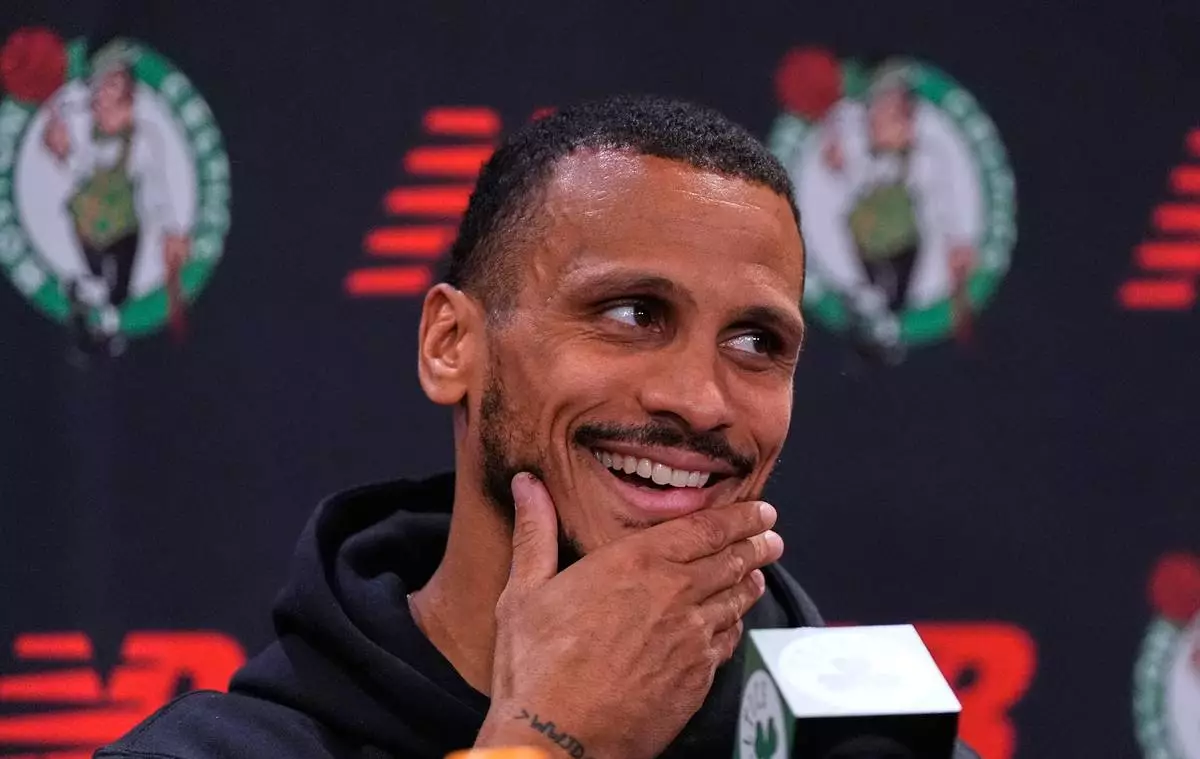
Boston Celtics head coach Joe Mazzulla listens to a reporter's question during the NBA basketball team¥s media day, Monday, Sept. 28, 2026, in Boston. (AP Photo/Charles Krupa)
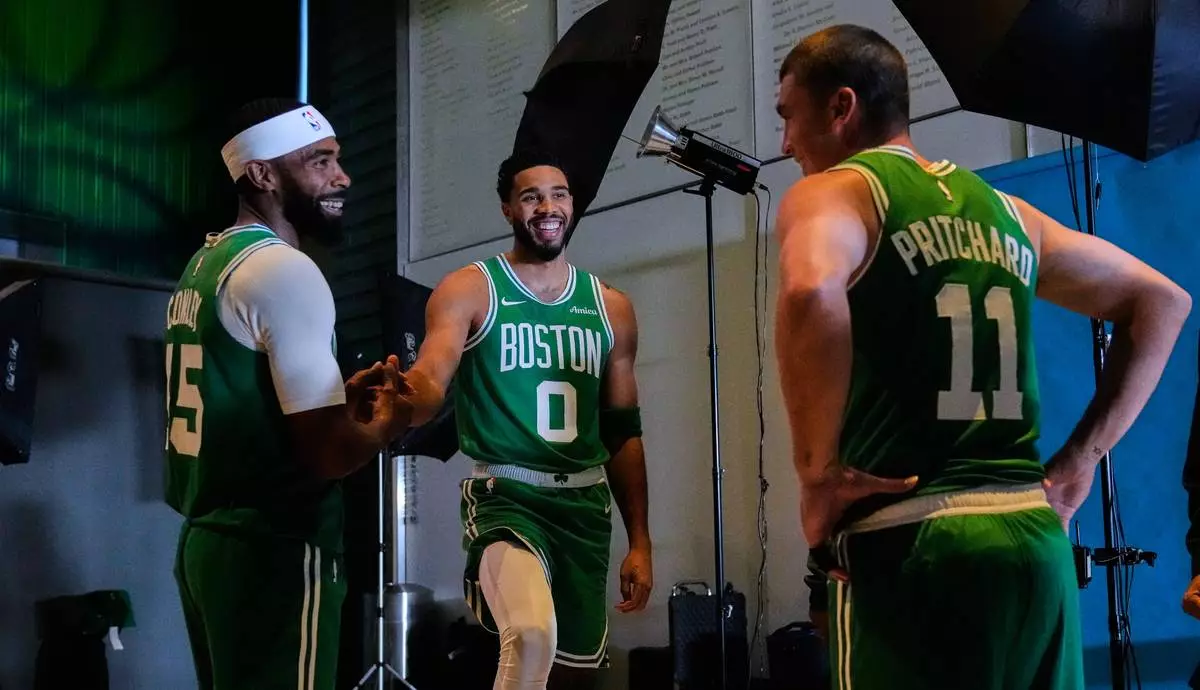
Boston Celtics' Jayson Tatum, center, talks with teammates Mike Conley, left, and Payton Pritchard (11) during the NBA basketball team's media day, Monday, Sept. 28, 2026, in Boston. (AP Photo/Charles Krupa)
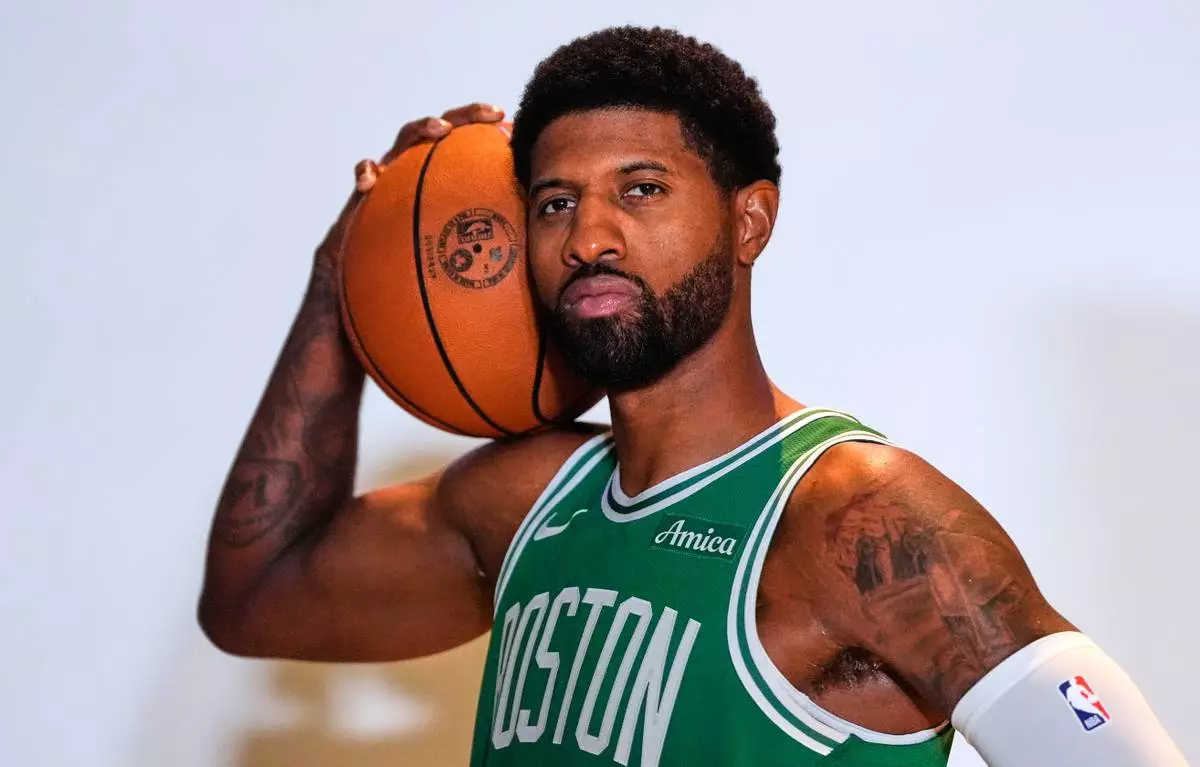
Boston Celtics' Paul George poses during the NBA basketball team's media day, Monday, Sept. 28, 2026, in Boston. (AP Photo/Charles Krupa)
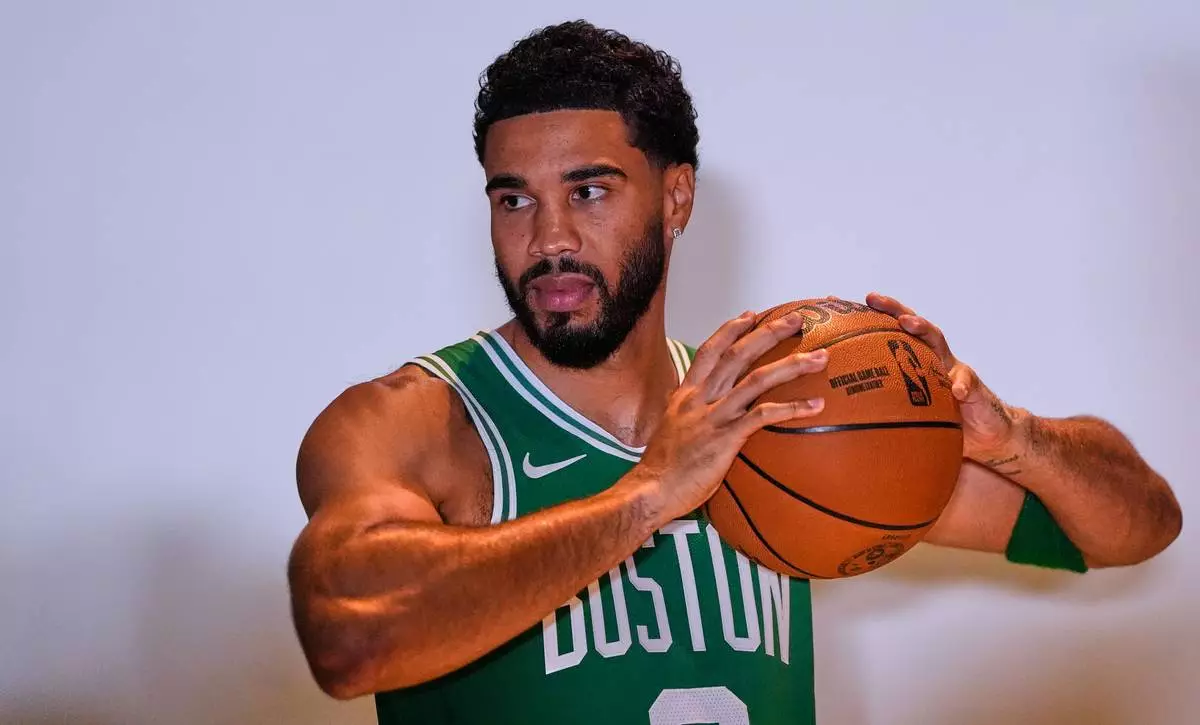
Boston Celtics' Jayson Tatum poses during the NBA basketball team's media day, Monday, Sept. 28, 2026, in Boston. (AP Photo/Charles Krupa)
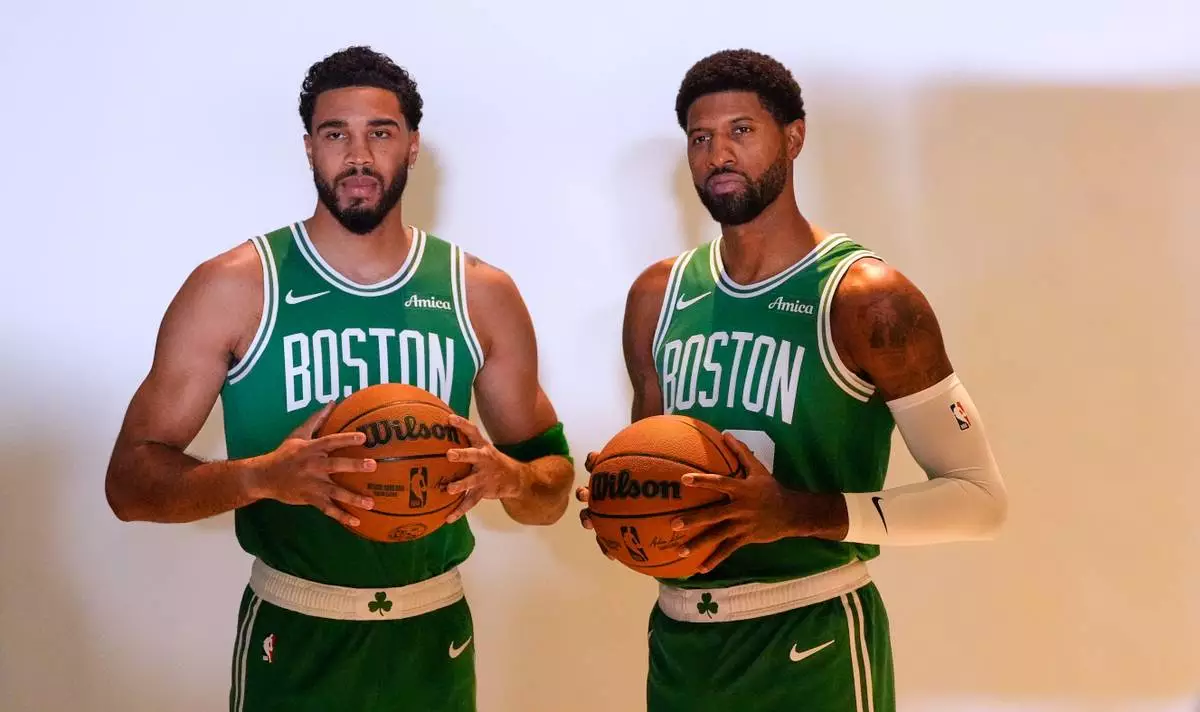
Boston Celtics' Jayson Tatum, left, and Paul George, right, pose together during the NBA basketball team's media day, Monday, Sept. 28, 2026, in Boston. (AP Photo/Charles Krupa)