Hezbollah Secretary-General Naim Qassem said Sunday that the group remained committed to "resistance" and would not "surrender" to Israel, reaffirming the group’s refusal to disarm.
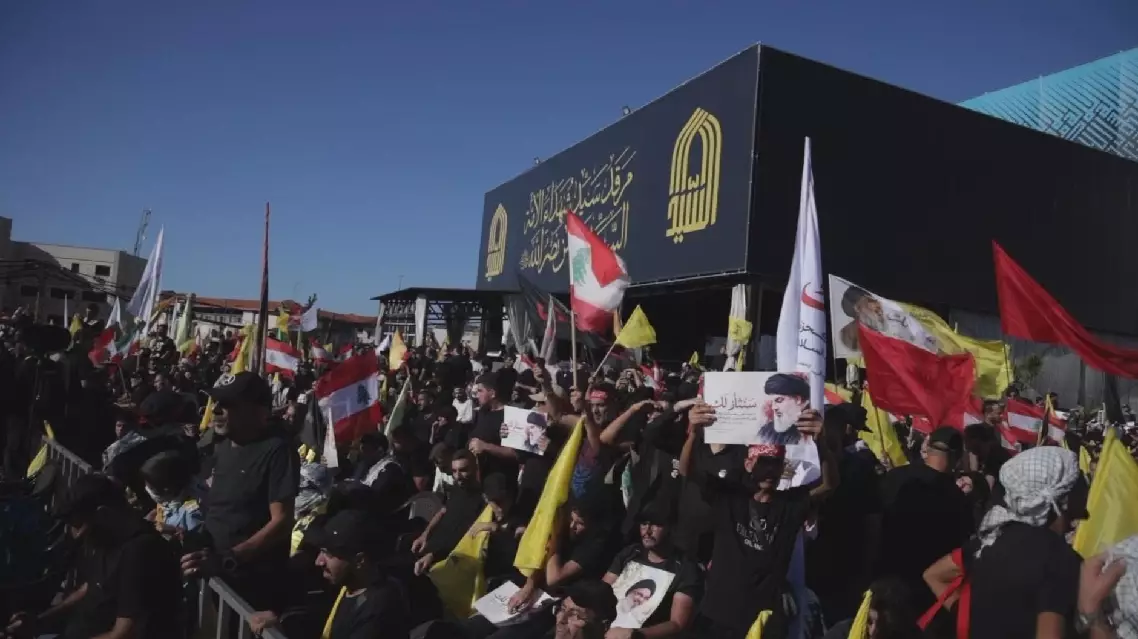
Speaking at a Sunday rally marking the second anniversary of the death of late Hezbollah leader Hassan Nasrallah, Qassem said Hezbollah "will only keep moving forward and will not be defeated."
In his televised speech at the rally, Qassem said Hezbollah cannot survive without "resistance," and called on all social groups in Lebanon to remain united.
According to al-Manar TV channel, thousands of people took part in the rally held in the southern suburbs of Beirut, Lebanon's capital.
On September 27, 2024, then-Hezbollah leader Hassan Nasrallah was killed in an Israeli airstrike on Beirut.
Israel and Hezbollah agreed to a ceasefire on June 19 following negotiations in Washington. Under the deal, Israeli forces were to withdraw from parts of southern Lebanon, with the Lebanese army taking over security responsibilities there.
But since the agreement was reached, Israeli forces have continued to carry out military strikes on targets inside Lebanon.
Hezbollah leader reaffirms refusal to disarm, vows continued resistance against Israel
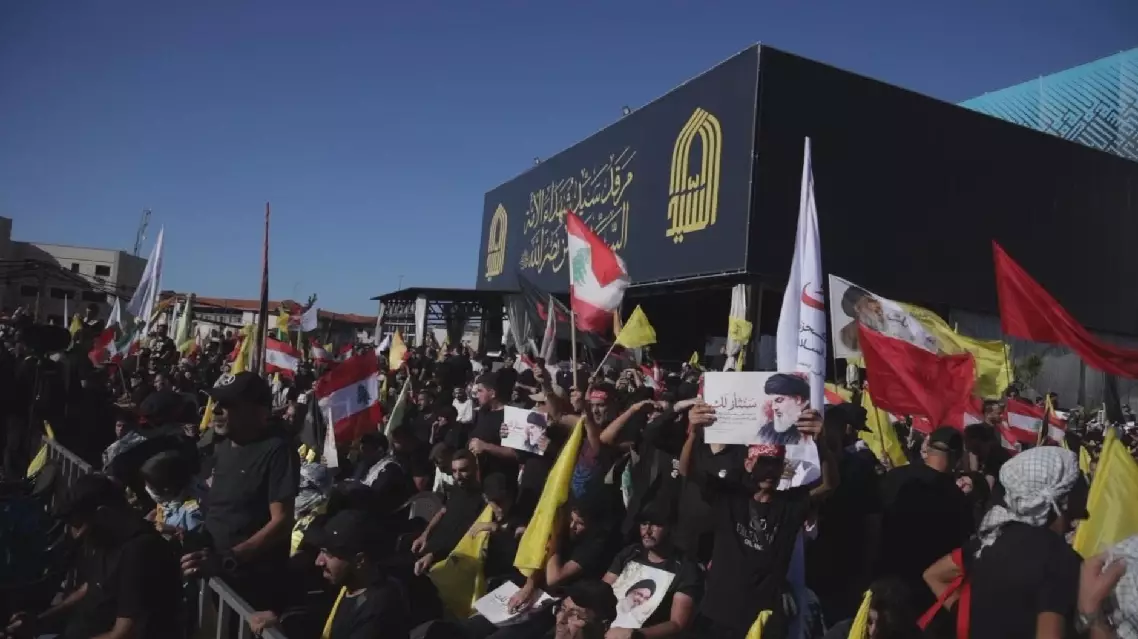
Hezbollah leader reaffirms refusal to disarm, vows continued resistance against Israel
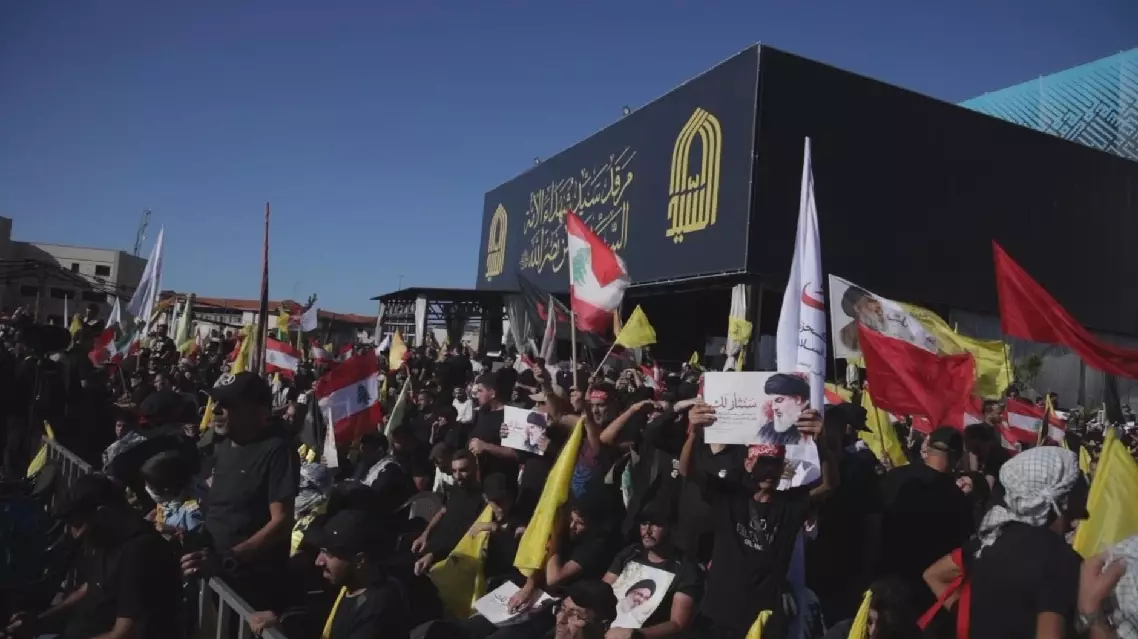
Hezbollah leader reaffirms refusal to disarm, vows continued resistance against Israel
From China's tokens and software to Malaysia's AI studios and offices, China's digital services are building a digital foundation for Asia-Pacific businesses.
As Malaysia's short-drama and AI animation scene is starting to take off, creators at Sunstrong Entertainment, a leading film production and cultural entertainment company, are using AI to generate scenes, characters, and effects -- work that requires millions of tokens.
"The biggest chance we see is [to] give more choice and more opportunity for audience, [and] get more entertainment option," said Jment Lim, founder of Sunstrong Entertainment.
But the digital brain behind some of this work is 3,000 kilometers away in Shantou, south China's industrial powerhouse of Guangdong Province, from which the tokens -- the smallest unit of information processed by a large AI model -- are going overseas through submarine optical cables to Malaysia and other Southeast Asian countries.
In April 2026, Shantou became the first city in China to export tokens. The process spans offshore data centers, token production and overseas applications, with data transferred in compliance with regulations.
Shi Yang, who works at one of the city's token production facilities, said it comes down to four factors.
"There are abundant international submarine cable resources, rich offshore wind power resources, pilot areas for token exports, and overseas Chinese business networks connecting Southeast Asia," said Shi, general manager of Guangdong Suihong Token Overseas Technology.
And those advantages are already showing up in the numbers.
"So far, average daily token invocations have risen from 100 million to 100 billion. We have rolled out 10 policies on token exports, and established overseas AI service centers in 10 countries, including Thailand, Singapore, and Malaysia," said Fang Xiaomin, deputy director of the management committee of China (Shantou) Pilot Zone for Economic and Cultural Cooperation with Overseas Chinese.
But sending data across borders also means strict compliance rules. That's where Daria Peng's company comes in.
"We use secure connections, access control, limited data use, and clear use for data storage and deletion," said Daria Peng, founder and CEO of Daxi Technology.
Tokens and computing power AI, but software is needed to run a cross-border business, and Shenzhen is one of China's top software export hubs. In 2025, its digital trade alone exceeded 66 billion U.S. dollars.
Kingdee is one of the companies driving that flow. Last year, Kingdee added 463 new overseas clients, including Chin Hin Group in Malaysia, where teams use Chinese software to run finance and operations across borders.
"One thing about Kingdee is that the AI operating system is called Lingee, it's seamlessly integrated. You don't need additional MCP to make it happen, right? In that context, I think most of -- 80 percent of -- the issue has been resolved within the day," said Abel Saw, chief transformation officer of Chin Hin Group.
"Kingdee has been expanding across key markets including Singapore, Malaysia, Indonesia, Vietnam, Thailand, Qatar, Hong Kong Special Administrative Region and Macao Special Administrative Region, aiming to build local marketing, delivery, customer success and R and D capabilities. We are also building an open partner ecosystem," said Daniel Xu, president of Kingdee International Holdings.
And that ecosystem is already happening on the ground as China’s trade in digitally deliverable services reached over 432 billion U.S. dollars in 2025.

China's tokens, software empower Asia-Pacific businesses