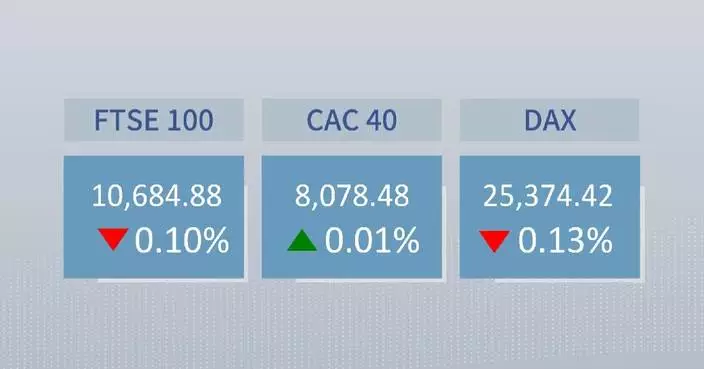
Russian President Vladimir Putin signed a presidential decree on Monday extending the deadline for the mandatory ruble settlement mechanism for natural gas trade from the originally scheduled October 1, 2026 to April 1, 2027.
Under the ruble settlement rule, foreign buyers are required to deposit rubles into the Russian bank accounts of Russian suppliers in order to complete payment.

Putin extends ruble payment requirement for foreign gas buyers to April 1 of 2027
The Chinese and U.S. first ladies came together last week at a museum in Washington, D.C., where a shared journey through Chinese art offered what the museum's director called "a lovely complement" to political and economic talks, a moment to celebrate culture side by side.
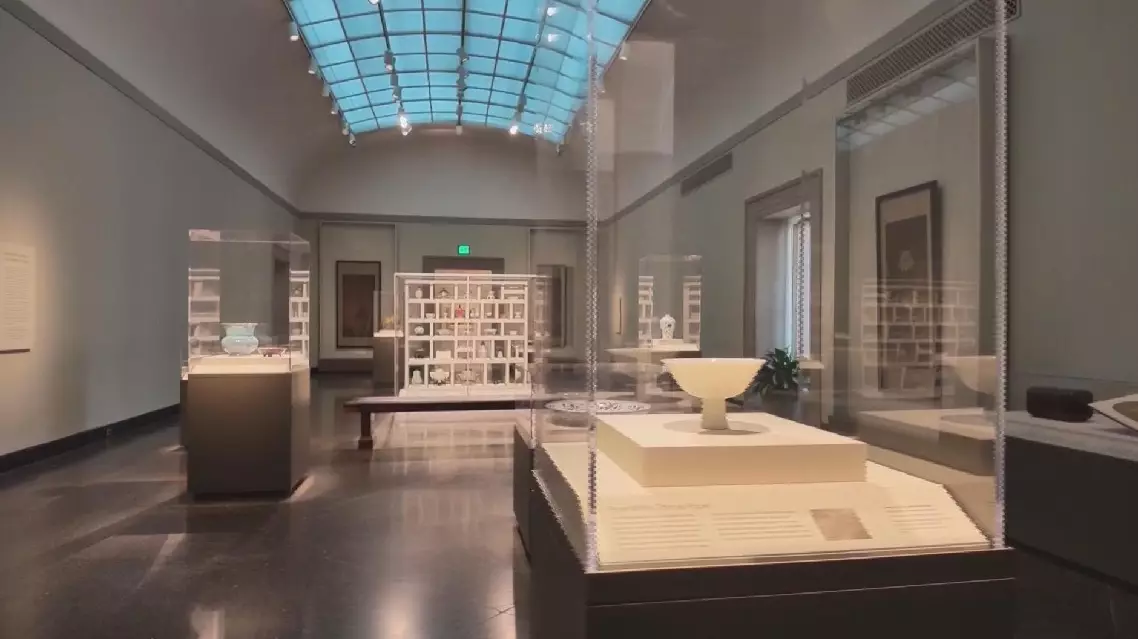
During Chinese President Xi Jinping's state visit to the United States at the invitation of U.S. President Donald Trump, Peng Liyuan, Xi's wife, and Melania Trump, Donald Trump's wife, visited the National Museum of Asian Art in Washington, D.C., on Sept 24.
The museum's director, Chase Robinson, who guided Peng Liyuan and Melania Trump through galleries filled with Chinese artifacts, shared with CGTN about the tour.
"They were standing right here looking at this display case, and looking in particular at this Qianlong piece," Robinson told CGTN, referring to a 18th-century porcelain vase made in Jingdezhen, China's porcelain capital, during the Qianlong period of the Qing dynasty (1644-1911).
Carole Yee, a Chinese brush painter who works as docent at the museum, called the visit a great honor, saying that the collection serves as a long-standing witness to cultural exchange between the two nations.
The museum holds one of the finest collections of Chinese art in the United States, with more than 13,000 objects covering thousands of years of Chinese history. For Robinson, the visit carried special meaning.
"Given that the focus of conversations that were being carried out was very much on economy and trade and other matters, it was a lovely complement for them, for members of the delegation to come and celebrate culture," he said.
The museum has an active provenance research program aimed at tracing the histories of cultural objects -- work that can sometimes lead to their return to their places of origin. Earlier this month, the United States returned 64 Chinese cultural relics and paleontological fossils to China.
"I think the question of returns and responsibilities that museums bear is a really important question. We have a large active program of what's called provenance research, and those discussions can result in return," Robinson said.
Some objects travel across borders, and sometimes they find their way back. Behind every relic lies a shared feeling. As the Chinese and American peoples come to know each other's culture and philosophy, they discover many shared hopes and aspirations.
"I truly hope so that people can learn more about our culture, our philosophy and how we view life, that really the Chinese and the Americans all have the same wants," said Yee.
Washington’s Asian Art Museum director recalls first ladies' visit