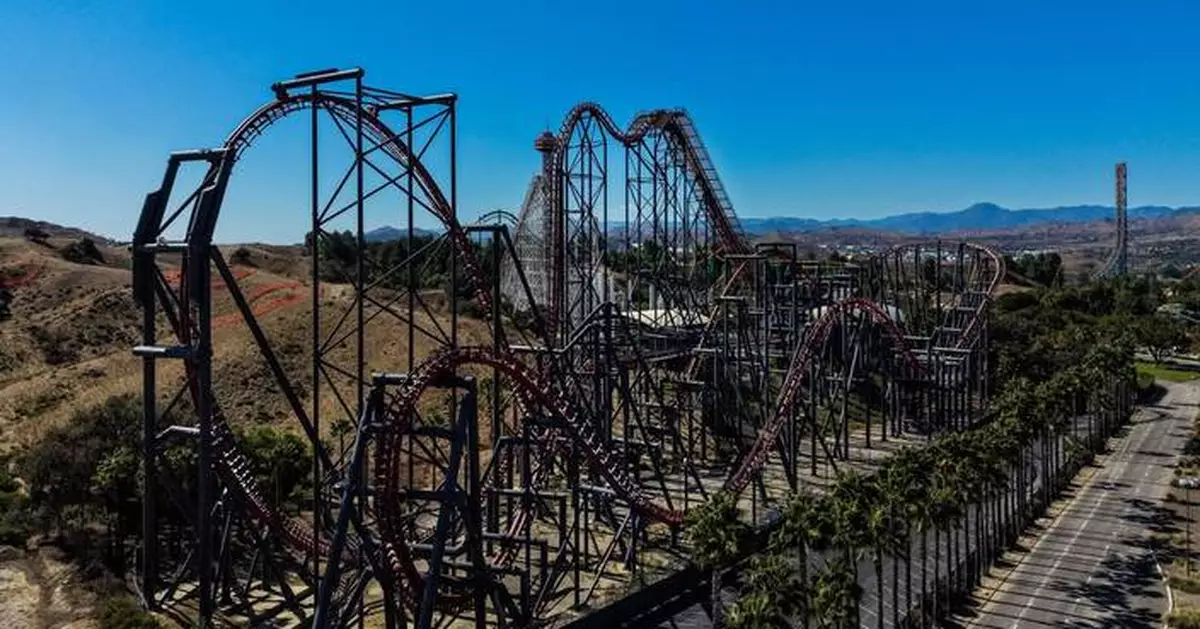
LOS ANGELES (AP) — Six Flags Magic Mountain is retiring its famous X2 roller coaster amid lawsuits alleging serious brain injury caused by the ride.
The Southern California theme park said Tuesday that it is permanently shuttering the ride after nearly 20 years. Six Flags recently settled a wrongful-death lawsuit from the family of a 22-year-old man who died after riding the coaster in 2022, and three more lawsuits alleging traumatic brain injuries were filed last week.
“While X2 consistently passed a multitude of safety tests, we have decided to close the ride because we believe it’s the right thing to do,” park President Brian Oerding said in an online announcement. “Ride safety is a cornerstone of our business, and when we see guest confidence affected, we take it seriously.”
The ride has been closed since the evening of July 12, after two women who rode the coaster less than a week apart both needed to be rushed to the hospital after they exited.
One of them, 25-year-old Naomi Greer-Wilkinson, collapsed shortly after the ride ended and was found to have massive brain bleeding inside the skull that required emergency brain surgery. She remains in a vegetative state in the hospital, unable to speak or move and dependent on a ventilator. Her family filed a lawsuit against Six Flags on her behalf.
Her attorneys said more than 100 people claimed they suffered brain injuries from the roller coaster in the past two years, and more lawsuits would be filed in the coming weeks.
According to the Six Flags Magic Mountain website, the X2 roller coaster reaches a top speed of 76 mph (122 kph) and has a total length of 3,610 feet (1,100 meters). The seats rotate 360 degrees “so your body will be flipping around the entire time,” and the ride features two “raven turns” — half loops that turn into sheer drops midway.
It debuted at the park in 2002 under the name X as the world’s first “fourth-dimension” roller coaster and reopened in 2008 as X2 with new trains and special effects. The uniqueness of the ride drew thrill-seekers from around the world and garnered a fervent fanbase.
The park settled a wrongful-death lawsuit filed by the family of Christopher Hawley, a 22-year-old who died the day after he rode X2. He was taken to the hospital after the ride with severe brain bleeding. The medical examiner’s office said his death was from blunt head trauma. The case was settled at the end of August, a few days before the trial was scheduled to start.
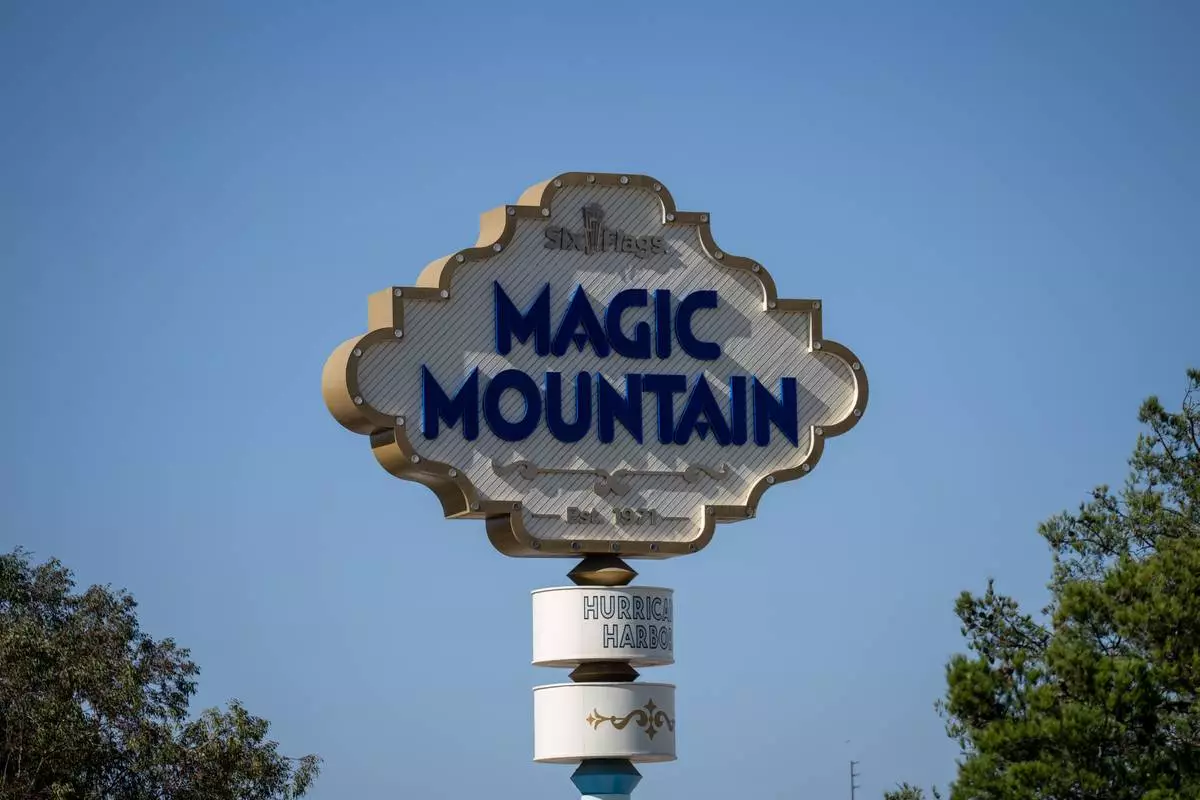
A Six Flags Magic Mountain sign is seen in Valencia, Calif., Wednesday, Sept. 23, 2026. (AP Photo/Jae C. Hong)
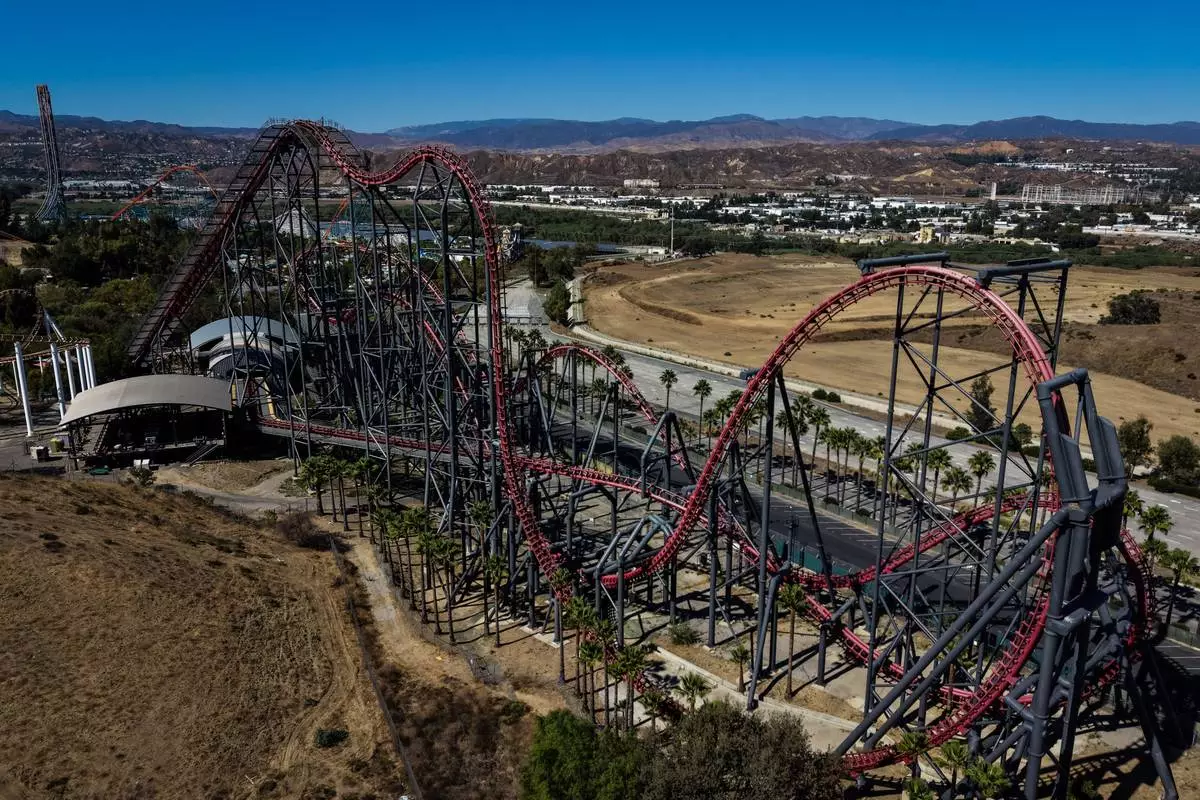
This aerial view shows the X2 roller coaster at Six Flags Magic Mountain in Valencia, Calif., Wednesday, Sept. 23, 2026. (AP Photo/Jae C. Hong)
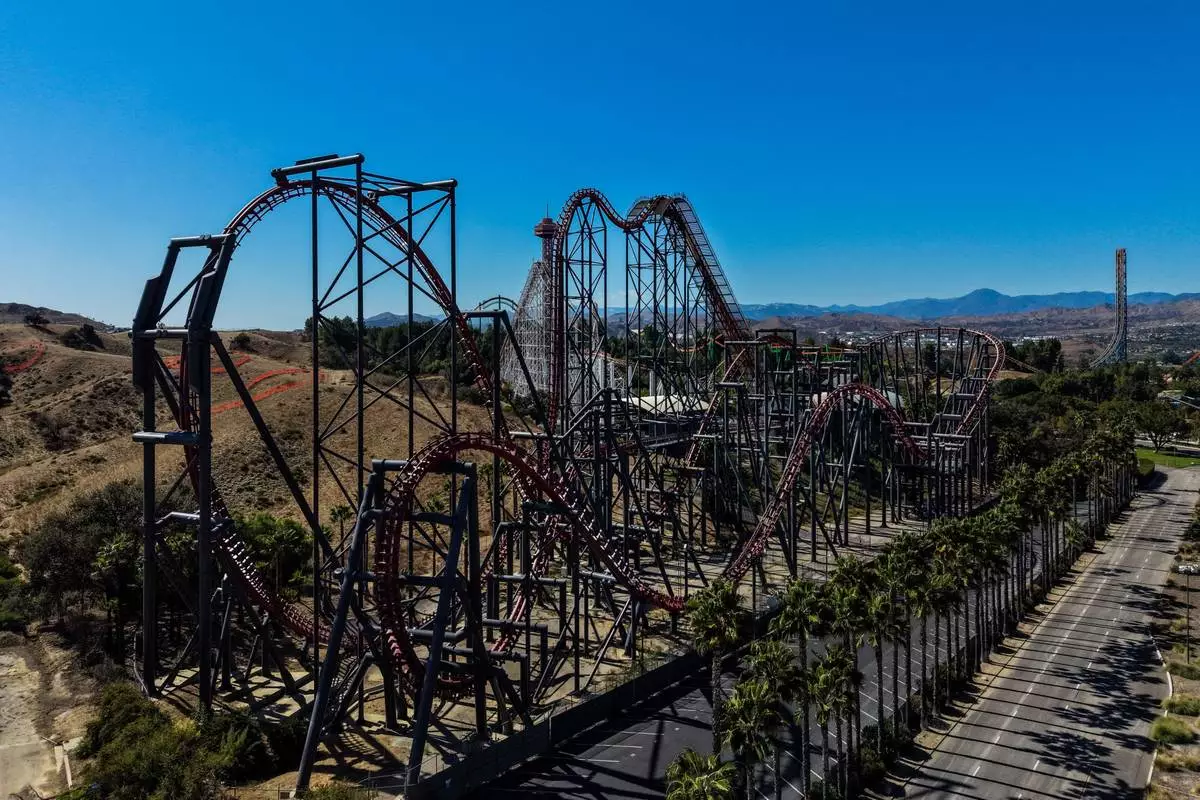
This aerial view shows the X2 roller coaster at Six Flags Magic Mountain in Valencia, Calif., Wednesday, Sept. 23, 2026. (AP Photo/Jae C. Hong)
Iran’s currency fell to a new record low on Tuesday, with traders in Tehran exchanging more than 2.5 million rials to the U.S. dollar in a stark reflection of how the war in the Middle East has steadily eroded the Iranian economy.
The latest decline came just 27 days after the rial hit its previous record low of 2.2 million to the dollar on Sept. 2. The currency has repeatedly reached new lows since the war began in February.
The Iranian economy has been under duress for years in the face of international sanctions. But a U.S. naval blockade on Iranian oil and new sanctions imposed since the start of the war have sent it into free fall.
Meanwhile, Iran’s top diplomat said indirect negotiations with the United States aimed at reopening the critical Strait of Hormuz have become “more serious,” while the Iranian Revolutionary Guard Corps’ chief spokesman Gen. Hossein Mohebbi on Tuesday called on Americans to take to the streets and protest the conflict.
Foreign Minister Abbas Araghchi told Iranian media late on Monday that the “current focus is solely on the Strait of Hormuz,” the chokepoint of the war.
Araghchi made the comments shortly before departing New York — where he attended last week’s gathering of world leaders at the U.N. General Assembly — and after meeting with Pakistani and Qatari mediators.
Araghchi said the Qatari intermediaries were expected to soon engage with the U.S. side.
“They are set to raise the matter with the American side once more, after which the final U.S. response will be conveyed to us,” Araghchi said. “If there is a response, the Qataris will convey it to us and a decision will be made in Tehran on that basis.”
Officials, including from the U.S., have confirmed to The Associated Press that mediators are working with Iran and the U.S. on trying to broker a deal to end the fighting and open the strait.
The mediation efforts continue even after U.S. President Donald Trump earlier this week spurned an Iranian proposal to reopen the strait in seven days if the U.S. agreed to lift its blockade of Iranian ports, release frozen Iranian assets and waive sanctions on Iranian oil sales, among other conditions.
Tensions in the Strait of Hormuz were underscored by a report Tuesday that a cargo vessel was struck by an “unknown projectile” while moving through the strait on Monday. The United Kingdom Maritime Trade Operations said it had received a delayed report from a third party.
The strike caused a fire on board that was extinguished, UKMTO said, and all crew members were reported safe, UKMTO said. The vessel, which wasn't identified, continued on its way, the report said. There was no immediate claim of responsibility for the attack.
The Trump administration said Tuesday that 10 individuals and entities based in Iran, Hong Kong and Pakistan now face sanctions over accusations of procuring weapons and weapon components for Iran’s defense ministry as it fights its now seven-month war against the U.S.
The United States is targeting people and companies around the globe that it accuses of being financial facilitators or enablers of Iran’s military supply chain, pushing ahead with economic warfare against Tehran at a time when renewed diplomacy between the two countries remains uncertain.
The latest action by the Treasury Department is part of the administration’s “Operation Economic Outcast” campaign, aimed at severing “critical financial lifelines” for the already heavily sanctioned Iranian government.
“Treasury will not tolerate any support to the regime and will continue to identify, expose, and isolate Iran’s enablers,” Treasury Secretary Scott Bessent said in a statement.
The Iranian Revolutionary Guard Corps on Tuesday made an appeal to everyday Americans to push their government to end the U.S. war against Iran, a provocative message that comes just weeks before critical midterm elections in the United States.
Mohebbi, the Guard spokesman, read a letter during a news conference in Iran's capital, Tehran, appealing to Americans to pressure their government and claiming that the only way for the war to end is for Washington to admit defeat and leave the Mideast.
Mohebbi’s remarks come as Trump’s Republican Party faces fierce headwinds as it looks to maintain control of Congress. But polling shows the war has darkened the American electorate’s mood ahead of the Nov. 3 election in which elevated gasoline prices, a byproduct of the conflict, loom large.
Mohebbi also accused the U.S. of using Iran’s nuclear program as a ruse to “plunder Iran’s wealth” and to turn the country “back into a colony.”
He added that the U.S. and others failed in their belief that military and economic action would get Tehran to submit and that Washington “has no choice but to acknowledge defeat and leave the region.”
“This is how the war will end,” he said.
Trump and his top aides are insistent that Iran’s economy cannot sustain a conflict much longer and have expressed confidence that Tehran will be forced to capitulate.
The U.S. president predicted soon after launching the war that the conflict would last a matter of weeks. More recently, he’s said that the war will likely end after the November elections in the U.S.
U.S. Secretary of State Marco Rubio in a Monday appearance on Fox News said Iran was heading toward an economic “cataclysm.” Administration officials say that a combination of new sanctions and a U.S. naval blockade aimed at preventing Iranian oil from going to market are having the intended effect.
“And so when you’re denying them money through oil sales and sanctions, you’re not just punishing them,” Rubio said. “You are preventing them from getting access to money that they will use to try and kill Americans and others around the world and their own people and build weapons and threaten the world and ultimately break out to a nuclear weapon program."
In a separate development, a crucial oil pipeline in Saudi Arabia that was shuttered by the kingdom earlier this month after coming under attack is once again operating, according to a Saudi government official.
The official, who was not authorized to comment publicly and spoke on condition of anonymity, said operations are near pre-attack levels and that the pipeline should be running at full capacity within a few weeks.
The kingdom relies on the East-West Pipeline, which runs the breadth of the country, to move its crude from oil processing facilities on the Gulf to ports on its western, Red Sea coast. From there it can be put on tankers for export.
Saudi Arabia blamed an Iran-backed militia in Iraq for the drone attack that forced the temporary shutdown of the 1,200-kilomeer (745-mile) pipeline.
Satellite imagery indicated tankers on Sunday loaded some 12.5 million barrels of oil at the Yanbu export terminal, which is supplied by the East-West Pipeline, and the nearby terminal at Al Muajjiz, the data and analytical firm Kpler said in a report.
Associated Press writer David McHugh in Frankfurt, Germany contributed reporting.
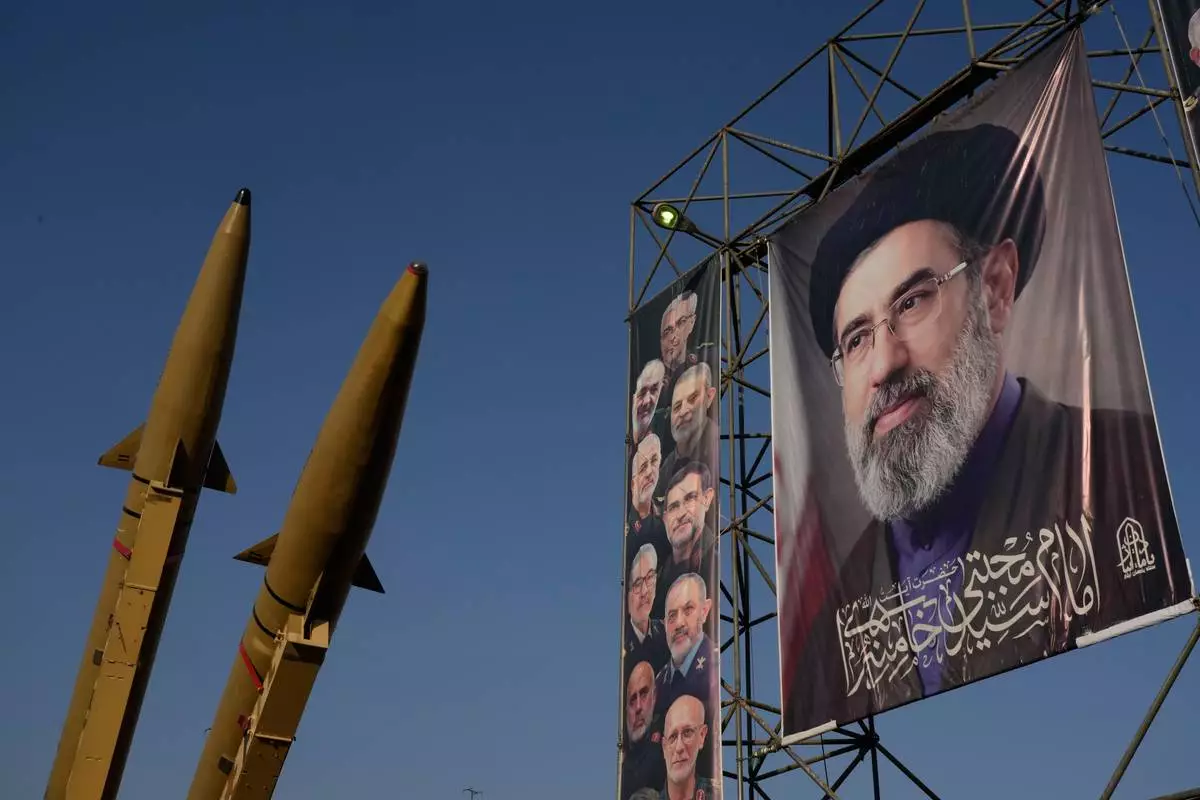
Iranian missiles and banners showing portraits of the Iranian Supreme Leader Ayatollah Mojtaba Khamenei, right, and the late armed forces commanders, who were killed in Israeli and U.S. strikes, are displayed in a military exhibition commemorating the anniversary of the start of the 1980-88 Iraq-Iran war at Baharestan Square, in Tehran, Monday, Sept. 28, 2026. (AP Photo/Vahid Salemi)
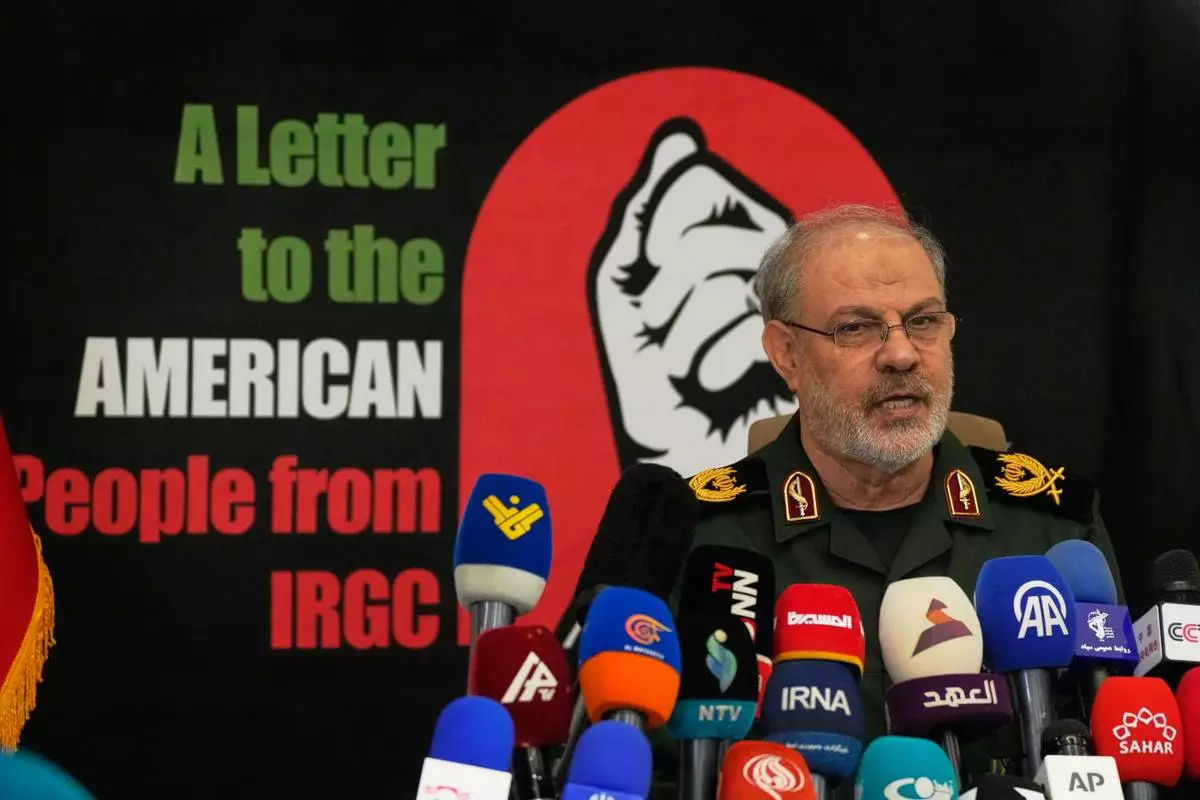
Iran's Revolutionary Guard spokesman Gen. Hossein Mohebbi speaks during a news conference in Tehran, Iran, Tuesday, Sept. 29, 2026. (AP Photo/Vahid Salemi)
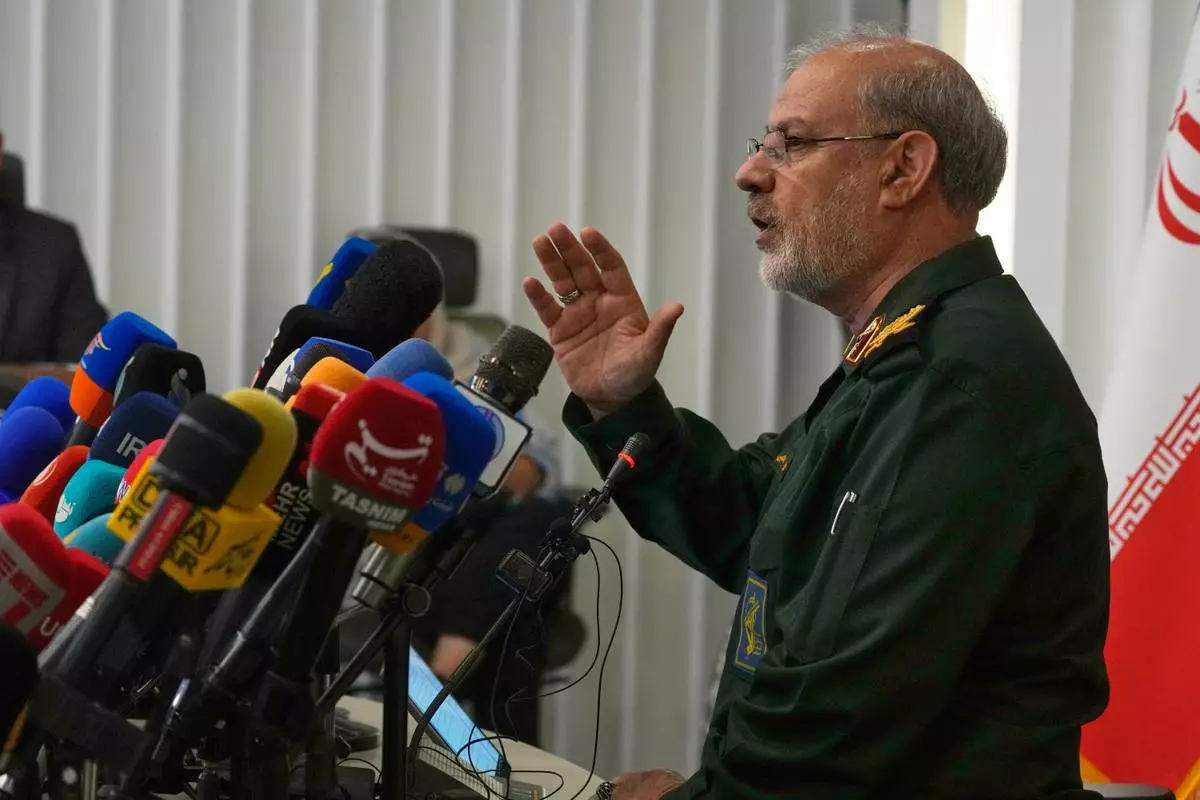
Iran's Revolutionary Guard spokesman Gen. Hossein Mohebbi speaks during a news conference in Tehran, Iran, Tuesday, Sept. 29, 2026. (AP Photo/Vahid Salemi)
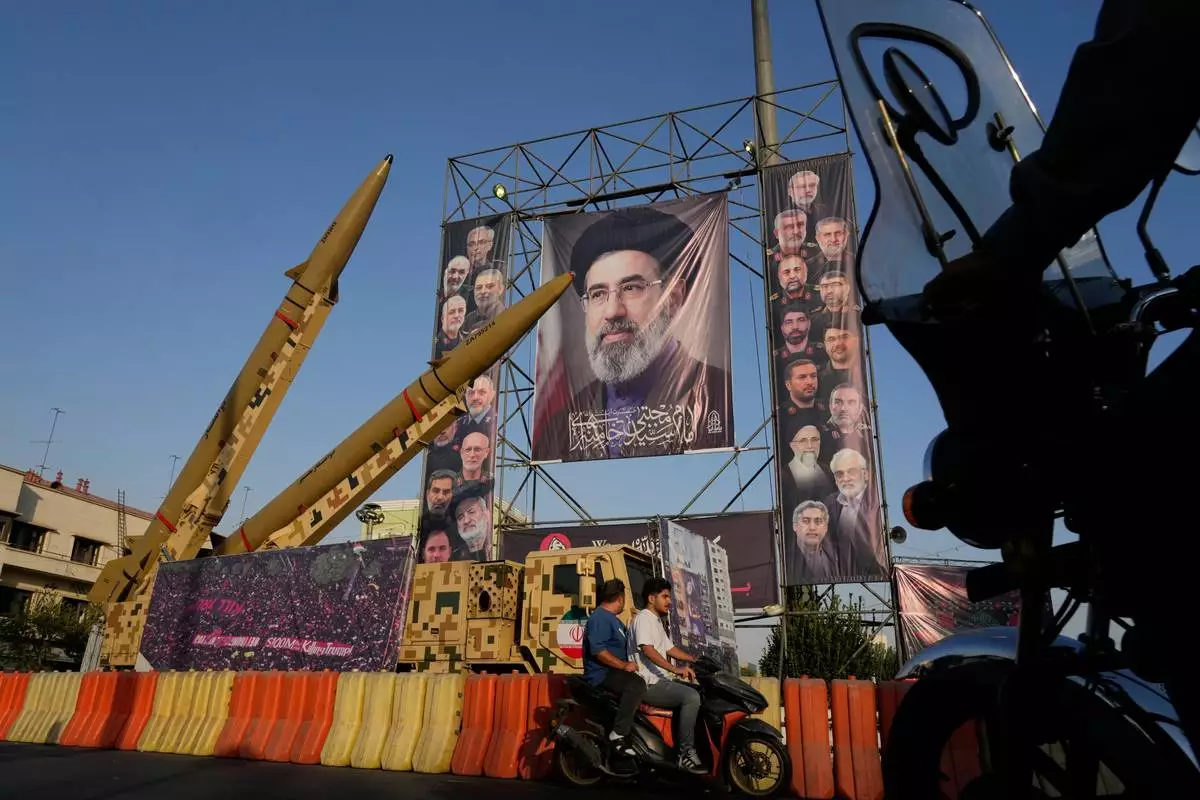
Motorbikes drive past Iranian missiles and banners showing portraits of the Iranian Supreme Leader Ayatollah Mojtaba Khamenei, center, and the late armed forces commanders and nuclear scientists, who were killed in Israeli and U.S. strikes, displayed in a military exhibition commemorating the anniversary of the start of the 1980-88 Iraq-Iran war at Baharestan Square, in Tehran, Monday, Sept. 28, 2026. (AP Photo/Vahid Salemi)