Skip to Content Facebook Feature Image

NASCAR shrugs off fisticuffs and swearing, heads back to old tracks as it embraces its rugged past

Sport

NASCAR shrugs off fisticuffs and swearing, heads back to old tracks as it embraces its rugged past
Sport

Sport

NASCAR shrugs off fisticuffs and swearing, heads back to old tracks as it embraces its rugged past

2026-09-30 03:19 Last Updated At:03:30

The hats and flags and T-shirts carrying the No. 77 of NASCAR driver Carson Hocevar were flying unapologetically, and almost defiantly, over Kansas Speedway last weekend, days after a pit-road fracas at Bristol in which the up-and-coming Cup Series star traded a few haymakers with popular driver Ryan Blaney.

The two tangled in the closing laps, the contact sending Blaney into the wall and ending his race — and maybe his title hopes. And when Hocevar pulled his car onto pit road after a third-place finish, his foil was standing there waiting for him. Hocevar got the better of the dust-up, leaving Blaney with a shiner under his right eye. Thousands of fans who had stuck around to watch Joey Logano take the checkered flag seemed to roar even louder for the post-race fight.

More Images
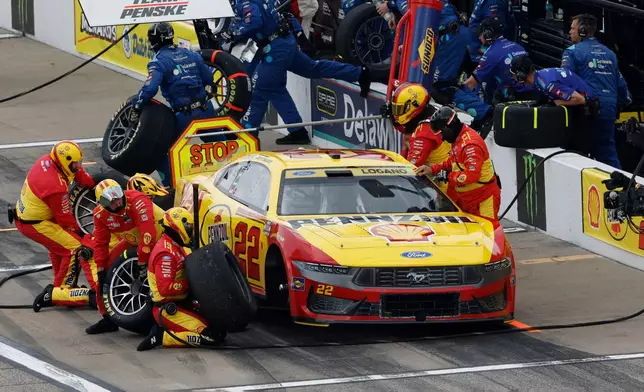
Joey Logano makes a stop on pit road at the end of the first stage during a NASCAR Cup Series auto race in Kansas City, Kan., Sunday, Sept. 27, 2026. (AP Photo/Colin E. Braley)
Joey Logano makes a stop on pit road at the end of the first stage during a NASCAR Cup Series auto race in Kansas City, Kan., Sunday, Sept. 27, 2026. (AP Photo/Colin E. Braley)

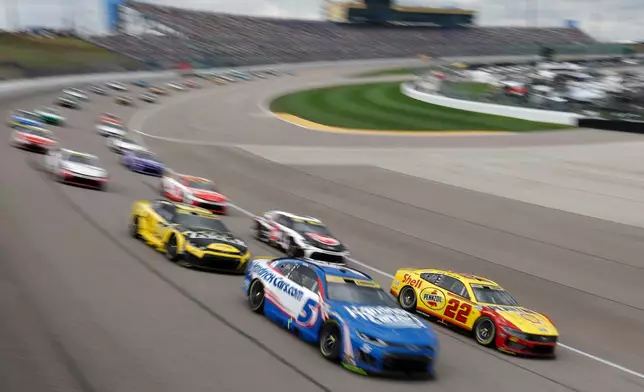
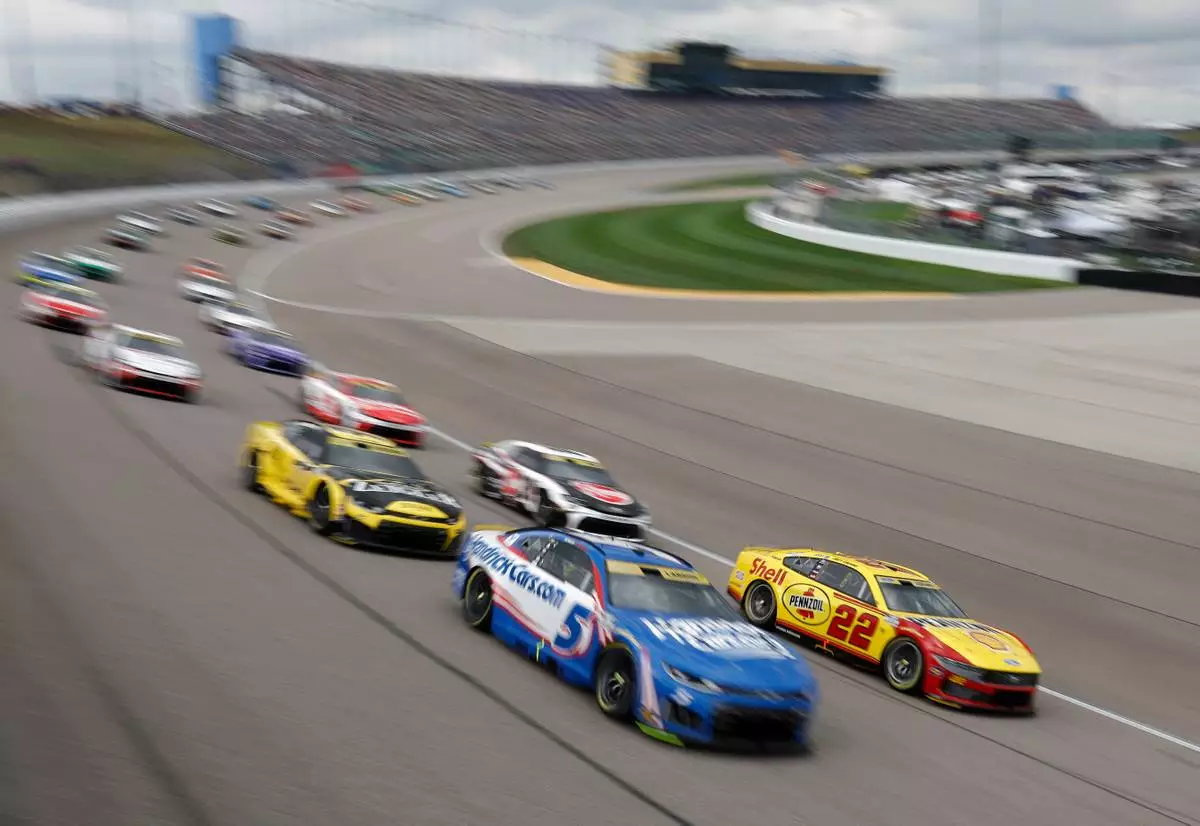
Kyle Larson (5) and Joey Logano (22) lead the field into Turn 1 during the start of a NASCAR Cup Series auto race at Kansas Speedway in Kansas City, Kan., Sunday, Sept. 27, 2026. (AP Photo/Colin E. Braley)
Kyle Larson (5) and Joey Logano (22) lead the field into Turn 1 during the start of a NASCAR Cup Series auto race at Kansas Speedway in Kansas City, Kan., Sunday, Sept. 27, 2026. (AP Photo/Colin E. Braley)

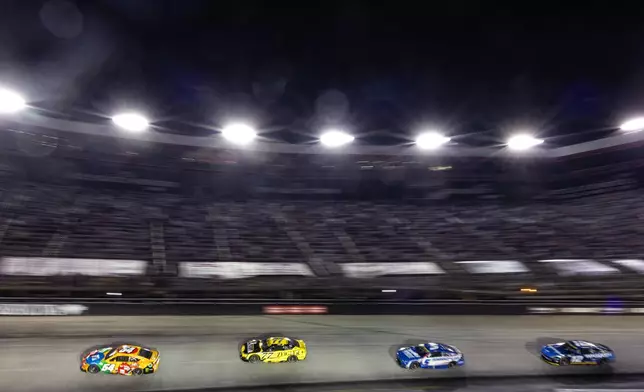
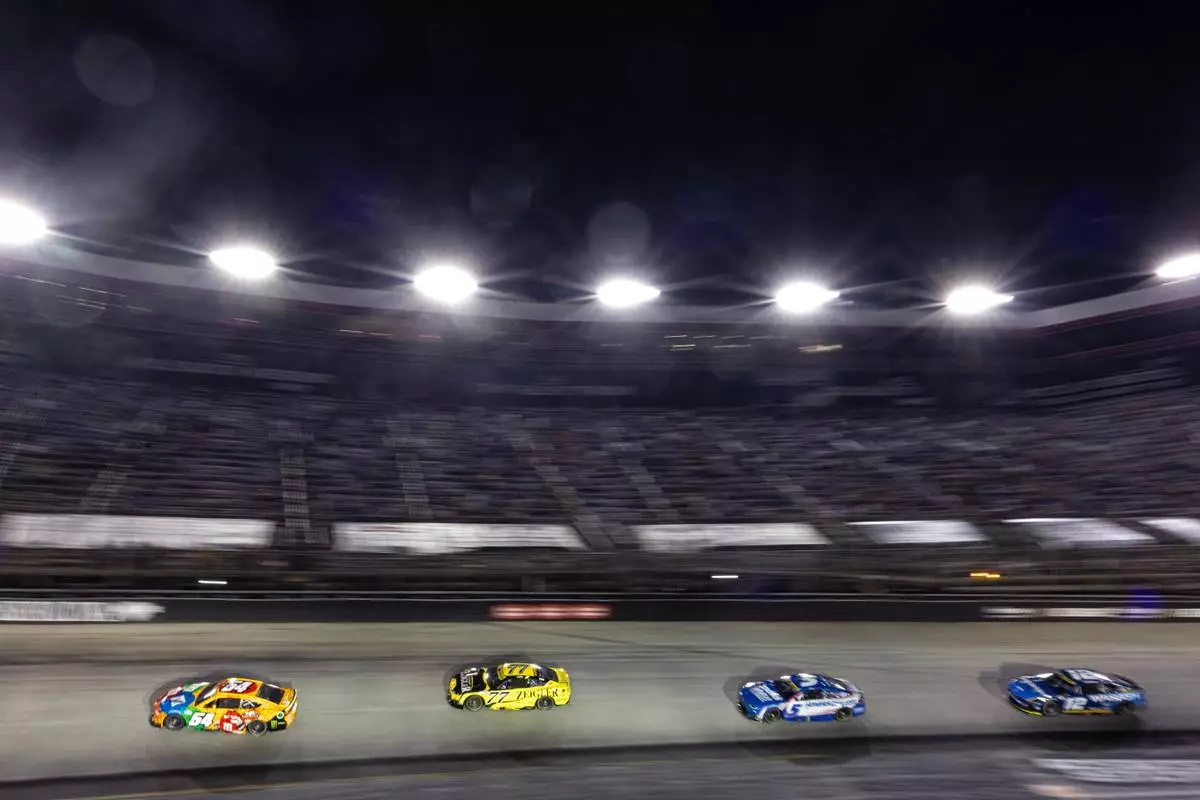
Ty Gibbs (54) leads Carson Hocevar (77), Kyle Larson (5), and Ryan Blaney (12) during a NASCAR Cup Series auto race Saturday, Sept. 19, 2026, in Bristol, Tenn. (AP Photo/Wade Payne)
Ty Gibbs (54) leads Carson Hocevar (77), Kyle Larson (5), and Ryan Blaney (12) during a NASCAR Cup Series auto race Saturday, Sept. 19, 2026, in Bristol, Tenn. (AP Photo/Wade Payne)

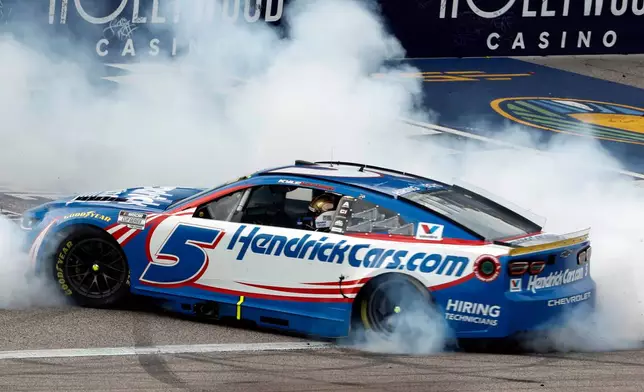
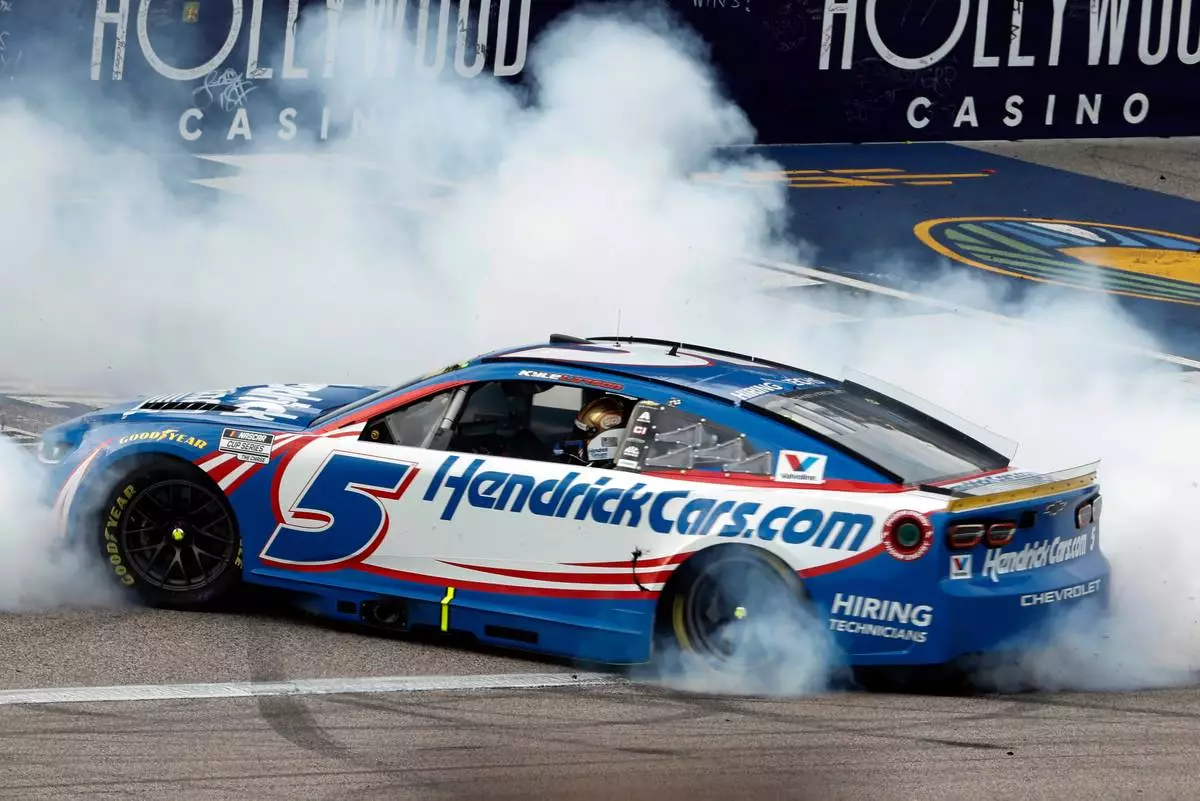
Kyle Larson does a burnout after winning a NASCAR Cup Series auto race in Kansas City, Kan., Sunday, Sept. 27, 2026. (AP Photo/Colin E. Braley)
Kyle Larson does a burnout after winning a NASCAR Cup Series auto race in Kansas City, Kan., Sunday, Sept. 27, 2026. (AP Photo/Colin E. Braley)

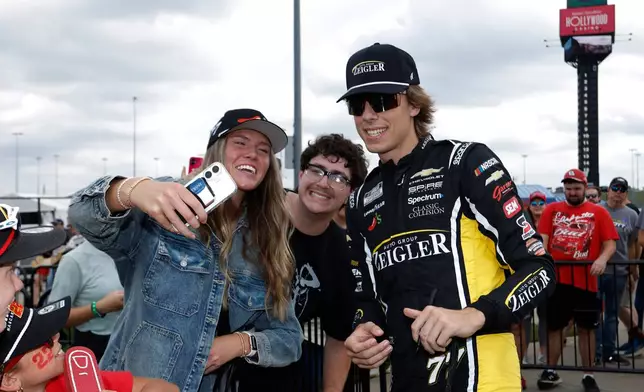
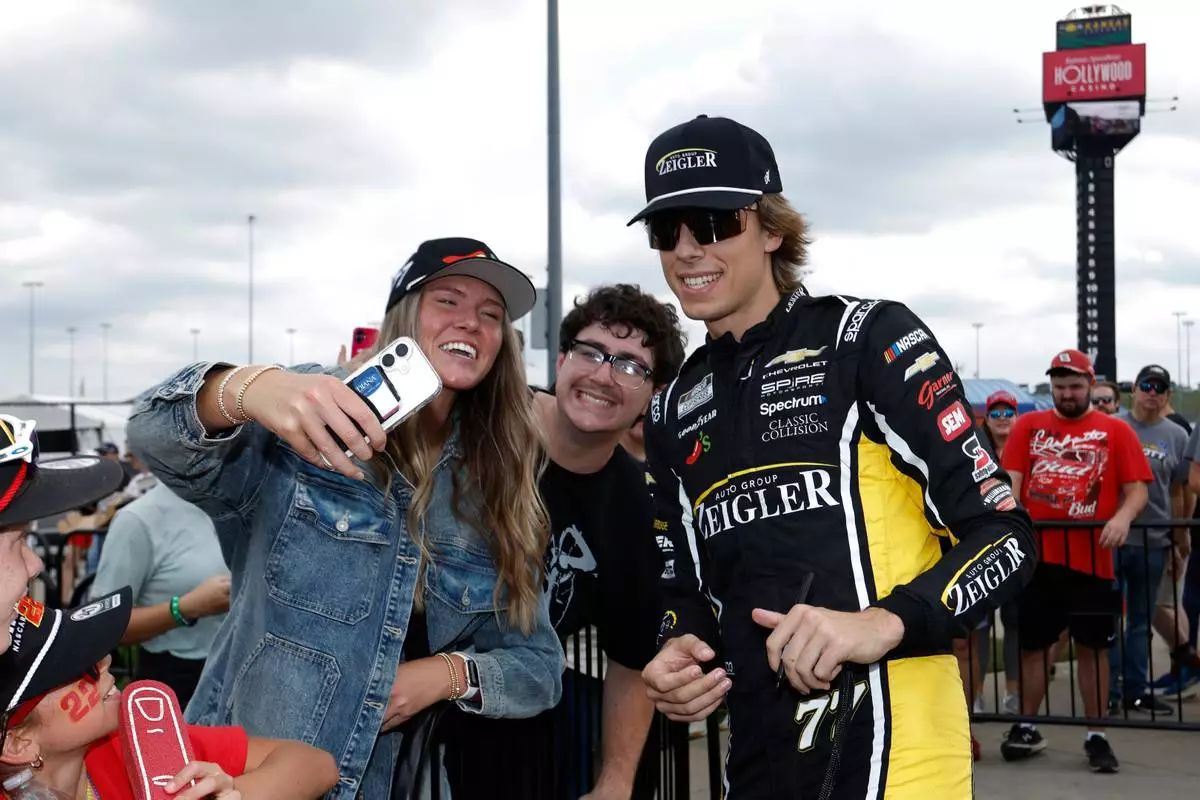
Carson Hocevar, right, interacts with fans before a NASCAR Cup Series auto race in Kansas City, Kan., Sunday, Sept. 27, 2026. (AP Photo/Colin E. Braley)

Carson Hocevar, right, interacts with fans before a NASCAR Cup Series auto race in Kansas City, Kan., Sunday, Sept. 27, 2026. (AP Photo/Colin E. Braley)

“I was surprised, and so was everybody else. But luckily, I have a height advantage on Ryan, I guess,” Hocevar said later. "If we were in a running competition, I’m screwed. No matter who it is, I can’t run. So luckily, standing still, I can do OK and defend myself.”

Perhaps even more surprising was what NASCAR did in the aftermath: Nothing.

No penalties. No fines. Not even a slap on the wrist.

“We’re not going to encourage fighting, but what we are going to encourage is passion,” NASCAR CEO Steve O’Donnell said during an appearance on former driver Kevin Harvick’s podcast, before adding: “We’ll watch what happens the rest of the way."

The decision was seen by many as NASCAR embracing a “Boys, have at it” attitude that had been displaced for a generation by a squeaky clean corporate image that somehow seemed out of place. It harkened back to the 1979 Daytona 500, when Cale Yarborough and the Allison brothers, Donnie and Bobby, got into perhaps the most famous fistfight in NASCAR history, and the days when Dale Earnhardt Sr. was using the bumper of his famed black No. 3 to drive rivals out of his way on the way to seven Cup Series championships.

Intentional or not, the Bristol fight was another example of NASCAR turning back to its roots.

“I feel like we've kind of gone that direction quite a bit here recently,” Logano said. “It seems like the American pride is definitely in the game, and I feel like the drivers, the brands they have right now, are more that direction than they have been in the past. It was there for a moment when a lot of drivers were, I don't know, a little more higher society, if you will, right? It seems like everyone is more into their hotrods again, and you know, being a little more blue collar, I guess.”

Many drivers still trace the roots of NASCAR to the short tracks of the South, which the series seemed to abandon during the 1990s and early 2000s, when races moved to purpose-built, almost cookie-cutter tracks amid a northern and westward expansion.

The move may have briefly fed a popularity explosion, but in the long run, it also might have alienated some of its base that treasures NASCAR's historical ties to the moonshine runners of old and the outlaw image the sport has long embraced.

North Wilkesboro is a prime example. The fan-favorite track in rural North Carolina opened in 1947, almost simultaneous to NASCAR's founding, and hosted Cup Series races until 1996, at which point it sat idle for decades. But it has made a comeback in recent years, hosting the All-Star race from 2023-25, and Logano was victorious in July when the series returned with a regular-season race.

“The community just loved having the race there,” driver Michael McDowell said. “You could just feel that when you got there.”

Or take the Clash, which from 1979-97 led into the Daytona 500 every February. NASCAR took the exhibition race from Florida to the Los Angeles Coliseum for a three-year stretch beginning in 2022, but the novelty wore off after just one year. So, the organization took the race to Bowman Gray Stadium in North Carolina for the past couple of years, and will take it back to Daytona in February.

“We've all been very fortunate in the garage area to make it to top-level motorsports,” driver Chris Buescher said. “But we all came from that short-track racing background in some way, shape or form. This is all our background.”

For many, so is dirt-track racing on bullrings scattered across the country.

Those small-town stock car races were once a proving ground for guys like Earnhardt, whose first race car was a 1956 Ford Victoria that “The Intimidator” ran on dirt tracks around North Carolina. Through the early '90s, guys like Clint Bowyer got on the radar of NASCAR teams by slinging mud at places like Lakeside Speedway, just down the road from Kansas Speedway.

Turns out NASCAR is starting to feel dirty again.

Former driver Tony Stewart bought famed Eldora Speedway in Ohio, pouring his support into dirt track and grassroots racing. Hocevar tried his hand in a dirt late model on weeknights this past summer, and often found the going to be tough against those doing it on a nightly basis. And his Cup Series team, Spire Motorsports, has fully embraced the dirt late model business, putting together a full-time touring team and hiring one of the top drivers, Nick Hoffman, for next season.

“Nick has a great family with a proud lineage in our industry,” Spire co-owner Jeff Dickerson said. “At the same time, he is fantastic with partners, has been a great coach to Carson and, most importantly, stands on the gas.”

More than a few expletives were dropped when Hocevar and Blaney tangled two weeks ago at Bristol, the short track nestled in the Appalachian Mountains along the Tennessee-Virginia state line that epitomizes the rubbin'-is-racin' ethos of the early NASCAR days.

While the organization still doesn't condone colorful language, it isn't exactly punishing anyone for it. In fact, it's almost rewarding them for it. At the start of the playoffs, NASCAR unveiled a virtual “swear jar” in which $5 is added every time a curse is uttered over team radios during a race; fans who correctly predict the total number can walk away with the pot.

The total after last week's race at Kansas was 776 swear words, or a prize total of $3,880. (The most popular curse word, by the way, has been the one that Ralphie Parker called the “queen-mother of dirty words” in the film “A Christmas Story.”)

"We were looking for buzzworthy ideas that would build excitement around the Chase (playoffs) and complement the other initiatives launching during this part of the season,” said Jess Smith, NASCAR’s vice president of content. “The swear jar was a natural fit because colorful driver radio is an authentic part of our sport, but it’s never been something we’ve highlighted or turned into a game.”

On the contrary, Dale Earnhardt Jr. was once fined $10,000 and docked 25 points for swearing in victory lane at Talladega.

That was back in 2004, when NASCAR was trying to polish up its image and land new fans. And while the swear jar isn't designed to dirty it up again, it is but one way the sport — and its sanctioning body — are giving new love to its past.

“The sport is always walking a line between some aspects of really high-level professionalism, world-class engineering, training world-class athletes and other aspects that are more entertainment-centric,” veteran driver Brad Keselowski said. “And I think it always has to be careful not to tip its hand one way more than the other at any time, and that's hard to do.”

See AP’s full auto racing coverage here
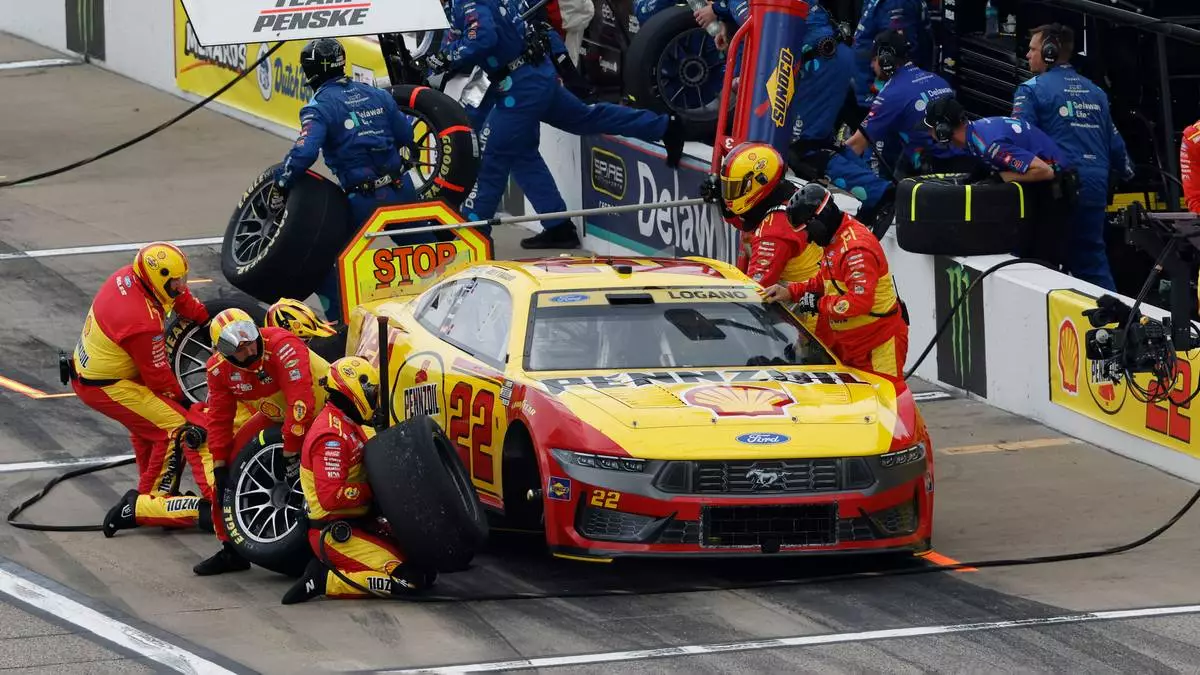
Joey Logano makes a stop on pit road at the end of the first stage during a NASCAR Cup Series auto race in Kansas City, Kan., Sunday, Sept. 27, 2026. (AP Photo/Colin E. Braley)
Joey Logano makes a stop on pit road at the end of the first stage during a NASCAR Cup Series auto race in Kansas City, Kan., Sunday, Sept. 27, 2026. (AP Photo/Colin E. Braley)

Kyle Larson (5) and Joey Logano (22) lead the field into Turn 1 during the start of a NASCAR Cup Series auto race at Kansas Speedway in Kansas City, Kan., Sunday, Sept. 27, 2026. (AP Photo/Colin E. Braley)
Kyle Larson (5) and Joey Logano (22) lead the field into Turn 1 during the start of a NASCAR Cup Series auto race at Kansas Speedway in Kansas City, Kan., Sunday, Sept. 27, 2026. (AP Photo/Colin E. Braley)

Ty Gibbs (54) leads Carson Hocevar (77), Kyle Larson (5), and Ryan Blaney (12) during a NASCAR Cup Series auto race Saturday, Sept. 19, 2026, in Bristol, Tenn. (AP Photo/Wade Payne)
Ty Gibbs (54) leads Carson Hocevar (77), Kyle Larson (5), and Ryan Blaney (12) during a NASCAR Cup Series auto race Saturday, Sept. 19, 2026, in Bristol, Tenn. (AP Photo/Wade Payne)

Kyle Larson does a burnout after winning a NASCAR Cup Series auto race in Kansas City, Kan., Sunday, Sept. 27, 2026. (AP Photo/Colin E. Braley)
Kyle Larson does a burnout after winning a NASCAR Cup Series auto race in Kansas City, Kan., Sunday, Sept. 27, 2026. (AP Photo/Colin E. Braley)

Carson Hocevar, right, interacts with fans before a NASCAR Cup Series auto race in Kansas City, Kan., Sunday, Sept. 27, 2026. (AP Photo/Colin E. Braley)
Carson Hocevar, right, interacts with fans before a NASCAR Cup Series auto race in Kansas City, Kan., Sunday, Sept. 27, 2026. (AP Photo/Colin E. Braley)
PUERTO SAN CARLOS, Mexico (AP) — Hurricane Polo pummeled the Mexican state of Baja California Sur with powerful winds and rain as it made landfall Tuesday, leaving coastal areas flooded and streets littered with fallen trees.

The Category 2 hurricane struck land just south of Las Barrancas, Mexico, about 80 miles (130 kilometers) north of Cabo San Lazaro with maximum sustained winds of 110 mph (175 kph).

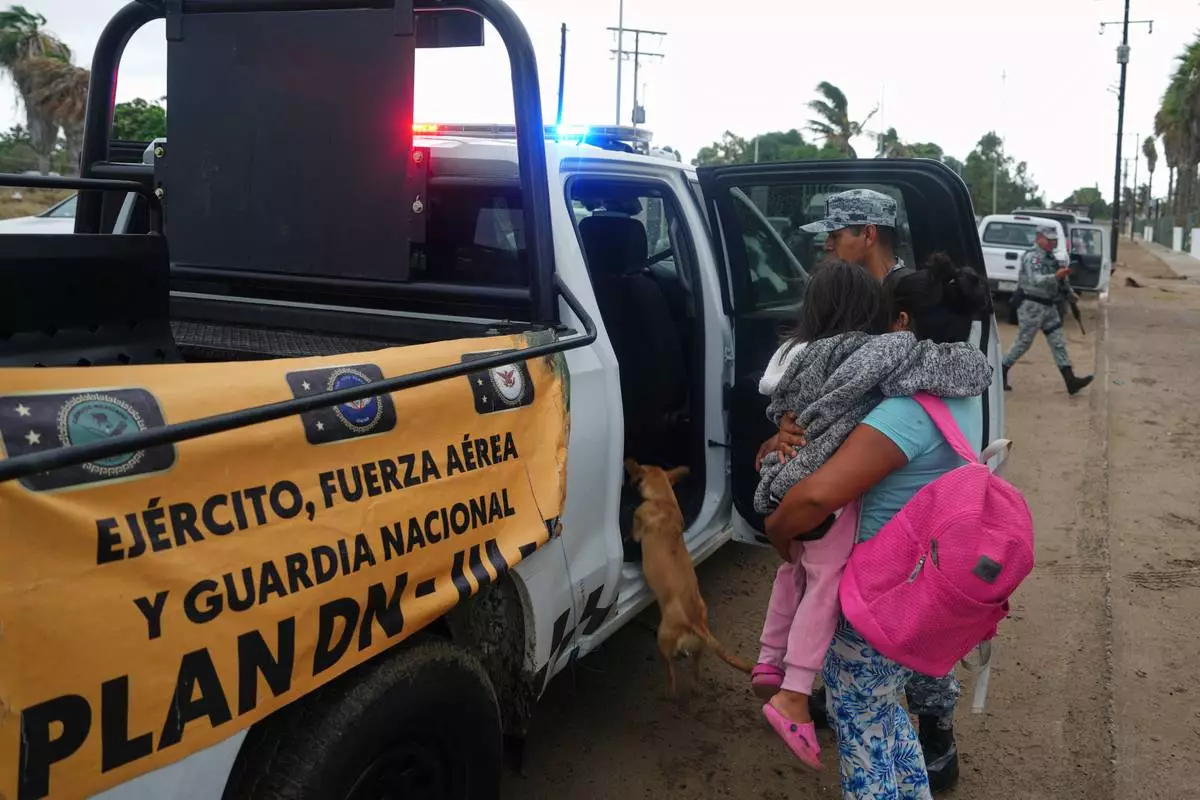
About 700 people remained in shelters Tuesday. But they were expected to return to their homes, and no serious damage or deaths were immediately reported, according to authorities.

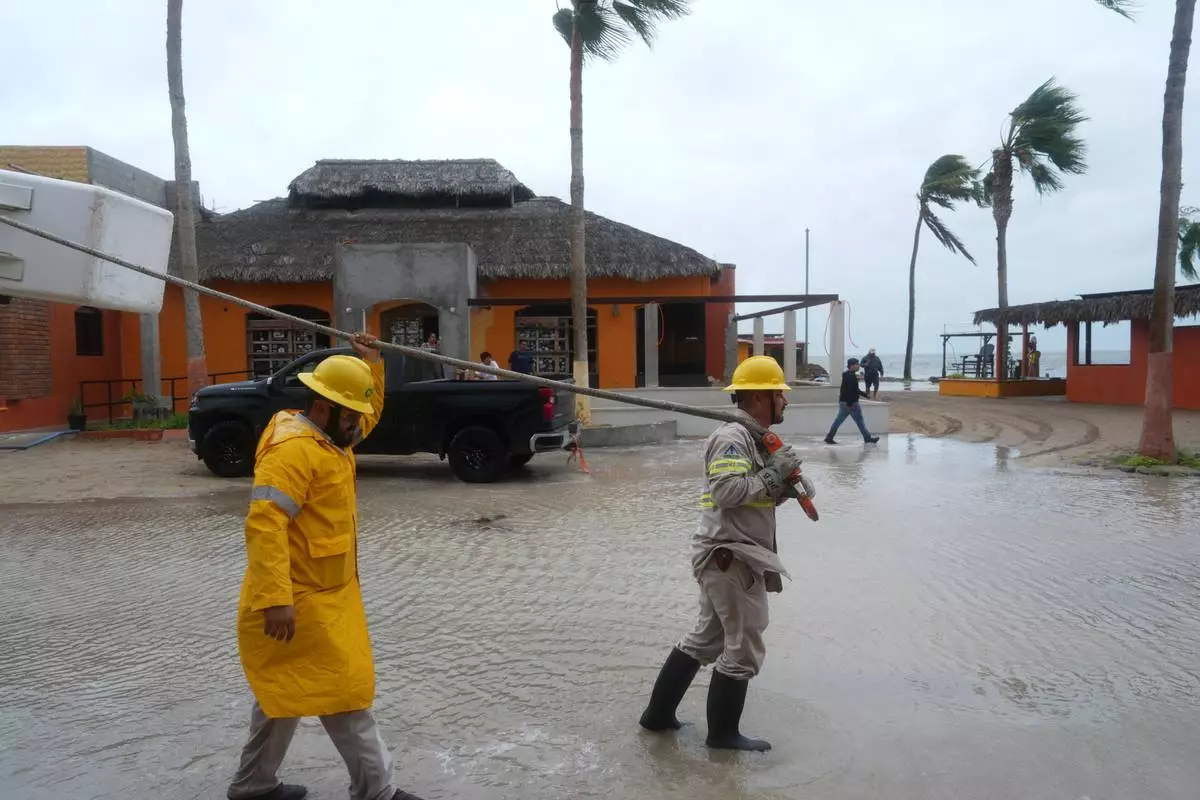
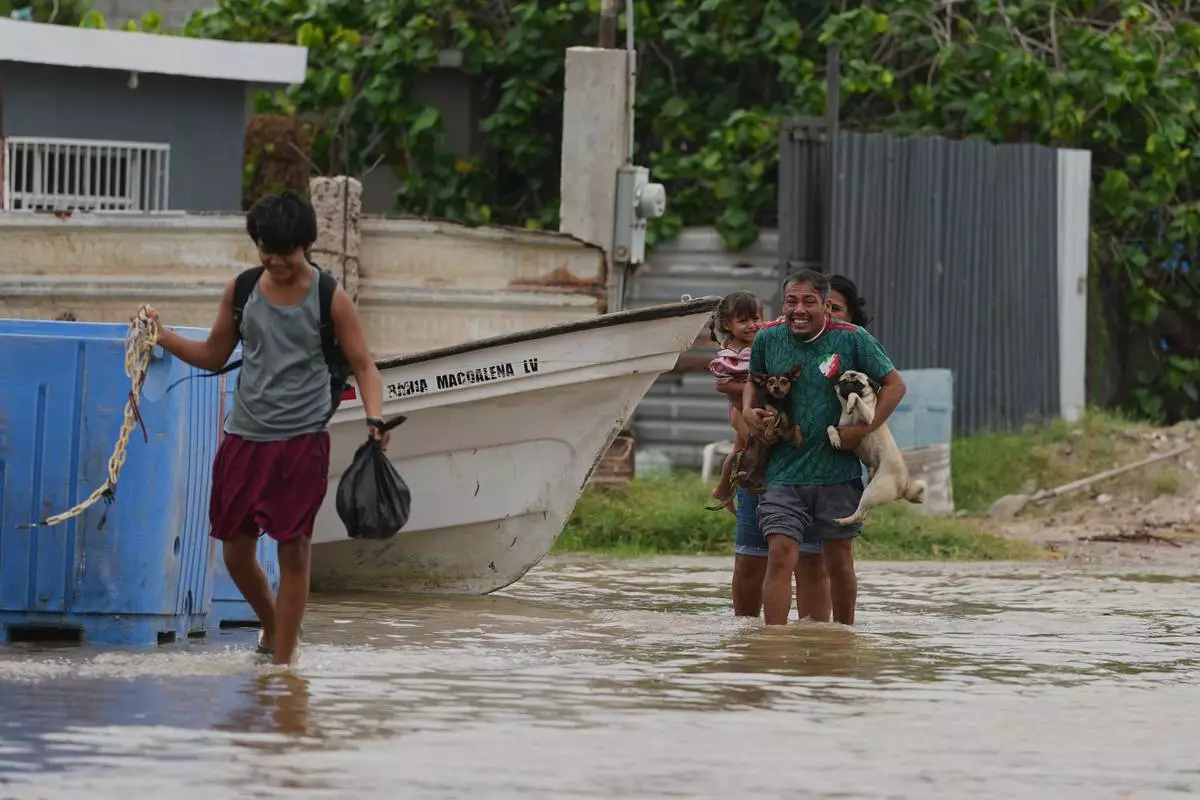
After the hurricane passed over the small fishing town of Puerto San Carlos on the Baja California peninsula, residents waded among downed trees through ankle-high water that flooded some homes. Seeing their roughened community largely intact brought relief to those who had prepared for the worst.

Shopkeeper Elbia María Bachomo, 40, picked through furniture strewn through her home. She and her three children had gathered their clothes quickly and left for a shelter Monday as water began flooding into their home.

Her husband was out on the water fishing for sardines when Polo hit. Bachomo said he was fortunate to escape alive.

“I thought, ‘Oh no, what are we going to come back to? We will be left with nothing.’ But we were lucky,” she said.

Polo was expected to produce 6 to 12 inches (about 15 to 30 centimeters) of rain across parts of Baja California Sur. By late Tuesday morning, a weakened Polo made a second landfall and moved inland in the Mexican state of Sonora after crossing the Gulf of California.

Forecasters predicted Polo would hit the Mexican mainland with life-threatening winds and flash floods. Sonora officials suspended all “nonessential” activities, including school, sports and nonessential work in the state capital and more than a dozen municipalities.

Meanwhile, the hurricane center reported Tropical Storm Rachel was moving parallel to Mexico's coast early Tuesday. The storm was about 265 miles (425 kilometers) southwest of Lazaro Cardenos with maximum sustained winds of 65 mph (105 kph). It was moving west-northwest at 13 mph (20 kph).

Bands of rain continued to sweep across the U.S. Southwest on Tuesday, causing desert rivers to surge and usually dry arroyos to rage with floodwater. Nearly all of the region was under flood watches as the complex system of tropical weather — with Polo the main event — spread northeast from Mexico.

Forecasters warned north-central New Mexico including Albuquerque and Santa Fe could feel the brunt, with as much as 3 to 4 inches (about 8 to 10 centimeters) of rain through Wednesday and possibly more.

“Definitely looking at the chances for urban flooding,” said National Weather Service meteorologist Carter Greulich in Albuquerque. “Don’t drive through flooded roadways. Remain out of the arroyos, especially in our urban areas.”

The system made a brisk pass through Phoenix early Tuesday, dumping up to 2 inches (5 centimeters) of rain before tapering. North of the city, a truck was swept away in a wash in the New River area. The driver got out safely, Maricopa County sheriff’s officials said.

The rocky, desert area typically gets less than 10 inches (25 centimeters) of rain annually with little vegetation to soak it up, making flash flooding a perpetual risk.

Near Zion National Park in Utah, the East Fork of the Virgin River raged with chocolate floodwater seen carrying a shipping container downstream.

In the small town of Orderville, Utah, where flooding began Monday night, Sabrina Dubay was driving home when her partner called and told her to stay away.

“The river came in and swept around the entirety of our house,” Dubay said, adding that her partner told her, “We’re about to lose everything.”

A camper, snowmobile trailer, and other items from Dubay’s yard were swept away by the river. Neighbors and friends arrived to dig a trench around the house as the water rose around their home.

“It was coming in through our front doors,” she said.

Flooding also was reported in southern New Mexico. An unusually soggy September across the region set the stage: When the ground is saturated, rainfall has nowhere to go but run off.

“Runoff is likely going to start much quicker and lead to those flooding impacts quicker,” Greulich said.

Forecasters said the flood risk would move into parts of the central U.S. beginning late Tuesday and into Wednesday. Starting late Wednesday, widespread heavy rain was expected to hit the Dallas-Fort Worth, Austin and San Antonio areas. Life-threatening flash flooding was possible, with low-lying areas especially vulnerable.

Parts of west Texas, Oklahoma, Kansas, Nebraska and Iowa were under flood watch through Thursday, with some areas expecting up to 5 inches (13 centimeters) of rain.

In the central Pacific Ocean, Hurricane Nolo remained a dangerous Category 3 hurricane on Tuesday as it edged away from Hawaii after drenching parts of the Big Island over the weekend.

Pacific storm activity has been above average during what is already the peak of hurricane season. That pattern is consistent with El Niño years, when the Pacific often sees more tropical storms and hurricanes.

Nolo was about 270 miles (435 kilometers) south-southeast of French Frigate Shoals with maximum sustained winds of 110 mph (175 kph) moving north, at 9 mph (15 kph).

The hurricane was approaching Papahanaumokuakea Marine National Monument, a marine conservation area, according to the hurricane center.

Janetsky reported from Mexico City. Eduardo Verdugo in Puerto San Carlos, Mexico, Julie Walker in New York, Mead Gruver in Fort Collins, Colorado, Mikella Schuettler in Phoenix, Sarah Raza in Sioux Falls, South Dakota, and Eugene Garcia and Gregory Bull in Hilo, Hawaii, contributed to this report.

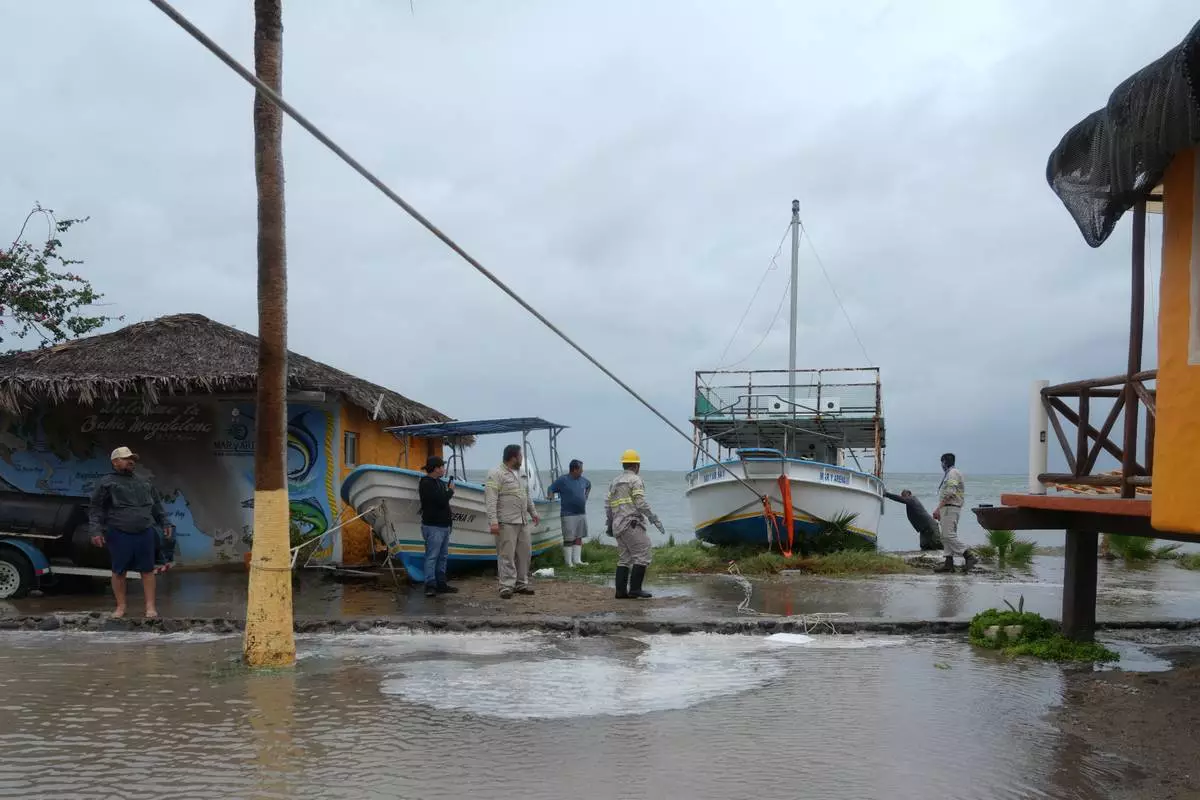
Workers pull a boat to shore as Hurricane Polo approaches Puerto San Carlos, Baja California Sur state, Mexico, Monday, Sept. 28, 2026. (AP Photo/Eduardo Verdugo)

Workers pull a boat to shore as Hurricane Polo approaches Puerto San Carlos, Baja California Sur state, Mexico, Monday, Sept. 28, 2026. (AP Photo/Eduardo Verdugo)

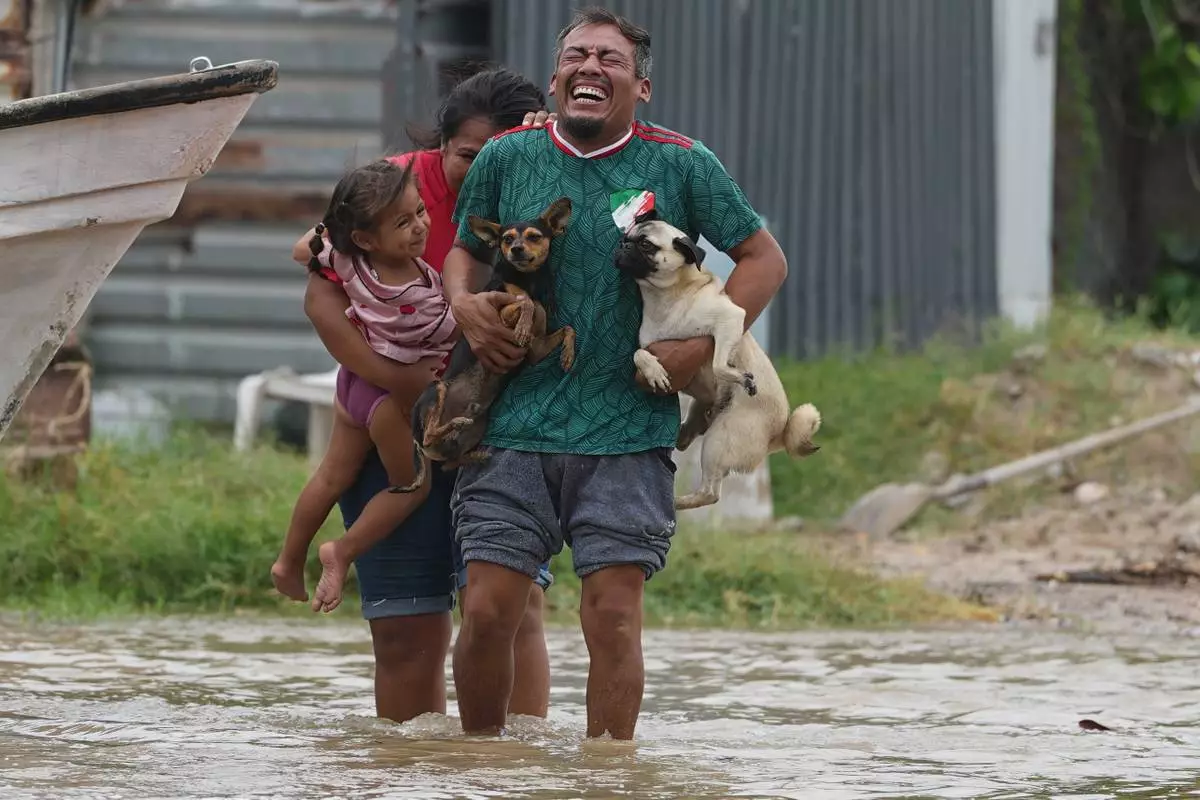
People evacuate their homes as Hurricane Polo approaches Puerto San Carlos, Baja California Sur state, Mexico, Monday, Sept. 28, 2026. (AP Photo/Eduardo Verdugo)

People evacuate their homes as Hurricane Polo approaches Puerto San Carlos, Baja California Sur state, Mexico, Monday, Sept. 28, 2026. (AP Photo/Eduardo Verdugo)

Residents are evacuated by the Army as Hurricane Polo approaches Puerto San Carlos, Baja California Sur state, Mexico, Monday, Sept. 28, 2026. (AP Photo/Eduardo Verdugo)

Residents are evacuated by the Army as Hurricane Polo approaches Puerto San Carlos, Baja California Sur state, Mexico, Monday, Sept. 28, 2026. (AP Photo/Eduardo Verdugo)

People evacuate their homes as Hurricane Polo approaches Puerto San Carlos, Baja California Sur state, Mexico, Monday, Sept. 28, 2026. (AP Photo/Eduardo Verdugo)

People evacuate their homes as Hurricane Polo approaches Puerto San Carlos, Baja California Sur state, Mexico, Monday, Sept. 28, 2026. (AP Photo/Eduardo Verdugo)

Workers pull a boat to shore as Hurricane Polo approaches Puerto San Carlos, Baja California Sur state, Mexico, Monday, Sept. 28, 2026. (AP Photo/Eduardo Verdugo)

Workers pull a boat to shore as Hurricane Polo approaches Puerto San Carlos, Baja California Sur state, Mexico, Monday, Sept. 28, 2026. (AP Photo/Eduardo Verdugo)

Recommended Articles