SEOUL, South Korea (AP) — The powerful sister of North Korean leader Kim Jong Un on Wednesday rejected South Korean findings that North Korea likely planted the land mines that injured three South Korean soldiers last week. She threatened to retaliate if the South fires at North Korean troops conducting border fortification work.
Three South Korean military officers were injured in two consecutive explosions Sept. 21 near the military demarcation line in the western section of the Demilitarized Zone, a heavily fortified border buffer zone between the Koreas.
The statement by Kim Yo Jong came after South Korea’s Joint Chiefs of Staff on Monday announced a preliminary assessment that the blasts were caused by North Korean mines following a joint inspection of the site with the U.S.-led United Nations Command.
The South Korean joint chiefs said South Korean and U.N. investigators discovered another North Korean mine Tuesday during a follow-up inspection, and the U.N. Command said Wednesday it had determined that North Korea violated the armistice agreement that ended fighting in the 1950-53 Korean War. The command said it was addressing the violation through established mechanisms but didn't elaborate.
South Korean Defense Minister Kang Shin-chul told lawmakers Tuesday the South would consider unspecified “corresponding measures” if a complete investigation confirms the North was responsible for the blasts.
Kim Yo Jong, a top foreign policy official for her brother and possibly the second-most powerful figure in Pyongyang, called the South Korean assessment a “conspiratorial farce” and accused Seoul of making groundless claims to create a pretext for military provocation against the North.
North Korea in recent years has added mines, anti-tank barriers and other front-line fortifications as relations between the Koreas have sharply deteriorated, raising concerns in the South about the growing presence of North Korean soldiers near the border zone, commonly known as the DMZ.
Kim described North Korea’s efforts as a rightful exercise of its sovereignty to strengthen the border and accused the South of escalating tensions by broadcasting warnings and firing warning shots at North Korean troops involved in front-line fortification work, insisting that “our soldiers have never crossed the border.”
“When a single bullet is hit on our land, they must be prepared for a lot,” she said. “If the (South Korean) military gangsters fire at our soldiers carrying on the permanent project for the southern border, not warning shots, our border units will take immediate and merciless retaliatory action."
The recent explosions, which took place about 10 meters (yards) south of the military demarcation line, came during an operation to establish a patrol route through a densely vegetated area rarely visited for decades. The route was intended to allow future inspections with the U.N. Command after South Korea since last year detected “terrain changes” that may have resulted from North Korean minelaying.
Kwon Dae-won, vice chairman of South Korea’s Joint Chiefs of Staff, said there was a “very high possibility” that North Korean mines caused last week’s explosions, noting that there was no record of South Korean or allied forces laying mines in the area. Blast marks, forensic analysis of explosive substances and what appeared to be a third North Korean mine at the scene also pointed to the North, he said. Kang said South Korean and U.N. investigators found a possible fourth mine during a follow-up inspection Tuesday.
The DMZ, which is 248 kilometers (155 miles) long and 4 kilometers (2.5 miles) wide, is one of the world’s most heavily fortified borders. An estimated 2 million mines are buried in and around the zone, which is also guarded by barbed-wire fences, tank traps and combat troops on both sides. The zone is a legacy of the Korean War, which ended with an armistice rather than a peace treaty.
The latest explosions came more than a decade after South Korea blamed the North for land mine explosions that maimed two South Korean soldiers and sharply raised tensions between the countries in August 2015.
The Koreas then traded threats, staged weapons demonstrations and resumed border propaganda broadcasts, before days of marathon talks eventually pulled them back from the brink. North Korea issued a vague expression of regret over the soldiers’ injuries but never clearly accepted responsibility.
Last week’s explosions came as South Korea’s liberal government sought to help revive diplomacy between Pyongyang and Washington as part of broader efforts to reduce tensions on the Korean Peninsula.
Since early 2024, North Korea has taken an increasingly hard-line stance toward South Korea, declaring its neighbor a permanent enemy and abandoning the concept of shared statehood in favor of a hostile “two-state” system. The North has so far rejected U.S. calls to revive diplomacy between the countries that collapsed in 2019, insisting that Washington must first drop its demand for the North’s denuclearization as a precondition for talks.
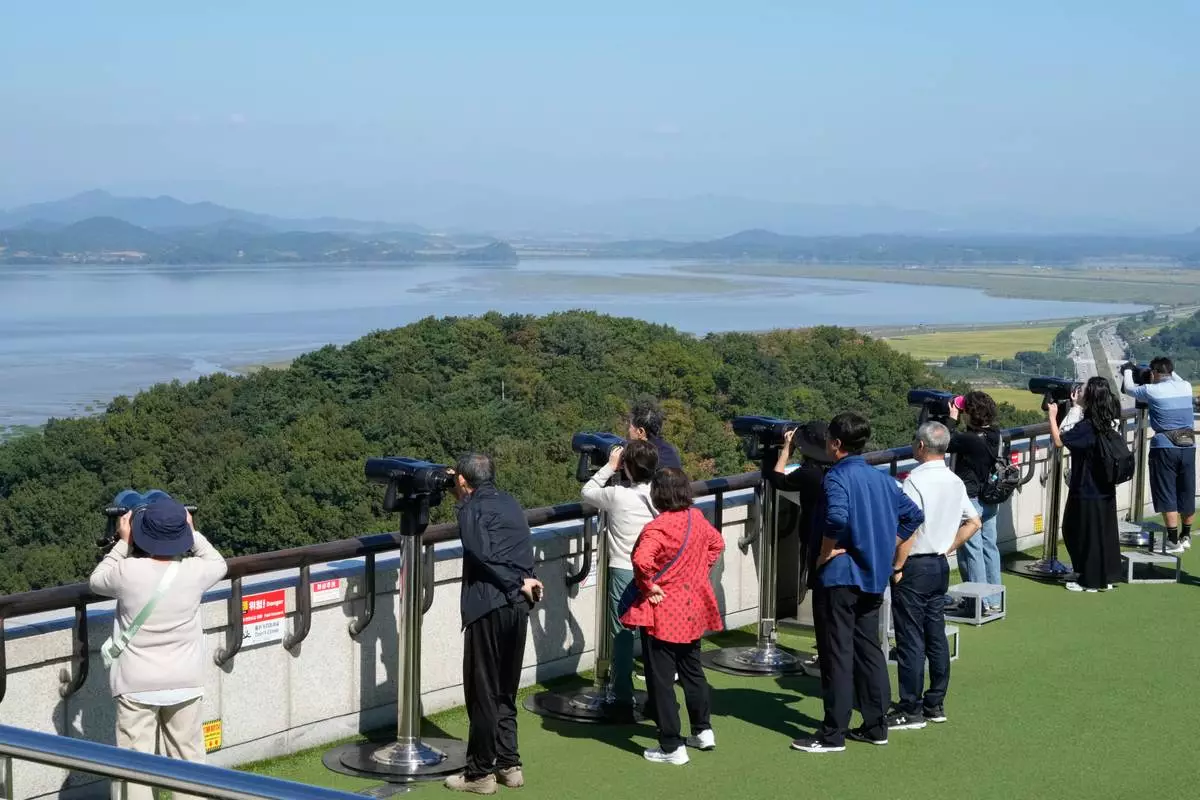
Visitors watch the North Korea side from the Unification Observation Post near the border with North Korea, in Paju, South Korea, Tuesday, Sept. 29, 2026. (AP Photo/Ahn Young-joon)
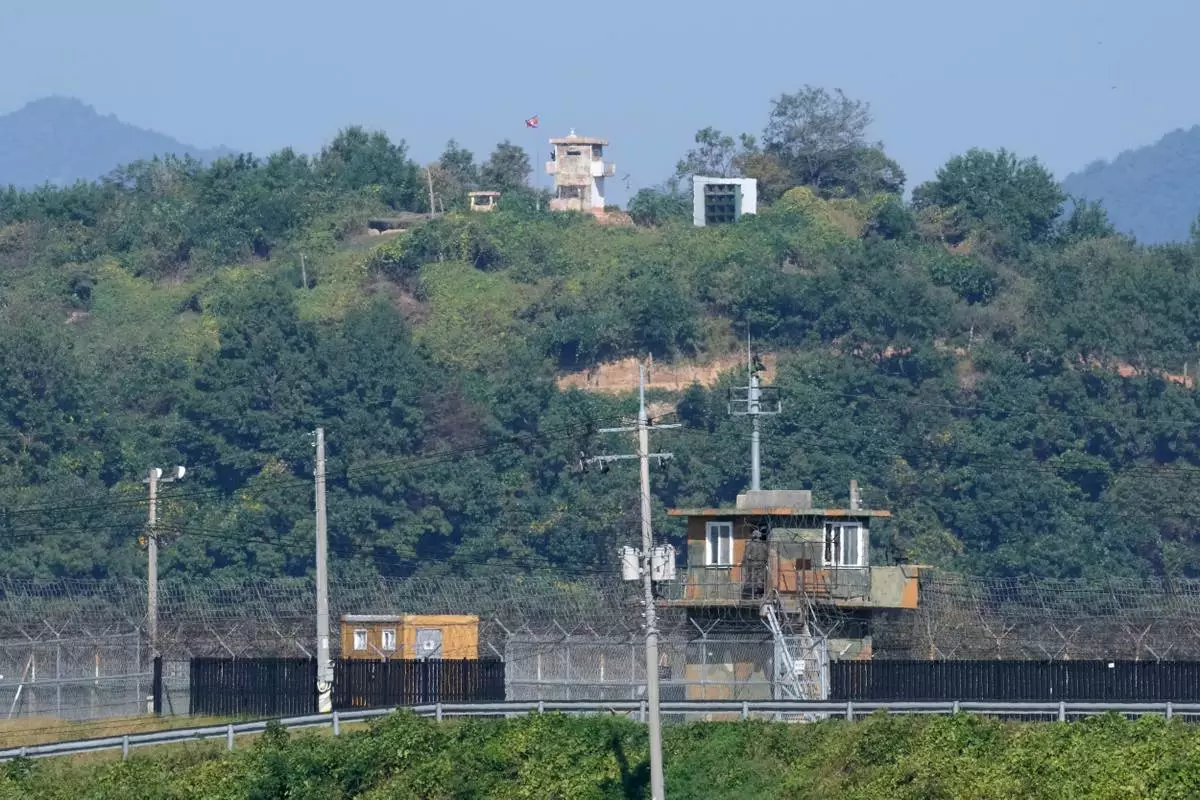
A North Korean military guard post, top, and a South Korean post, bottom, are seen near the border with North Korea, in Paju, South Korea, Tuesday, Sept. 29, 2026. (AP Photo/Ahn Young-joon)
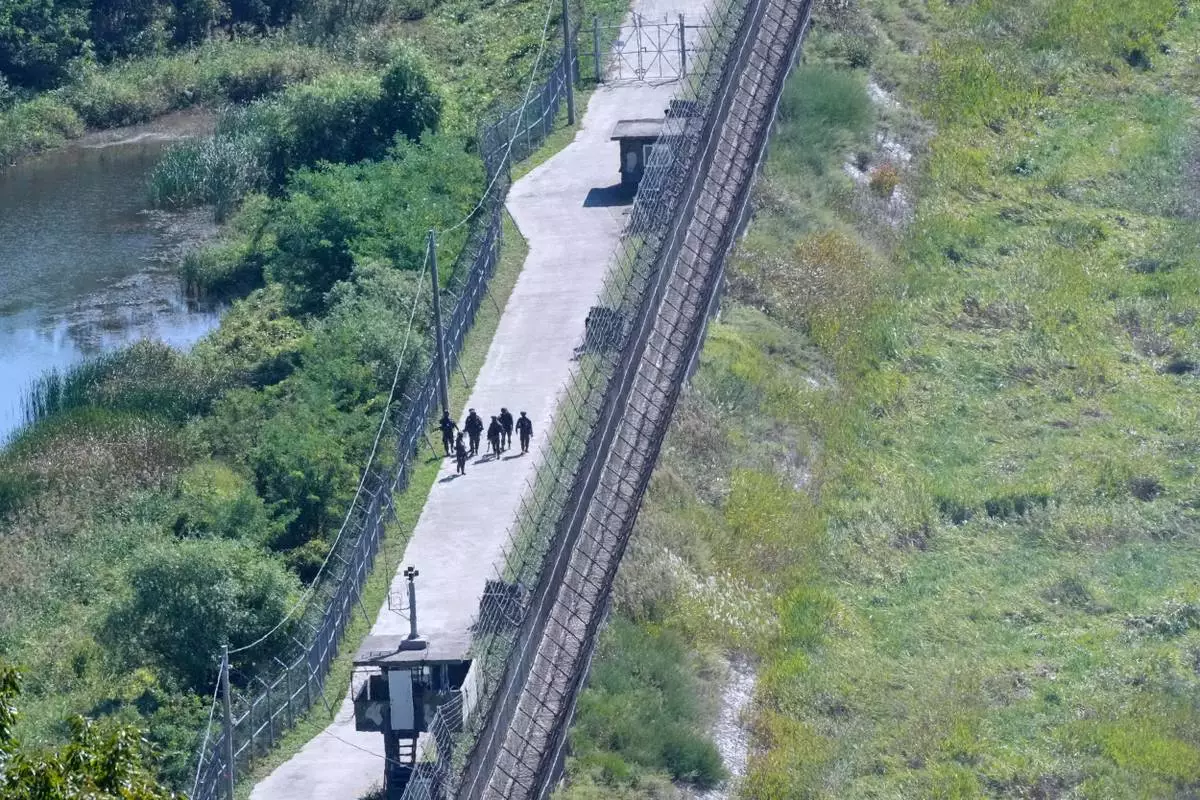
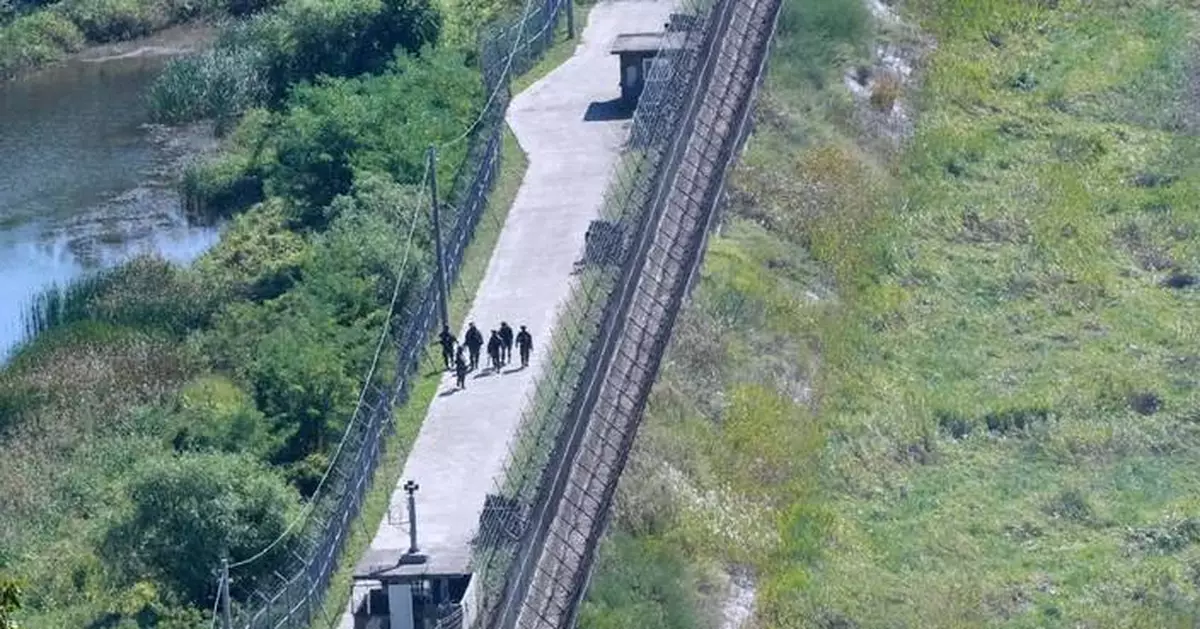
South Korean army soldiers patrol along the barbed-wire fence near the border with North Korea, in Paju, South Korea, Tuesday, Sept. 29, 2026. (AP Photo/Ahn Young-joon)
PHOENIX (AP) — Hurricane Polo smashed into the western coast of Mexico on Tuesday, swamping coastal areas and toppling trees before the storm’s remnants headed toward the U.S. Southwest, where heavy rains soaked the region and residents in small New Mexico towns were evacuated over concerns about a dam failing.
Polo struck the Mexican state of Baja California Sur in the morning with maximum sustained winds of 110 mph (175 kph). It crossed the Gulf of California and weakened to become a tropical storm as it moved inland to the northeast, and its remnants were expected to reach the U.S. by Tuesday night.
North-central New Mexico, including Albuquerque and Santa Fe, could feel the brunt of the severe weather, with as much as 3 to 4 inches (about 8 to 10 centimeters) of rain through Wednesday and possibly more, forecasters said.
That is after storms rolled through parts of the U.S. Southwest overnight Monday, saturating the ground, which can make flooding worse.
Bands of rain continued to sweep across the U.S. Southwest, causing desert rivers to surge and usually dry arroyos to rage with floodwater.
The potential failure of the dam in south central New Mexico prompted evacuations in three small communities with hundreds of residents along the Rio Grande. People in Rincon, Salem and Garfield were told to seek higher ground immediately “before conditions worsen.”
Nearly all of the region was under flood watches as the complex system of tropical weather — with Polo the main event — spread northeast from Mexico.
“Definitely looking at the chances for urban flooding,” said National Weather Service meteorologist Carter Greulich in Albuquerque. “Don’t drive through flooded roadways. Remain out of the arroyos, especially in our urban areas.”
A person stranded on top of a vehicle in floodwaters west of Phoenix was rescued Tuesday morning. Video taken by Arizona Fire and Medical Services showed a helicopter lowering a rescuer to a person clinging to their overturned car. And in Zion National Park, a helicopter was used to rescue three people who had been in Heaps Canyon and went to high ground when it began to flash flood.
North of Phoenix, a truck was swept away in a wash in the New River area. The driver got out safely, Maricopa County sheriff’s officials said.
The rocky, desert area typically gets less than 10 inches (25 centimeters) of rain annually with little vegetation to soak it up, making flash flooding a perpetual risk.
Near Zion National Park in Utah, the East Fork of the Virgin River raged with chocolate floodwater seen carrying a shipping container downstream.
In the small town of Orderville, Utah, where flooding began Monday night, Sabrina Dubay was driving home when her partner called and told her to stay away.
“The river came in and swept around the entirety of our house,” Dubay said.
A camper, snowmobile trailer, and other items from Dubay’s yard were swept away by the river. Neighbors and friends arrived to dig a trench around the house as the water rose around their home.
“It was coming in through our front doors,” she said.
Flooding also was reported in southern New Mexico. An unusually soggy September across the region set the stage: When the ground is saturated, rainfall has nowhere to go but run off.
“Runoff is likely going to start much quicker and lead to those flooding impacts quicker,” Greulich said.
Forecasters said the flood risk would move into parts of the central U.S. beginning late Tuesday and into Wednesday. Starting late Wednesday, widespread heavy rain was expected to hit the Dallas-Fort Worth, Austin and San Antonio areas. Life-threatening flash flooding was possible, with low-lying areas especially vulnerable.
Parts of west Texas, Oklahoma, Kansas, Nebraska and Iowa were under flood watch through Thursday, with some areas expecting up to 5 inches (13 centimeters) of rain.
Hurricane Polo pummeled Baja California Sur with powerful winds and rain as it made landfall.
After Polo passed over the small fishing town of Puerto San Carlos on the Baja California peninsula, residents waded among downed trees through ankle-high water that flooded some homes. Seeing their roughened community largely intact brought relief to those who had prepared for the worst.
Shopkeeper Elbia María Bachomo, 40, picked through furniture strewn through her home. She and her three children had gathered their clothes quickly and left for a shelter Monday as water began flooding into their home.
Her husband was out on the water fishing for sardines when Polo hit. Bachomo said he was fortunate to escape alive.
“I thought, ‘Oh no, what are we going to come back to? We will be left with nothing.’ But we were lucky,” she said.
Polo was expected to produce 6 to 12 inches (about 15 to 30 centimeters) of rain across parts of Baja California Sur.
About 700 people remained in shelters Tuesday. But they were expected to return to their homes, and no serious damage or deaths were immediately reported, according to authorities.
Meanwhile, the hurricane center reported Tropical Storm Rachel was moving parallel to Mexico’s coast early Tuesday. The storm was about 265 miles (425 kilometers) southwest of Lazaro Cardenos with maximum sustained winds of 65 mph (105 kph). It was moving west-northwest at 13 mph (20 kph).
In the central Pacific Ocean, Hurricane Nolo remained a dangerous Category 3 hurricane on Tuesday as it edged away from Hawaii after drenching parts of the Big Island over the weekend. The hurricane was approaching Papahanaumokuakea Marine National Monument, a marine conservation area.
Pacific storm activity has been above average this year. That's consistent with El Niño years.
Hill reported from Las Vegas, and Brown reported from Billings, Montana. Martin Silva Rey and Eduardo Verdugo in Puerto San Carlos, Mexico, Megan Janetsky in Mexico City, Julie Walker in New York, Mead Gruver in Fort Collins, Colorado, Mikella Schuettler in Phoenix, Sarah Raza in Sioux Falls, South Dakota, and Eugene Garcia and Gregory Bull in Hilo, Hawaii, contributed to this report.
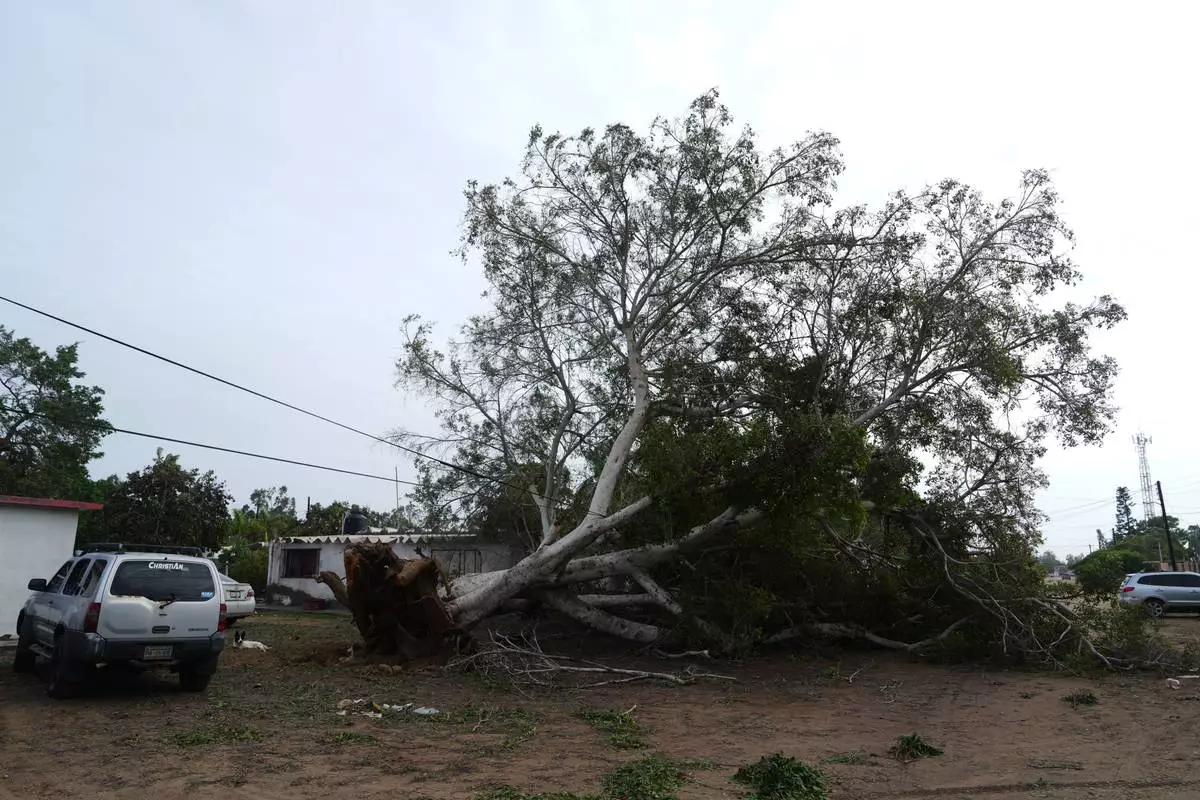
An uprooted tree lies on the ground after the passing of Hurricane Polo in Puerto San Carlos, Baja California Sur state, Mexico, Tuesday, Sept. 29, 2026. (AP Photo/Eduardo Verdugo)

A resident retrieves belongings from their home that was damaged by Hurricane Polo in Puerto San Carlos, Baja California Sur state, Mexico, Tuesday, Sept. 29, 2026. (AP Photo/Eduardo Verdugo)
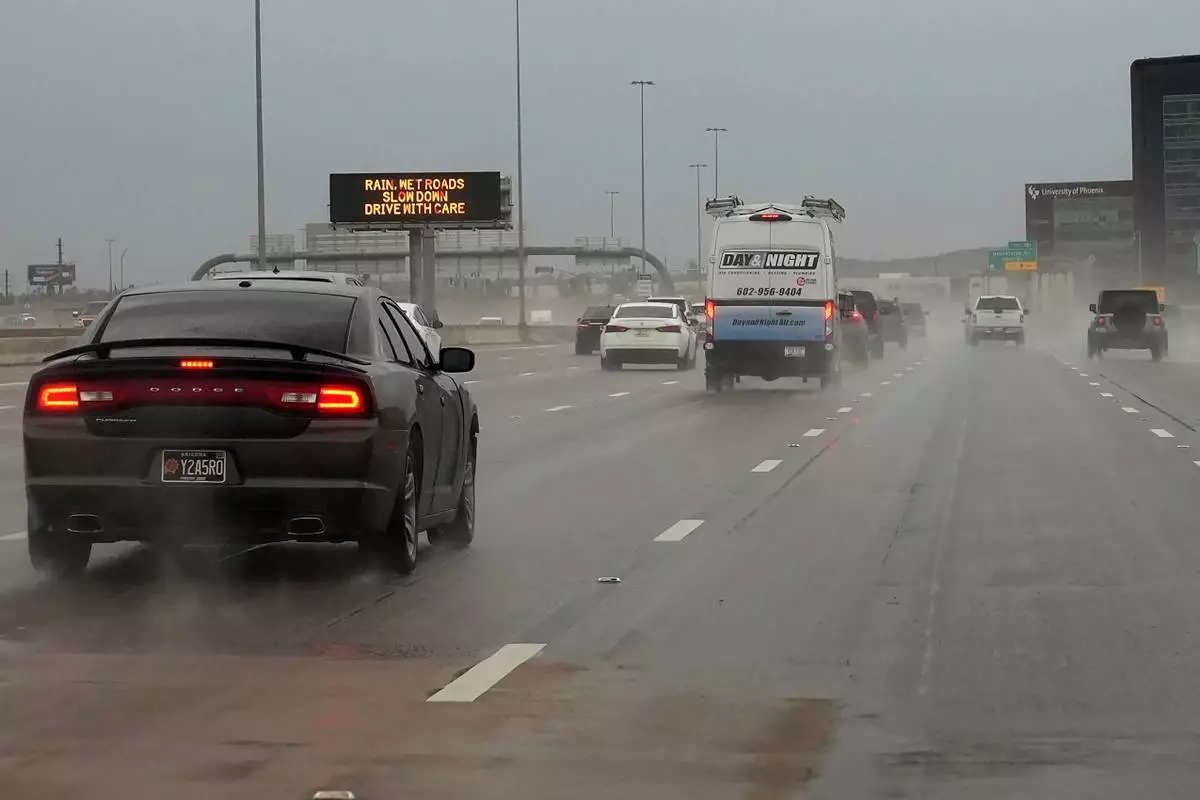
Vehicles drive in the rain on the I-10 with Arizona Department of Transportation (ADOT) warning signs displayed along the route, Monday, Sept. 28, 2026, in Phoenix. (AP Photo/Ross D. Franklin)
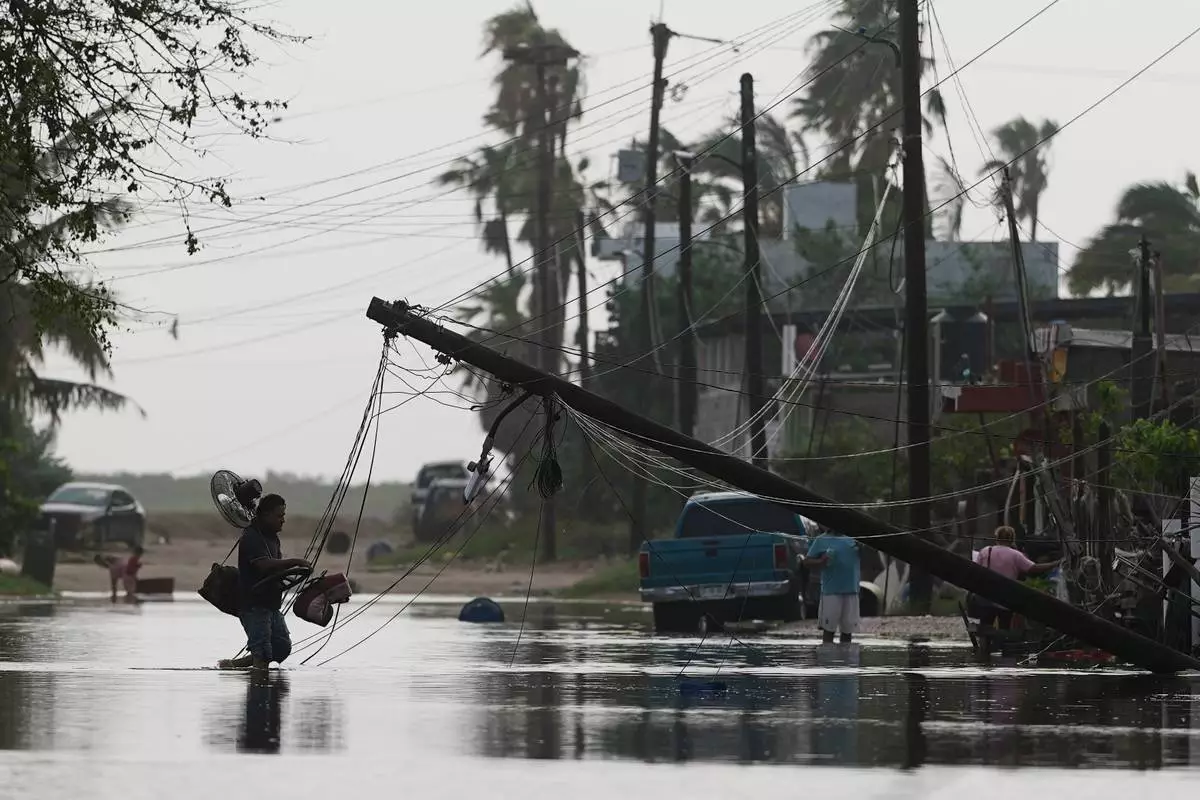
A man carries items through floodwater past downed electric lines after the passing of Hurricane Polo in Puerto San Carlos, Baja California Sur state, Mexico, Tuesday, Sept. 29, 2026. (AP Photo/Eduardo Verdugo)
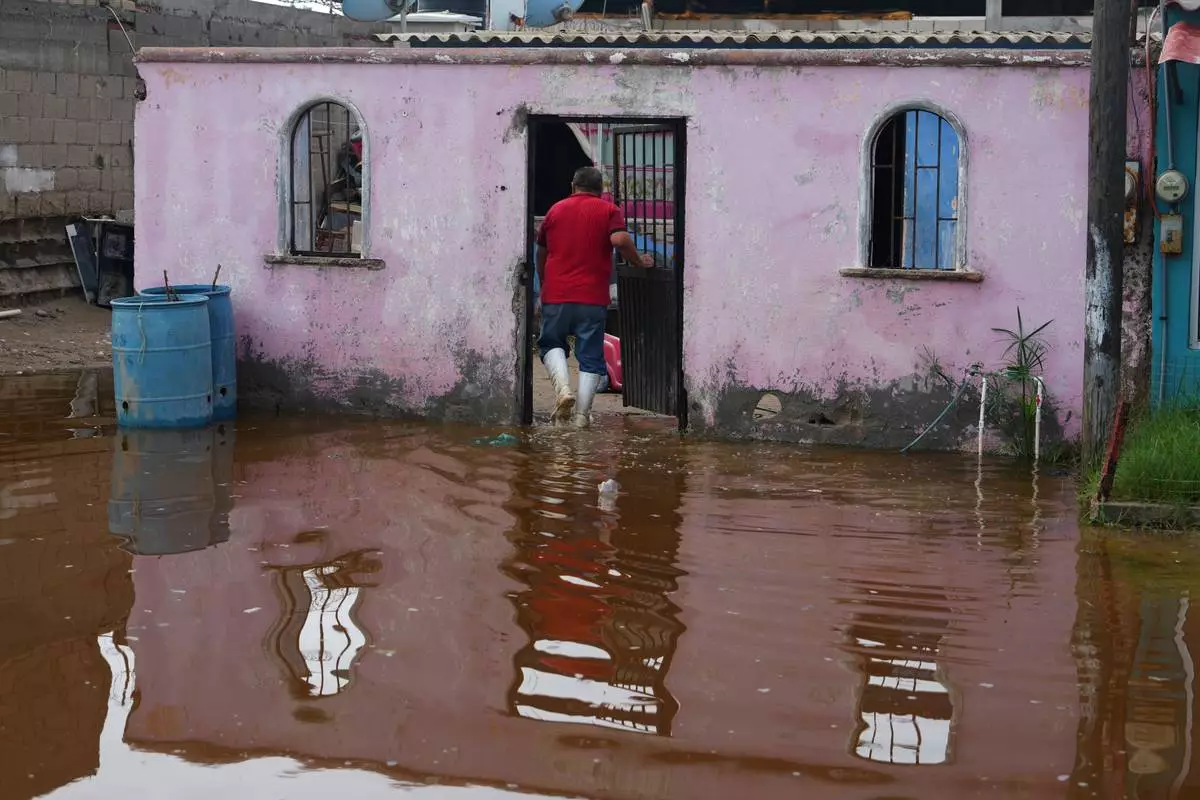
A resident enters his home surrounded by water brought by Hurricane Polo in Puerto San Carlos, Baja California Sur state, Mexico, Tuesday, Sept. 29, 2026. (AP Photo/Eduardo Verdugo)
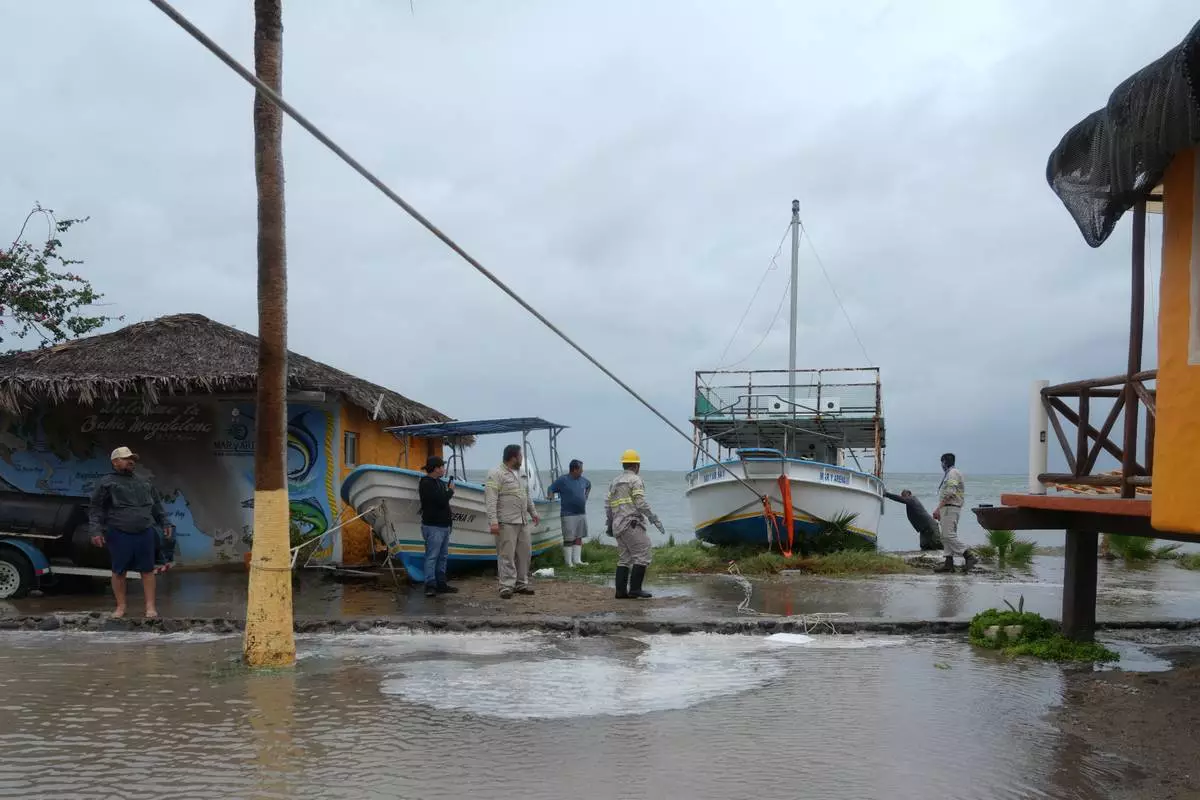
Workers pull a boat to shore as Hurricane Polo approaches Puerto San Carlos, Baja California Sur state, Mexico, Monday, Sept. 28, 2026. (AP Photo/Eduardo Verdugo)
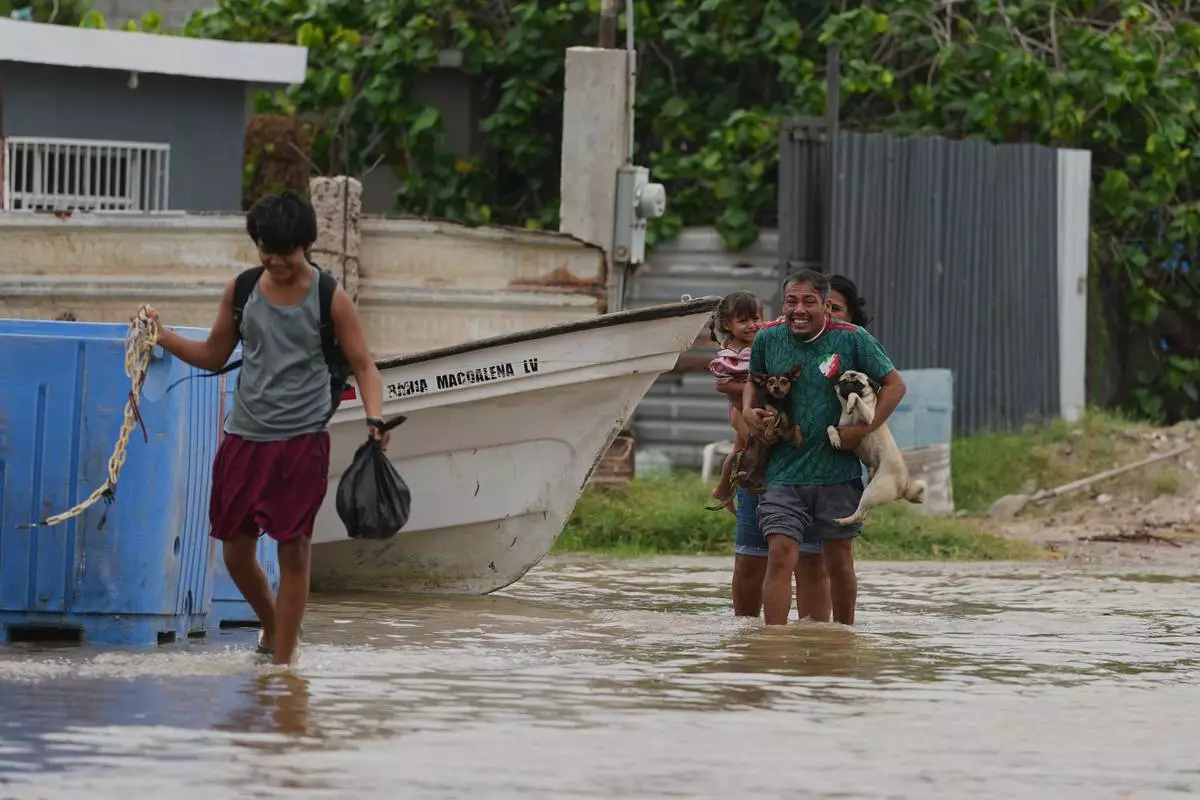
People evacuate their homes as Hurricane Polo approaches Puerto San Carlos, Baja California Sur state, Mexico, Monday, Sept. 28, 2026. (AP Photo/Eduardo Verdugo)
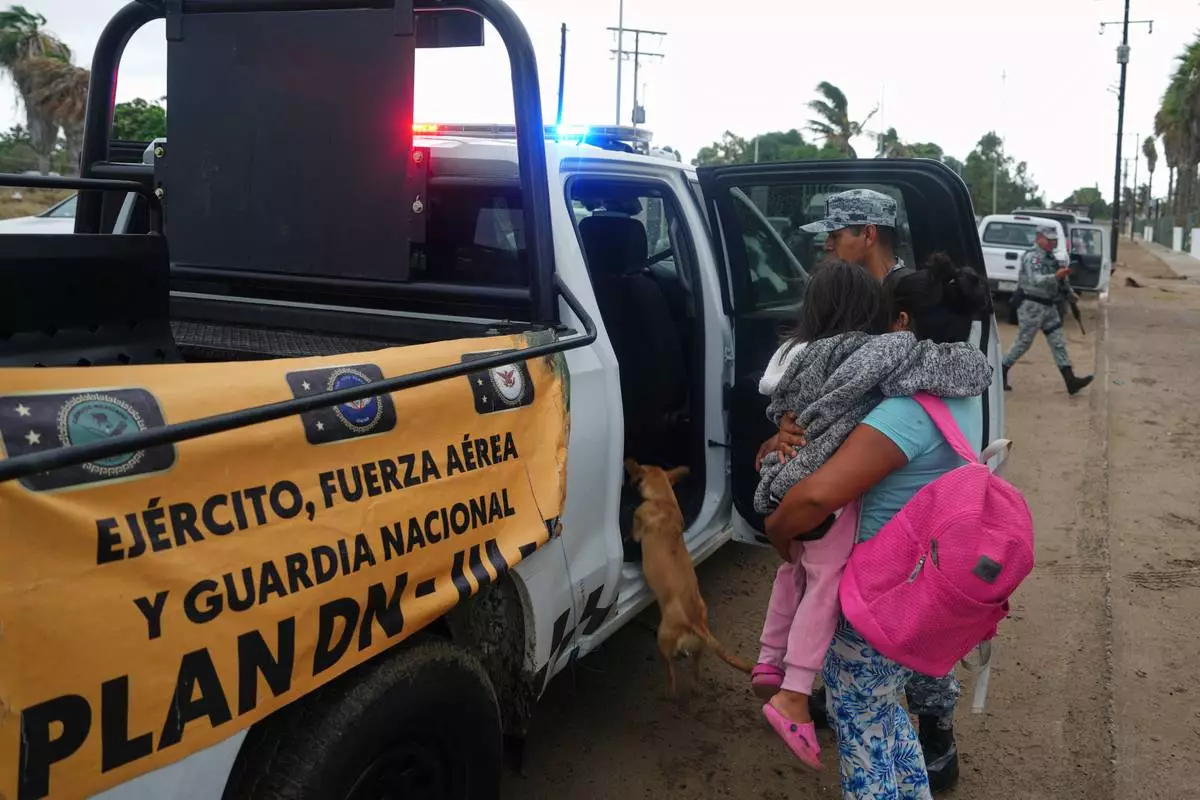
Residents are evacuated by the Army as Hurricane Polo approaches Puerto San Carlos, Baja California Sur state, Mexico, Monday, Sept. 28, 2026. (AP Photo/Eduardo Verdugo)
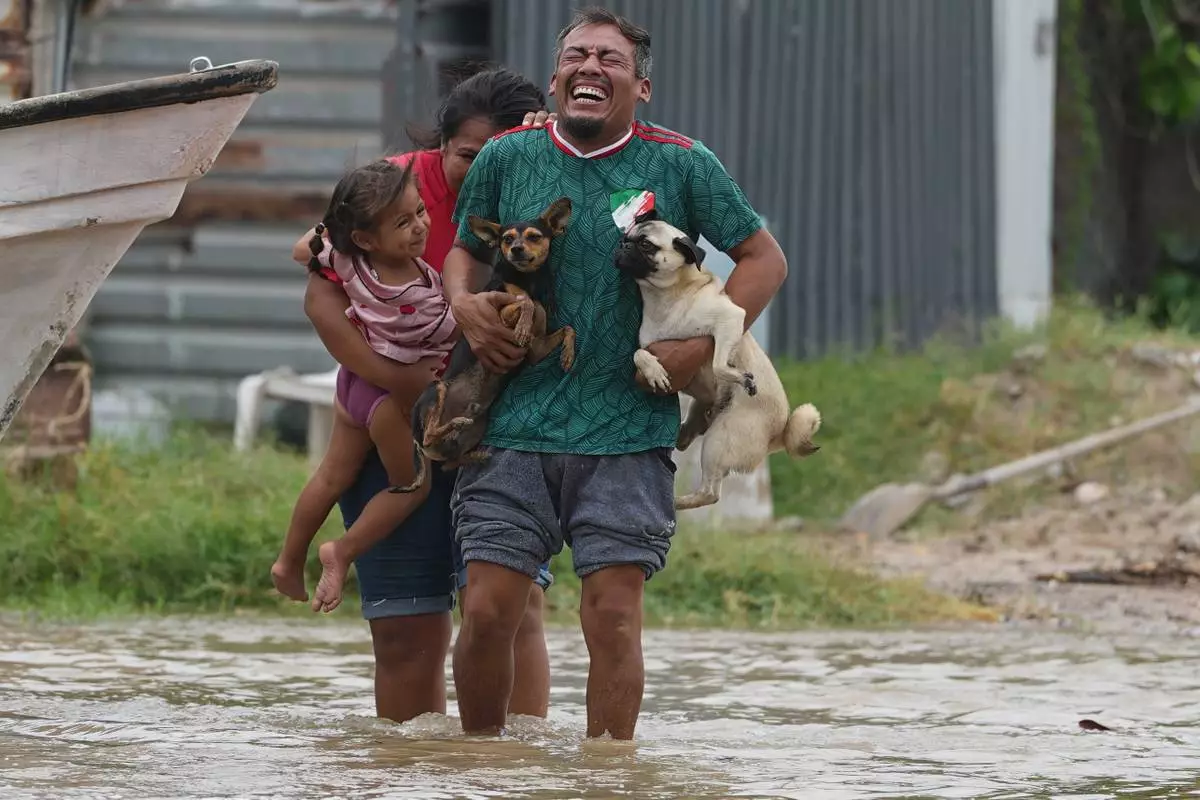
People evacuate their homes as Hurricane Polo approaches Puerto San Carlos, Baja California Sur state, Mexico, Monday, Sept. 28, 2026. (AP Photo/Eduardo Verdugo)
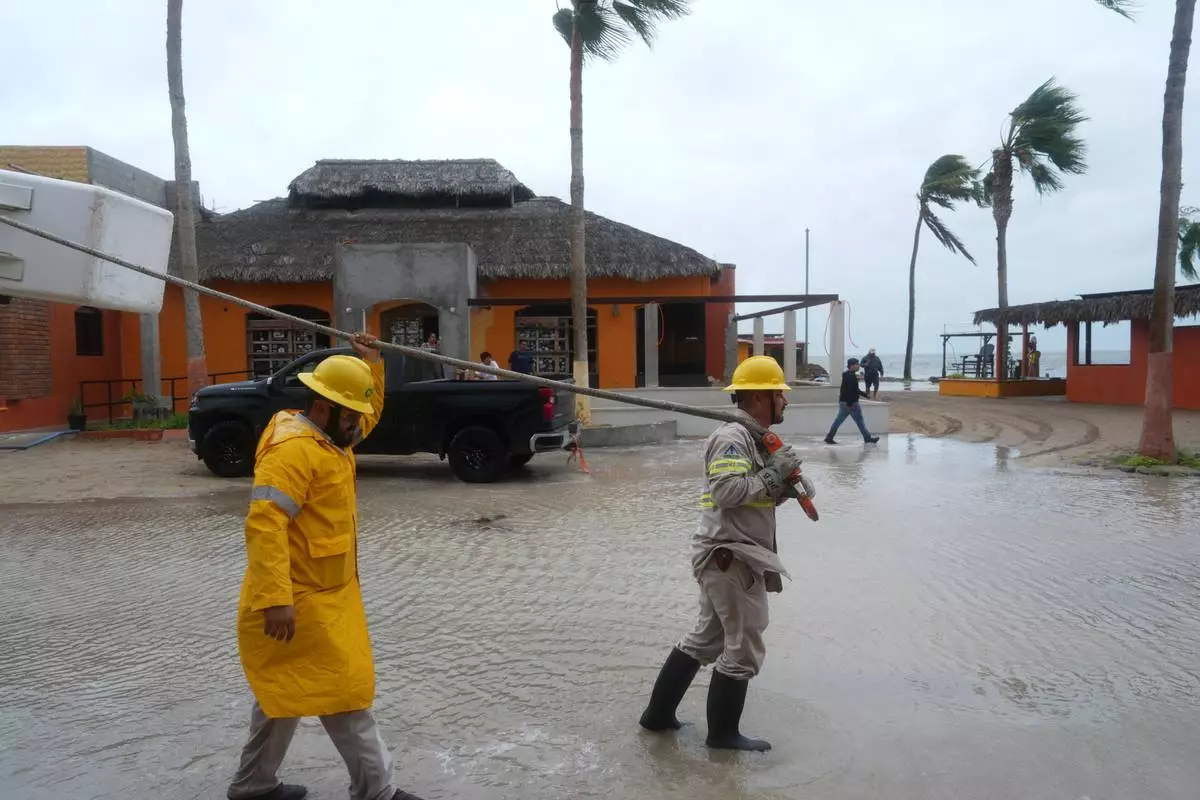
Workers pull a boat to shore as Hurricane Polo approaches Puerto San Carlos, Baja California Sur state, Mexico, Monday, Sept. 28, 2026. (AP Photo/Eduardo Verdugo)