A Virginia man’s murder conviction has been vacated and he has been freed from prison after spending 25 years behind bars — including more than a decade on death row.
Justin Michael Wolfe ’s release on Monday marks the end of a complex legal saga that at one point had him just days away from an execution date for the 2001 murder of Daniel Petrole in Bristow, Virginia. Judge Carl Weimer vacated the conviction after the only witness tying Wolfe to the shooting recanted his testimony, and Wolfe agreed to a plea deal on marijuana and robbery charges for a sentence of time served.
Wolfe, 45, spent his first few hours of freedom in a whirlwind of normalcy: Eating pizza, running errands with his mom, planning a family dinner.
“The thing I relish most is getting to know my nieces and nephews,” he said Tuesday afternoon. “I did 25 years for a marijuana case, something that you can go buy at the store now. I feel like I handled it as well as I could.”
Wolfe's case drew widespread attention when it began in the early 2000s, exposing a then-shocking drug ring involving Wolfe and several other teens in northern Virginia. At the time, authorities said they estimated Wolfe and the others may have sold as much as $10 million worth of marijuana and the synthetic drug ecstasy before they were caught, using the money on high-dollar vacations to Hawaii and Atlantic City while maintaining a veneer of everyday suburban life.
Prosecutors said Wolfe hired another young marijuana dealer, Owen Barber, to shoot and kill Daniel Petrole on March 15, 2001. Petrole was Wolfe’s friend from high school as well as his drug supplier, and prosecutors said Wolfe owed Petrole more than $60,000.
After the shooting, Barber told a friend what he had done and the friend notified police, according to court records. Barber eventually pleaded guilty as part of a deal to avoid the death penalty, and was sentenced to 60 years for the murder.
Meanwhile, a grand jury indicted Wolfe on charges including capital murder. Wolfe testified in his own defense and denied any involvement in Petrole’s death, but he was convicted in 2002 and sentenced to death.
The only person tying Wolfe to the murder-for-hire scheme was Barber. And Barber later recanted his trial testimony, saying Wolfe wasn’t involved in the murder and that law enforcement officers had repeatedly threatened him with the death penalty unless he cooperated with Wolfe’s prosecution.
Legal advocacy groups, including the U.S. Campaign to End the Death Penalty, the Innocence Project at the University of Virginia School of Law and others took up Wolfe's cause. But legal wins in the case were at times incremental, and each step took years.
After Wolfe appealed, a federal judge determined that prosecutors had engaged in misconduct and vacated his death sentence, ordering a new trial. But Barber refused to testify on Wolfe's behalf because he feared it would violate the plea deal he had reached in his own case, potentially subjecting Barber to a new death penalty trial.
More legal wrangling ensued, and in 2016 Wolfe was resentenced to up to 41 years in prison as part of a plea deal to avoid another death sentence. The deal also required him to apologize to Petrole's family.
“I understand all the pain and suffering I caused,” Wolfe said at his 2016 sentencing, looking directly at Petrole’s family. “I know an apology is not enough, but I’m sorry.”
Virginia abolished the death penalty in 2021. Barber, who was no longer at risk of facing capital punishment, signed a new sworn statement in 2023 vowing that Wolfe had nothing to do with Petrole's death. Two other people also provided sworn statements that Barber had told each of them that Wolfe wasn’t involved in Petrole’s death.
Last year, a panel of federal appellate judges agreed that Wolfe had been the victim of prosecutorial misconduct.
“Twenty-four years ago, the Commonwealth decided that appellant was a guilty man,” U.S. Circuit Judge Stephanie Thacker wrote for the unanimous three-judge panel. "From that moment, the Commonwealth has done everything in its power to ensure Appellant dies in prison, eschewing the Constitution, ethical strictures, and Appellant’s own repeated and consistent assertions of actual innocence.”
Wolfe's release this week came as part of a new plea deal in which he pleaded guilty to selling marijuana and entered a modified guilty plea known as an Alford plea to solicitation of robbery. An Alford plea essentially allows a defendant to plead guilty despite maintaining their innocence.
“The system is broken," his mom, Steinberg, said. “What they did to him was cruel and unusual punishment, and what they did to the Petroles was just prolong their pain.”
In a statement released Monday, Prince William County Commonwealth's Attorney Amy Ashworth called the resolution a “just and appropriate outcome” to a case that was mishandled by a previous administration.
“We recognize that people will have strong and differing views about this resolution,” with some believing it establishes Wolfe's guilt and others his innocence, Ashworth said.
Petrole's family also issued a statement, included in the Prince William County Commonwealth Attorney's office release.
They asked for privacy and said they hope that now they “can finally begin to close this chapter and remember Danny for life rather than for the circumstances of his death.”
Steinberg said she's looking forward to healing, as a family.
Wolfe is facing an adjustment period. Simple things like being able to choose when to sleep, and showering without a correctional officer escort are novel changes after a quarter-century behind bars. But he hopes to eventually become an advocate for criminal justice reform.
“We just went to Costco, and that was sensory overload,” Wolfe said with a chuckle. “I’m going to get the hang of it. I’ll be alright.”

FILE - Justin Michael Wolfe, left, looks back towards his parents as he is led from the courtroom by a sheriff's deputy after being found guilty of capital murder in Manassas, Va., Jan. 22, 2002. (AP Photo/Dylan Moore, Pool, File)
PHOENIX (AP) — Hurricane Polo smashed into the western coast of Mexico on Tuesday, swamping coastal areas and toppling trees before the storm’s remnants headed toward the U.S. Southwest, where heavy rains soaked the region and residents in small New Mexico towns were evacuated over concerns about a dam failing.
Polo struck the Mexican state of Baja California Sur in the morning with maximum sustained winds of 110 mph (175 kph). It crossed the Gulf of California and weakened to become a tropical storm as it moved inland to the northeast, and its remnants were expected to reach the U.S. by Tuesday night.
North-central New Mexico, including Albuquerque and Santa Fe, could feel the brunt of the severe weather, with as much as 3 to 4 inches (about 8 to 10 centimeters) of rain through Wednesday and possibly more, forecasters said.
That is after storms rolled through parts of the U.S. Southwest overnight Monday, saturating the ground, which can make flooding worse.
Bands of rain continued to sweep across the U.S. Southwest, causing desert rivers to surge and usually dry arroyos to rage with floodwater.
The potential failure of the dam in south central New Mexico prompted evacuations in three small communities with hundreds of residents along the Rio Grande. People in Rincon, Salem and Garfield were told to seek higher ground immediately “before conditions worsen.”
Nearly all of the region was under flood watches as the complex system of tropical weather — with Polo the main event — spread northeast from Mexico.
“Definitely looking at the chances for urban flooding,” said National Weather Service meteorologist Carter Greulich in Albuquerque. “Don’t drive through flooded roadways. Remain out of the arroyos, especially in our urban areas.”
A person stranded on top of a vehicle in floodwaters west of Phoenix was rescued Tuesday morning. Video taken by Arizona Fire and Medical Services showed a helicopter lowering a rescuer to a person clinging to their overturned car. And in Zion National Park, a helicopter was used to rescue three people who had been in Heaps Canyon and went to high ground when it began to flash flood.
North of Phoenix, a truck was swept away in a wash in the New River area. The driver got out safely, Maricopa County sheriff’s officials said.
The rocky, desert area typically gets less than 10 inches (25 centimeters) of rain annually with little vegetation to soak it up, making flash flooding a perpetual risk.
Near Zion National Park in Utah, the East Fork of the Virgin River raged with chocolate floodwater seen carrying a shipping container downstream.
In the small town of Orderville, Utah, where flooding began Monday night, Sabrina Dubay was driving home when her partner called and told her to stay away.
“The river came in and swept around the entirety of our house,” Dubay said.
A camper, snowmobile trailer, and other items from Dubay’s yard were swept away by the river. Neighbors and friends arrived to dig a trench around the house as the water rose around their home.
“It was coming in through our front doors,” she said.
Flooding also was reported in southern New Mexico. An unusually soggy September across the region set the stage: When the ground is saturated, rainfall has nowhere to go but run off.
“Runoff is likely going to start much quicker and lead to those flooding impacts quicker,” Greulich said.
Forecasters said the flood risk would move into parts of the central U.S. beginning late Tuesday and into Wednesday. Starting late Wednesday, widespread heavy rain was expected to hit the Dallas-Fort Worth, Austin and San Antonio areas. Life-threatening flash flooding was possible, with low-lying areas especially vulnerable.
Parts of west Texas, Oklahoma, Kansas, Nebraska and Iowa were under flood watch through Thursday, with some areas expecting up to 5 inches (13 centimeters) of rain.
Hurricane Polo pummeled Baja California Sur with powerful winds and rain as it made landfall.
After Polo passed over the small fishing town of Puerto San Carlos on the Baja California peninsula, residents waded among downed trees through ankle-high water that flooded some homes. Seeing their roughened community largely intact brought relief to those who had prepared for the worst.
Shopkeeper Elbia María Bachomo, 40, picked through furniture strewn through her home. She and her three children had gathered their clothes quickly and left for a shelter Monday as water began flooding into their home.
Her husband was out on the water fishing for sardines when Polo hit. Bachomo said he was fortunate to escape alive.
“I thought, ‘Oh no, what are we going to come back to? We will be left with nothing.’ But we were lucky,” she said.
Polo was expected to produce 6 to 12 inches (about 15 to 30 centimeters) of rain across parts of Baja California Sur.
About 700 people remained in shelters Tuesday. But they were expected to return to their homes, and no serious damage or deaths were immediately reported, according to authorities.
Meanwhile, the hurricane center reported Tropical Storm Rachel was moving parallel to Mexico’s coast early Tuesday. The storm was about 265 miles (425 kilometers) southwest of Lazaro Cardenos with maximum sustained winds of 65 mph (105 kph). It was moving west-northwest at 13 mph (20 kph).
In the central Pacific Ocean, Hurricane Nolo remained a dangerous Category 3 hurricane on Tuesday as it edged away from Hawaii after drenching parts of the Big Island over the weekend. The hurricane was approaching Papahanaumokuakea Marine National Monument, a marine conservation area.
Pacific storm activity has been above average this year. That's consistent with El Niño years.
Hill reported from Las Vegas, and Brown reported from Billings, Montana. Martin Silva Rey and Eduardo Verdugo in Puerto San Carlos, Mexico, Megan Janetsky in Mexico City, Julie Walker in New York, Mead Gruver in Fort Collins, Colorado, Mikella Schuettler in Phoenix, Sarah Raza in Sioux Falls, South Dakota, and Eugene Garcia and Gregory Bull in Hilo, Hawaii, contributed to this report.
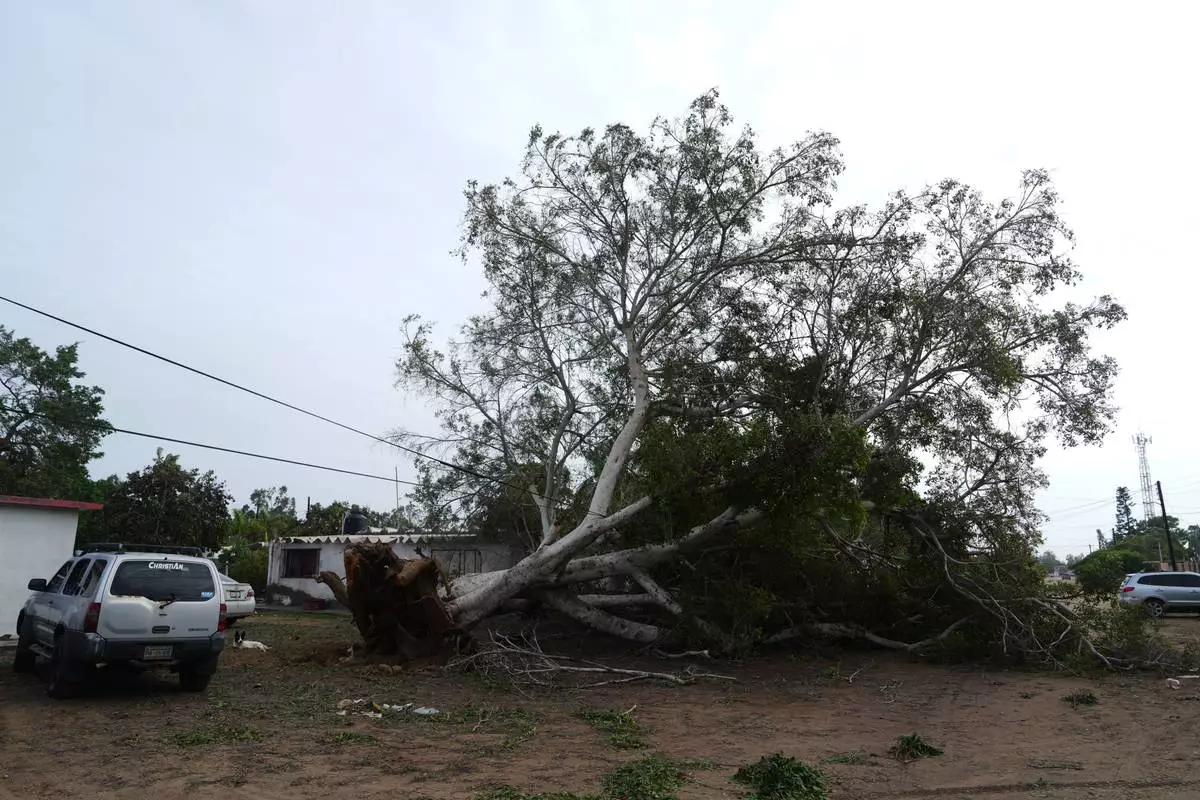
An uprooted tree lies on the ground after the passing of Hurricane Polo in Puerto San Carlos, Baja California Sur state, Mexico, Tuesday, Sept. 29, 2026. (AP Photo/Eduardo Verdugo)
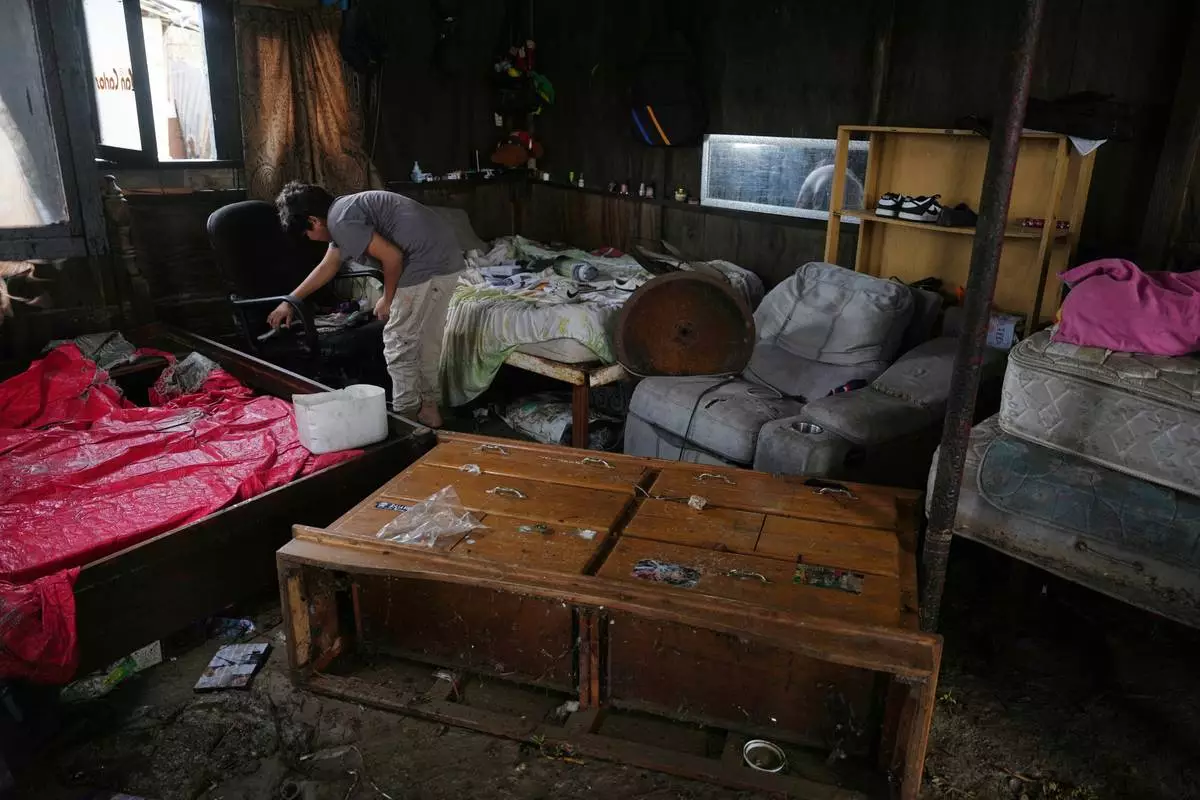
A resident retrieves belongings from their home that was damaged by Hurricane Polo in Puerto San Carlos, Baja California Sur state, Mexico, Tuesday, Sept. 29, 2026. (AP Photo/Eduardo Verdugo)
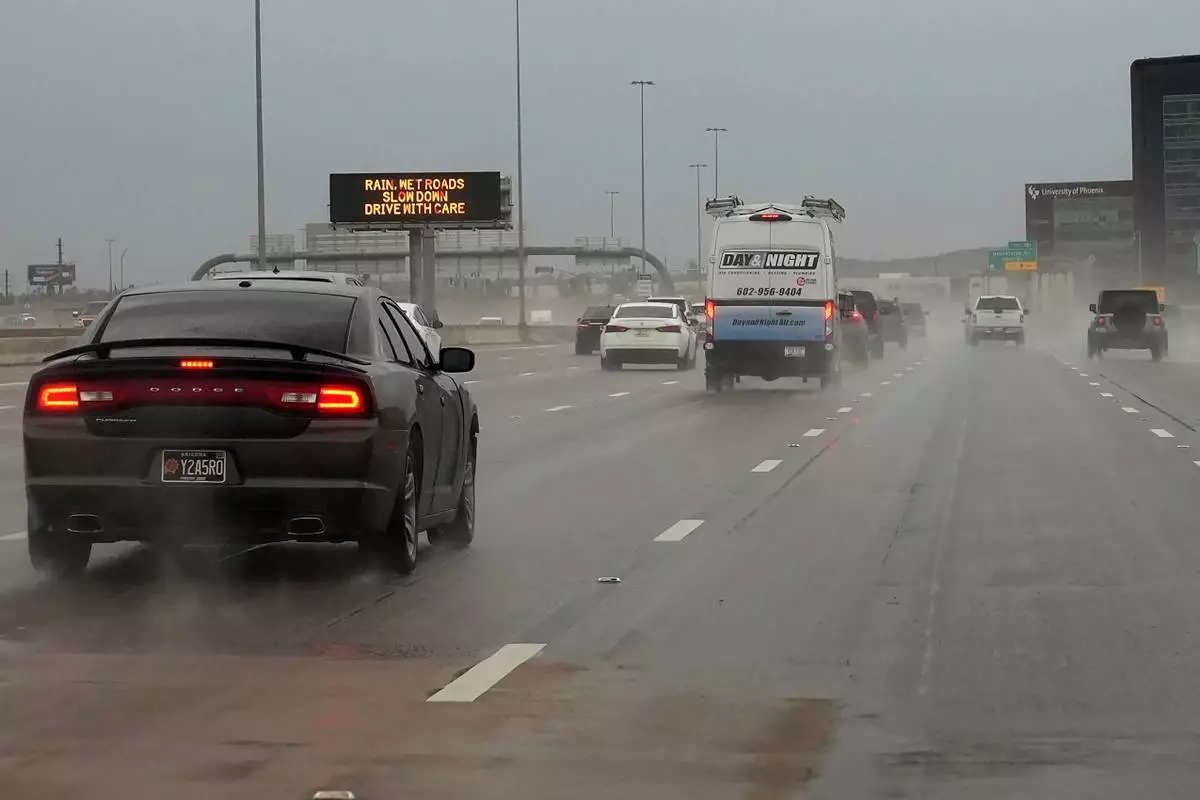
Vehicles drive in the rain on the I-10 with Arizona Department of Transportation (ADOT) warning signs displayed along the route, Monday, Sept. 28, 2026, in Phoenix. (AP Photo/Ross D. Franklin)
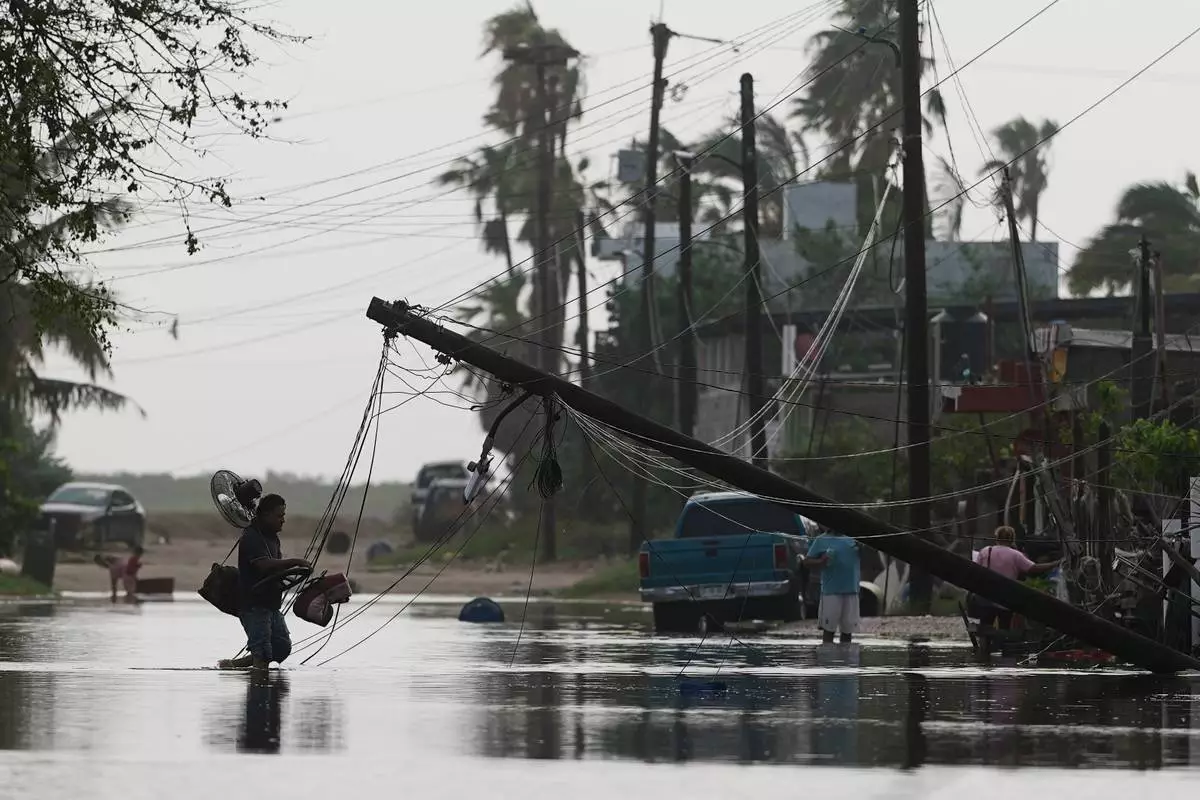
A man carries items through floodwater past downed electric lines after the passing of Hurricane Polo in Puerto San Carlos, Baja California Sur state, Mexico, Tuesday, Sept. 29, 2026. (AP Photo/Eduardo Verdugo)
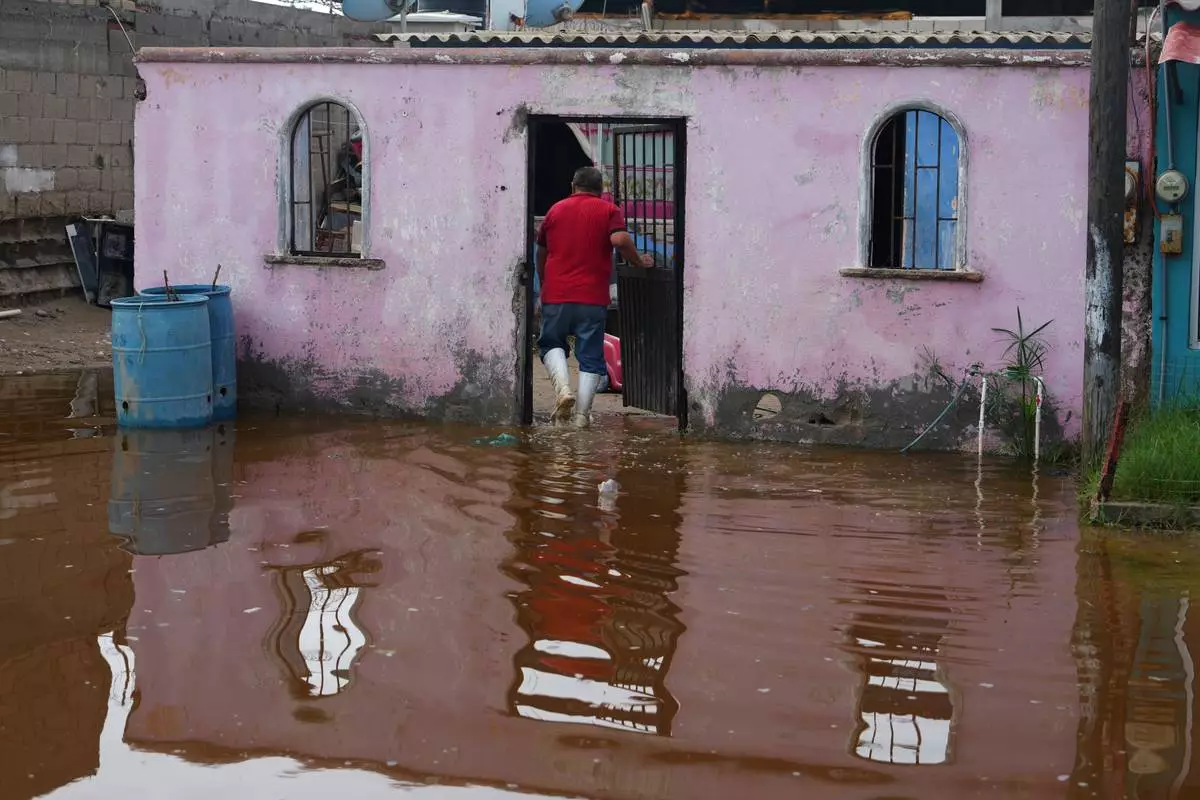
A resident enters his home surrounded by water brought by Hurricane Polo in Puerto San Carlos, Baja California Sur state, Mexico, Tuesday, Sept. 29, 2026. (AP Photo/Eduardo Verdugo)
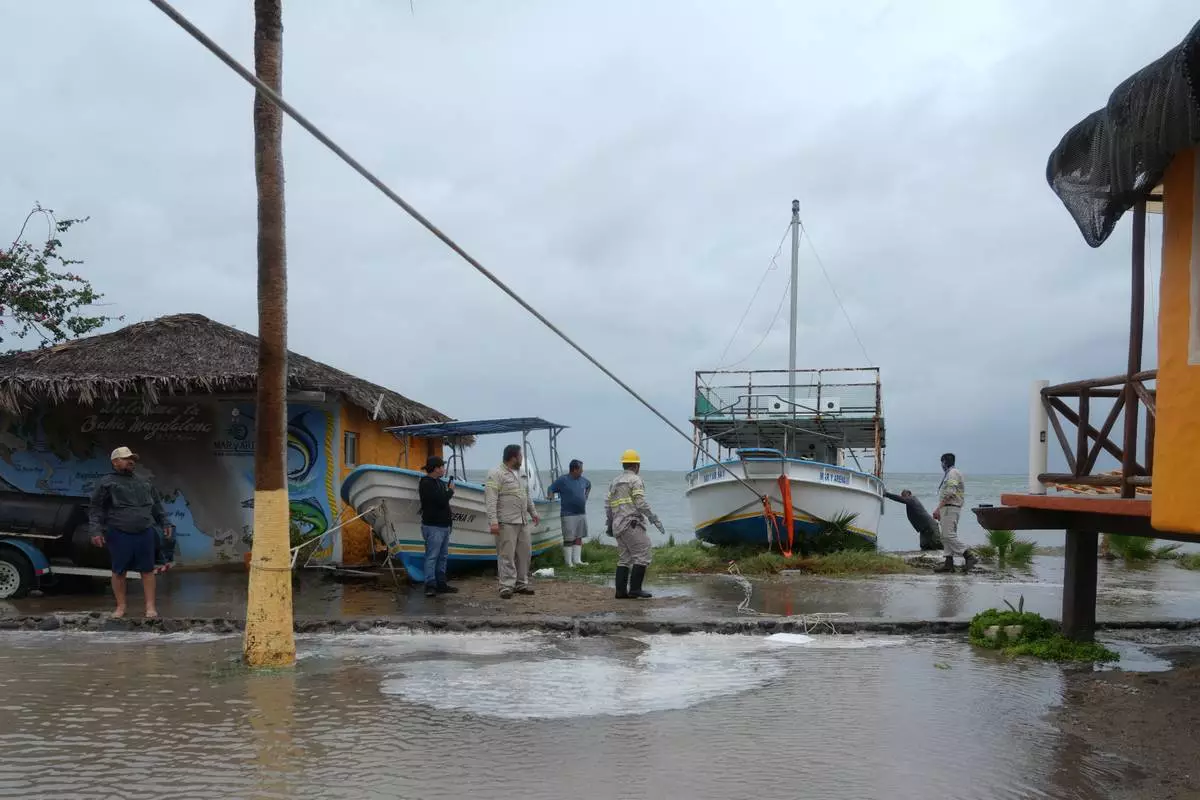
Workers pull a boat to shore as Hurricane Polo approaches Puerto San Carlos, Baja California Sur state, Mexico, Monday, Sept. 28, 2026. (AP Photo/Eduardo Verdugo)
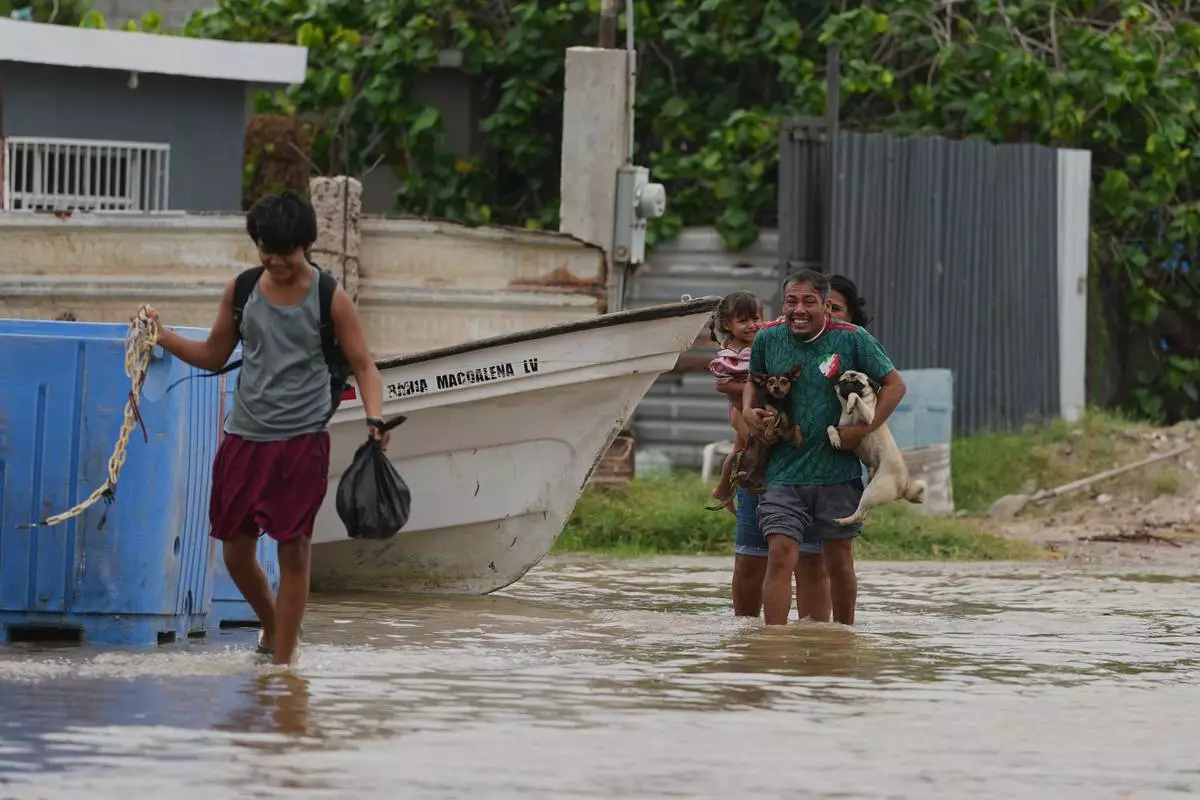
People evacuate their homes as Hurricane Polo approaches Puerto San Carlos, Baja California Sur state, Mexico, Monday, Sept. 28, 2026. (AP Photo/Eduardo Verdugo)
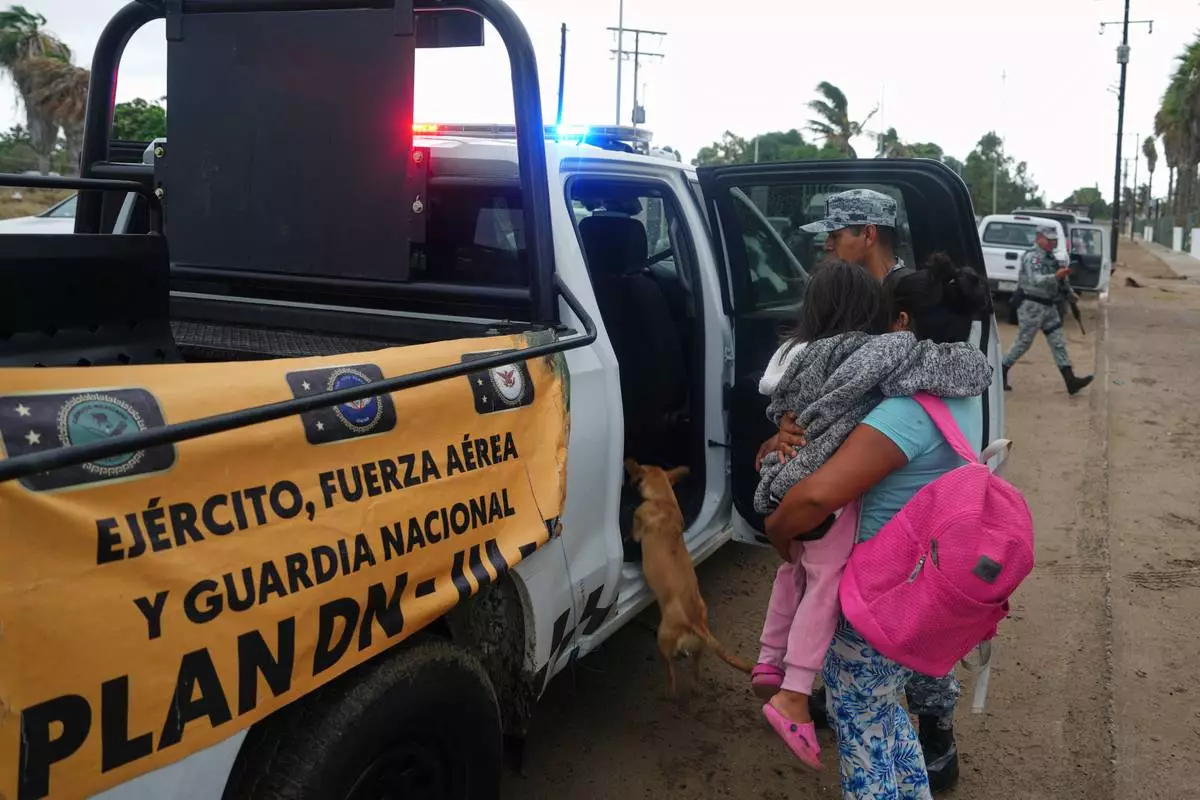
Residents are evacuated by the Army as Hurricane Polo approaches Puerto San Carlos, Baja California Sur state, Mexico, Monday, Sept. 28, 2026. (AP Photo/Eduardo Verdugo)
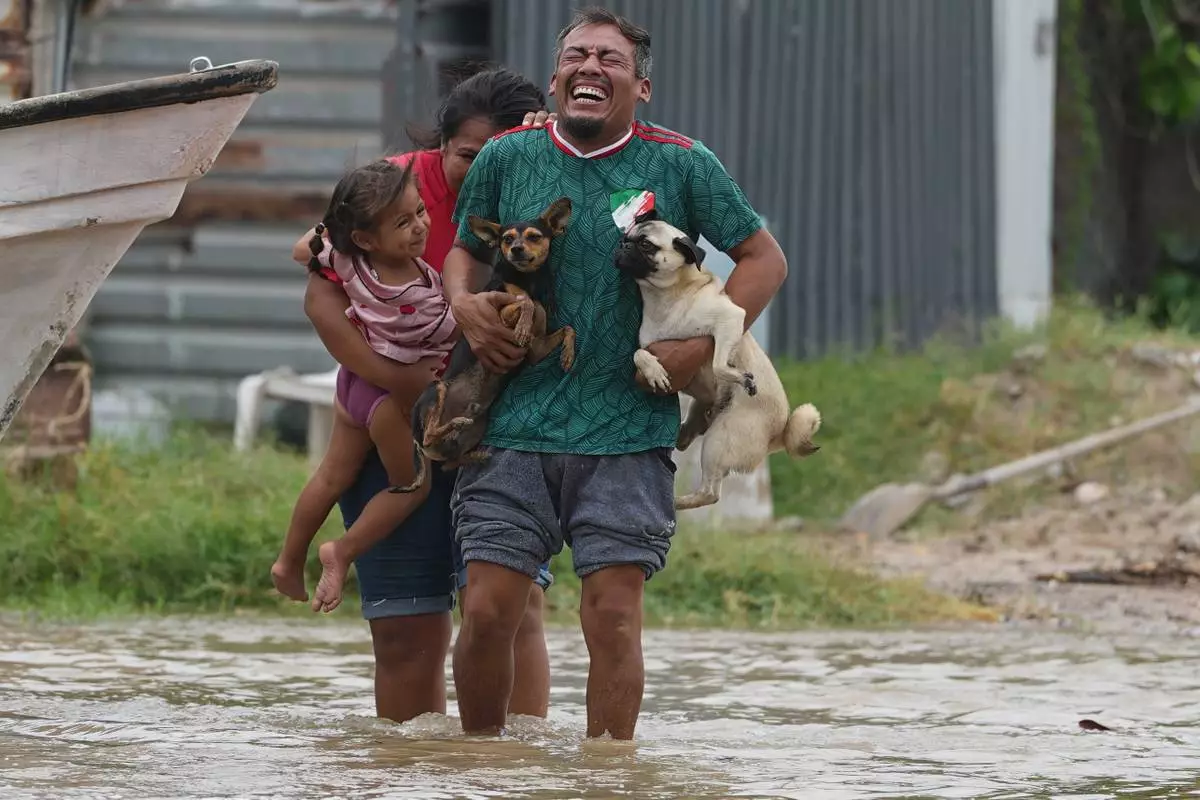
People evacuate their homes as Hurricane Polo approaches Puerto San Carlos, Baja California Sur state, Mexico, Monday, Sept. 28, 2026. (AP Photo/Eduardo Verdugo)
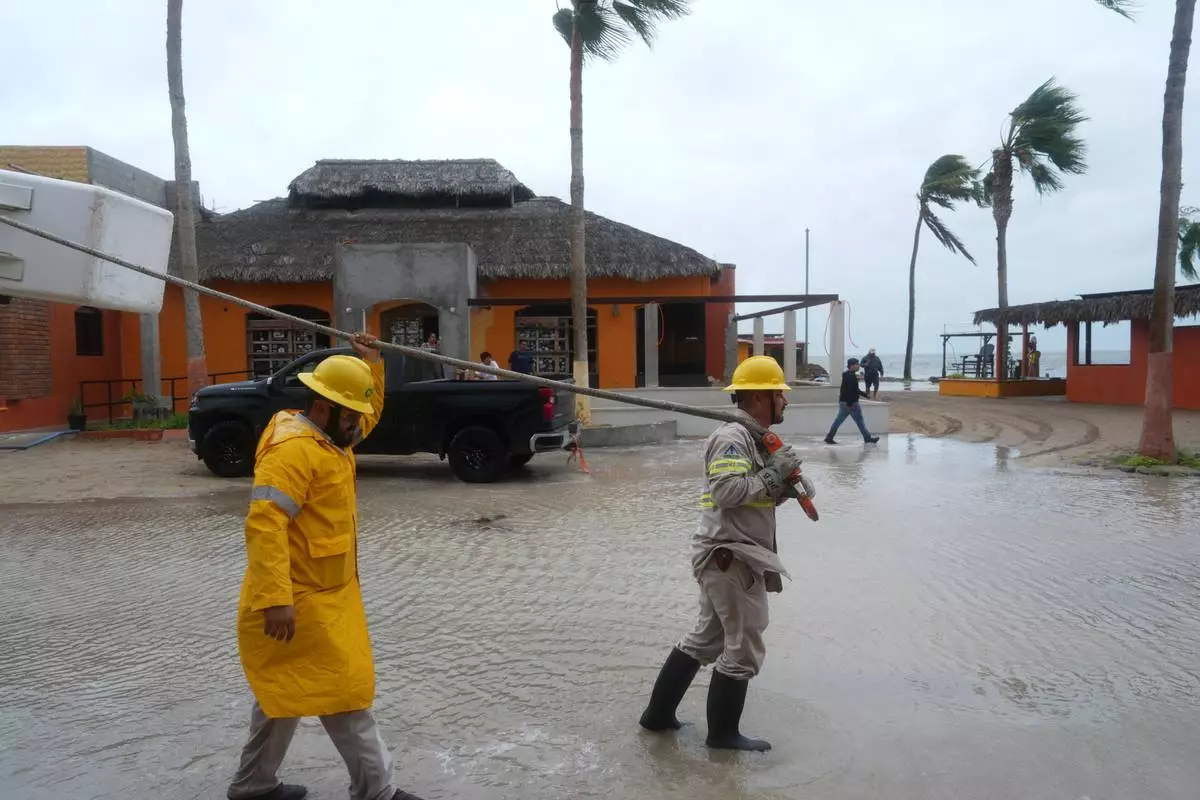
Workers pull a boat to shore as Hurricane Polo approaches Puerto San Carlos, Baja California Sur state, Mexico, Monday, Sept. 28, 2026. (AP Photo/Eduardo Verdugo)