Satellite images show that tankers have resumed loading oil from Saudi Arabia's Red Sea terminals as the country recovers from a drone attack on a key pipeline earlier this month, The New York Times reported on Tuesday, citing ship-tracking firm Kpler.
A total of nine oil tankers have loaded roughly 12.5 million barrels of crude along the Red Sea coast since Sunday, with three completing their loading operations in the past 24 hours, the report said.
The activity is seen as the "strongest indication" yet that Saudi Arabia's East-West Pipeline has resumed operations, at least partially. As one of the world's largest oil exporters, Saudi Arabia has invested heavily in the pipeline, which carries crude from its eastern fields to the Red Sea port of Yanbu, bypassing the Strait of Hormuz.
Two sources familiar with the pipeline's repairs, speaking on condition of anonymity, said that Saudi Arabia has restored flows to about 3.5 million barrels per day.
Neither the Saudi Energy Ministry nor state-owned Saudi Aramco, which operates the pipeline, has commented on the resumption.
The Saudi Energy Ministry said on Sept 11 that the pipeline had been shut down as a precaution after coming under multiple attacks a day earlier.
Saudi Arabia's civilian and energy sites have come under repeated Houthi fire recently. The Yemeni group said its attacks are in response to Saudi airstrikes on areas under its control in north-western Yemen.
Stretching more than 1,200 kilometers, Saudi Arabia's East-West Pipeline has a peak capacity of 7 million barrels per day, of which 5 million barrels can be used for export.
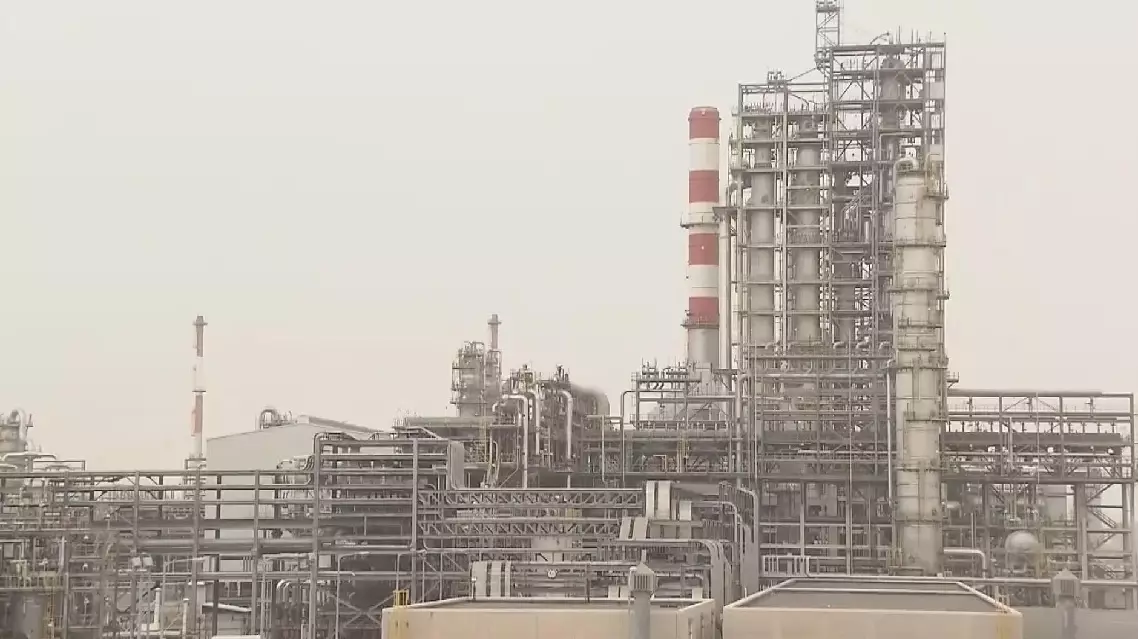
Satellite imagery shows Saudi East-West Pipeline partially restored after attack: report
The U.S.-led coalition concluded its military mission in Iraq on Wednesday, marking the end of more than two decades of Western military presence that began with the 2003 invasion.
Iraqi Prime Minister Ali al-Zaidi on Wednesday announced the conclusion of the U.S.-led international coalition's mission to combat the Islamic State (IS) in Iraq.
On the same day, the Pentagon said the United States and its allies have officially ended Operation Inherent Resolve against the IS in Iraq.
To mark the occasion, the Iraqi government declared a four-day official holiday from September 30 to October 3, designated as "Sovereignty Day" celebrations.
"For Iraq, the withdrawal of U.S. forces means that national sovereignty is further fully implemented. Iraq will be able to decide its own stance independently. This is something to be happy about and an important moment of national significance," said Majid Al-Hasnawi, a resident.
Iraqi analysts echoed hopes that regaining full autonomy will accelerate domestic recovery.
"I think at this current time, the withdrawal of U.S. forces and international coalition troops will help promote the reconstruction process. Because the Iraqi people will rely on their own country's talents and institutions, and the people of this country will drive the national reconstruction themselves," said Faisal Radi, an economist.
The drawdown follows years of shifting security dynamics. The U.S. launched the Iraq War in 2003 and carried out a broad withdrawal in late 2011, leaving only a residual force.
In 2014, the Islamic State group seized vast territories across Iraq's west and north. The U.S.-led coalition to combat the extremist group was subsequently formed and deployed forces to Iraq.
In 2024, the U.S. and Iraq agreed on a two-phase transition to conclude the coalition's mission.
"Ending the foreign military presence is an important political decision made and being implemented by Iraq. The problem is that a foreign military presence may provide room for intervention in Iraq's domestic political affairs, and this kind of interference in Iraq's internal affairs is something the Iraqi side cannot accept," said Salah Boushi, director of the Iraq Center for Strategic Affairs.
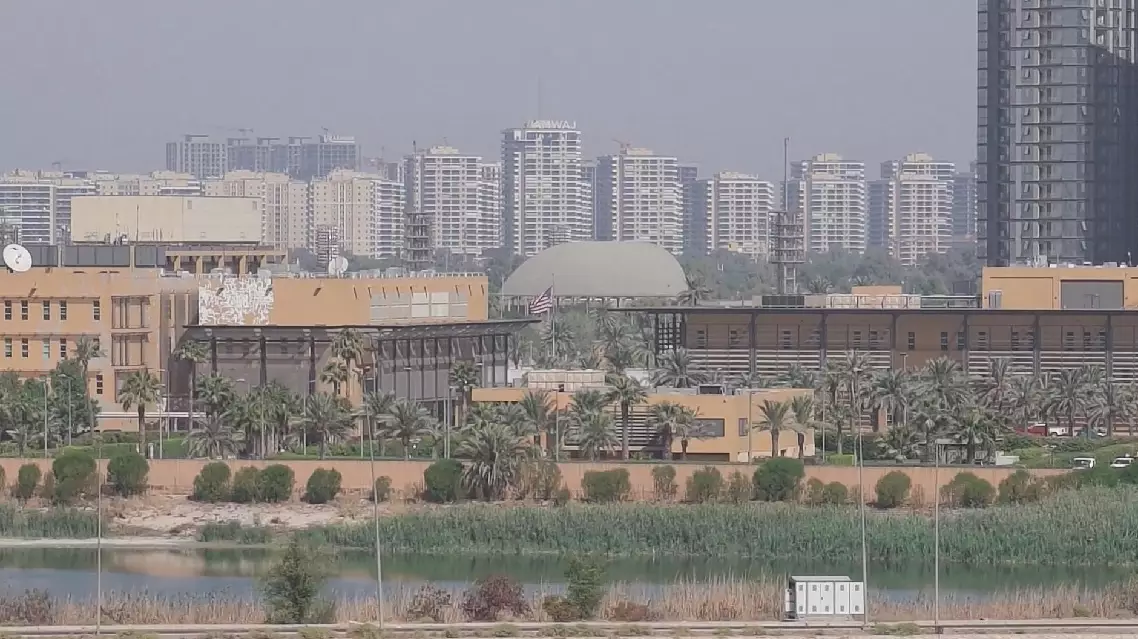
U.S.-led coalition concludes military mission in Iraq