China urged the international community to help Haiti chart its own path out of the crisis on Tuesday after abstaining from a UN Security Council vote to extend the mandate of the Gang Suppression Force (GSF) for six months.
Resolution 2829 was adopted with 12 votes in favor and three abstentions cast by China, Russia and Pakistan among the 15-member council.
The resolution decides to extend the mandate of the GSF until March 31, 2027, and requests the UN secretary-general to continue to provide logistical and operational support through the UN Support Office in Haiti.
Speaking after the vote at the UN headquarters in New York, Sun Lei, China's deputy permanent representative to the UN, elaborated on China's position regarding the resolution and the Haiti crisis.
"China is deeply concerned about the severe security situation in Haiti and supports regional countries and the international community in providing assistance. However, China has consistently held doubts and concerns over whether suppressing or even eliminating gangs through external military forces is the appropriate way to resolve Haiti's security dilemma. This position remains unchanged. The key to resolving the issue always lies in the hands of Haiti itself. This does not mean the international community should stand idly by, but rather that it should help Haiti find the right path out of the crisis based on its unique national conditions and historical lessons," Sun said.
The resolution notes the agreement between the Haitian government and the GSF, signed in July 2026, confirming the legal personality of the GSF, as well as other arrangements extending to the GSF and its personnel the status and protections necessary for the continued independent exercise of their functions.
It says the Security Council encourages UN member states to take measures, as appropriate, to acknowledge the legal status of the GSF and accord to the GSF and its personnel the privileges and immunities necessary for the continued independent exercise of their functions.
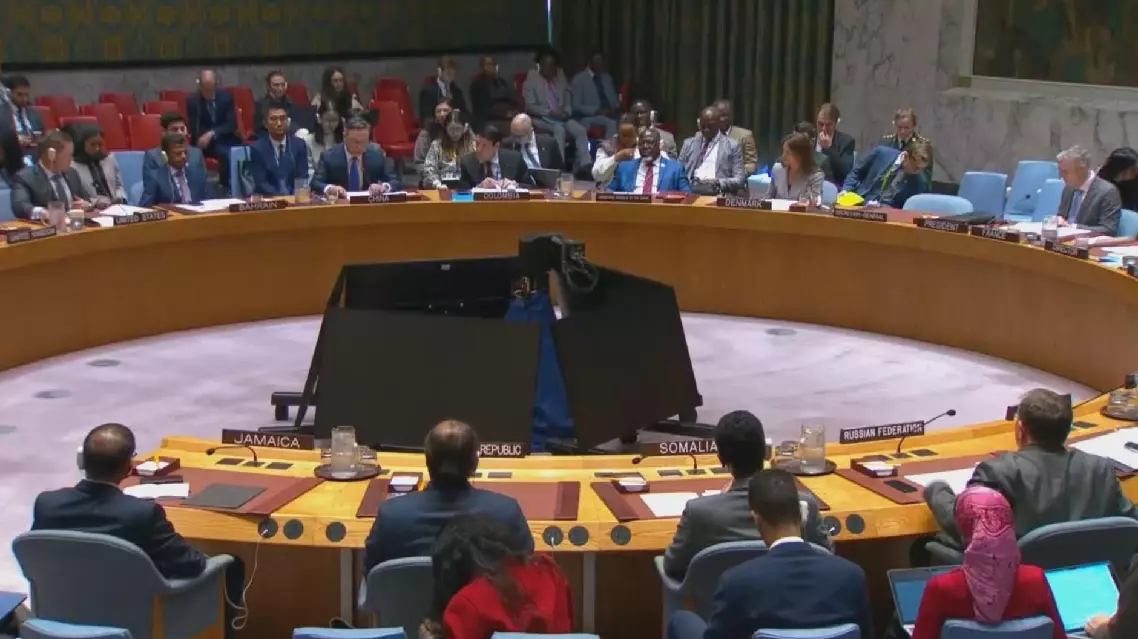
China calls for local solutions in Haiti after abstaining on security force vote
The U.S.-led coalition concluded its military mission in Iraq on Wednesday, marking the end of more than two decades of Western military presence that began with the 2003 invasion.
Iraqi Prime Minister Ali al-Zaidi on Wednesday announced the conclusion of the U.S.-led international coalition's mission to combat the Islamic State (IS) in Iraq.
On the same day, the Pentagon said the United States and its allies have officially ended Operation Inherent Resolve against the IS in Iraq.
To mark the occasion, the Iraqi government declared a four-day official holiday from September 30 to October 3, designated as "Sovereignty Day" celebrations.
"For Iraq, the withdrawal of U.S. forces means that national sovereignty is further fully implemented. Iraq will be able to decide its own stance independently. This is something to be happy about and an important moment of national significance," said Majid Al-Hasnawi, a resident.
Iraqi analysts echoed hopes that regaining full autonomy will accelerate domestic recovery.
"I think at this current time, the withdrawal of U.S. forces and international coalition troops will help promote the reconstruction process. Because the Iraqi people will rely on their own country's talents and institutions, and the people of this country will drive the national reconstruction themselves," said Faisal Radi, an economist.
The drawdown follows years of shifting security dynamics. The U.S. launched the Iraq War in 2003 and carried out a broad withdrawal in late 2011, leaving only a residual force.
In 2014, the Islamic State group seized vast territories across Iraq's west and north. The U.S.-led coalition to combat the extremist group was subsequently formed and deployed forces to Iraq.
In 2024, the U.S. and Iraq agreed on a two-phase transition to conclude the coalition's mission.
"Ending the foreign military presence is an important political decision made and being implemented by Iraq. The problem is that a foreign military presence may provide room for intervention in Iraq's domestic political affairs, and this kind of interference in Iraq's internal affairs is something the Iraqi side cannot accept," said Salah Boushi, director of the Iraq Center for Strategic Affairs.
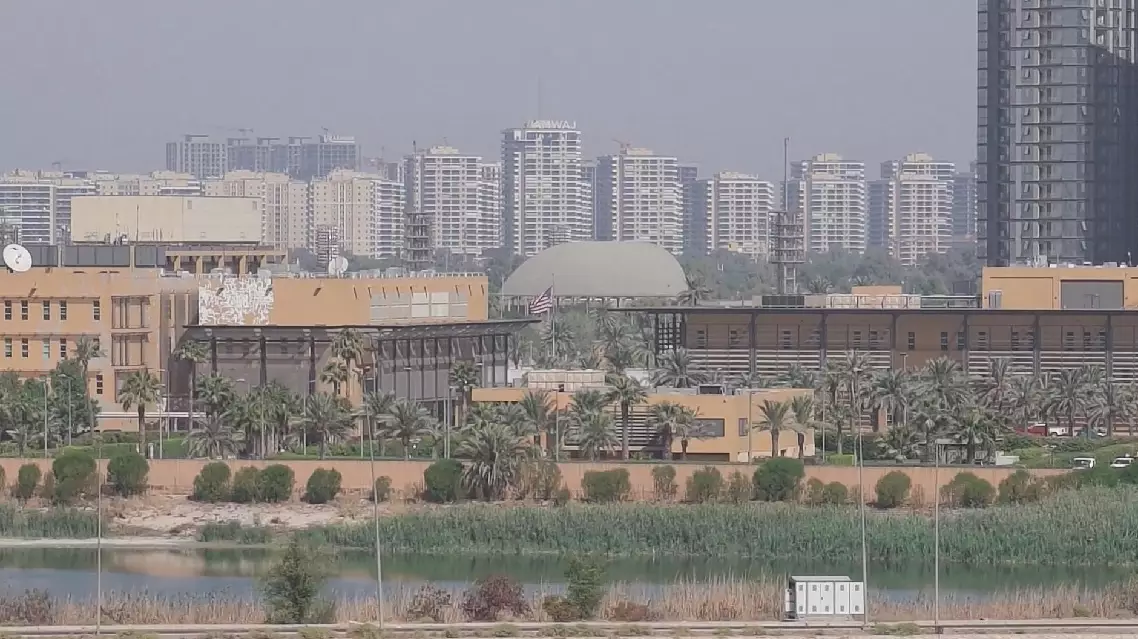
U.S.-led coalition concludes military mission in Iraq