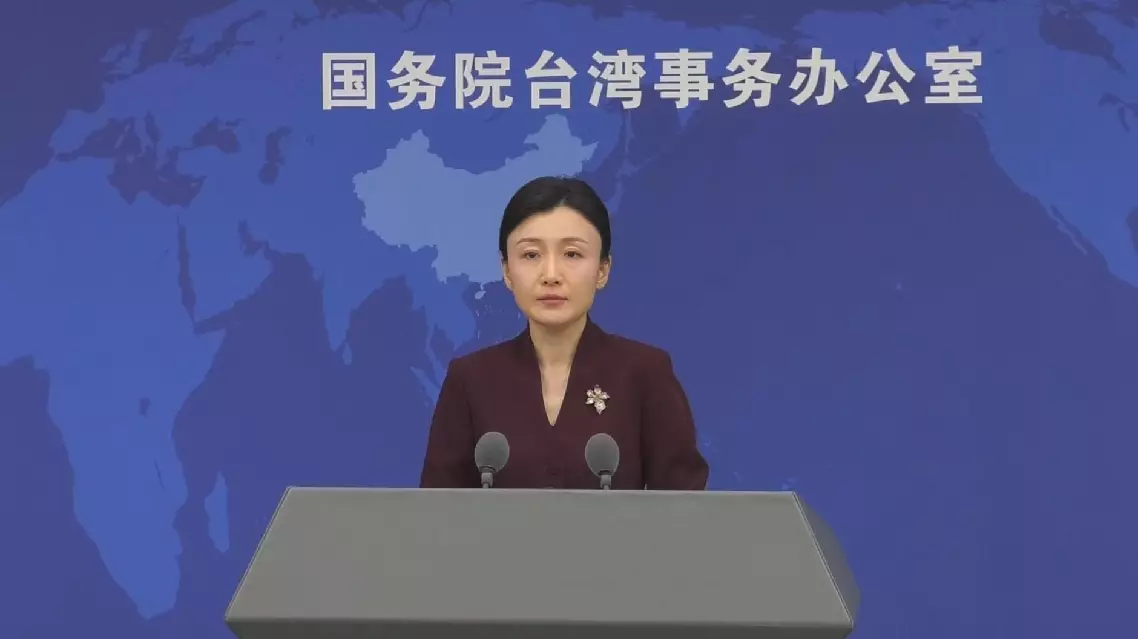
China's Taiwan Affairs Office said on Wednesday that firmly opposing Taiwan separatism and safeguarding cross-Strait stability serve the common interests of China and the United States.
Speaking at a regular news briefing, spokeswoman Zhang Han addressed a recent commentary in the People's Daily, which said that Taiwan separatism is an enemy for both China and the U.S. and managing Taiwan separatism is critical for a constructive strategic stability between the world's two largest economies.
"There is but one China in the world, Taiwan is an inalienable part of China's territory. Upholding the one-China principle is a universally recognized norm in international relations and a prevailing consensus among the international community, and the bedrock of the political foundation of China-U.S. relations," said Zhang.
"The Taiwan question is the core of the core interests of China, and the most important issue in China-U.S. relations. Proper handling of this issue will maintain the overall stability of bilateral ties. Mismanagement may lead to frictions or even conflicts between the two countries, pushing China-U.S. relations into an extremely dangerous situation," Zhang continued.
The spokeswoman also leveled direct criticism at the administration of Taiwan's leader Lai Ching-te, accusing his government of deliberately escalating tensions across the Taiwan Strait.
"The Lai Ching-te authorities stubbornly adhere to the separatist stance, refuse to recognize the 1992 Consensus which embodies the one-China principle, and continually engage in provocations to seek 'independence'. They are the chief culprit undermining peace and stability across the Taiwan Strait," said Zhang.
"Firmly opposing Taiwan separatism and safeguarding cross-Strait peace and stability serve the common interests of both China and the U.S. We hope that compatriots in Taiwan can recognize the extreme harm and danger posed by the Lai Ching-te authorities' bullheaded pursuit of 'independence', resolutely oppose separatist acts and join hands with the mainland to safeguard cross-Strait peace and stability and to advance the great cause of national reunification," Zhang added.
China says opposing Taiwan separatism serves China-US interests
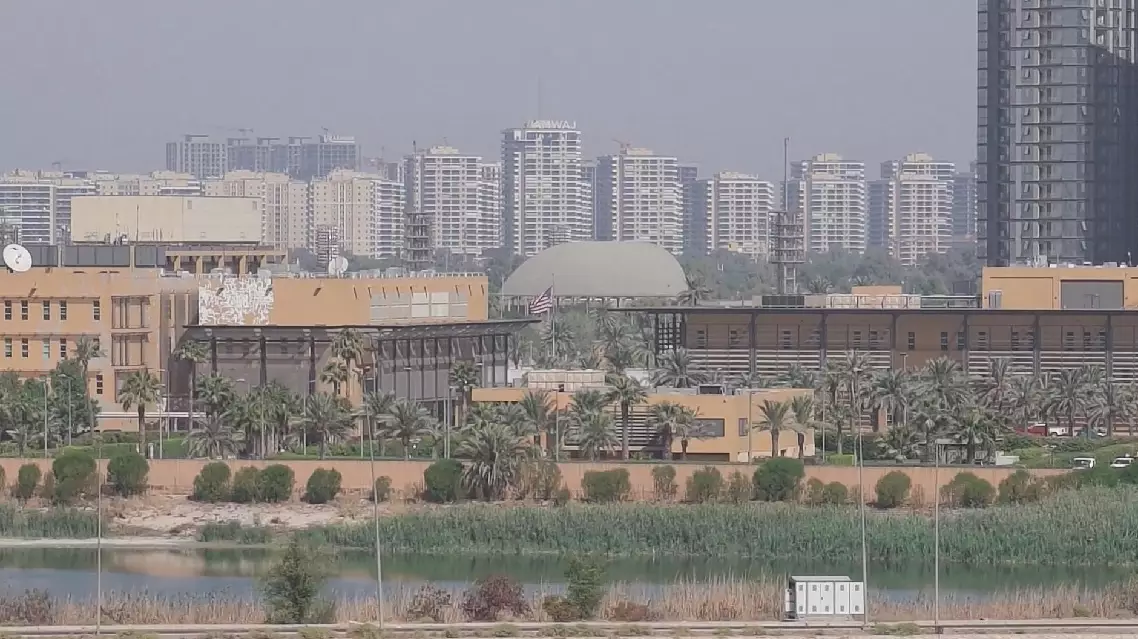
The U.S.-led coalition concluded its military mission in Iraq on Wednesday, marking the end of more than two decades of Western military presence that began with the 2003 invasion.
Iraqi Prime Minister Ali al-Zaidi on Wednesday announced the conclusion of the U.S.-led international coalition's mission to combat the Islamic State (IS) in Iraq.
On the same day, the Pentagon said the United States and its allies have officially ended Operation Inherent Resolve against the IS in Iraq.
To mark the occasion, the Iraqi government declared a four-day official holiday from September 30 to October 3, designated as "Sovereignty Day" celebrations.
"For Iraq, the withdrawal of U.S. forces means that national sovereignty is further fully implemented. Iraq will be able to decide its own stance independently. This is something to be happy about and an important moment of national significance," said Majid Al-Hasnawi, a resident.
Iraqi analysts echoed hopes that regaining full autonomy will accelerate domestic recovery.
"I think at this current time, the withdrawal of U.S. forces and international coalition troops will help promote the reconstruction process. Because the Iraqi people will rely on their own country's talents and institutions, and the people of this country will drive the national reconstruction themselves," said Faisal Radi, an economist.
The drawdown follows years of shifting security dynamics. The U.S. launched the Iraq War in 2003 and carried out a broad withdrawal in late 2011, leaving only a residual force.
In 2014, the Islamic State group seized vast territories across Iraq's west and north. The U.S.-led coalition to combat the extremist group was subsequently formed and deployed forces to Iraq.
In 2024, the U.S. and Iraq agreed on a two-phase transition to conclude the coalition's mission.
"Ending the foreign military presence is an important political decision made and being implemented by Iraq. The problem is that a foreign military presence may provide room for intervention in Iraq's domestic political affairs, and this kind of interference in Iraq's internal affairs is something the Iraqi side cannot accept," said Salah Boushi, director of the Iraq Center for Strategic Affairs.
U.S.-led coalition concludes military mission in Iraq