The 12th Global Tourism Economy Forum • Macao 2026
To be held on 15 to 17 October
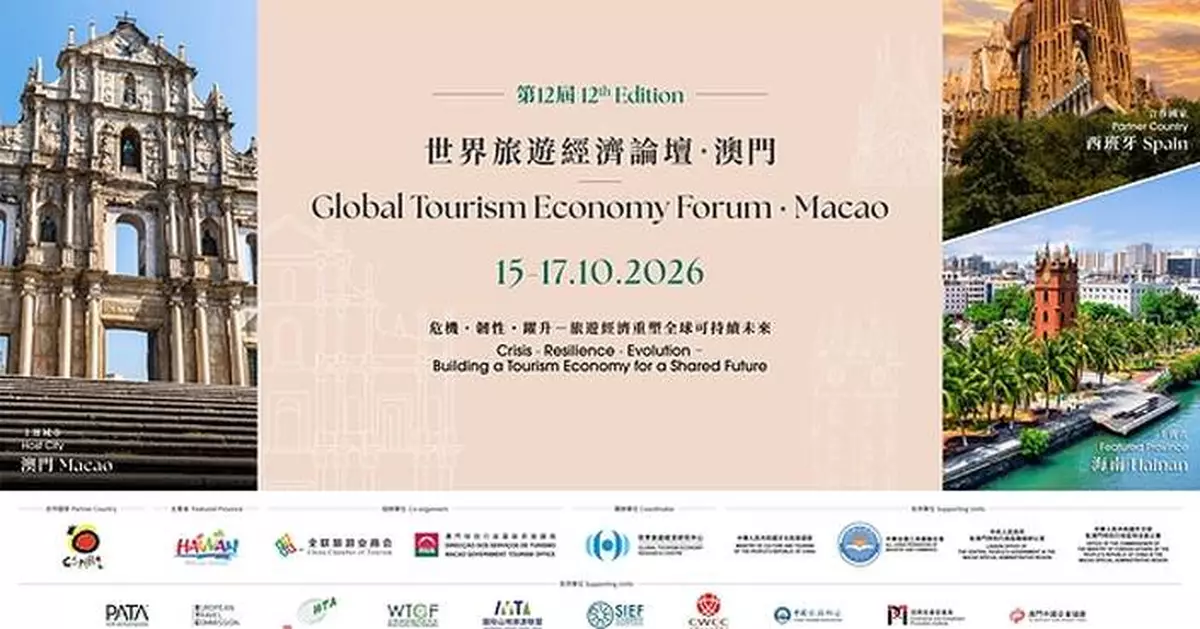
MACAO, Sept. 30, 2026 /PRNewswire/ -- How does the global tourism economy turn its scale and reach into a force for lasting transformation? The 12th Global Tourism Economy Forum (GTEF) will return to its founding city Macao, China, from 15 to 17 October 2026. Bringing together political and business leaders, academic elites, and representatives from international organisations across five continents, the Forum will revolve around the theme "Crisis • Resilience • Evolution - Building a Tourism Economy for a Shared Future" to collectively address defining questions of our era and chart a blueprint for shared progress.
The global landscape today sees international cooperation facing rigorous tests amid intersecting geopolitical tensions, climate pressures, and global economic uncertainties. Now more than ever, the world needs to break down barriers and foster connection, with the tourism economy serving as a powerful bond that unites communities across geographical divides. As the timeless wisdom observes, "A partnership forged with the right approach defies geographical distance." According to the latest data from UN Tourism, international tourist arrivals reached a record 1.52 billion in 2025, vividly proving that tourism transcends its role as an economic sector to become a core driving force for mutual learning among civilizations, restoring global trust, and spurring sustainable growth. The decision by the United Nations to designate 2027 as the "International Year of Sustainable and Resilient Tourism" directly addresses this call of our time.
As a premier flagship event in the global tourism economy sector, the Global Tourism Economy Forum was founded in 2012 and has successfully hosted eleven editions. Having brought together over 15,500 participants across 88 countries and regions, the Forum serves as a vital bridge connecting China with the international community to drive cultural tourism alignment, facilitate trade, and promote mutual learning among civilizations. The newly released 15th Five-Year Plan for Cultural and Tourism Development by China's Ministry of Culture and Tourism designates GTEF as a key national strategic platform, explicitly mandating the expansion of its global reach. Following its inclusion in the 14th Five-Year Plan, being named once again in national strategic planning marks the Forum's official transition from a Macao-born exchange platform into a key vehicle for China's high-quality opening-up in cultural tourism, as well as a major contributor to global tourism rules and trends.
Standing at a new historical starting point, the 12th Global Tourism Economy Forum • Macao 2026 will closely align with five core pillars, namely Resilient Governance, Technology and Innovation, The New Traveller, Culture and Identity, and Sustainable Growth, deeply integrating with Macao's development strategies. The Forum will explore frontier topics such as global cultural tourism capital deployment, China-Europe and Asia-Pacific connectivity, mountain-dwelling tourism, and investment facilitation. It will also transcend traditional industry boundaries to explore emerging "Tourism+" business models such as AI empowerment, educational tourism, sports IP, cultural heritage revitalisation, and experiential retail, offering forward looking guidance for global industry transformation.
This edition features Spain as the Partner Country to share its mature experiences in destination refined governance, balanced regional development, and sustainable transformation as a model for the global cultural tourism industry. Hainan Province joins as the Featured Province to highlight China's high-standard opening-up through the launch of island-wide special customs operations for the Free Trade Port alongside expanded visa-free policies. Leveraging the Forum, Hainan and Macao will drive substantive progress in policy complementarity and resource sharing while opening new avenues of cooperation in multi-destination tourism itineraries development, reciprocal visitor flows, and international MICE synergies.
In addition, the Forum features business matching, cultural tourism promotions, and themed dinners. Adopting an integrated "MICE + Delegation Visit" model, the event extends its programming to Macao world heritage culinary tours and wellness tourism site visits in the Guangdong-Macao In-Depth Cooperation Zone in Hengqin, opening concrete new channels for Guangdong-Hong Kong-Macao Greater Bay Area supply chain synergy and investment execution.
This edition of the Forum is supported by the Ministry of Culture and Tourism of the People's Republic of China and the All-China Federation of Industry and Commerce, maintaining long-term strategic partnerships with UN Tourism and the World Travel & Tourism Council (WTTC). It also works closely with leading international tourism organisations, including the Pacific Asia Travel Association (PATA), European Travel Commission (ETC), World Tourism Cities Federation (WTCF), World Tourism Alliance (WTA), International Mountain Tourism Alliance (IMTA), and Sino-International Entrepreneurs Federation (SIEF), continuously building global governance synergy to write a new chapter in sustainable global cultural tourism development.
Reflecting on crises reveals shifting landscapes, building resilience unleashes collective strength, and aiming for breakthroughs drives transformation. The 12th Global Tourism Economy Forum • Macao 2026 looks forward to joining hands with global stakeholders to navigate challenges with greater ecosystem resilience, forge stronger synergies through deeper cooperation, and lead industry breakthroughs with visionary innovation, shaping an open, inclusive, prosperous, and sustainable future for global cultural tourism.
- END –
About the Global Tourism Economy Forum
The Global Tourism Economy Forum (GTEF), established in Macao SAR in 2012, is a premier international platform dedicated to sustainable tourism development. Serving as an essential bridge between China and the global tourism community, the Forum convenes leaders from government, business, academia, and international organizations to address the sector's most pressing opportunities and challenges, establishing itself as one of the most influential annual summits in the global tourism economy.
Since inception, GTEF has successfully hosted 11 editions, welcoming more than 15,500 participants from 88 countries and regions, and featuring over 780 internationally renowned speakers to build a high-level network for dialogue and practical cooperation across sectors.
For more details and the latest updates regarding the Forum, please visit https://www.gte-forum.com/en/ or follow the official GTEF social media accounts.
Media Enquiries
| Occasions Asia Pacific | |
| Stella Wong | Jade Liu |
| Tel.: +852 3678 0123 | Tel.: +852 3678 0135 |
| Email: stellawong@occasionspr.com | Email: jadeliu@occasionspr.com |
Occasions Asia Pacific
Stella Wong
Jade Liu
Tel.: +852 3678 0123
Tel.: +852 3678 0135
Email: stellawong@occasionspr.com
Email: jadeliu@occasionspr.com
** This press release is distributed by PR Newswire through automated distribution system, for which the client assumes full responsibility. **
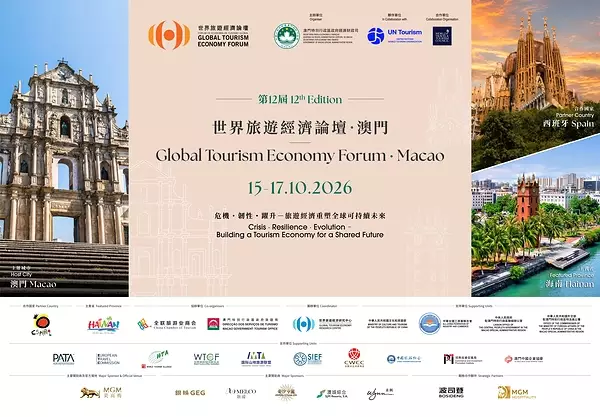
Crisis • Resilience • Evolution -- Building a Tourism Economy for a Shared Future