Crude oil exports from major oil-producing countries in the Middle East rebounded significantly in September, reaching nearly 16.33 million barrels, according to the latest report released by the ship-tracking firm Kpler on Monday.
Data showed that the average daily crude oil exports from Saudi Arabia, the United Arab Emirates (UAE), Iraq, Oman, Qatar, Kuwait and Iran totaled nearly 16.33 million barrels in September, about 3.2 million barrels less than the 19.51 million barrels recorded in February this year, before the outbreak of the conflict in Iran.
Based on the statistics, Kepler estimated that Middle East crude oil exports recovered to about 80 percent of pre-conflict levels in September.
Saudi Arabia has shifted its crude oil exports to the Strait of Hormuz after Yemen's Houthi group attacked the port of Yanbu on the Red Sea this month, coupled with damage to the East-West Pipeline, according to the Kpler data. Saudi crude oil exports in September are expected to reach 5.4 million barrels per day, more than double the daily export volume in August.
Last week alone, 19 very large crude carriers (VLCCs) with a capacity of 2 million barrels of crude oil sailed out of the Strait of Hormuz from Saudi Arabia, data showed.
Overall, crude oil shipments from Middle Eastern oil-producing countries through the Strait of Hormuz are expected to reach nearly 9.72 million barrels per day in September. Kpler noted that the data didn't include vessels that have turned off their Automatic Identification System (AIS) transponders to evade detection.
Meanwhile, naphtha exports from the Middle East recovered significantly in August and September, according to the latest Kepler data.
The UAE and Kuwait shipped this key feedstock for the petrochemical industry via ship-to-ship transfers in waters beyond the Strait of Hormuz.
Data showed that the Abu Dhabi National Oil Company (ADNOC) and the Kuwait Petroleum Corporation (KPC) shipped a total of nearly 1.6 million tons of naphtha in August and September, equivalent to 14 million barrels.
This figure was higher than the 700,000 tons shipped in March and April, but still far below the 5 million tons recorded during the same period last year. Before the conflict, the two companies accounted for nearly half of the Gulf region's naphtha exports.

Middle East crude oil exports near pre-war levels as shipments through Hormuz Strait rebound
U.S. stocks ended mixed on Wednesday as cooler-than-expected inflation data was offset by persistent pressure from elevated U.S. Treasury yields and rising oil prices.
The Dow Jones Industrial Average fell 443.87 points, or 0.86 percent, to 50,906.05. The benchmark Standard and Poor's 500 dipped 19.3 points, or 0.25 percent, to 7,651.54, while the tech-heavy Nasdaq Composite Index gained 63.52 points, or 0.24 percent, to close at 26,861.06.
Nine of the 11 primary Standard and Poor's 500 sectors ended in the red, with consumer staples and health leading the decliners by dropping 1.68 percent and 1.39 percent, respectively. Technology and consumer discretionary advanced 0.61 percent and 0.13 percent, respectively.
On the macroeconomic front, the U.S. Commerce Department reported that the headline personal consumption expenditures (PCE) price index rose 3.4 percent year on year in August, coming in below consensus forecasts of 3.7 percent and easing from levels sustained throughout much of the summer. The core PCE price index, which excludes volatile food and energy costs, climbed 3 percent, lower than expectations of a 3.3 percent increase and marking a drop from 3.3 percent in July. On a monthly basis, core PCE rose 0.2 percent, edging down 0.1 percentage point from the previous month and coming in below a projected gain of 0.3 percent.
Complementing the inflation readout, payroll processor ADP reported that private sector employment grew by 90,000 jobs in September, rebounding notably from the 36,000 jobs added in August and pointing to resilience in domestic hiring.
The softening inflation figures, coupled with dovish commentary from New York Federal Reserve President John Williams noting "no need for urgency" to hike rates next month, prompted traders to sharply scale back tightening expectations. According to the CME FedWatch tool, the implied probability of an interest rate increase at the central bank's October meeting fell to 37 percent, down markedly from more than 70 percent priced in a week earlier. Despite the easing rate-hike expectations, equity markets remained constrained by elevated sovereign debt yields and firming energy prices. The yield on the benchmark 10-year U.S. Treasury note edged up over 4 basis points to 5.291 percent, hovering near multi-decade highs reached earlier in the week, while the 30-year bond yield rose over 6 basis points to 5.634 percent.
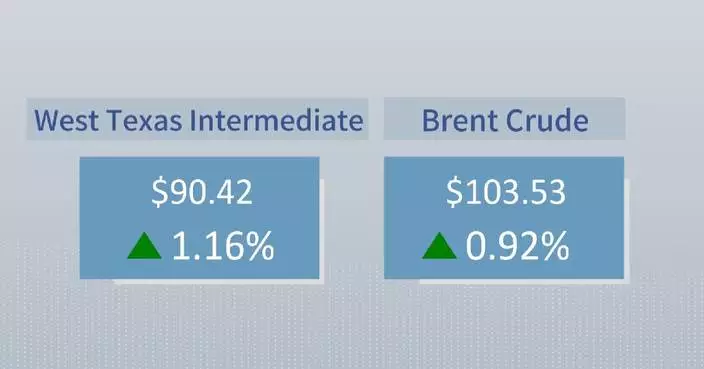
In commodity markets, crude oil benchmarks moved higher on Wednesday. West Texas Intermediate crude for November delivery added 1.04 U.S. dollars, or 1.16 percent, to settle at 90.42 dollars a barrel. Brent crude for November delivery rose 94 cents, or 0.92 percent, to finish at 103.53 dollars a barrel.
In other corporate news, Boeing ended 0.87 percent lower, erasing early gains after the plane maker was selected by the U.S. Navy for its next-generation fighter program. Robinhood Markets declined 3.2 percent after the company announced new active trading products. Micron's earnings after the bell will also offer investors insights into the state of the memory and AI markets.
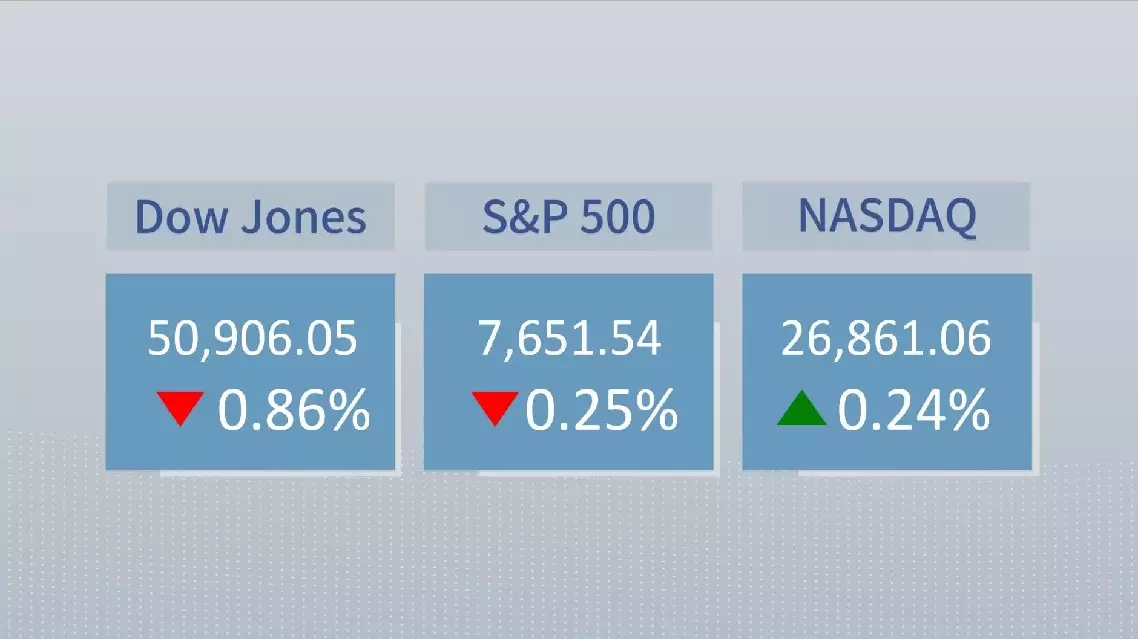
U.S. stocks close mixed despite cooler inflation report