The Hong Kong-Zhuhai-Macao Bridge (HKZM Bridge) is bracing for a surge in cross-border passengers and vehicles during China's week-long National Day holiday from Oct. 1 to 7.
Connecting China's Hong Kong Special Administrative Region (SAR), Macao SAR and the mainland city of Zhuhai, the bridge saw long lines form at the entrance of the passenger border inspection building before opening on Thursday, the holiday's first day. The first tour groups also gathered nearby.
Border authorities forecast daily average passenger volume will top 100,000 for the holiday, with the peak expected on Oct. 3 and 4.
Since the bridge serves as the only designated corridor for private vehicles registered in Hong Kong and Macao to travel northward to the mainland, and for private vehicles registered in south China's Guangdong to enter Hong Kong, officials predict sustained heavy cross-border vehicle flows, averaging more than 20,000 crossings daily during the holiday.
Single-plate vehicles from Hong Kong and Macao are expected to dominate the traffic, accounting for more than 60 percent of total crossings.
Self-driving trips from Guangdong to Hong Kong have grown popular this year. Nearly all reservation slots for the seven days have been taken.
Since July 25, the Southbound Travel for Guangdong Vehicles scheme has expanded to cover nine mainland cities in the Greater Bay Area, with daily reservations increased from 100 to 200. More than 20,000 mainland vehicle crossings were recorded through September.
Smart facial-recognition clearance systems are fully operational at the port to speed up passenger checks amid an expected surge in travel.
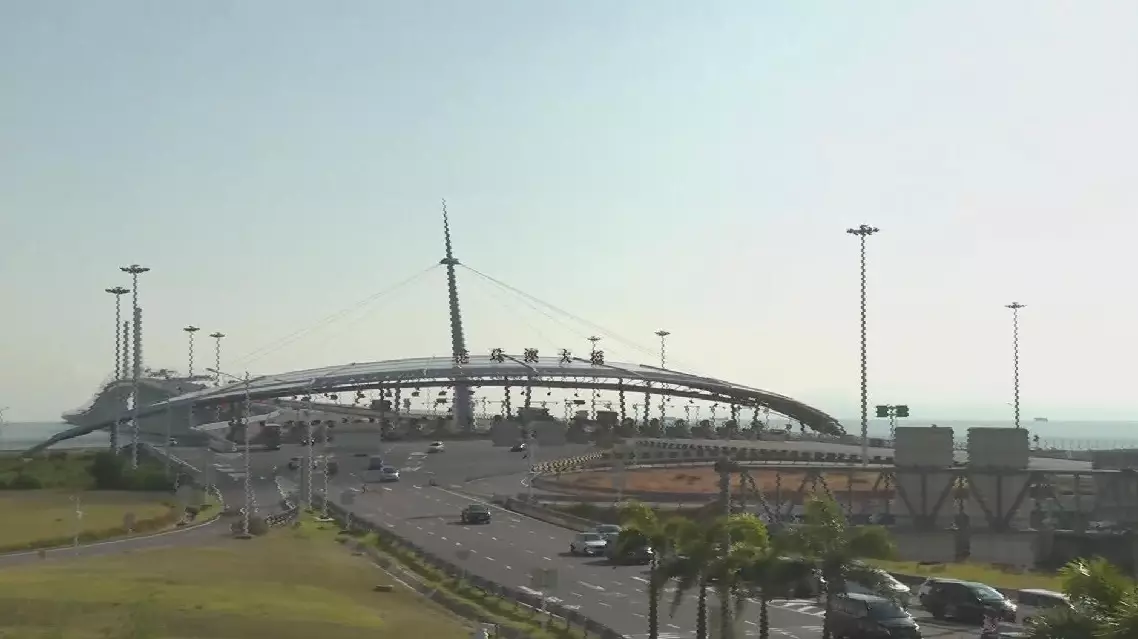
HKZM Bridge braces for surging visitor, traffic flow during National Day holiday
China's flagship nuclear fusion project reached a significant milestone ahead of the country's National Day holiday which begins Thursday, with the completion of the main complex for the Burning Plasma Experimental Superconducting Tokamak (BEST) facility in Hefei of east China's Anhui Province.
The BEST facility represents one of China's major ventures into controlled nuclear fusion and is designed to replicate the nuclear fusion reactions that occur inside the sun, unlocking a source of nearly inexhaustible clean energy.
Since July, several key components of the BEST facility have arrived at the site in succession, and assembly work has been progressing steadily with more than half of the overall work now completed.
With the construction of the outer complex now finished, the main unit has recently entered its most challenging phase inside the huge facility. The process which will deliver the nuclear fusion can be imagined as a giant, layer-upon-layer "thermos". Starting from the innermost vacuum vessel, engineers need to successively install a cold shield, toroidal field magnets, and various precision internal components.
The vacuum vessel serves as the "furnace" where fusion reactions take place, while the cold shield acts as a super-insulation layer, blocking heat transfer. The toroidal field magnets generate an ultra-strong magnetic field to confine the high-temperature plasma and prevent it from touching the container walls.
In recent years, China's fusion research has accelerated, with the BEST device - seen as the country's next-generation "artificial sun" - scheduled for completion by the end of 2027. It will conduct deuterium-tritium burning plasma experiments targeting 20 to 200 megawatts of fusion power and achieve a major net energy gain.
Fusion energy, which replicates the sun's power generation process, is hailed as an ideal clean energy source. For decades, scientists have used techniques like magnetic confinement to create the extreme conditions required for fusion.
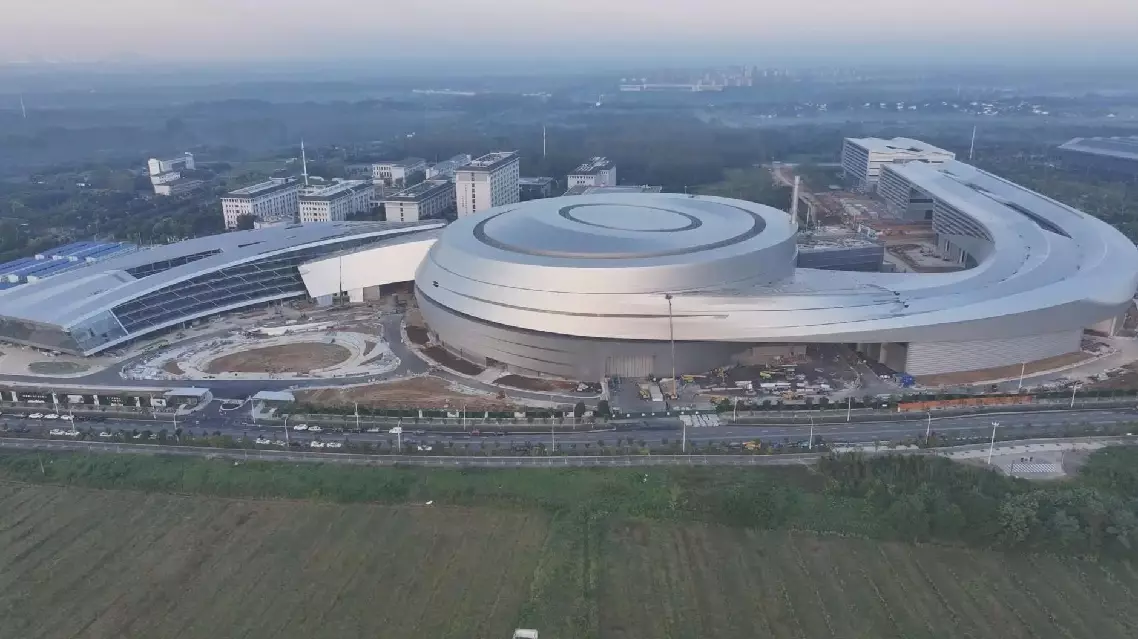
Main complex for China's "artificial sun" project completed in Hefei