Excavation work was fully completed in the pilot section of the Three Gorges Dam's new waterway project on Wednesday, marking a key milestone in the project's construction.
The project is the first major one to break ground during China's 15th Five-Year Plan period (2026-2030), a critical stage in the country's efforts to advance toward its goal of basically realizing socialist modernization by 2035.
With a total investment of about 77.2 billion yuan (roughly 11.3 billion U.S. dollars), the project consists of two parts.
A new five-tier, dual-track ship lock, designed for 10,000-tonne vessels, will be built north of the existing lock at the Three Gorges Dam, the world's largest water conservancy project.
To upgrade navigation facilities, the smaller downstream Gezhouba Dam will see its No. 3 ship lock demolished and replaced with two new single-tier ship locks.
In the pilot excavation area of the Three Gorges Dam's new waterway project, a total of nearly 8 million cubic meters of earth and rock were excavated, approximately 2 million cubic meters were backfilled, and about 80,000 cubic meters of concrete were poured, creating a working face 935 meters long and over 122 meters deep.
This has paved the way for subsequent utility relocation and construction of the main part of the project.
Upon completion of construction of the new project, the Three Gorges Dam will have ship locks featuring four tracks plus the ship lift, with a combined annual cargo throughput capacity of 336 million tonnes. Ship locks at the Gezhouba Dam will also feature four tracks, with a total capacity of 360 million tonnes.
The Three Gorges Dam's new ship lock and its approach channels, spanning approximately 6,680 meters, are scheduled for completion in 112 months, while the Gezhouba upgrade is planned to take 95 months, both including a 12-month preparation period.
River transport remains vital to China's economy, especially on the Yangtze River, which stretches over 6,300 km and which is known as the country's golden waterway.
Since the Three Gorges Dam's ship lock began operations in 2003, the volume of freight passing through the dam has grown rapidly, surpassing 100 million tonnes in 2011 - reaching its designed throughput capacity 19 years ahead of schedule.
By 2025, the comprehensive freight volume passing through the Three Gorges complex reached 173 million tonnes, far exceeding its designed throughput capacity.
Spanning 11 provincial-level regions from the inland west to the eastern coast, the Yangtze River Economic Belt accounts for nearly half of the national GDP. It hosts major industrial clusters covering metallurgy, electronics and automobiles, while newer sectors such as AI, biomedicine and new energy are rapidly taking shape.
This economic belt is also one of China's major hubs for foreign investment and trade, accounting for nearly half of the country's foreign trade.
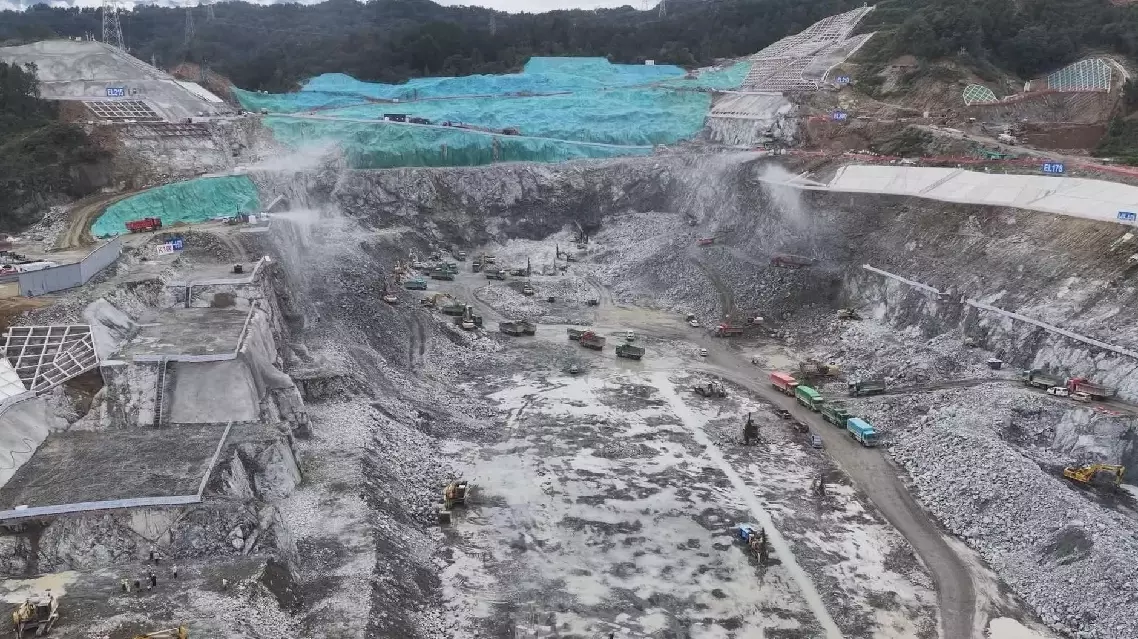
Excavation completed in pilot section of Three Gorges new waterway project