China's railway system is expected to handle 24.8 million passenger trips on Thursday, the first day of the National Day holiday running from Oct 1 to 7, an anticipated increase of 1.668 million, or 7.2 percent, over the same day in 2025, according to China State Railway Group Co., Ltd.
To meet the rising travel demand, a total of 2,324 additional trains have been scheduled for the day, said the national railway operator.
As of 08:00 Thursday, the country's railway ticketing platform 12306 had sold 203.48 million tickets for the holiday season.
Popular departure and destination cities include Beijing, Guangzhou, Shanghai, Chengdu, Shenzhen, Wuhan, Xi'an, Hangzhou and Zhengzhou.
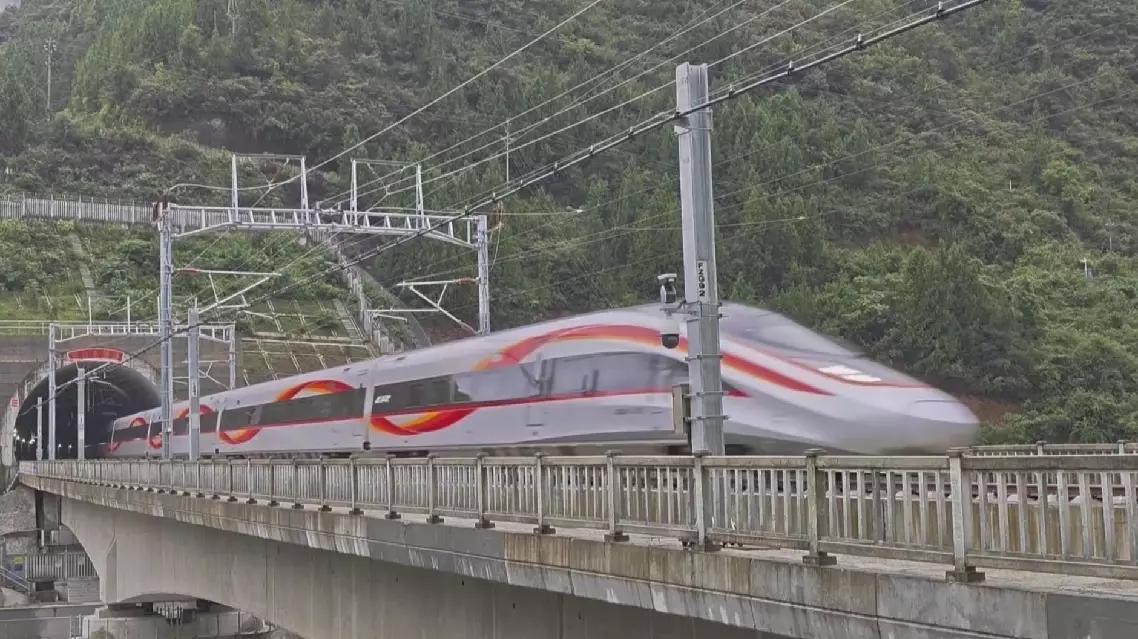
China's railway system sees surge in passenger trips on National Day
China's flagship nuclear fusion project reached a significant milestone ahead of the country's National Day holiday which begins Thursday, with the completion of the main complex for the Burning Plasma Experimental Superconducting Tokamak (BEST) facility in Hefei of east China's Anhui Province.
The BEST facility represents one of China's major ventures into controlled nuclear fusion and is designed to replicate the nuclear fusion reactions that occur inside the sun, unlocking a source of nearly inexhaustible clean energy.
Since July, several key components of the BEST facility have arrived at the site in succession, and assembly work has been progressing steadily with more than half of the overall work now completed.
With the construction of the outer complex now finished, the main unit has recently entered its most challenging phase inside the huge facility. The process which will deliver the nuclear fusion can be imagined as a giant, layer-upon-layer "thermos". Starting from the innermost vacuum vessel, engineers need to successively install a cold shield, toroidal field magnets, and various precision internal components.
The vacuum vessel serves as the "furnace" where fusion reactions take place, while the cold shield acts as a super-insulation layer, blocking heat transfer. The toroidal field magnets generate an ultra-strong magnetic field to confine the high-temperature plasma and prevent it from touching the container walls.
In recent years, China's fusion research has accelerated, with the BEST device - seen as the country's next-generation "artificial sun" - scheduled for completion by the end of 2027. It will conduct deuterium-tritium burning plasma experiments targeting 20 to 200 megawatts of fusion power and achieve a major net energy gain.
Fusion energy, which replicates the sun's power generation process, is hailed as an ideal clean energy source. For decades, scientists have used techniques like magnetic confinement to create the extreme conditions required for fusion.
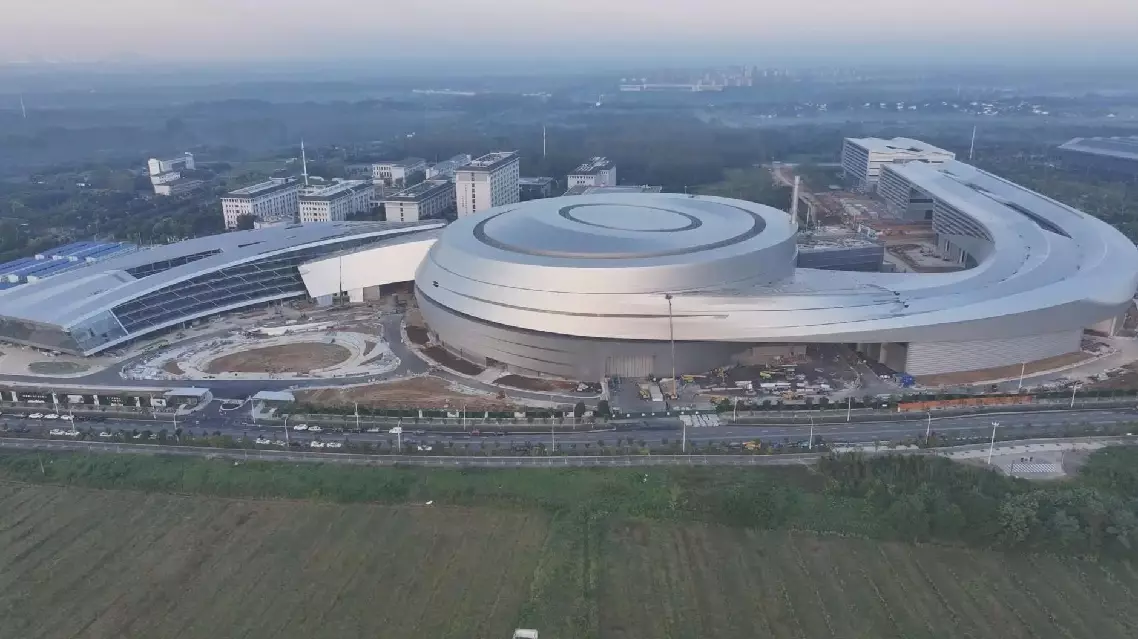
Main complex for China's "artificial sun" project completed in Hefei