Skip to Content Facebook Feature Image

Shanghai International Light Festival illumines city, boosts night-time consumption

China

China

China

Shanghai International Light Festival illumines city, boosts night-time consumption

2026-10-01 19:38 Last Updated At:20:47

The third Shanghai International Light Festival has been lighting up the city so far this autumn, offering residents and visitors a chance to experience the city's night art in an immersive way, with the unleashing of new vigor and vitality in night-time consumption promotion.

Centered on its permanent theme Light of Shanghai, this year's festival spans one main venue and 16 sub-venues citywide, hosting 158 themed events. The month-long citywide festival is scheduled to run until Oct 16.

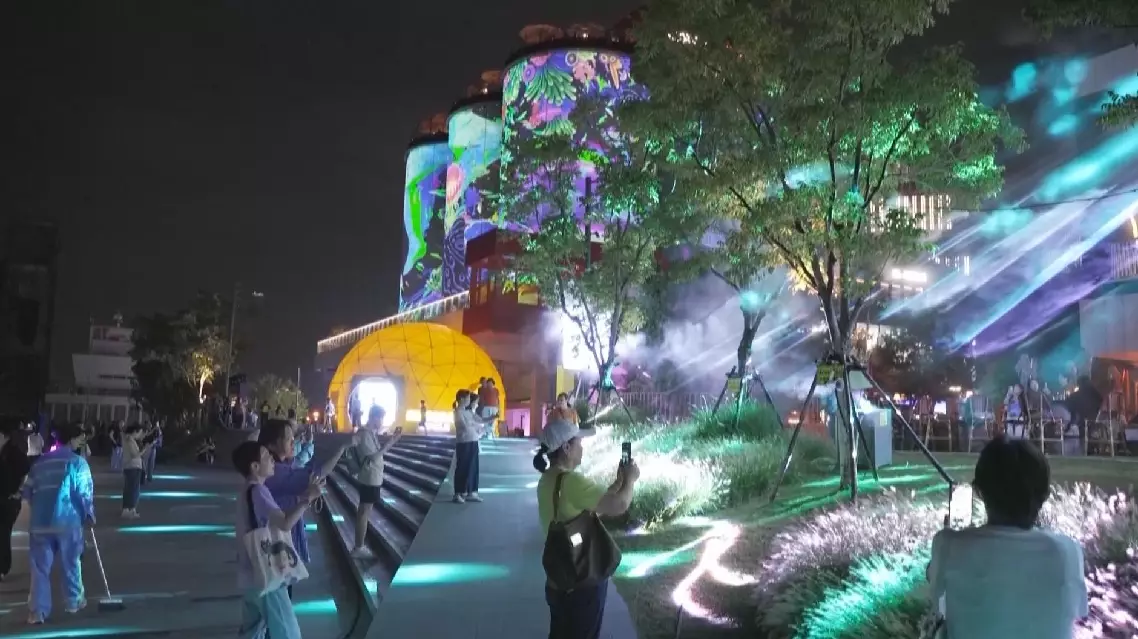
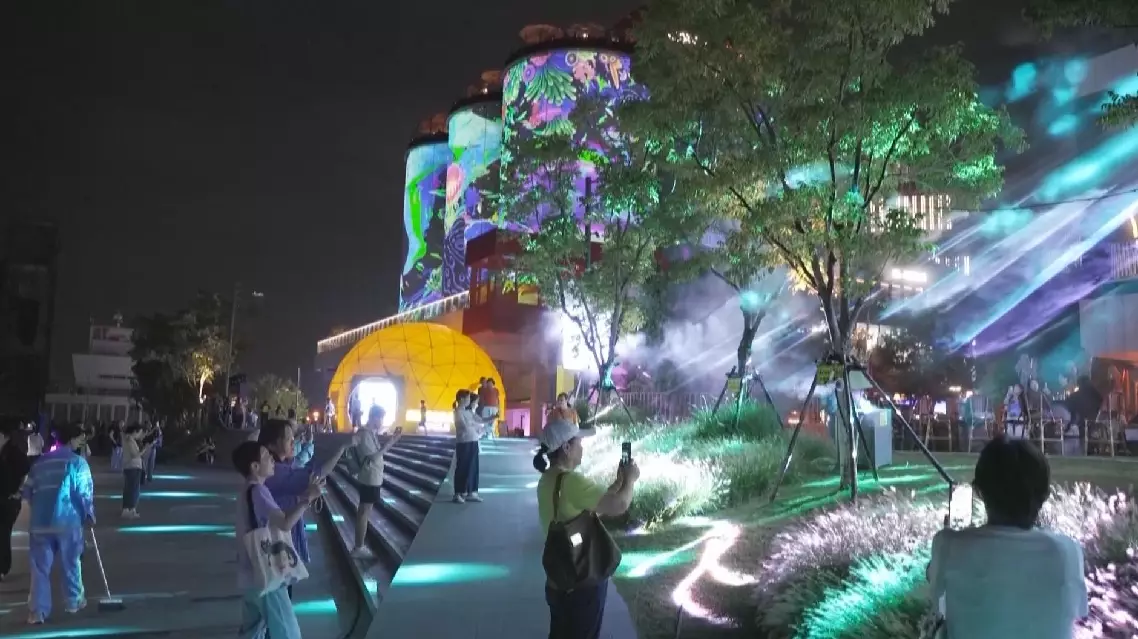
At the main venue in the Huangpu District, the Yanzhong Green Space has been transformed into Shanghai's first contiguous urban forest light experience zone in the city core, stretching across four connected green plots where an interactive projection show on the Telecom Building and a 10-day music and light spectacular at the Shanghai Concert Hall merge architectural mapping with diverse music lineups to deliver an immersive audio-visual experience.

"The cutting-edge projection technology is now applied on the facade of buildings at night for tourists to play games, which is very novel," said a tourist.

At the Changning sub-venue, the light effect was an important aspect taken into consideration during the architectural planning stage, and the three-dimensional space of the building is an important carrier for the expression of illumination.

"We have designed a cloud garden and three sunken squares. These rich and three-dimensional architectural spaces provide a very good platform for us to showcase the content of this light festival," said Li Nan, general manager of the Crystal Bridge, an ultra-large mixed-use complex located in the core business district of the Changning District.

Not merely a visual cultural feast, the festival also plays the role as a platform to convert light show visitors into night market consumers through multiple measures such as collecting stamps and distributing consumption vouchers.

"During the festival, there are 28 check-in spots where visitors can use their mobile phone to tap and claim the 'Starlight Medal' we distributed during the festival. Then they can exchange the medals for government consumption vouchers issued by the Huangpu District, covering various scenarios such as clothing, food, housing, transportation, as well as dining, entertainment and leisure," said Hu Yu, manager of the check-in event.

"In fact, it has also brought in visitor flows for the surrounding business districts. For instance, the average number of visitors to the Hong Kong Plaza has increased by 12 percent in the past two days," said Shen Shuai, director of the Greening and City Appearance Administration Department of the Huangpu District.
Shanghai International Light Festival illumines city, boosts night-time consumption
Shanghai International Light Festival illumines city, boosts night-time consumption

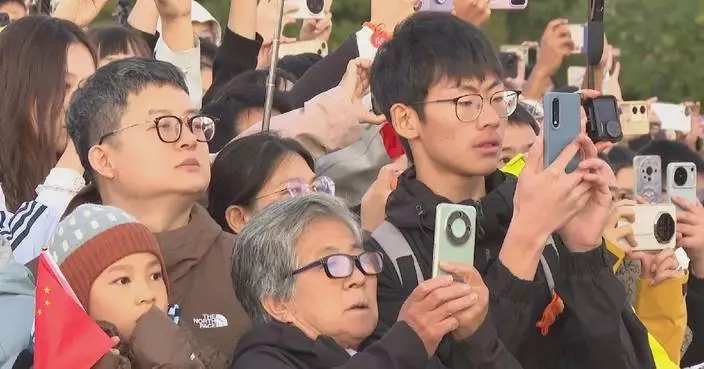
Shanghai International Light Festival illumines city, boosts night-time consumption

Shanghai International Light Festival illumines city, boosts night-time consumption
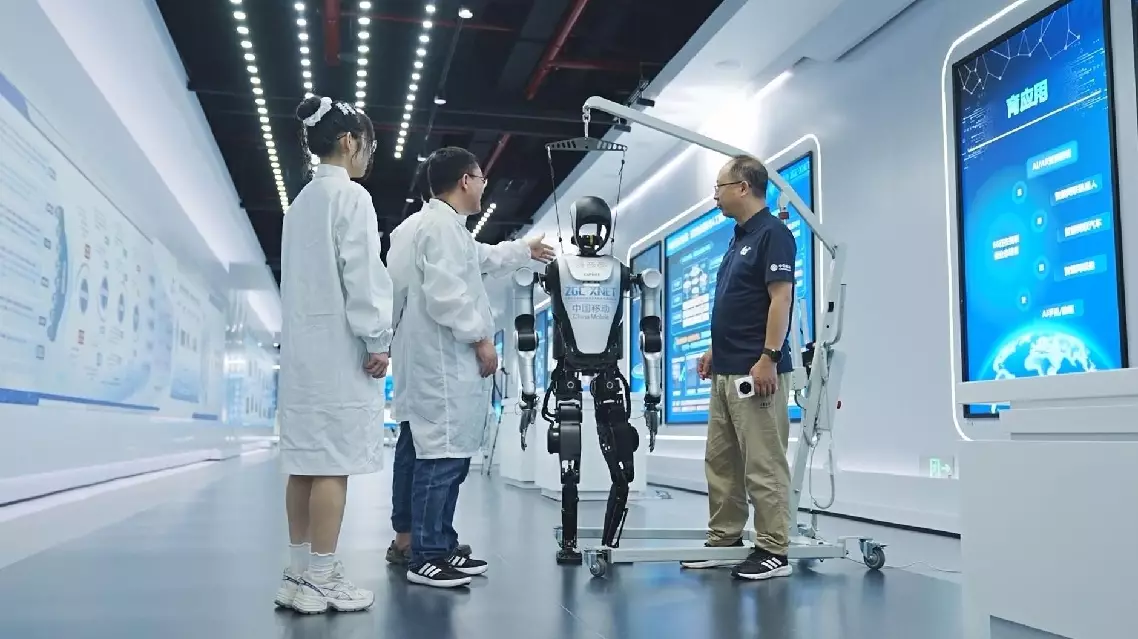
Chinese researchers are pairing 6G with robot training and validation at a dedicated test facility in Beijing, aiming to make smart robots more reliable and affordable as they move from lab prototypes toward real-world deployment.

At a specialized test site in Hangzhou City, east China's Zhejiang Province, a four-legged robot flips, jumps and climbs its way through punishing obstacle courses. The goal is not just to show what it can do, but to see how well it performs under real-world conditions.

"We are testing its motion‑control stability across multiple scenarios and complex terrains, including slopes, rubble‑strewn surfaces and other rugged environments," said Zhang Tianyi, product manager of Zhejiang Humanoid Robot Pilot Test Platform.

The difficulty is that real-world environments are unpredictable. For AI to control robots reliably, it must adapt to physical surroundings - an approach known as physical AI. That is why a dedicated test facility at Beijing 6G Laboratory has been set up to pair 6G with robot training and validation.

"A complete closed loop of 'sensing‑decision‑execution' must be fully functional. Every link imposes extremely high requirements on latency and stability, a delay of just a fraction of a second can trigger critical errors," said Liu Guangyi, chief expert of China Mobile Group and also chief scientist of ZGC-XNET.

Existing networks, including 5G-A, hit hard limits. Slow signal response cannot sustain robots' long-hour, high-precision operations.

6G changes that by delivering near-instant latency, massive device connectivity and ultra-stable signals.

The test site at Beijing 6G Laboratory replicates real-life working conditions, helping robots move more smoothly from lab prototypes to field deployment.

"It enables the cloud‑based AI brain to govern physical robots within milliseconds," said Liu.

6G-powered cloud computing also frees robots from bulky on-board hardware, making them lighter, less costly and longer-lasting.

That shift is already showing results in the market.

"Our robot has secured orders for nearly 100 units so far, and mass delivery is expected by the end of this year," said Ling Lei, product manager of WUBA Intelligence Humanoid Robot.

Beyond individual robots, the facility offers end-to-end support for local companies, covering research, training and certification. The test site is projected to push local intelligent robot industry output above 10 billion yuan by 2027. "Even when hundreds of devices connect simultaneously, data transmission and command synchronization remain stable," said Liu.

Chinese researchers use 6G to boost smart robots' real-world performance

Chinese researchers use 6G to boost smart robots' real-world performance

Recommended Articles