SAN JUAN, Puerto Rico (AP) — A record electric rate went into effect Thursday in Puerto Rico as outages persist and the U.S. territory’s power grid continues to crumble.
A residential customer that consumes 800 kilowatt-hours a month will see the monthly bill rise about 18%, from $229 to $271, according to Puerto Rico’s Energy Bureau, which approved the increase.
The new rate will remain in effect until at least Dec. 31 and is expected to drive up an already high cost of living on the island of 3.2 million people, where more than 40% of residents live in poverty.
The new rate of 33.86 cents per kWh far surpasses the average rate of 18.3 cents per kWh for residential customers in the U.S. mainland, according to the U.S. Energy Information Administration.
Luma Energy, which oversees the transmission and distribution of power in Puerto Rico, had requested an increase of more than six cents per kWh and stressed that it would not generate additional revenue for the company, but rather cover an increase in costs.
“The difference is driven by higher energy consumption due to high summer temperatures, rising global oil prices resulting from the conflict in the Middle East — which has constrained fuel transportation and increased costs — greater use of customer batteries, and the need to rely on more expensive fuel when power plants do not generate enough electricity,” Luma said in a statement.
The increase comes as outages persist nearly a decade after Puerto Rico’s power grid was razed by Hurricane Maria when it struck the island in 2017 as a powerful Category 4 storm, although the grid was already weak given a lack of maintenance and investment for decades.
Last week, a large fire that erupted at a substation left more than 200,000 customers without power in the latest outage to hit the island.
The Energy Bureau said in a statement late Wednesday that it approved an increase of 5.28 cents per kWh to reduce the financial burden on customers.
It noted that it did not pass along the cost of $17.6 million associated with what it called alleged failures by New Fortress Energy to supply fuel from June to August.
“Fuel costs must not be automatically passed on to the consumer simply because they were incurred or billed,” the Energy Bureau said.
New Fortress Energy supplies natural gas to power generation plants on Puerto Rico’s north coast. Currently, those plants are using diesel — driving up costs — because a vessel laden with a delivery of natural gas was blocked from entering the San Juan Bay for two weeks given its size. The case went to court, and a judge on Thursday authorized its entry.
The Energy Bureau said it also is investigating some $19 million that Luma said was paid for gas quantities that officials say exceeded what Genera PR “ultimately needed or could receive.” Genera PR oversees the generation of power in Puerto Rico.
The increase comes as the administration of Puerto Rico Gov. Jenniffer González pushes to cancel the contract with Luma, with the case currently tied up in court with ongoing lawsuits.
Luma and Genera PR were awarded contracts as Puerto Rico’s state-owned Electric Power Authority struggles to restructure its more than $9 billion debt load.
In 2024, petroleum represented 63% of the island's overall energy use; natural gas accounted for 31%, coal 5% and renewables 1%, according to the U.S. Energy Information Administration.
Follow AP’s coverage of Latin America and the Caribbean at https://apnews.com/hub/latin-america
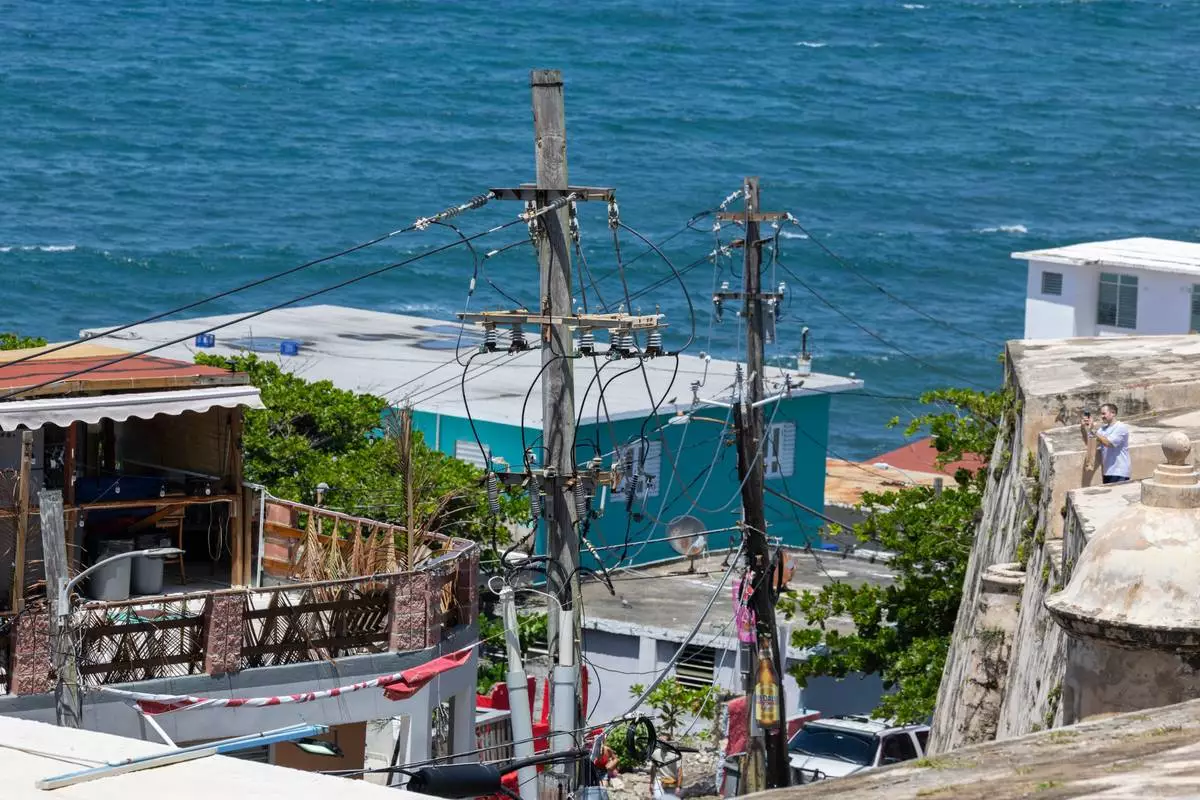
FILE - Power lines and utility poles stand in front of La Perla neighborhood along the coast in Old San Juan, Puerto Rico, Aug. 15, 2025. (AP Photo/Alejandro Granadillo, File)
U.S. Immigration and Customs Enforcement officers have been ordered not to engage in high-speed car chases and to make vehicle stops only if they have completed specific training, under new internal guidance issued after several drivers were shot in encounters with ICE.
A memo sent to officers in ICE’s Enforcement and Removal Operations division and obtained by The Associated Press warned they are not authorized to chase vehicles that fail to pull over under any circumstances. Instead, officers should take down the vehicles’ information for further investigation, according to the memo signed by ICE’s executive associate director Marcos D. Charles and dated Wednesday.
The new guidance comes after ICE-initiated vehicle stops have repeatedly escalated when drivers have refused to cooperate or tried to flee. ICE agents have fired their guns during more than a dozen such encounters since last year, killing at least four people and wounding several others.
President Donald Trump's administration has faced internal tension over how to handle traffic stops, which are seen as particularly high-risk encounters.
After fatal shootings of drivers in Maine and Texas in July, ICE officers were directed to temporarily pause most vehicle stops. But the next day, Trump went on social media to direct the agency to continue traffic stops, calling them “one of ICE’s most important and effective Crime Fighting tools.”
ICE has faced intense pressure from the White House to deport more people who are in the country illegally, and its arrests have reached record numbers. At the same time, the agency's rapid hiring spree last year resulted in some poorly vetted and trained officers hitting the streets.
In a statement, ICE downplayed the significance of the memo, which said the new guidance was intended to replace and amend prior directives issued earlier this year, last year and in 2018.
“Occasionally, ICE leadership issues guidance reminders to law enforcement officers,” the statement said. “Vehicle stops and arrests of illegal aliens continue.”
The new memo outlines steps intended to improve the safety of vehicle stops for ICE officers, drivers they are targeting, their passengers and the public.
The memo told ICE’s field office directors that they must ensure vehicles used for traffic stops have lights and sirens that let the public know they are law enforcement vehicles when activated. All officers on the scenes of vehicle stops must wear and activate their body cameras, under the guidance.
In addition, only officers who have completed one of five specific agency training courses can conduct vehicle stops. Officers who have not completed the training courses can only participate in vehicle stops “in a support capacity” as passengers and cannot be the drivers of any of the vehicles involved.
The guidance says ICE officers can continue to use a controversial technique known as pinning, which is defined as “using a vehicle or physical barrier to trap or stop a car,” but only if they have received special training. Similarly, only trained officers can use spike strips that deflate tires to prevent drivers from fleeing.
The memo came the day that courtroom testimony highlighted ways in which two ICE officers involved in a vehicle stop, pursuit and shooting that wounded a delivery driver in Austin last month would not have complied with the new guidance.
During a bond hearing for Wilber Rafael Garces Perez, testimony showed that the officer who shot him wasn’t wearing a body-worn camera. The ICE officer who did have a camera was driving in a separate car and turned it off during the pursuit.
Prosecutors presented surveillance video that showed an ICE agent chasing Garces Perez at high speeds through residential streets after he fled an initial traffic stop.
Garces Perez faces federal assault charges after investigators say he struck an ICE officer with his driver’s side mirror. That officer then shot into Perez's vehicle, lodging a bullet in his back, officials say.
Attorneys for Garces Perez have called the charges against him “retaliation” and have argued that the camera footage was inconclusive because it didn’t fully capture the moment when he allegedly tried to flee.
Associated Press reporter Anna Wilder contributed to this report from Austin, Texas.
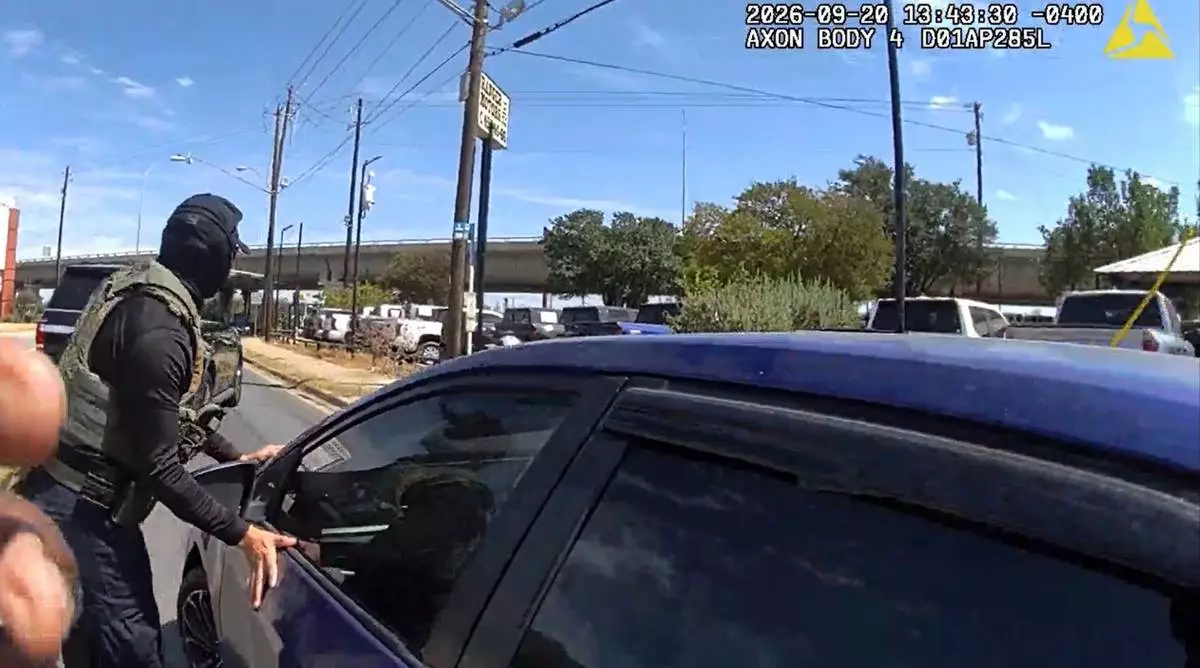
This image made from Immigration and Customs Enforcement (ICE) body camera footage shows an ICE officer stopping Wilber Rafael Garces Perez on Sunday, Sept. 20, 2026, in Austin, Texas. (Immigration and Customs Enforcement via AP)