6G is still years away from commercial rollout, but Shanghai is already positioning itself for the next generation of mobile technology, with the Songjiang District emerging as one of the city's main bases for developing 6G-related technologies.
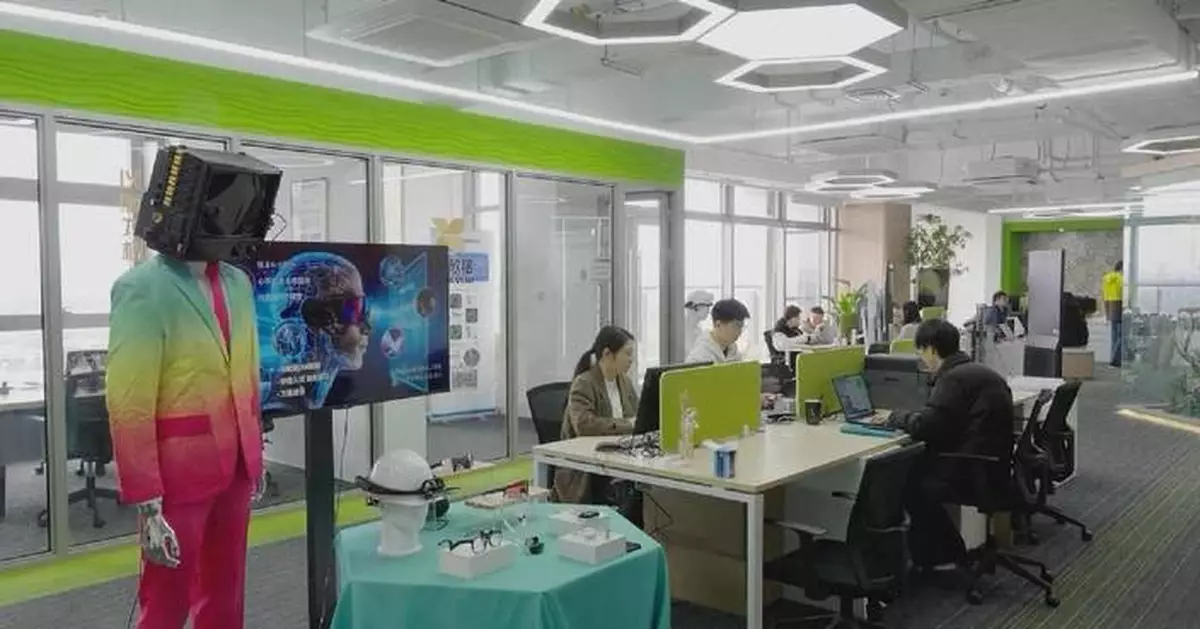
A 123,000-square-meter industrial park there is now home to more than 120 companies, including around 40 linked to the 6G industry chain.
One of them is developing wearable brain-computer interface technology. Its current devices can allow users to place a coffee order without touching a screen. The developer says similar technology could eventually be used to control smart-home appliances and robots.
And as the number of connected devices grows, the company says future networks will need to handle many more connections at the same time.
"For example, a smartphone can currently connect to around ten Bluetooth devices at most. But as the number of smart-home devices and eventually robots grows rapidly, 6G will need to support simultaneous short-range connections with more than 20, or even more than 30 devices," said Zhao Xi, general manager of Guoke Xinnao (Shanghai) Intelligent Technology.
Other companies in the park are looking at how 6G could support much larger AI systems. One developer of intelligent airport inspection technology says faster, lower-latency networks could allow a single AI agent to process data from far more cameras in real time.
"Our AI can operate 24 hours a day. With 5G, one AI can monitor 500 cameras. With 6G, one AI could potentially handle more than 10,000. And because our AI needs to anticipate events, a difference of just a few seconds can change a lot," said Chen Hao, deputy general manager of Howchau Aviation Technology.
Local authorities are also putting money behind the push. Songjiang has launched a 300-million-yuan (45-million-U.S.-dollar) fund to support the development of 6G-related businesses. Selected major science and technology projects, as well as companies newly recognized as unicorn enterprises, can also qualify for additional incentives.
"Over the past two years, we've been developing this platform. As a potentially disruptive technology for future industries, much of the work involves turning research from the laboratory into practical applications. Out platform helps companies turn scientific and technological research into commercial output," said Xiao Yang, director of Songjiang Science and Technology Commission.
The park now brings together incubators, proof-of-concept facilities, testing services and technology companies, as Songjiang tries to build a broader 6G industrial ecosystem.
By 2030, the wider 6G industrial cluster in Songjiang is expected to generate more than 100 billion yuan (15 billion U.S. dollars) in annual industrial value.
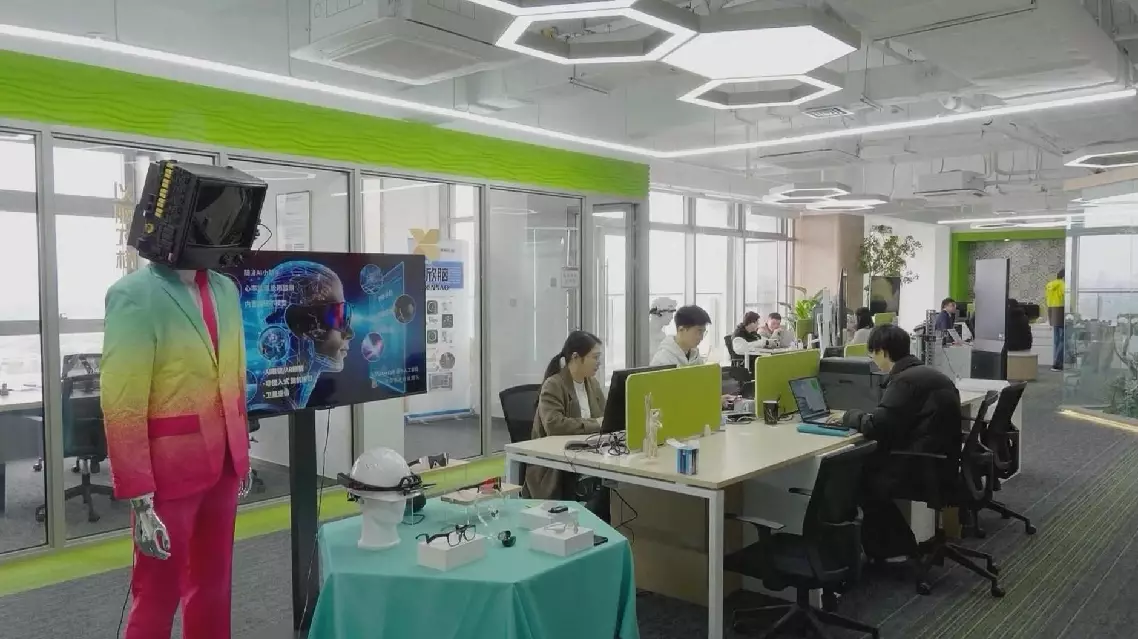
Shanghai's Songjiang District emerges as main base for 6G development