Skip to Content Facebook Feature Image

U.S.-led maritime center raises threat level for Middle East to severe

HotTV

HotTV

HotTV

U.S.-led maritime center raises threat level for Middle East to severe

2026-10-02 09:05 Last Updated At:13:09

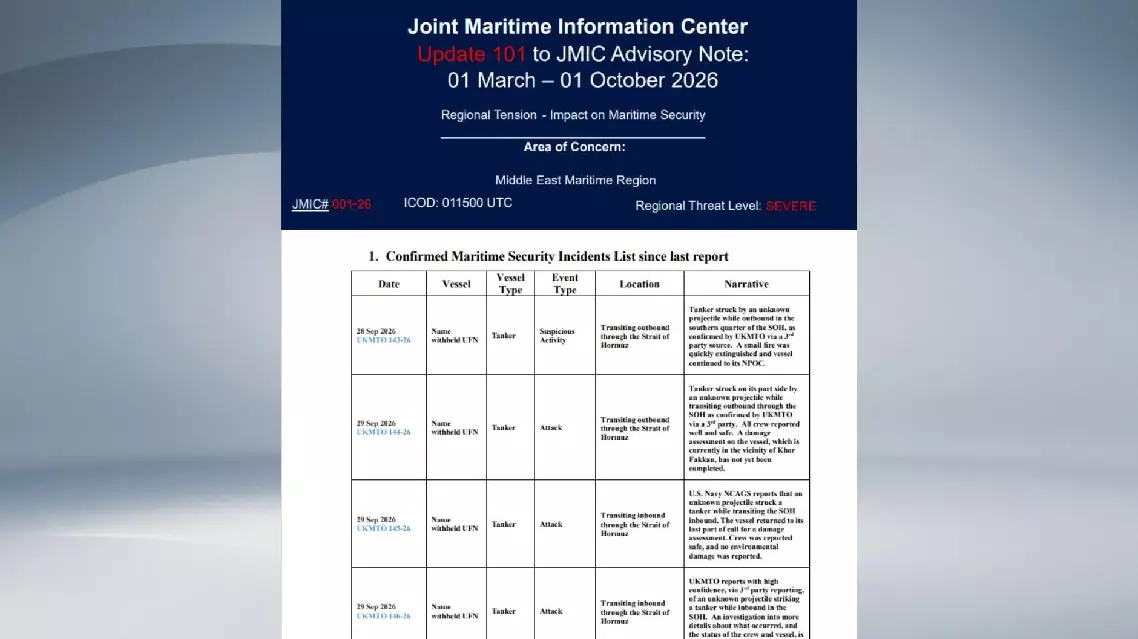
The U.S.-led Joint Maritime Information Center (JMIC) on Thursday raised the security threat level for the Middle East Maritime Region to "severe" following a series of attacks on oil tankers in the Strait of Hormuz.

The advisory was issued by the United Kingdom Maritime Trade Operations (UKMTO). The JMIC is a multinational naval advisory body, and the UKMTO serves as one of its core information-sharing partners.

At least four maritime safety incidents involving oil tankers occurred in the Strait of Hormuz between September 28 to 29, the advisory said.

On Sept 28, an oil tanker leaving the Strait of Hormuz was struck by an unknown projectile, causing a small fire on board that was quickly extinguished. On Sept 29, three oil tankers transiting the Strait of Hormuz were hit by unidentified projectiles. The crews of two of the tankers were unharmed, and the vessels subsequently underwent damage assessments. The status of the crew and the extent of damage to the third tanker are still under investigation.

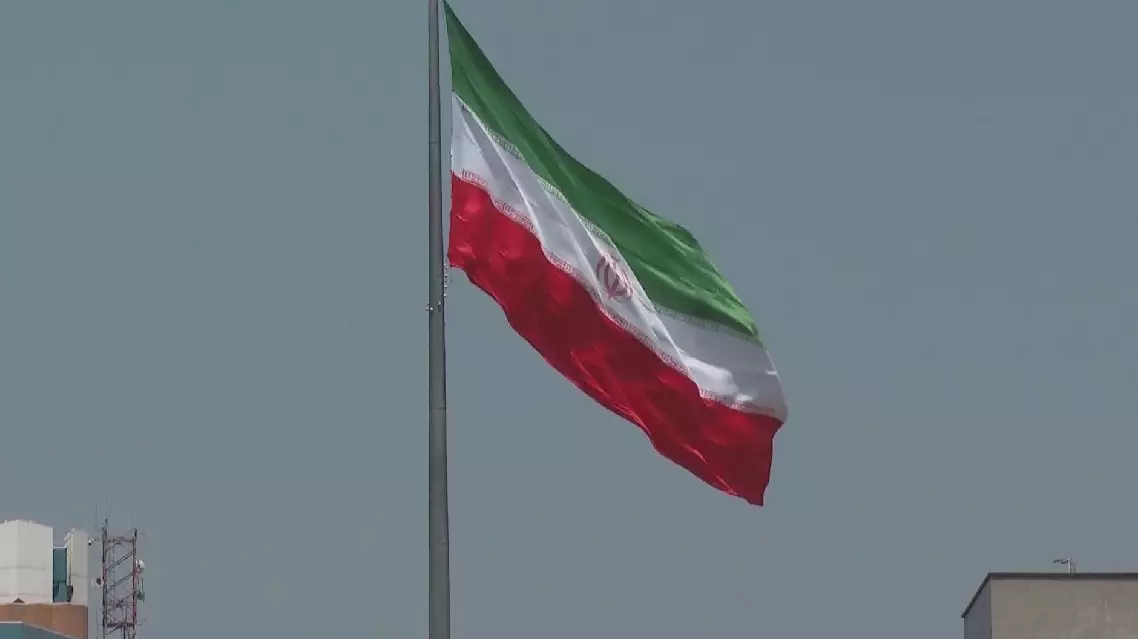
Iran's Persian Gulf Strait Authority said on Thursday that several oil tankers were struck in the Strait of Hormuz over the past days, of which the last three ones are owned or rented by the United Arab Emirates. It identified the vessels as "Al Ruwais," "Sinbad," and "Mersin Prosperity."

The three oil tankers have passed through the Strait of Hormuz multiple times over the past two months, and their names appeared on the most recently updated list of non-compliance released by the body.

Iran tightened its grip on the Strait of Hormuz on Feb 28, barring safe passage of vessels belonging to or affiliated with Israel and the United States following their joint strikes on Iranian territory.
U.S.-led maritime center raises threat level for Middle East to severe

U.S.-led maritime center raises threat level for Middle East to severe
Iranian President Masoud Pezeshkian said on Thursday that his country will never shy away from dialogue with the United States.

"We have never shied away from talks, and we never will, although the United States has targeted our country three times despite having signed an agreement," the semi-official Tasnim News Agency quoted him as saying.

He criticized the U.S. for not seeking talks with Iran, saying Tehran is weighing Washington's response to its latest proposal.

Iran said a day earlier it had received a formal U.S. reply to its proposal on reopening the Strait of Hormuz.

U.S. media reported Thursday that U.S. President Donald Trump said Washington may ramp up military strikes against Iran after November's midterm elections.

A day earlier, Trump told reporters military action could come if no deal is reached with Iran, adding the time for a decision is drawing near.

The U.S. and Iran held a new round of indirect talks in New York on Monday. U.S. media said negotiations hit an impasse as neither side was willing to make concessions. Iranian Foreign Minister Abbas Araghchi has returned to Tehran from New York.

Earlier, Araghchi announced at a news conference at the UN headquarters in New York on Sept. 25 that Iran had relayed conditions for reopening the Strait of Hormuz and advancing negotiations to Washington via Qatar.

According to U.S. media reports, Iran has proposed reopening the Strait of Hormuz within seven days if the U.S. lifts its naval blockade, lifts oil sales sanctions, and restores a regional ceasefire. Trump said on Sept. 26 he had rejected the proposal.

Iran not to shy away from dialogue with U.S.: Iranian President

Iran not to shy away from dialogue with U.S.: Iranian President

Recommended Articles