Russia declared on Thursday that it will ensure the security of its Kaliningrad region, warning that any attempts to exert pressure on the exclave are completely unacceptable.
Kaliningrad, a Russian exclave on the Baltic Sea, is separated from the Russian mainland and lies between NATO members Poland and Lithuania. It is a strategically important military outpost for Russia, hosting air defense systems, missiles and naval forces.
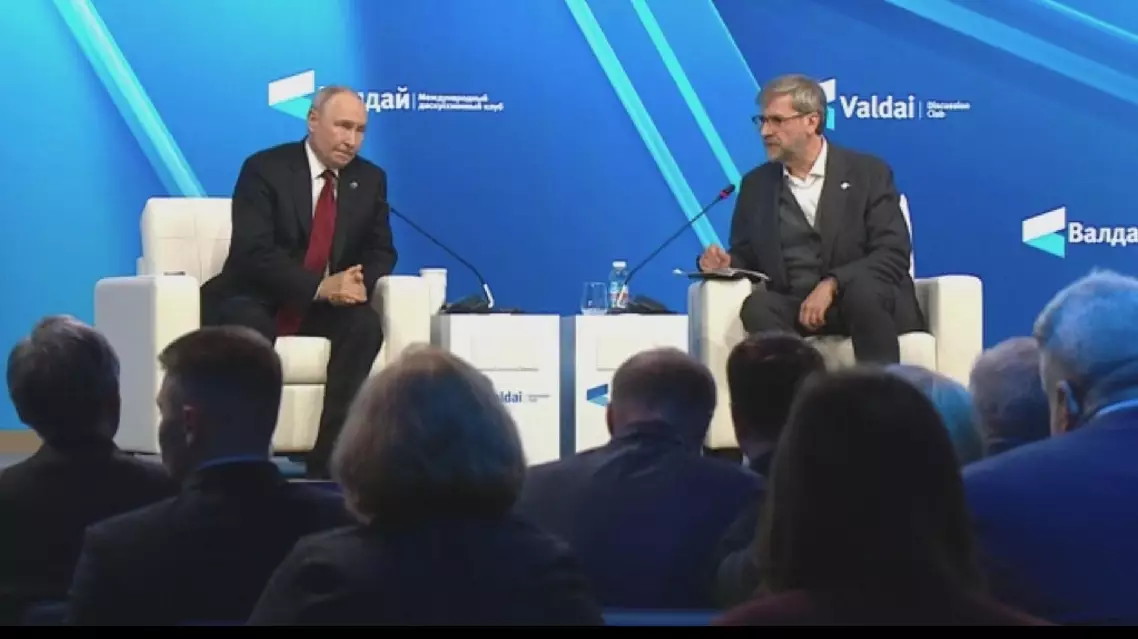
Speaking at the plenary session of the 23rd annual meeting of the Valdai Discussion Club on Thursday, Russian President Vladimir Putin clarified speculations regarding a potential nuclear strike in response to a hypothetical NATO blockade of Kaliningrad. He stated that Russia has never publicly declared plans to use nuclear weapons, but emphasized that the country will utilize all available forces and means, reserving the right to determine the specific methods.
Dmitry Peskov, press secretary to the Russian President, reiterated on the same day that Kaliningrad is an inalienable part of the Russian Federation, and that any attempts to covet or pressure the region are unacceptable.
He added that Russia poses no threat to Europe and has no plans to use nuclear weapons against it, noting that if NATO has no plans to act against Russia, there is no reason for concern.
Russian embassies in Britain, Belgium and Ireland have recently posted warnings concerning the Kaliningrad on their Telegram accounts, saying that Russia would use its "entire arsenal" to defend its territory if NATO countries attempted to "blockade" the region. Posts by the Russian embassies in Britain and Ireland explicitly said that this could include the use of nuclear weapons.
NATO Secretary General Mark Rutte responded on Wednesday by describing NATO as a "defensive alliance" and condemning what he called Russia's "nuclear threats."
According to media reports, Lithuania, Poland, France and other countries conducted exercises in nearby areas in June, including scenarios involving the disruption of railway links to the Kaliningrad region.
In August, dozens of military aircraft from NATO countries conducted exercises around the region, simulating the disruption of communications and suppression of air defense systems.
Founded in 2004, the Valdai Discussion Club held annual forum this year in Moscow under the theme: "Responsibility for the Future: Limits of the Possible, or Limitless Possibilities?" It gathered around 120 delegates from 40 countries and regions.
Russia vows to defend Kaliningrad exclave, clarifies stance on nuclear response