Beijing has been expanding services to provide assistance to its large foreign population, with an increasing number of volunteer stations popping up across the Chinese capital to help handle any issues and offer support alongside the city's citizen hotline.
The Beijing government's '12345' service hotline operates around the clock, with operators addressing calls and handling requests covering nearly every aspect of urban life. Now, the telephone service is equipped to respond to queries in eight languages including English, French, Russian, and Japanese.
In order to enhance the hotline's efficiency and give a public face of the service to foreign visitors and residents, special volunteer stations have been opened at key locations.
Regarded as an international hub, Beijing's Sanlitun neighborhood accommodates more than 10,000 foreign residents and employees. A bright new orange hut has appeared on one of the main commercial streets of Sanlitun, where volunteers are on hand to provide help that is urgently needed.
"Our volunteers primarily engage in service-oriented work targeting international communities on a daily basis. This includes assisting foreigners with payment, transportation, app usage, recommendations for entertainment, and dining options in Beijing. For example, we would tell them where to go if they want to eat Middle Eastern food," said Yuan Qianming, leader of the Sanlitun international volunteer service team.
Yuan said providing immediate assistance may only take a few steps, but helping foreigners get accustomed to life in Beijing could be much more complicated in reality. To improve the work efficiency, Yuan said they have already analyzed dozens of different scenarios and hundreds of common questions most often asked by foreigners.
Helping people in a more considerate way is the approach Yuan said his team are currently committed to, and many foreign volunteers have themselves been brought on-board to provide that help.
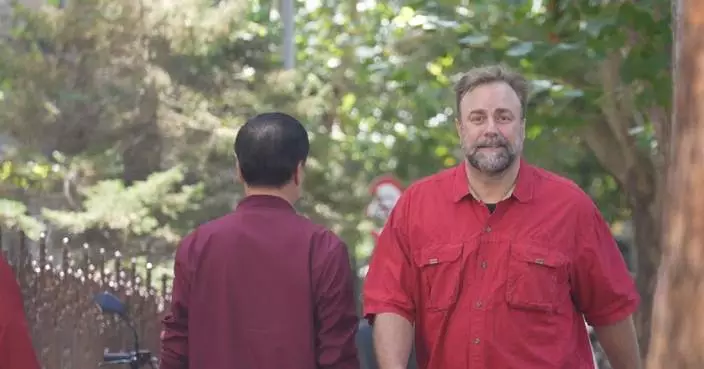
The small volunteer service station in Sanlitun has become a base for more than 500 volunteers working in shifts, a third of which come from overseas. Among them is Azfer Mumtaz Jatoi, who explained the significance of the program and his pride at taking part.
"The orange hut is not just a place where I sit down and chill. It's not just a place where I come out and help other people. But it's a symbol. It’s a symbol of the fact that China is opening up towards international people and the international community. It's a big responsibility that I get to help here. I get to be a part of the government. And that really helps me feel a part of the society," he said.
With the support of technology, an AI-powered digital volunteer named 'Sally' is also there to serve those in need, allowing people to interact with the screen and get a quick response.
"Sally knows over 70 languages. If you ask Sally in your own language, Sally will answer you directly," said Eva Ledneva, another volunteer, before giving a practical demonstration.
The volunteer services team are there to proactively identify, gather, and resolve problems on the spot. It marks the latest step forward as part of Beijing's efforts to improve urban governance.
Later this month, Beijing will hold the Forum on Swift Response to Public Complaints, an event which shines a spotlight on the city's urban management protocols and efficient handling of concerns at the community level.
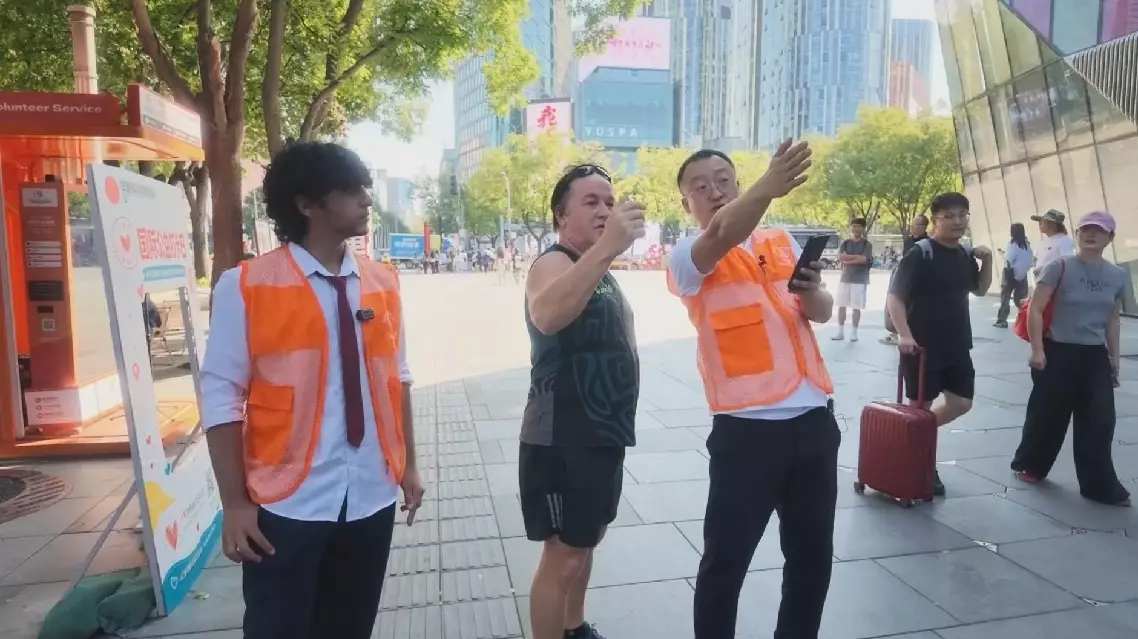
Volunteer stations set up to offer helping hand to Beijing’s int'l community