Christa Pike’s failed execution followed other death penalty miscues in Tennessee, which performs just a fraction of the nation’s executions but is now halting them for a second time since 2022, reigniting questions over the state’s handling of capital punishment.
Pike, 50, remained on a ventilator and unconscious at a Nashville-area hospital on Friday, according to her attorneys, who say she was poked with needles at least seven times in the state's death chamber and then hospitalized with burned and blistered arms after being given two doses of lethal drugs.
The unsuccessful attempt was the second failed execution in four months in Tennessee. Since 2022, the state has carried out just four of the more than 140 executions that have taken place nationwide, according to the Death Penalty Information Center.
Republican Gov. Bill Lee paused executions in the state following the unsuccessful attempt to put Pike to death and ordered an independent investigation into what went wrong, as both critics and supporters of the death penalty called for changes.
“Number one, I think we need to get better people that are doing these executions because I don’t know that they’re trained well enough to be doing this on difficult patients,” said Republican state Sen. Joey Hensley, a family physician, adding that he suspects the IV line was not properly inserted.
Days after the attempt to execute Pike, who received two lethal doses of pentobarbital, she had blisters on her arms from the bleach-like, caustic substance that was injected into her body, her attorneys wrote in an emergency court filing on Friday.
Pike’s attorneys said they believed problems with the IV lines caused the pentobarbital to flow into her body instead of her bloodstream.
“Apparently at no point did any member of the execution team realize that the IV lines were not correctly placed or that the veins had blown and that the pentobarbital was, in whole or in part, entering Ms. Pike’s body,” they wrote.
They wrote that instead of “remedying this failure” prison officials prepared and administered a backup set of pentobarbital syringes.
Pike's case is not the first time Tennessee's execution practices have drawn criticism.
Earlier this year, Tennessee stopped the execution of Tony Carruthers after medical workers placed an IV into his right arm but couldn’t get a secondary IV line, proceeding to attempt to place one into his other arm, his left hand and his left foot, then finally failing to establish a central line.
Lee ordered officials to wait at least a year before trying to execute Carruthers again.
Four years before that, the governor ordered an independent review into capital punishment after abruptly stopping the April 2022 execution of Oscar Smith in the 11th hour when officials became aware of a mishandling of the drugs. Lee paused all executions over a week later after acknowledging the state had failed to ensure its lethal injection drugs were properly tested.
The report he ordered, released in late December 2022, found that the state hadn’t complied with its own lethal injection process since it was revised in 2018.
In that time period, Tennessee put seven inmates to death — two by injection and five in the electric chair. The report said that in none of those, nor in the execution Lee halted, did the pharmacy conduct the required test for endotoxins, and in one of the lethal injections, the drug midazolam was not tested for potency.
At the time, the state's lethal injections were performed through a three-drug series of midazolam, vecuronium bromide and potassium chloride. The state later switched to using just pentobarbital.
The report, conducted by former U.S. Attorney Ed Stanton, also found that the state’s unidentified executioner had no formal healthcare training and learned the role mainly through on-the-job experience.
After the release of the report, the Tennessee Department of Correction fired its longtime top attorney and another employee.
One of Pike’s attorneys, Steve Ferrell, was skeptical of the progress made since those revelations, saying the investigation resulted in “a less detailed protocol and more secrecy."
It's not uncommon for executioners to have minimal medical training, according to Corinna Lain, a law professor at the University of Richmond and author of a book on lethal injections.
Lain said lethal injection has become more popular because it is considered less gruesome and hides the violence of state killing. But she said that, even when states follow protocol, the method still poses risks. A number of attorneys have echoed those concerns in lawsuits, arguing that the method is unconstitutional.
Lain said she has only found about 10 medically licensed doctors in the entire country who work with states on executions. Doctors she interviewed told her that they believed executions to be contrary to their oath to take care of people.
In many ways, executions are shrouded in secrecy. The identity of execution team members, the details about where and how lethal drugs are procured, and in some states even what happens in the death chamber is hidden from public view.
“Tennessee has botched executions so badly that two people this year have survived their own executions,” Lain said. “That’s quite something."
Still, experts like Jordan Steiker, the co-director of the Capital Punishment Center at the University of Texas, say that the method is likely to continue to be an option for states with the death penalty.
That is in large part, Steiker said, because of a deferential judicial approach to the execution process, which has consistently empowered states to carry out executions.
“I think it gives states confidence that even if they take shortcuts, it’s unlikely that the courts will intervene in their ability to carry out executions,” Steiker said.
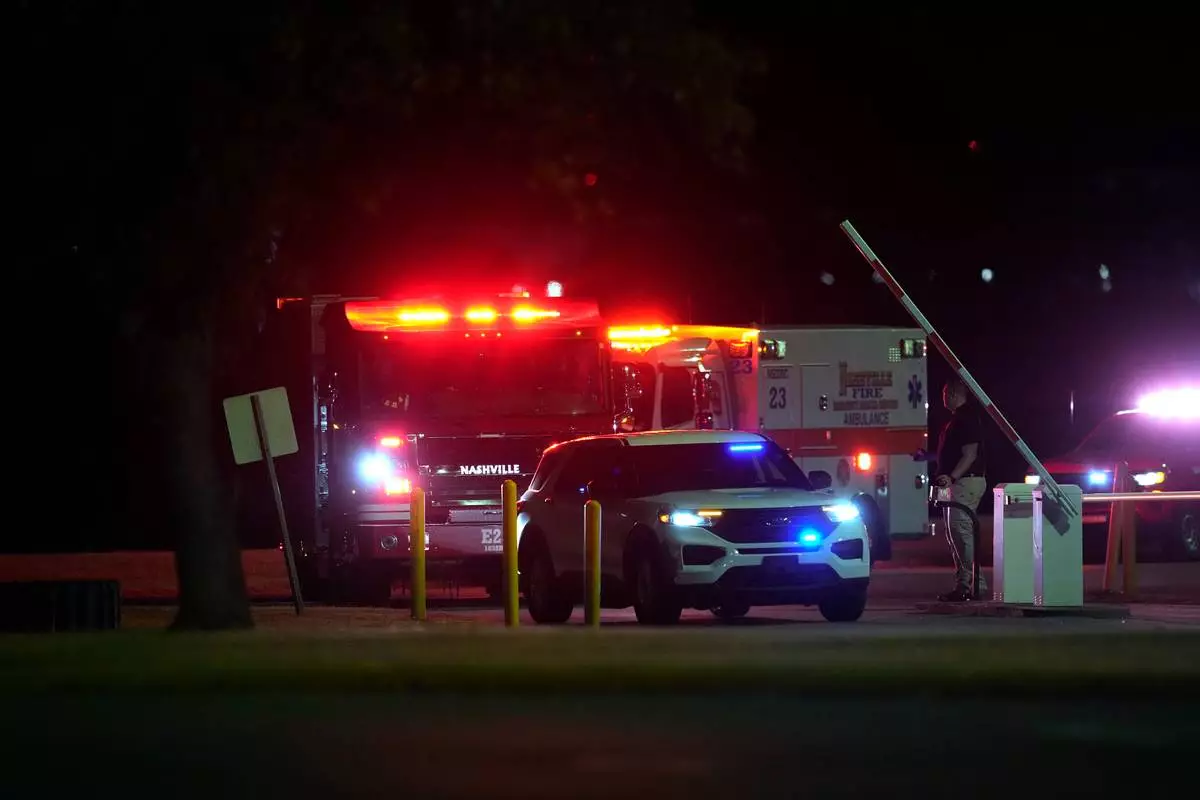
Emergency vehicles arrive at Riverbend Maximum Security Institution after the execution of Christa Pike was halted Wednesday, Sept. 30, 2026, in Nashville, Tenn. (AP Photo/George Walker IV)
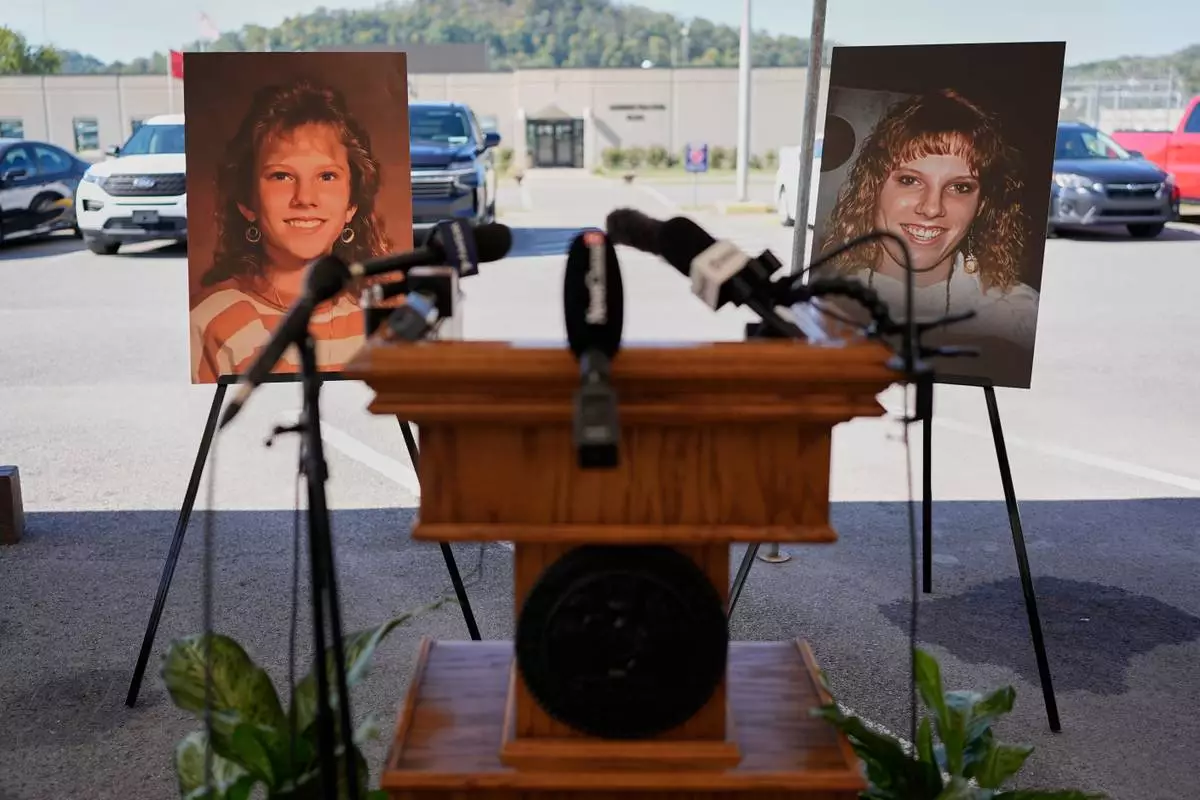
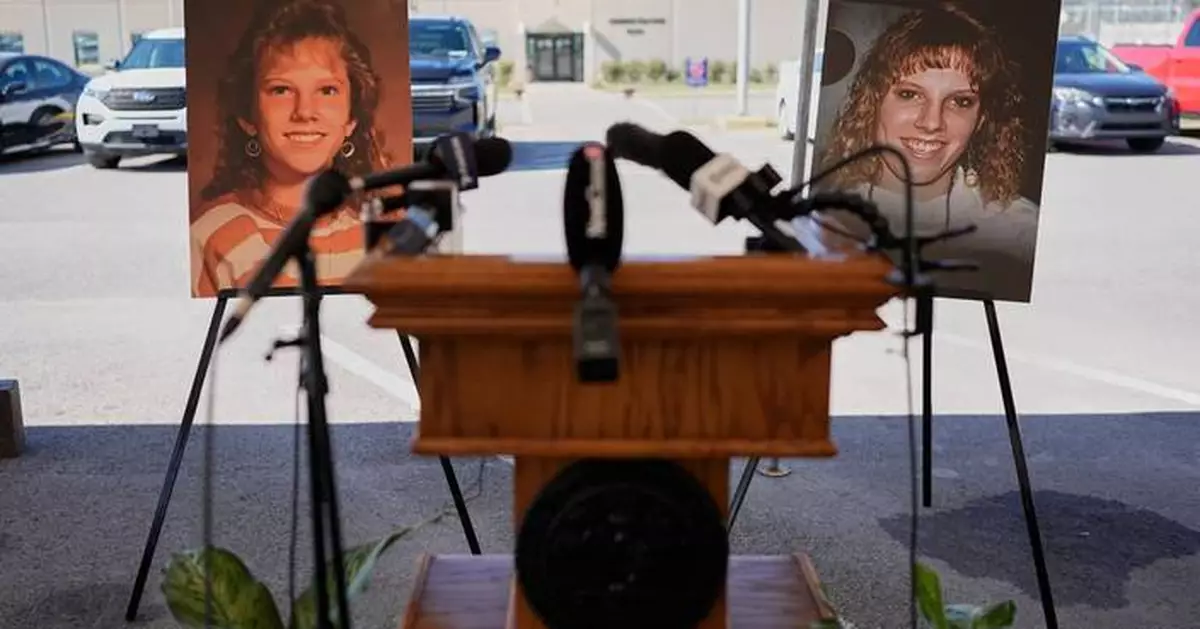
Photographs of Colleen Slemmer, who was murdered in 1995, are displayed outside Riverbend Maximum Security Institution before the planned execution of Christa Pike, Wednesday, Sept. 30, 2026, in Nashville, Tenn. (AP Photo/George Walker IV)
The Indian airline captain who helped thwart an apparent attempt to crash a FlyDubai flight said in a live video call that he knew he had to get back on his feet to save passengers after being stabbed by his co-pilot.
Meanwhile, a Palestinian citizen of Israel who was running in Israel’s upcoming election is withdrawing his candidacy following comments about Hamas’ Oct. 7 attack on Israel.
Here is the latest news from the Middle East on Friday. Full coverage is available here.
The FlyDubai captain told Indian Prime Minister Narendra Modi that he knew he had to get back on his feet to save everyone on board, after he was stabbed by his co-pilot and the aircraft plunged into a steep descent.
“I had so many wounds. I had fallen down,” Capt. Smit Machchhar said from a hospital in Abu Dhabi. “I was fighting for my life. At one point I realized that if I didn’t get up … then passengers would lose their lives.”
Machchhar was seriously injured in Wednesday’s attack but managed to open the cockpit door, allowing passengers to enter and restrain the attacker as the Boeing 737 descended sharply, witnesses and Israeli authorities said.
The flight from Dubai to Tel Aviv, with 182 people on board, was diverted to Tabuk in northwestern Saudi Arabia for an emergency landing.
Israeli Prime Minister Benjamin Netanyahu said the attacker, an Omani national, was arrested in Saudi Arabia. His motive for the attack was not immediately clear.
The first repatriation flight left the UAE shortly before 11 p.m. and landed in Tel Aviv just after 1 a.m., according to the Ben Gurion International Airport website.
— More coverage on the attempt to crash the plane is available here.
In the Strait of Hormuz, a tanker was struck by an “unknown projectile” while transiting outbound through the waterway, the British military said Friday, adding that the attack caused a “small fire and blackout onboard.” There were no reported casualties, the United Kingdom Maritime Trade Operations Center (UKMTO) said. The fire was extinguished and the tanker continued its transit.
UKMTO did not identify the tanker and there was no immediate claim of responsibility for the attack. Four tankers have recently been hit by projectiles in the critical waterway, bringing the total to five with Friday’s incident, UKMTO said.
Overall ship traffic remains below prewar levels in the Strait of Hormuz, as do shipments of energy products, even though Iran has lost its near-complete chokehold over the crucial waterway thanks to the U.S. Navy's efforts to shepherd oil tankers through the strait. That, along with various pipelines, has allowed Gulf countries to restore oil exports to nearly prewar levels.
Three Israeli strikes in Gaza City and central Gaza killed three people and wounded at least one other on Friday, according to health officials at Gaza’s hospitals.
Two strikes in Gaza City killed one person each, while another strike in central Gaza killed a third, officials said.
Israel’s military acknowledged carrying out the strikes, saying that it was hitting militants in those areas, without elaborating.
In Yemen, intense fighting engulfed a residential area in Taiz City as clashes between the Iran-backed Houthis and Saudi-backed government forces raised concerns over a worsening humanitarian situation.
The World Food Program warned that renewed fighting in Yemen is worsening an already dire humanitarian situation in a country suffering from severe hunger.
WFP director Matthew Hollingworth said that almost three out of four households are unable to meet their basic food needs.
Shelling Friday by the Houthis on the residential neighborhood of Wadi al-Qadi in Taiz City injured several people, according to an Associated Press reporter in the city.
Separately, Saudi Arabia said Friday that it intercepted three ballistic missiles, launched by the Houthis, over the city of Khamis Mushait. The statement, by Saudi spokesman Gen. Turki al-Maliki, did not specify when the attacks occurred or report any immediate damage. A fourth projectile, also blamed on Houthi rebels, fell on a school in the city of Najran, causing material damage, Saudi Civil Defense said. No injuries have been reported.
In Israel, the chairman of the left-wing Balad party said he would withdraw from Israel’s upcoming election after the country’s Supreme Court president said a majority of justices were prepared to uphold his disqualification.
Sami Abou Shehadeh’s candidacy was challenged over an editorial he wrote in the newspaper Al-Araby al-Jadeed the day after Hamas’ Oct. 7 attack on Israel. The article did not condemn Hamas and argued that it was surprising violence hadn’t erupted earlier given conditions in Gaza.
In a subsequent article, Abou Shehadeh, a former member of Israel’s Knesset, called Hamas’ attack both unacceptable and a crime. He said he hadn’t known the scale of the violence when he wrote the first article.
The court weighed whether his remarks violated an Israeli law barring candidates who reject Israel’s existence, incite racism or support armed struggle against Israel. His lawyers said that barring him would reinterpret the law and create a new threshold.
About 20% of Israel's citizens are of Palestinian descent.
Israeli soldiers have barred Palestinian farmers and activists from harvesting olives in the northern West Bank, according to video footage obtained by The Associated Press.
The footage showed soldiers firing shots in the air and tear gas toward the Palestinian farmers and activists, while settlers were also seen in the area.
Israel's military said troops were deployed following reports of a confrontation, which was dispersed. It added that a security official at the scene fired shots into the air earlier, without elaborating. The military said no one was injured.
The olive harvest season in the West Bank is usually marred by tensions between Palestinian farmers and settlers. Israel has imposed new rules this year, prohibiting Palestinians from harvesting in what’s known as Area C, which is under Israeli security control and encompasses the majority of the territory’s agricultural lands.
An earlier version of this story mistakenly said that a fourth projectile reported by Saudi Arabia Friday was not attributed to anyone in particular; it was blamed on Houthi rebels.
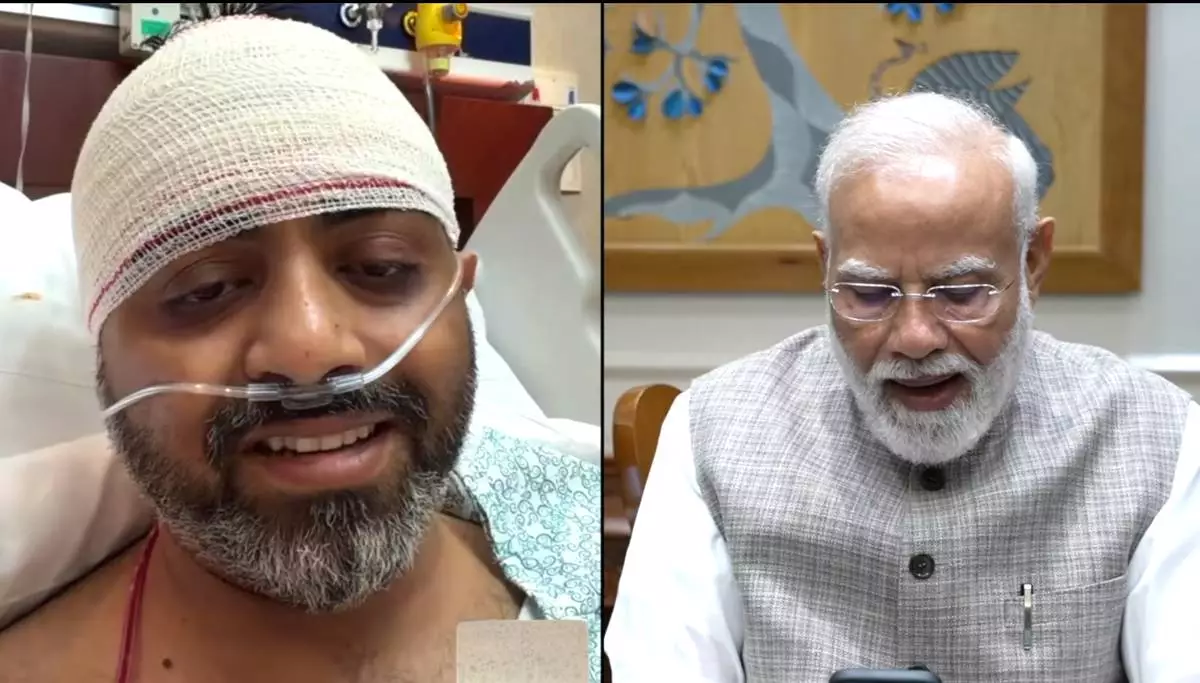
This screengrab from Narendra Modi YouTube Channel shows Indian Prime Minister Narendra Modi speaking with FlyDubai pilot Capt. Smit Machchhar on Friday, Oct. 2, 2026. (Narendra Modi YouTube Channel via AP )