Skip to Content Facebook Feature Image

China's National Day holiday draws crowds to scenic spots, festive celebrations

China

China's National Day holiday draws crowds to scenic spots, festive celebrations
China

China

China's National Day holiday draws crowds to scenic spots, festive celebrations

2026-10-02 22:58 Last Updated At:10-03 17:47

Tourists flocked to scenic areas and heritage towns across China on Thursday as the seven-day National Day holiday began, with cultural performances, cruises and fireworks adding to celebrations marking the 77th anniversary of the founding of the People's Republic of China.

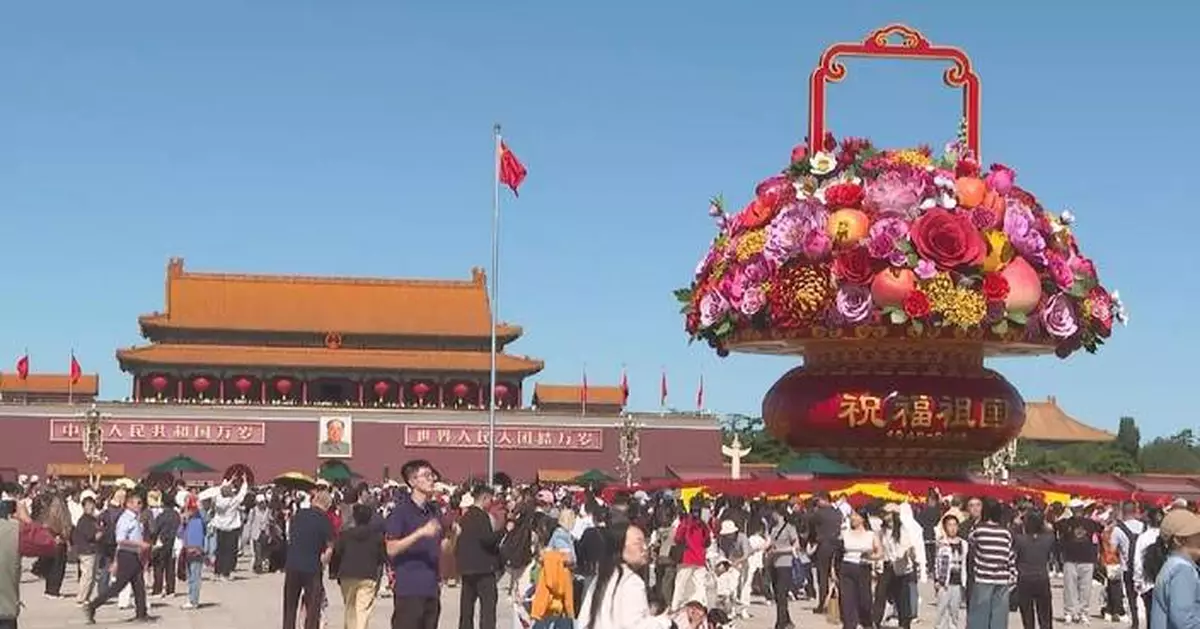
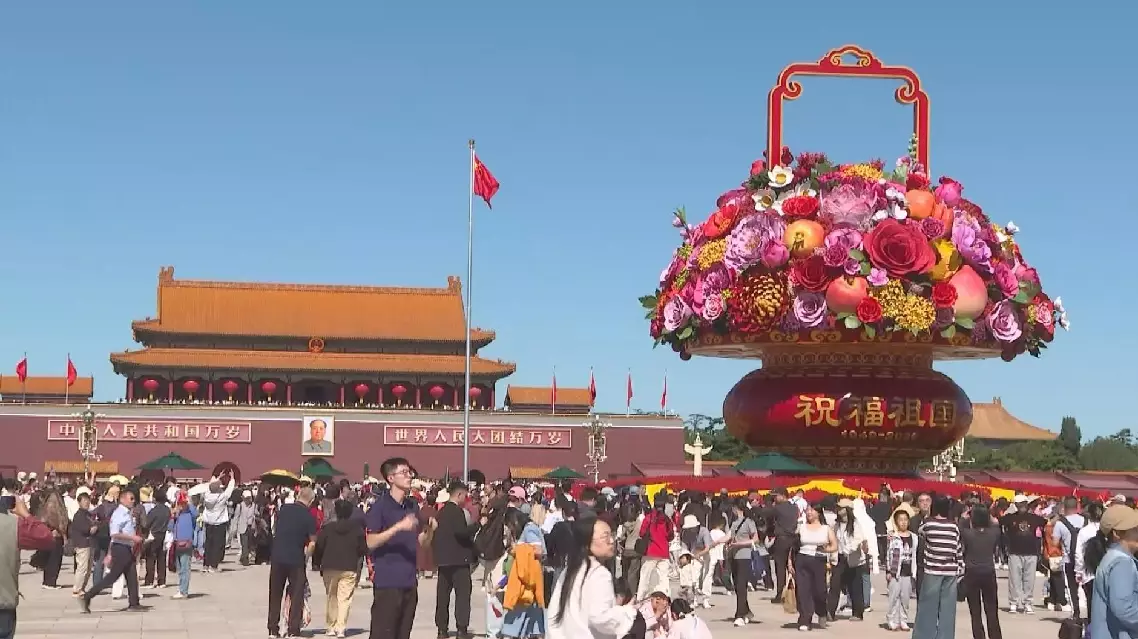
More than 300,000 people visited Beijing's Tiananmen area on the first day of the holiday, many carrying national flags and posing for photos.

On Gulangyu Island off Xiamen, in the eastern province of Fujian, music filled the lanes of the UNESCO World Heritage site. At a waterfront performance, a pianist played a duet with a piano-playing robot, while children also took to the stage.

For travelers seeking open landscapes, the choices ranged from the dunes of Minqin County in northwestern Gansu Province, where visitors walked on the sand and tried off-road rides, to the Xiaoqikong Scenic Area in southwestern Guizhou Province. The latter is known for a seven-arched stone bridge, green waters and waterfalls set amid Libo County's World Heritage-listed karst landscape.

Farther south, visitors stopped at Detian Transnational Waterfall in Daxin County, in the Guangxi Zhuang Autonomous Region, on the border with Vietnam. Others headed to the coast, with more than 6,000 people visiting Wuzhizhou Island off Sanya, in the southern island province of Hainan, on the first day of the holiday.

"With the sea and mountains all around us and red national flags everywhere, I felt especially proud to be enjoying our country's beautiful scenery while celebrating National Day," said visitor Yu Bin.

The holiday trip could also be a journey through regional culture. In the eastern province of Shandong, visitors to Dongwanyuan Scenic Area in Linqing watched stage performances and sampled local food. In neighboring Jiangsu Province, Jiulongkou Scenic Area in Jianhu County featured Huai Opera, a regional form of traditional Chinese opera, alongside folk performances.

In the southwest, craft workshops and cultural markets lined both banks of the Nanhe River in Chengdu's Xinjin District, showcasing traditions from Sichuan Province and neighboring Chongqing.

Back in eastern China, the canals and old buildings of Xinshi Ancient Town in Zhejiang Province provided a setting for handmade crafts and stalls selling freshly prepared local snacks.

"You can see historic buildings here and try your hand at traditional crafts. There are tea cakes and glutinous rice cakes, too. It feels so relaxing, and you can really feel the National Day atmosphere," said visitor Luo Yanqi.

After dark, the festivities shifted to the waterfront. In Shanghai, fireworks lit up the sky over Wusongkou. On a Huangpu River sightseeing cruise, passengers watched a robot perform martial arts, while children interacted with it against a backdrop of illuminated buildings.

Along Tianjin Municipality's Haihe River, a light show projected city landmarks and scenes of local life. Fireworks also burst above the Yangtze River in Wuhan, in central Hubei Province, and over the Gan River in Nanchang, in eastern Jiangxi Province. In Nanchang, the display rose beyond Tengwang Pavilion, the city's riverside landmark, putting the illuminated structure and fireworks in the same view.

The celebrations continued in Hong Kong, where more than 30,000 fireworks shells lit up Victoria Harbour on Thursday night. Macao marked the anniversary with fireworks and a cultural gala, including an orchestral performance.

China's National Day holiday draws crowds to scenic spots, festive celebrations
China's National Day holiday draws crowds to scenic spots, festive celebrations

China's National Day holiday draws crowds to scenic spots, festive celebrations
China's National Day holiday draws crowds to scenic spots, festive celebrations
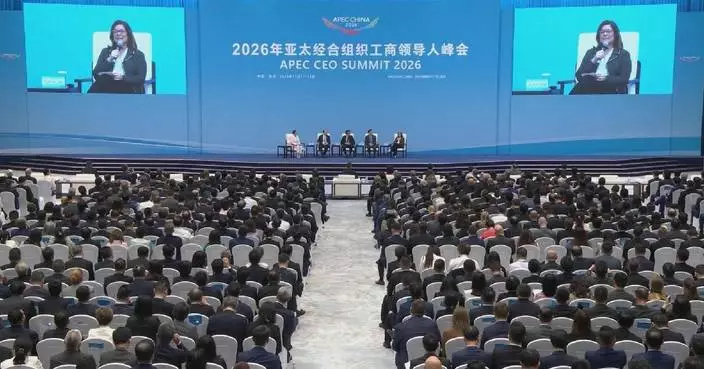
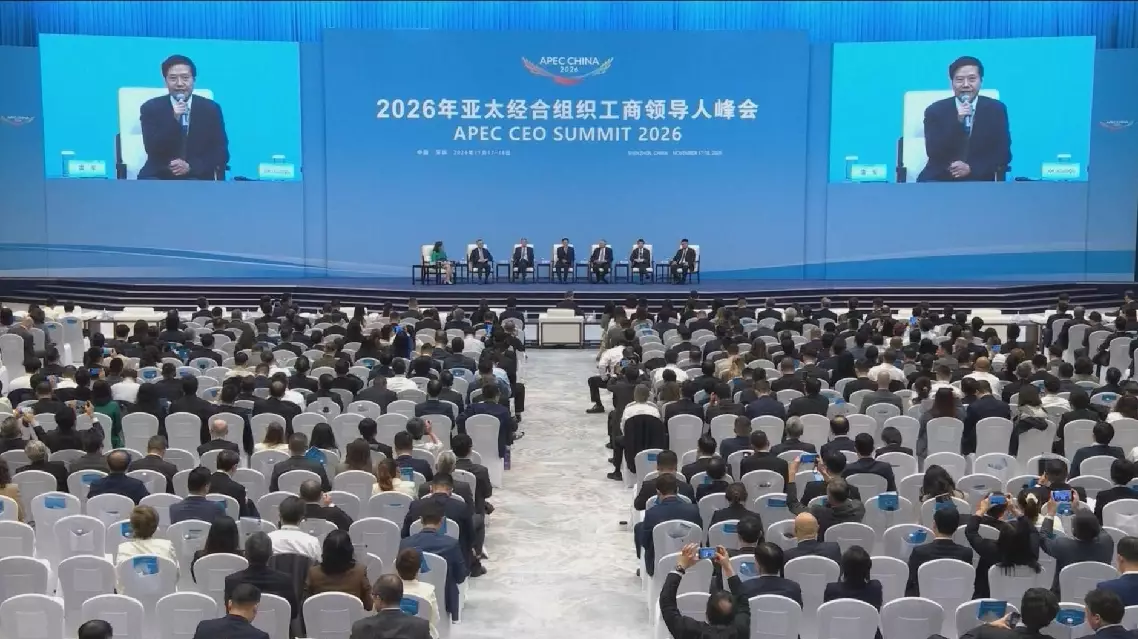
Artificial intelligence (AI), advanced robotics, and cross-border financial integration took center stage on Tuesday as corporate leaders gathered in China's Shenzhen for the APEC CEO Summit 2026.

As an important part of the 2026 APEC Economic Leaders' Week, the two-day summit has brought together more than 2,000 political and business delegates from across 21 APEC member economies and 13 non-member regions.

During the summit, top technology executives and financial leaders shared their sights on how artificial intelligence can empower industrial development and enterprise innovation across APEC economies.

Lei Jun, founder, chairman and CEO of Chinese technology company Xiaomi said that the potential of AI industry is larger than that of the automotive sector. He also said that Xiaomi’s embodied AI robots had begun trials in factories, could work for eight hours and could recharge themselves.

"We are optimistic about the room for growth and potential of AI entering the physical world. It may bring huge opportunities to the entire Asia-Pacific economy. Our embodied AI robots are already in the factory. They can work for full eight hours and are capable of charging themselves twice during that time. I think this performance is already extremely impressive. I believe that embodied AI robots will definitely a massive industrial opportunity, and their potential will likely surpass that of the automotive industry," said Lei.

Wang Xingxing, founder, chairman, and CEO of Chinese humanoid robot manufacturer Unitree Robotics, shared a similarly bullish perspective on hardware scaling.

"We are seeing a lot of truly exciting things in the field of large models and embodied AI. We have already seen the overall direction for the next few years, and the potential is immense. For example, right now we may just produce tens of thousands of robots a year, but in the future, we could suddenly be asked to produce millions or tens of millions annually. I believe the demand for computing power in the future will far exceed the imagination of almost everyone," said Wang.

While tech executives believe that tech innovation will drive regional growth, banking leaders stressed that translating tech innovations into widespread economic dividends relies heavily on establishing open, collaborative regional frameworks.

"We launched an action plan to support the AI industry chain in 2025, publicly committing to investing one trillion yuan to support this chain over the next five years. To date, our investments into this industry chain have already exceeded 700 billion yuan. I think, for APEC economies as well as the global market, that we should jointly build a cooperative and open ecosystem -- helping more foreign enterprises investing in China expand their reinvestment, and helping more Chinese companies become very important sources of outbound investment for investors," said Ge Haijiao, chairman of Bank of China (BOC).

"Over the past few years, we have had substantial cooperation with fintech companies, including card-issuing banks and acquirers in this region. This ensures that card holders from another side can scan local QR codes for payment without applying for local accounts or switching apps. I believe this will greatly enhance business, economic and trade ties, and promote personnel exchanges across the Asia-Pacific region," said Dong Junfeng, chairman of China UnionPay, a bank card service provider.

AI, advanced robotics, financial integration take center stage at APEC CEO Summit

AI, advanced robotics, financial integration take center stage at APEC CEO Summit

Recommended Articles