Scenic spots across China have seen a surge in tourist visits since the week-long National Day holiday began on Thursday.
The Huangguoshu Waterfall scenic area in Anshun City, southwest China's Guizhou Province, recorded nearly 48,000 tourist visits on Friday, marking a peak in arrivals.
On the viewing platform, many visitors held up their phones to capture the spectacular sight of the cascading waterfall.
The scenic area is expected to handle 230,000 to 250,000 tourist visits during the holiday. On the first day of the holiday, a traditional dragon boat event was held in Jiujiang Town, Foshan City, south China's Guangdong Province, drawing tens of thousands of people to the riverbanks to watch the fierce competition.
"Taking the National Day holiday as an opportunity, I've brought my family to Jiujiang to experience the intangible cultural heritage of the Lingnan region. The dragon boat spirit of pulling together in the same boat really lets us feel the charm of pulling together," said Guo Yunxian, a tourist from Guangzhou, the provincial capital city of Guangdong.
During the holiday, a desert tourism scenic area in Makit County, northwest China's Xinjiang Uygur Autonomous Region, has also seen flocks of visitors.
From thrilling sand dune off-roading to sand sliding and camel rides, the scenic area offers a range of activities for different age groups. It now receives about 6,000 tourist visits a day on average.
"My child has never been here before. I want him to see what the desert in the picture books actually looks like, and to experience what it feels like to ride a camel," said Qi Shuo, a tourist from east China's Shandong Province.
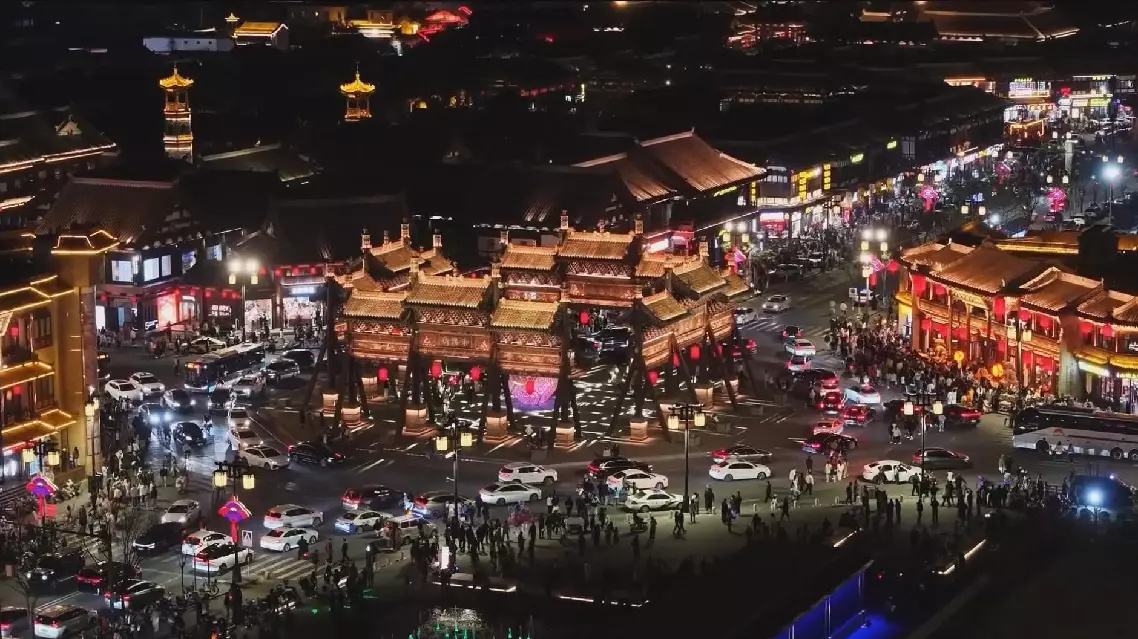
The ancient city of Datong in north China's Shanxi Province is staging light shows during the holiday.
The shows incorporate local historical and cultural elements, including images of ancient architecture such as the Hanging Temple and Huayan Temple, as well as the flying apsaras of the well-known Yungang Grottoes.
Scenic spots across China see tourist surge during National Day holiday
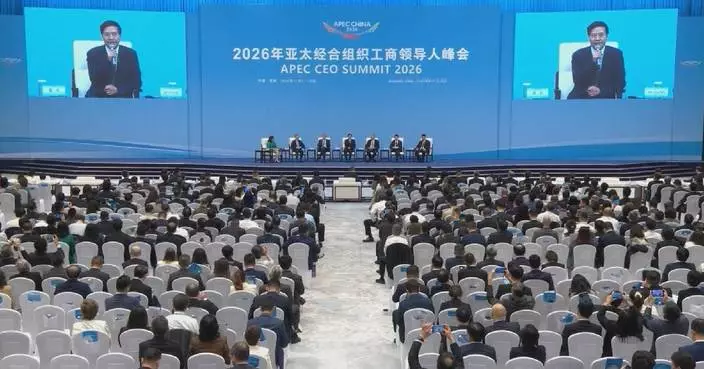
From government service counters to street corners, Shenzhen is combing through its foreign-language public signs as the city hosts this week's Asia-Pacific Economic Cooperation (APEC) China 2026 meetings, as part of a wider effort to elevate the city's international service environment.
The city is hosting the 33rd APEC Economic Leaders' Meeting on Wednesday and Thursday, China's first time hosting the annual gathering in 12 years since Beijing in 2014. With the theme "Building an Asia-Pacific Community to Prosper Together" setting the tone, Shenzhen wants its welcome to be felt in every corner, right down to the wording on its signs.
Change in this city does not always come with fanfare, and sometimes it is nothing more than a small sign being redone with care. At the Shenzhen Government Service Center, an old Chinese-English bilingual sign has made way for a new one, its translation placing greater emphasis on the proactive nature of government services.
Foreign visitors say the updated wording helps them actually understand what the counter is for.
"The new one, I feel like it's really thoughtful," said foreign visitor Tymur Dehtiarenko, commenting on a sign at a public service office with its English translation changed from "Feedback Window for Unfinished Work" to "Counter for Handling Unsolved Matters".
"If you say 'counter', I feel like this is the place where actual things get done," said another foreign visitor, Liv Ilasz.
The refresh does not stop at the service hall doors, because street-level signage across the city is being updated just as thoroughly. Since the start of this year, more than 100,000 foreign-language public signs have been corrected citywide, according to Zhao Qian, a staff member with the internationalization promotion division under the Foreign Affairs Office of the Shenzhen Municipal People's Government.
The bigger challenge, however, lies in the language itself. China's fast-emerging new business forms and new concepts often have no ready-made equivalent in other languages, and finding the right words for them is where the real work begins.
The translation team keeps studying and testing its work, moving beyond fixing inaccurate expressions to coining original terms for the city's own innovations.
That search for the right words falls partly to local scholars such as Zhang Shuyin, an assistant professor at the School of Humanities and Social Science at the Chinese University of Hong Kong, Shenzhen (CUHK-Shenzhen).
"Shenzhen is such a trend-setting city. Many concepts didn't exist yesterday and suddenly appear today. So, we developed a handbook of public signage and messaging tailored specifically to the unique character of Shenzhen," said Zhang.
Consistency is the other half of the job, according to Zhuang Yingyi, an assistant professor at the same school.
"We've inspected the redeveloped Huanggang Port many times. For example, 'elevator,' Hong Kong usually uses 'lift,' so we try to stay consistent with that usage," said Zhuang.
Manual research alone, however, cannot keep pace with the constant stream of new concepts, so Shenzhen has enlisted artificial intelligence for the citywide checkup to improve both efficiency and precision.
"The vehicle is equipped with five cameras in total. After each collection run, the back-end system uses an AI large model to extract Chinese and English entries from the images, then the model generates reference translations," said a technician.
From a small sign at a service counter to bilingual notices on street corners, the city is polishing the fine-grained details of how it hosts the world, and the same attention has gone into a guidebook for newcomers.
"Besides the printed booklet in four languages, we also have a digital service guide for foreigners in nine languages -- an interface connecting Shenzhen with the world," said Zhao.
"Shenzhen is like a second home for me. For now, I really love the city, I feel so welcome here. I feel like everything works well and is well-managed. It's very clean and it's not loud," said Dehtiarenko.
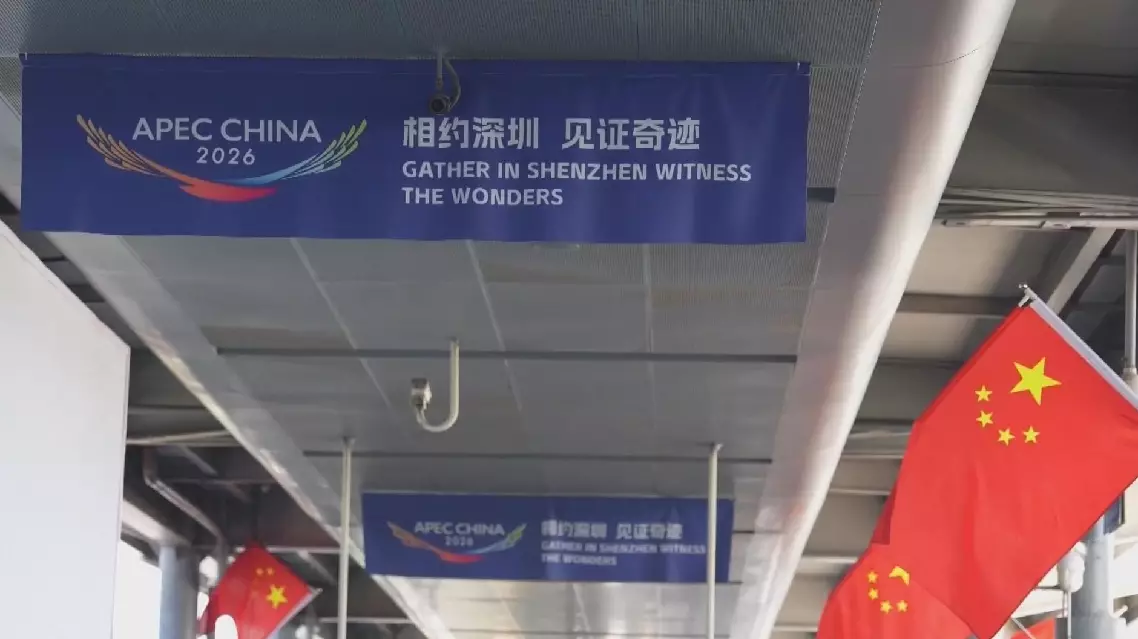
Shenzhen actively improves precise public sign translations for APEC