Sudan is grappling with a fuel shortage driven by global oil disruptions tied to the Middle East conflict and by domestic import restrictions, pushing prices higher and adding to the burden on ordinary people, CGTN reported from the country.
The shortage has severely disrupted transport services and daily business activity.
"The impact is big for both drivers and commuters," said Alnazeer Suliman, a transport operator.
"The movement of goods and people has stopped, and the market has totally paralyzed; we need solutions, not promises," said Mohamed Hassan, a resident.
The crisis has also fueled a thriving black market, where petrol reportedly sells at nearly twice the official price, adding pressure on already struggling consumers and businesses.
Prime Minister Kamil Idriss has ordered additional petroleum supplies to service stations to ease shortages and improve availability. But analysts point to deeper challenges, including the prolonged shutdown of the al-Jaili refinery, foreign exchange shortages, and difficulties financing fuel imports.
A central bank requirement for importers to deposit the equivalent of 200 kilograms of gold has also restricted participation in the import market.
"Sudan's fuel crisis in fact has two factors, or might we say two reasons. One is a global factor and the other is a domestic one (driven by global oil disruptions and domestic import restrictions)," said Mohamed Elnayer, an analyst.
Elnayer also pointed out that relying on a few importers has limited supply. He said government-led imports could have secured reserves and cut prices by as much as 25 percent, easing production costs and supporting economic recovery.
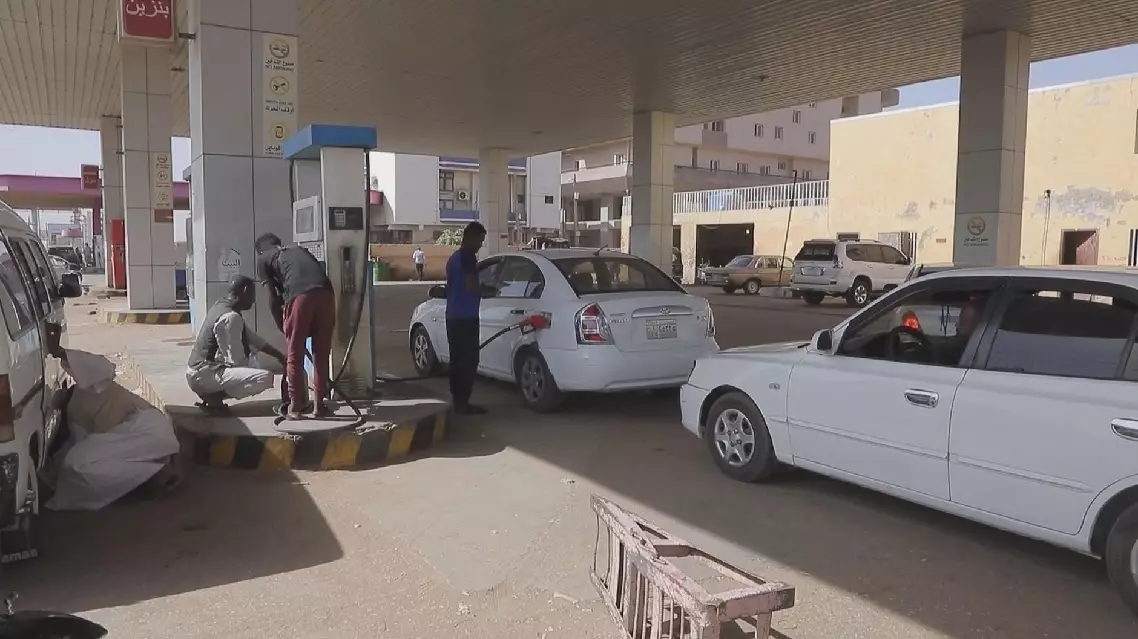
Fuel shortage in Sudan drives up prices, burdening ordinary people
Fuel shortage in Sudan drives up prices, burdening ordinary people