For residents aged 60 and above who make up 30 percent of the district population in Beijing's Xicheng District, the city's "12345" government service hotline, operating around the clock, has helped turn their everyday worries into meals, activities, and more compassionate care.
Beijing's "12345" government service hotline has answered some 180 million calls since 2019. Many retirees and seniors in Xicheng District used the hotline to voice their concerns and needs, and received feedback and improvements from district government and community service departments.
For many, retirement may sound like a well-earned rest, but growing older can bring its own set of concerns.
"If the kids are far away and it's just the old couple, honestly, they often skip cooking," a senior resident said.
"I just don't cook at home anymore," another elderly person said.
Xicheng District is Beijing's old town, where comprehensive elderly care service centers were built to address seniors' concerns.
On the ground floor in a community center building, a canteen serves meals specially designed for older diners, affordable, balanced, and nutritious. It prepares more than 1,000 portions every day, the highest daily output among community elderly-care centers in Beijing.
"For seniors, we keep meals light on oil and salt, such as steamed pork ribs, steamed fish, shrimp, and other protein-rich foods," said Liu Junguo, the restaurant manager
Vegetables are cooked soft and tender for easier eating, the menu is updated to reflect what seniors ask for, and meals can even be delivered right to their door.
"We come two or three times a week, and it feels really comfortable," said a senior resident dining here.
"Mainly it's the convenience -- whatever I'm craving, they've got it," said another elderly resident.
On the second floor of this senior community dining hall, a growing number of cultural activities have been rolled out, following suggestions of the elderly.
By taking part in these activities, they can enjoy a rich and varied calendar of programs.
"When we first started, the options were a bit limited. So we spoke up: seniors come in all ages and fitness levels, and we hoped for more variety," said a senior resident.
Yoga classes are also one of the popular choices.
"Yoga can help with many chronic conditions of aging. Through gentle rehab, joints become more stable and flexible, which helps prevent falls," said yoga coach Yunxi working for the center.
Exercise, new friendships, and a growing sense of control over the body, and over life itself- none of this happens by accident.
Beijing has built a citywide system in which the civil affairs bureau and local communities work hand in hand to receive residents' needs through different channels.
"People can come in person to share their thoughts, or reach us through WeChat groups, by phone, or by scanning a code. Whatever the elderly-care need, we take it," said Li Ying, manager of Guangwai Regional Elderly-care Center, Xicheng District.

Seniors in Beijing's Xicheng District find compassionate care through 12345 hotline
Chinese firms are partnering with Thai builders on a new round of port expansion project, the Phase-III expansion work of Laem Chabang Port.
Improved port infrastructure and logistics networks are expected to open up new opportunities for the port to connect with China and global markets and boost Thailand's industrial development, making it an important connectivity node in the country for the 21st Century Maritime Silk Road.
Located in Chonburi Province in eastern Thailand, around 130 km from Bangkok, Laem Chabang Port sits adjacent to the Eastern Economic Corridor, Thailand's manufacturing hub. Every day, huge volumes of containers, automobiles, machinery equipment and agricultural products are shipped from the port to destinations across the globe.
Dozens of kilometers around the port lie multiple large industrial parks, home to clustered manufacturers of automobiles, electronics and machinery.
In the ongoing new round of expansion, Chinese contractors are undertaking Phase-III infrastructure works, including 29 port roads, 16 bridges, a 500‑meter-long coastal berth and supporting container yards.
"Thai‑Chinese cooperation on this construction project is highly important. It helps push forward smooth project delivery and ensures the highest quality and safety standards. Aligned with the Maritime Silk Road initiative, it facilitates Thailand’s trade with the rest of the world. Laem Chabang Port will become a vital hub driving Thailand's trade toward global markets," said Anuson, Thai-side manager for the Chinese-run infrastructure projects.
Upon completion of Phase-III, the port's annual container handling capacity will rise from the current 11 million TEUs to about 18 million TEUs, further strengthening Thailand's logistics capacity linking regional and global markets.
The project has also nurtured a large pool of local engineers and technical personnel.
Pattarapong, a Thai engineer, said the role has brought her steady employment while exposing her to new construction techniques and management practices, building up her hands-on experience in large-scale port construction.
"Local workers account for roughly 70 percent of staff on the ongoing construction site. The Chinese enterprise attaches great importance to creating local jobs and keeps recruiting people from surrounding communities. I am delighted and honored to take part in this project since it is also part of the Maritime Silk Road development," said Pattarapong.
Earlier this year, a new shipping route linking Yantian Port in south China's Shenzhen City, Laem Chabang Port, and Cambodia's Sihanoukville Port was officially launched. It is expected to deepen ties between Thailand and China's Guangdong‑Hong Kong‑Macao Greater Bay Area, and open a fresh cargo import‑export corridor for businesses.
On land, Thailand is pressing ahead with the construction of a railway collection‑and‑distribution system for the port, with plans to boost freight rail links between Laem Chabang Port and northeastern Thailand.
Via maritime shipping lines and overland transport links, Laem Chabang Port connects with Thailand's industrial heartland. As regional transport networks keep improving, the port will further leverage its strengths in combined sea‑and‑land transport.
Over the past 13 years, projects such as this one under the 21st Century Maritime Silk Road have delivered fresh support for connectivity between China and Southeast Asian countries.
The 21st Century Maritime Silk Road is the sea route part of the Belt and Road Initiative proposed by China.
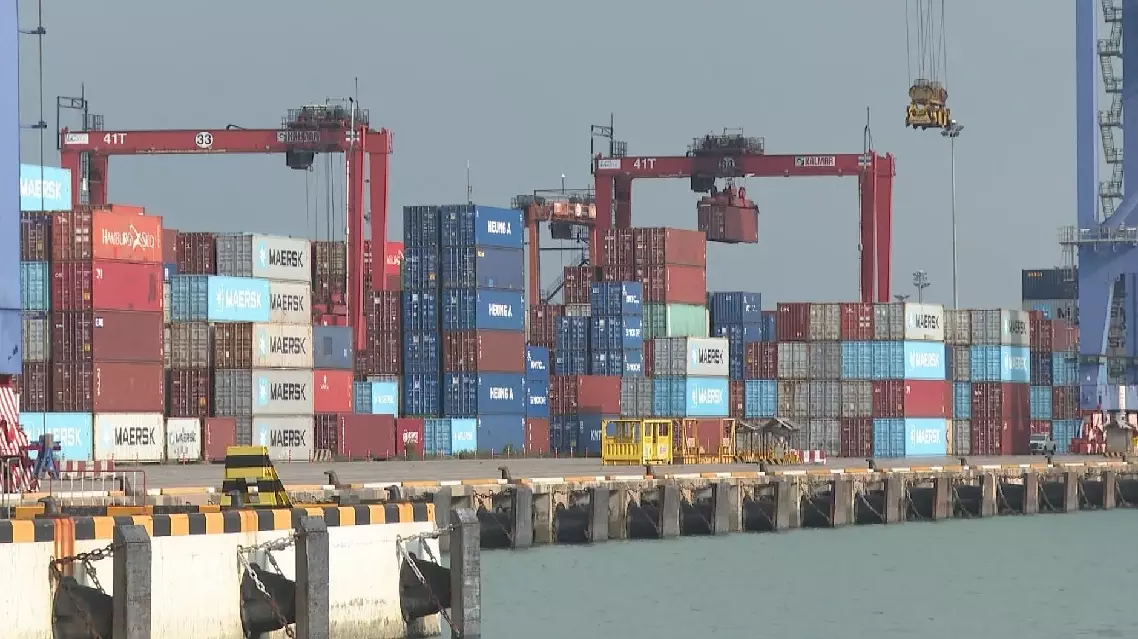
China-Thailand joint port expansion project bolsters Maritime Silk Road connectivity