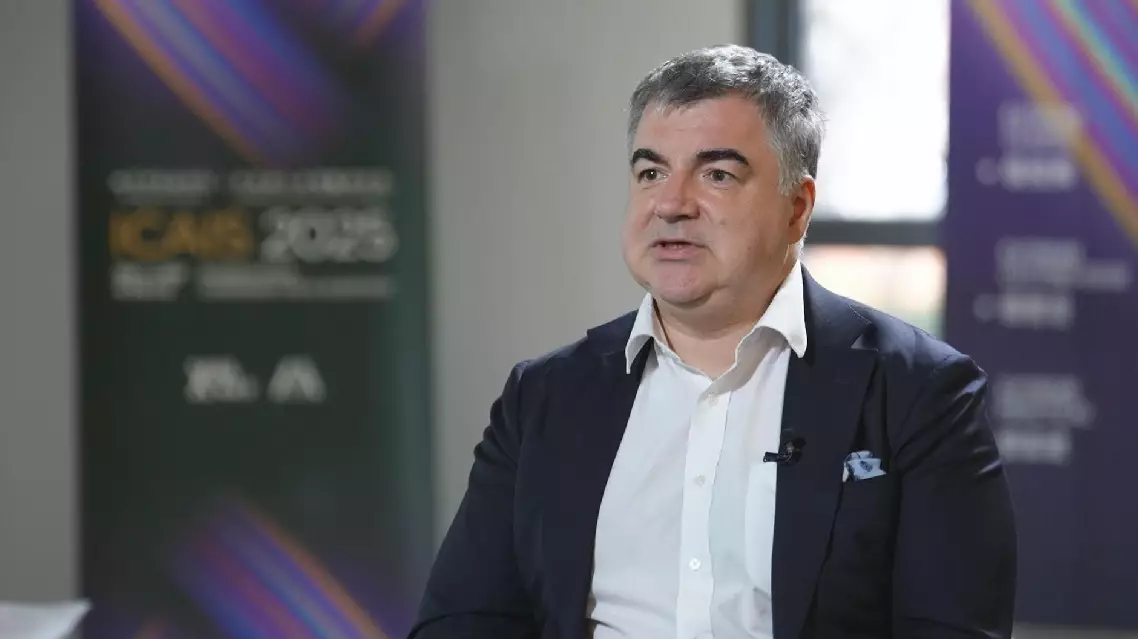
Physics Nobel Laureate Konstantin Novoselov has expressed hope that international scientific collaborations will grow deeper and overcome disruptions brought on by geopolitical tensions.
In an exclusive interview with China Media Group (CMG) that aired Friday, Novoselov addressed the mounting complexities of the current global landscape, noting how these external pressures are creating major obstacles for researchers worldwide.
"We do see very unpleasant cases where the collaboration stalled because of geopolitics. And that really makes me very sad. I've been collaborating with many scientists across many countries and many continents. So I would really love to [see that continue]. And the progress of our science is always relying on this collaboration. I really hope that it can continue in the future," he said.
Novoselov discovered graphene in 2004 together with fellow University of Manchester physicist Andre Geim, using a simple mechanical exfoliation method. Their groundbreaking work earned them the 2010 Nobel Prize in Physics, with Novoselov becoming one of the youngest Nobel laureates in history at the age of 36.
Since the discovery, Novoselov has remained active in international efforts to advance graphene technology, which has found applications in numerous fields from electronics to aerospace.
Nobel laureate calls for open global scientific exchange amid geopolitical tensions
Cooperation and exchanges between China and Indonesia have yielded tangible results since the 21st Century Maritime Silk Road initiative was proposed 13 years ago, benefiting sectors from infrastructure to cultural exchange.
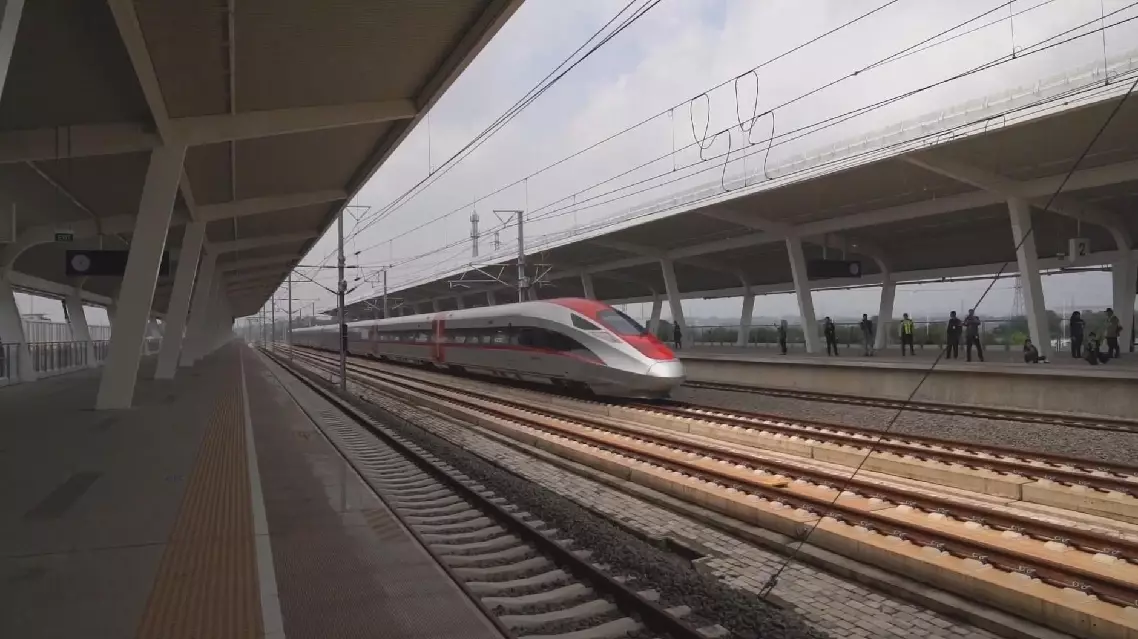
One of the major achievements is the construction of the Jakarta-Bandung High-Speed Railway, which links the Indonesian capital Jakarta with the city of Bandung in West Java Province. It has slashed the trip time from about four hours to just over 40 minutes.
As Indonesia's first high-speed rail line and the first in Southeast Asia, the railway has handled over 18 million passenger trips since it officially began commercial operations on Oct 17, 2023.
Along the railway, an industrial park is home to Wuling Motors Indonesia, a subsidiary of the major Chinese automobile manufacturer SAIC-GM-Wuling.
In the factory, more and more Indonesians are participating in different stages of vehicle production and assembly.
"When we first entered the Indonesian market, we mainly exported finished products. But now, what we export is technology, quality systems, and a full supply chain," said Yan Sui, head of the factory.
Young Indonesians working in various Chinese factories learn to operate advanced equipment, gain experience with new production methods and discover new career opportunities.
"At Wuling, I learned a great deal about automation, covering areas like conveyors, robotics, pneumatics and various mechanical and electrical systems. Technically speaking, I gained a lot of knowledge in Chinese factories," said Bintang, an Indonesian worker at the factory.
As bilateral cooperation among industries becomes more interconnected, so does the financial sector. Today, Indonesians traveling in China can use their own apps to make payments by simply scanning a QR code.
The two countries are also expanding cooperation in science and technology.
At Indonesia's Luban Workshop, a Chinese vocational training program, local youths acquire China's theoretical knowledge and experience, as well as practical skills they can apply in their jobs.
"Having able to have the device itself. PLC (programmable logic controller) and then able to learn how to design things in CAD (computer-aided design)," said Angga, an Indonesian university student.
The cooperation between the two countries also extends beyond the economy and technology sectors, into people-to-people cultural exchanges.
In August, the Chinese box-office hit "Dear You" was released nationwide in Indonesia, touching audiences with its historic diaspora experience and exploration of universal themes of displacement, nostalgia, and memories passed down through generations.
"This film is well worth watching for us, because it reflects the history of my parents' generation, a time from the past, and I feel very excited about it," said Chen Meizhuan, an Indonesian of Chinese descent.
China-Indonesia cooperation yields fruitful results across board