Skip to Content Facebook Feature Image

An immigrant deported by the US and held in an African prison for more than a year has been released

News

An immigrant deported by the US and held in an African prison for more than a year has been released
News

News

An immigrant deported by the US and held in an African prison for more than a year has been released

2026-10-05 03:41 Last Updated At:03:51

CAPE TOWN, South Africa (AP) — A Laotian citizen deported by the United States to Eswatini under the Trump administration's immigration crackdown was released from a maximum-security prison in the African nation on Sunday after being held there for more than a year, his lawyer said.

Phone Chomsavanh was among five immigrants deported to Eswatini — where he has no ties — in July 2025 in the early days of the Trump administration's secretive and highly contentious third-country deportation program.

Chomsavanh's U.S.-based lawyer, Tin Thanh Nguyen, said in a statement announcing his release that he had only been informed that he was being deported to Eswatini shortly before a military cargo plane carrying him and other deportees landed there more than 14 months ago.

Chomsavanh was now being deported to Laos, Nguyen said.

Chomsavanh and the four other immigrants he was deported to Eswatini with were convicted of serious crimes in the U.S., but had served their sentences by the time they were sent to the Matsapha Correctional Complex near Eswatini's administrative capital, Mbabane.

“He had already served his time. Instead they put him on a plane without telling him where it was headed and left him in a prison in a country he had never heard of, where nobody ever accused him of anything," Nguyen said. “He sat there for more than a year. No notice, no hearing, no chance to object. That is not due process by any definition.”

He said in separate messages to The Associated Press that Chomsavanh had left Eswatini and landed in Johannesburg en route to Laos.

An Eswatini government spokesperson didn’t immediately acknowledge Chomsavanh’s release.

Chomsavanh was born in a refugee camp in Thailand after his parents fled Laos, and his family moved to the United States when he was 7, his lawyer said.

Chomsavanh is one of around 500 immigrants who have been deported from the United States to African countries that aren't their home nations since the third-country program began last year, according to advocacy groups Human Rights First and Refugees International, which have been monitoring the deportations.

Around a dozen African countries have accepted third-country deportees from the U.S., some in exchange for millions of dollars in payments. Eswatini, which is Africa's last absolute monarchy and is ruled by a king, was paid $5.1 million by the Trump administration to take deportees, according to the agreement between the countries. Eswatini has received around 30 deportees so far.

The program, which results in immigrants being held in countries they have no ties to and where they haven't been charged with any crime, has been fiercely criticized by rights groups and lawyers. It has been the subject of legal challenges in the U.S. and in some of the countries where immigrants have been sent.

The Trump administration has defended the policy as a way to quickly remove immigrants who have final deportation orders from the U.S. when their home countries might not immediately take them back.

Last month, a U.S. appeals court upheld a judge's ruling to halt the program, because it didn’t give immigrants facing removal from the U.S. time to challenge their deportation to a third country if they fear persecution or torture there.

The U.S. Supreme Court ruled last week to temporarily allow U.S. President Donald Trump's administration to continue swiftly removing immigrants to third countries, though it will hear arguments in the case in December.

The program has largely been carried out in secrecy, with little transparency over how many immigrants have been deported to third countries, and where and in what conditions they are being held.

AP Africa news: https://apnews.com/hub/africa
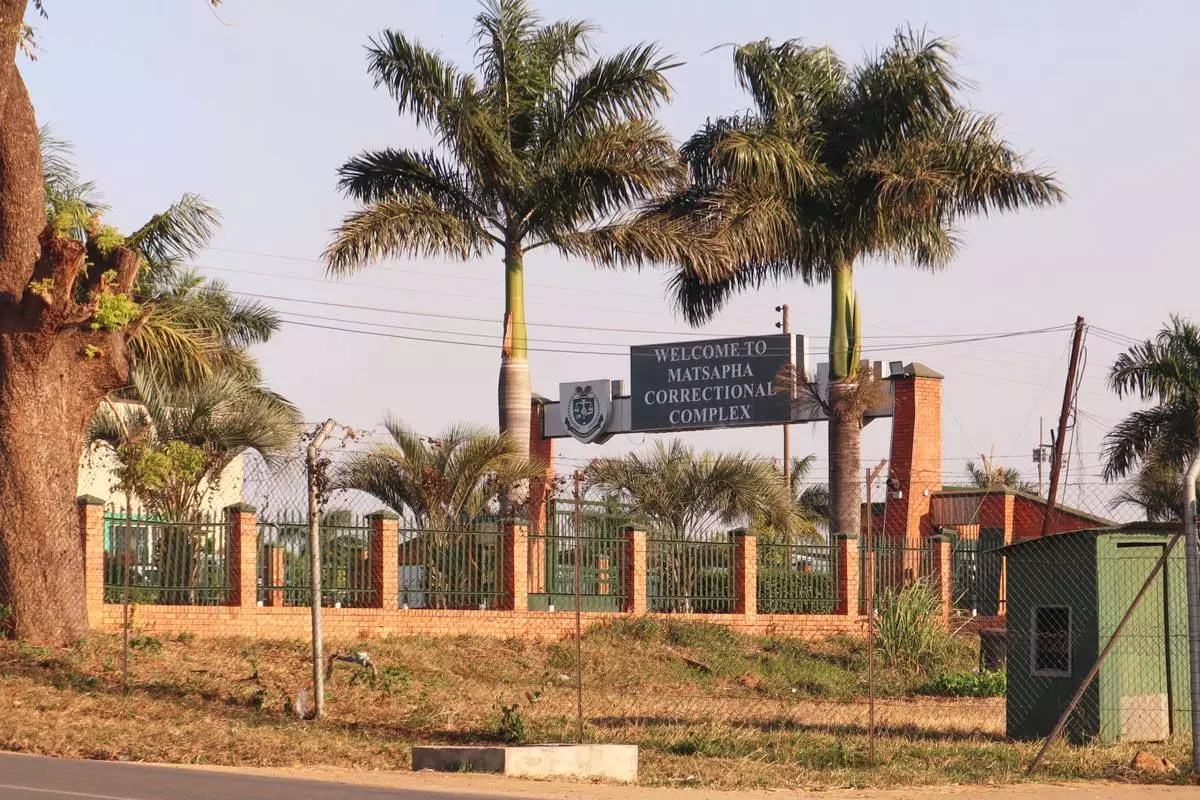
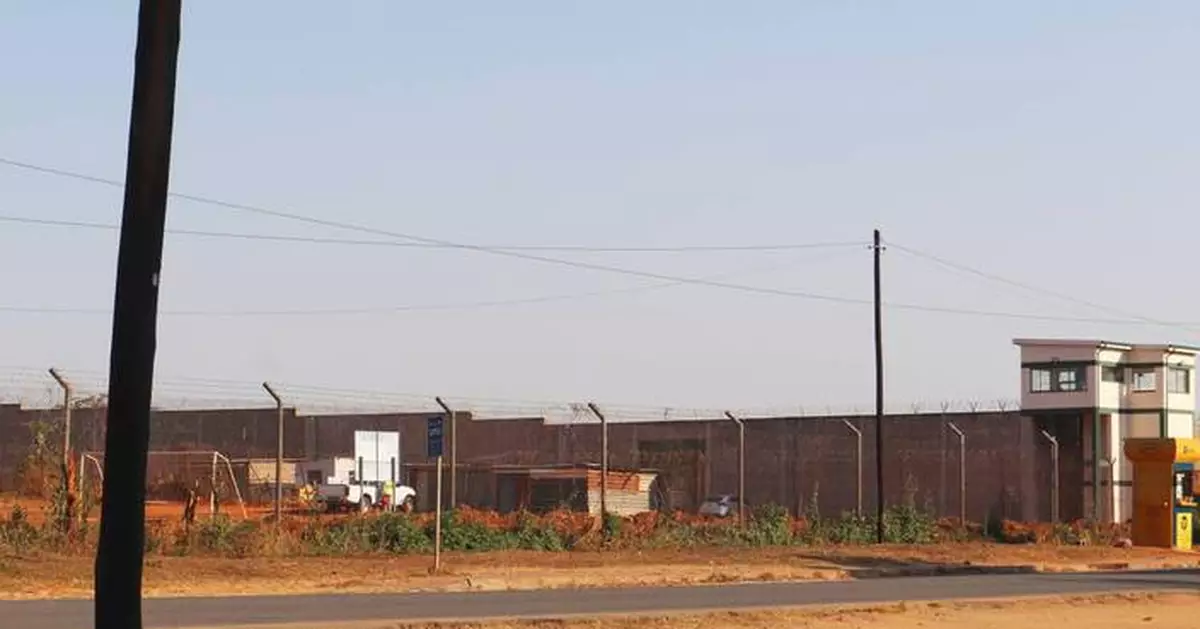
FILE - The Matsapha Correctional Complex in Matsapha, near Mbabane, Eswatini, July 17, 2025. (AP Photo, File)
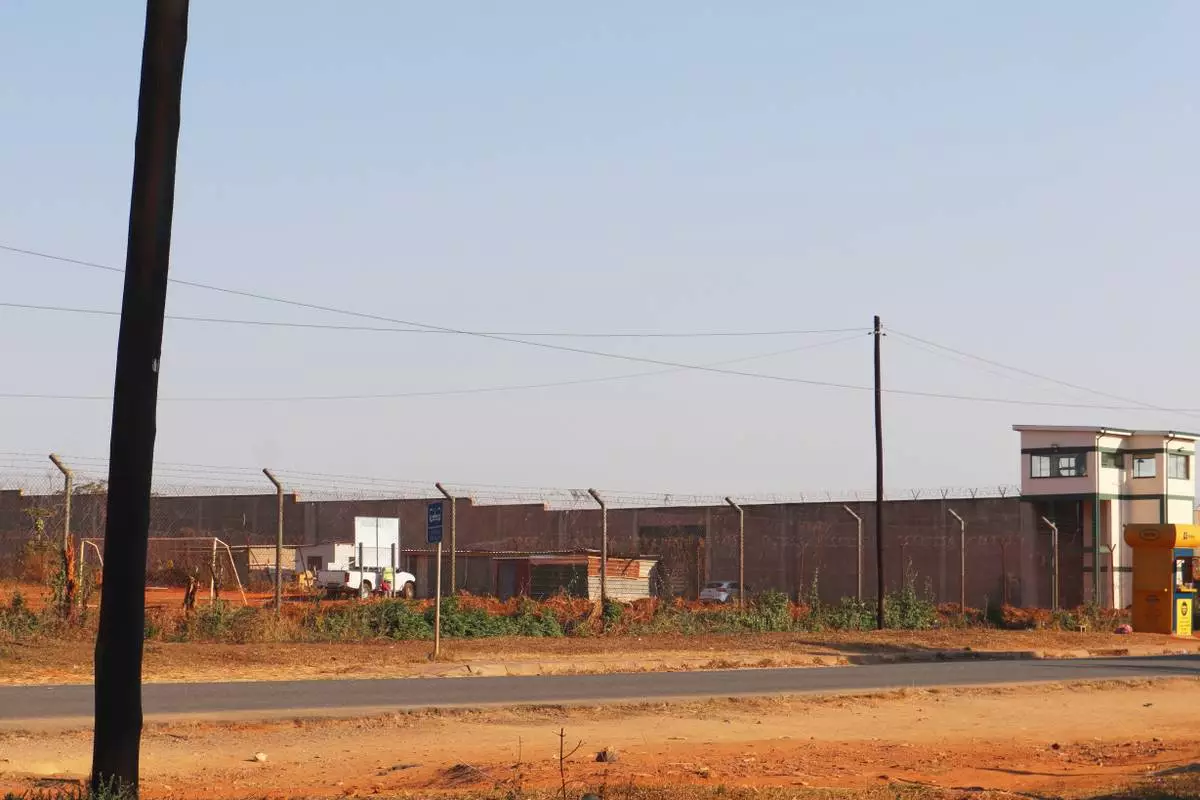
FILE - The Matsapha Correctional Complex in Matsapha, near Mbabane, Eswatini, July 17, 2025. (AP Photo, File)

FILE - Matsapha Correctional Complex is seen in Matsapha, near Mbabane, Eswatini, July 17, 2025. (AP Photo, File)

FILE - Matsapha Correctional Complex is seen in Matsapha, near Mbabane, Eswatini, July 17, 2025. (AP Photo, File)
TOKYO (AP) — Japanese police arrested a U.S. Marine in the alleged robbery and killing of a woman on Okinawa, officials said Sunday, the latest criminal case on the southern island where the heavy American troop presence has remained a sensitive issue.

The Okinawa prefectural police said they arrested a 20-year-old Marine stationed at the Futenma Air Station on suspicion of killing a 39-year-old local woman at a hotel in Naha, Okinawa's capital city, and taking her wallet and backpack in the early hours of Saturday.

Kyodo News agency, citing the police, reported the woman's body was found in her hotel room and she appeared to have been strangled to death.

Police said security camera footage showed the man believed to be the suspect entering the hotel with the victim and coming out alone. An officer arrested the suspect after spotting him walking alone on a street in Naha’s entertainment district late Saturday, Kyodo said.

“The case deals a major shock and adds fear to the Okinawans who have already been forced to live next to U.S. bases,” newly elected Okinawa Gov. Genta Koja told reporters. “It is absolutely unforgivable and we are outraged.”

“I must say, discipline and troop education are not working at all,” said Koja, referring to the U.S. military’s measures taken in response to past criminal cases.

Some 50,000 U.S. troops are deployed in Japan under a bilateral security pact, about half of them on Okinawa, whose strategic role is seen as increasingly important for the Japan-U.S. military alliance amid growing tensions with China. Japan's southwestern shift in its military focus centers heavily on Okinawa and its nearby islands.

Okinawans have long complained about noise, pollution and crime related to U.S. bases, with crimes involving U.S. service members on Okinawa complicating ties between Japan’s central government and the Okinawa administration. The latest case comes as Prime Minister Sanae Takaichi’s cabinet pushes to further fortify its Japanese military presence on Okinawa and work more closely with the U.S. military.

“The occurrence of the heinous crime is extremely regrettable,” Takaichi said in her message on X. She said her government has strongly protested to the U.S. side and demanded maximum cooperation with the Japanese authorities in the investigation, as well as tougher discipline for U.S. service members and preventive measures.

Foreign Minister Toshimitsu Motegi summoned U.S. Ambassador to Japan George Glass to his office and conveyed “outrage," the ministry said in a statement.

Glass, on X, expressed condolences to the victim's family, adding that the United States is cooperating with the Japanese national and local governments.

The U.S. Marine Corps said in a statement the suspect is assigned to the III Marine Expeditionary Force on Okinawa and that it is fully cooperating with Japanese authorities. “The Marine Corps takes these allegations very seriously and expects every Marine to adhere to the highest standards of behavior."

Futenma base, located in a densely populated area in central Okinawa, has been a sore spot for many Okinawans for decades, who demanded its relocation. Despite protests, the central government greenlit construction to relocate the base to Henoko on Okinawa’s eastern coast, though the project has faced massive delays.

A high-profile 1995 rape of a 12-year-old girl by three U.S. service members sparked massive protests against the heavy U.S. troop presence on Okinawa. The number of arrests related to U.S. service members and their families exceeded 100 last year, according to prefectural police. Repeated occurrence of sexual crimes and some of their delayed disclosures have also sparked outrage on Okinawa in recent years.

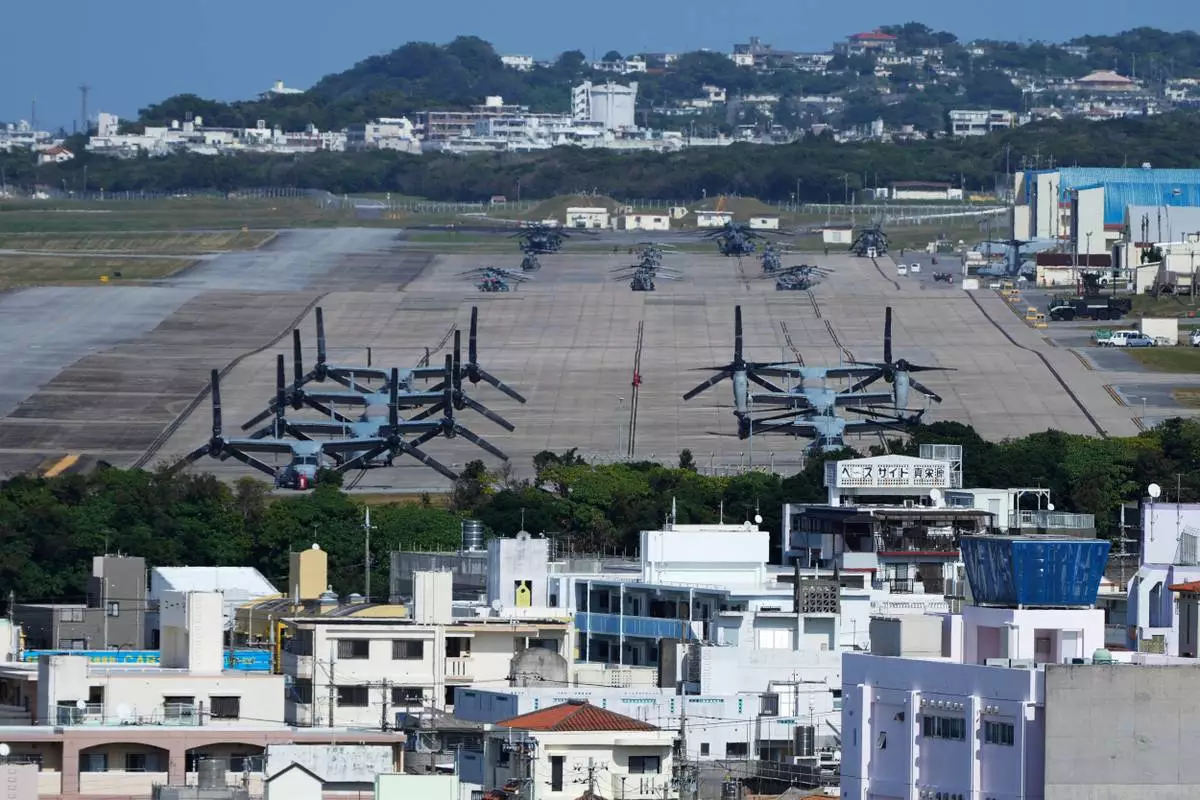
FILE - U.S. MV-22 Osprey transport aircraft are parked at the U.S. Marine Corps Air Station Futenma in Ginowan, on the main island of the Okinawa archipelago, southern Japan, Tuesday, Feb. 18, 2025. (AP Photo/Hiro Komae, File)

FILE - U.S. MV-22 Osprey transport aircraft are parked at the U.S. Marine Corps Air Station Futenma in Ginowan, on the main island of the Okinawa archipelago, southern Japan, Tuesday, Feb. 18, 2025. (AP Photo/Hiro Komae, File)

Recommended Articles