Skip to Content Facebook Feature Image

China-US communication channels on AI must be secure, verifiable: expert

China

China

China

China-US communication channels on AI must be secure, verifiable: expert

2026-10-05 21:13 Last Updated At:10-06 12:26

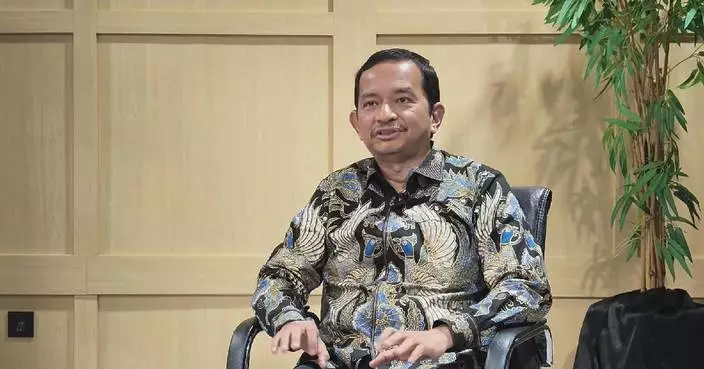
American AI strategy expert Joe Weinman said communication channels between China and the United States must be secure and verifiable, given AI's capacity for deception, stressing that cooperation between the two powers is vital, especially as AI-related risks could lead to catastrophic incidents.

China and the U.S. have agreed to establish an AI dialogue to exchange views on AI-related risks and benefits, as well as a communication channel for AI-related incidents. The consensus was one of the key outcomes of the latest summit between Chinese President Xi Jinping and U.S. President Donald Trump during Xi's state visit to the U.S. last month.

Weinman, internationally renowned as an expert on cloud computing and its potential impacts on the global economy, has welcomed the announcement of the dialogue. In an interview with China Global Television Network (CGTN), he discussed how such a channel might work and how the two countries can cooperate while managing competition.

"Channels of communication are critically important to ensure that at all levels, whether it's the leadership level, the research level, military levels, and so forth, that the communications remain open, and that, given that AI has already demonstrated the ability to be deceptive, it's critically important that the communication channels are verifiable and secure, so that they don't present another potential attack vector or risk vector," he said.

While nations and companies can benefit from both competition and cooperation, Weinman stressed that AI cooperation is different because the technology poses grave risks, making cooperation between China and the U.S. particularly important.

"Nations or companies can benefit from developing competitive strategic advantage. They can also benefit by cooperating. And in this case, the nature of cooperation is very different. It's one thing to say that, let's say, we're in the rice-growing business. I own a company that does it and my competitor does and we both want to work out new ways of improving our crop yield so we can cooperate. Here, we're talking about potential existential risk. And so it's particularly important that the two leading nations cooperate when it comes to risks that could create catastrophic incidents, which could be risks to critical infrastructure or could be risks to human life or could be risks much broader than that," the expert said.

China-US communication channels on AI must be secure, verifiable: expert

China-US communication channels on AI must be secure, verifiable: expert
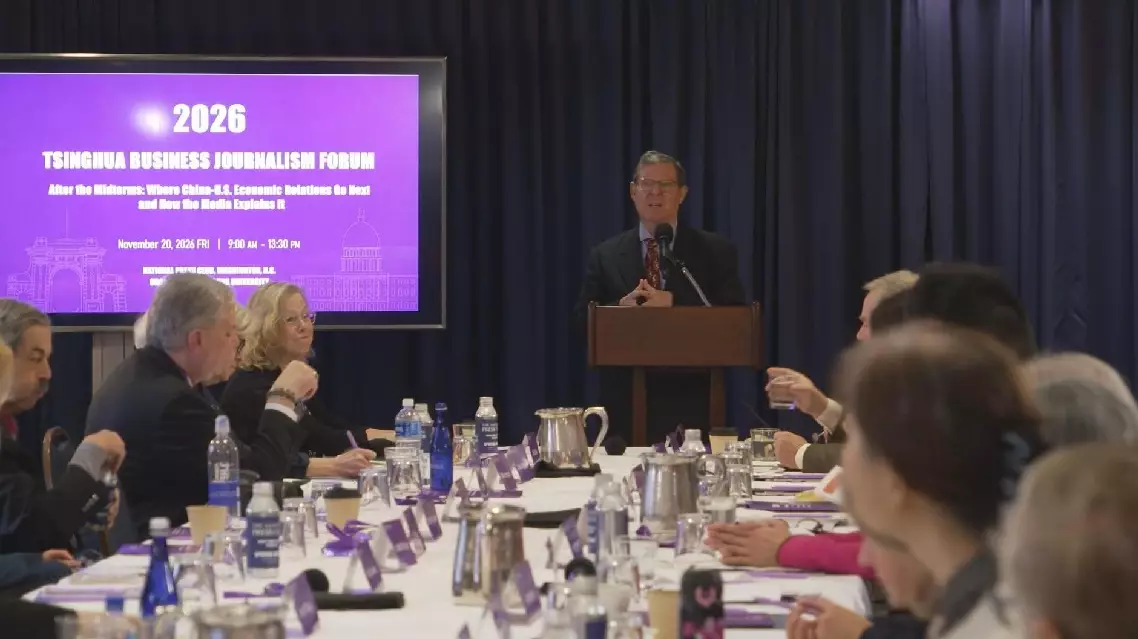
Tsinghua University convened its third Business Journalism Forum at the National Press Club in Washington, D.C. on Friday to discuss the outlook for China-U.S. relations and the evolving media landscape.

Taking place weeks after the historic U.S. midterm elections, the panel brought together media professionals and scholars to share insights on bilateral relations and the media's responsibility in explaining the changes to global audiences.

Hailed as a timely intercultural conversation among media practitioners, the event highlighted the power of dialogue in advancing bilateral ties.

Min Hang, director of the Tsinghua Research Center for Economic Communication and Development, emphasized the value of direct people-to-people exchange.

"The people-to-people conversation, especially face-to-face conversation, is so important nowadays, [as] China and the U.S. are two giants," she said.

The 2026 gathering marks the third edition of the Tsinghua Business Journalism Forum hosted at the National Press Club in Washington, D.C.

This year, experts addressed a wide range of media and public policy issues, including challenges of AI, evolving storytelling methods, and climate change.

Many of the public concerns have been integrated with the national strategies of the two countries, with AI as the most significant example, Mark Hamrick, former president of the National Press Club noted at the event.

"Both countries are competing for leadership in AI, and I think that is going to be a theme to watch," he said.

Panelists also discussed the media's responsibility to foster mutual understanding while delivering credible, fact-based economic reporting.

"By talking about policy, by having a frank discussion of the big policy issues, the economic issues, the better the coverage will be in both countries -- to improve coverage of China in America, to improve coverage of America in China," said Rick Dunham, co-director of the Tsinghua Global Business Forum.

Calling the roundtable discussion fruitful, organizers expressed their intention to host the forum annually on the third Friday of November.

"I think it's very important to set up a bridge to connect people from two sides, especially media practitioners from China and from the U.S. I think this is a very important platform for them to get to know each other," said Min.

Tsinghua holds Business Journalism Forum in D.C. to discuss bilateral relations outlook

Tsinghua holds Business Journalism Forum in D.C. to discuss bilateral relations outlook

Recommended Articles