The trilateral summit among Chinese President Xi Jinping, Russian President Vladimir Putin and U.S. President Donald Trump has provided practical pathways for cooperation in maintaining global strategic stability, said international observers.
The summit was held Thursday in Shenzhen, south China's Guangdong Province, where the 33rd Asia-Pacific Economic Cooperation (APEC) Economic Leaders' Meeting took place from Wednesday to Thursday. President Xi chaired the summit. He made four points on how major countries could find the right way to get along and jointly underpin world peace, calling for mutual respect, peaceful coexistence, win-win cooperation, and dialogue and consultation.
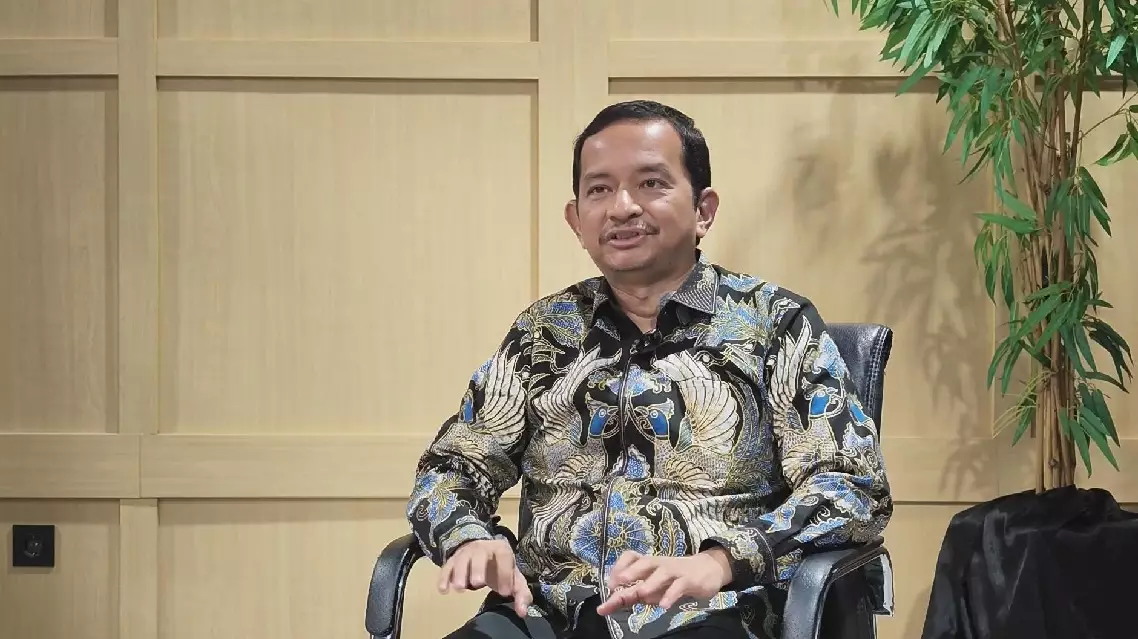
"Bringing together all the three major powers in this world -- President Xi, President Putin and President Trump -- is a very important thing because we can send the positive signal to the world. Any single kind of effort, whatever it is, the actions you have to reduce the tensions. I think, they are very important things, and they must get support from all of the countries in this world," said Dr. Rino F. Boer, associate professor and director of the postgraduate program at the LSPR Institute of Communication and Business in Jakarta, Indonesia.
"As President Xi Jinping said, peace among major countries brings stability to the world, while their contention would only lead to chaos in the world. It reveals the close relationship between major power relations and world peace. The four points proposed by Xi -- mutual respect, peaceful coexistence, win-win cooperation, and dialogue and consultation -- not only provide important visions for China, Russia and the United States to find the right way to get along, but also chart pathways with practical significance for cooperation in maintaining global strategic stability," said Wirun Phichaiwongphakdee, director of the Asia-Pacific Think Tank of Thailand.
Following the trilateral meeting, a four-point declaration was released, covering commitments to UN reform, stable energy flows, respecting the principle of state consent, and reaffirming that a nuclear war cannot be won and must never be fought.
"China, Russia and the United States have reached consensus on the responsibilities of major countries, including those for the future of the world. There's no winner in a nuclear war, which must not be waged. The three leaders also reached some consensus, holding that it is necessary to carry out cooperation in certain fields. I expect this summit to become the foundation for subsequent actions," said Kirill Barsky, head of the Department of Diplomacy at the Moscow State Institute of International Relations.
Other observers said the high profile of the meeting will help set a model for international relations.
"In the face of various uncertainties in the international situation, China has demonstrated a strong ability to promote the establishment of mechanisms for settling conflict peacefully, and has also encouraged the Global South countries to play an increasingly important role in multilateral cooperation. I believe that the trilateral summit in Shenzhen will bring new cooperation opportunities for the international landscape. People in many countries around the world hope that this meeting will serve as an opportunity for all countries to view diplomatic relations from a new perspective when facing major differences, and put this vision into practice," said Anibal Carlos Zottele, director of the Research Center for a Community with Shared Future in Mexico.
"I believe that the four propositions are actually interlinked because they each support one another, they are complementary to one another. Each one of them assists the other to move forward, but the ultimate objective of what President Xi is talking about here is World Peace and creating the absolute perfect environment for the maintenance of the global peace. President Xi is emphasizing the need for continuous dialogue. He's emphasizing the need for mutual respect. He's talking about, when world powers enter into dialogue on a plate, on a slate where they all respect each other, and there is that mutual regard, that we are all equal participants in dialogue. That for me is a wonderful recipe that President Xi has come up for international relations in the modern era," said Abbey Makoe, founder and editor-in-chief of South Africa's Global South Media Network.
China-Russia-US summit provides cooperation pathways for global stability: int'l observers