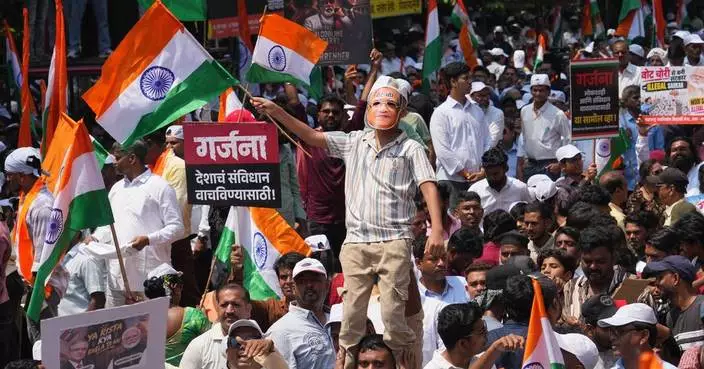
NEW DELHI (AP) — Opposition parties held protests in India’s capital New Delhi on Tuesday, demanding the resignation of the country’s election chief over a contentious revision of voter lists as hundreds of police personnel were deployed across the heart of the city.
Tuesday’s demonstration is the latest in a series of near-daily protests beginning last week by student groups, opposition parties and India's “Cockroach” youth movement.
Click to Gallery
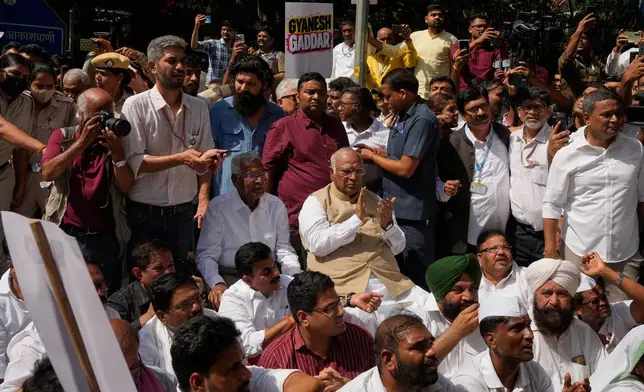
Congress party President Mallikarjun Kharge, center, claps while seated during a protest organized by opposition parties in New Delhi, India, Tuesday, Oct. 6, 2026. (AP Photo/Manish Swarup)
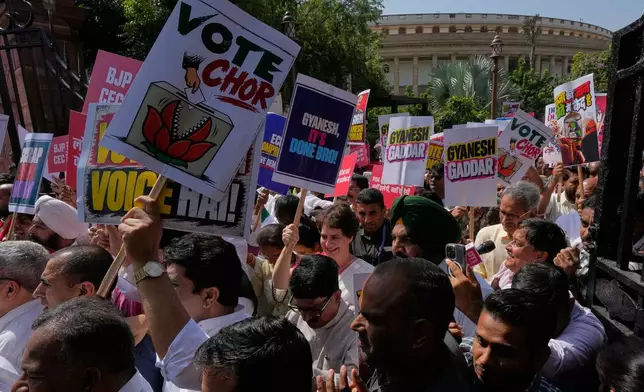
Congress party leader Priyanka Gandhi Vadra, center, and others hold placards as they march during a protest organized by opposition parties in New Delhi, India, Tuesday, Oct. 6, 2026. (AP Photo/Manish Swarup)
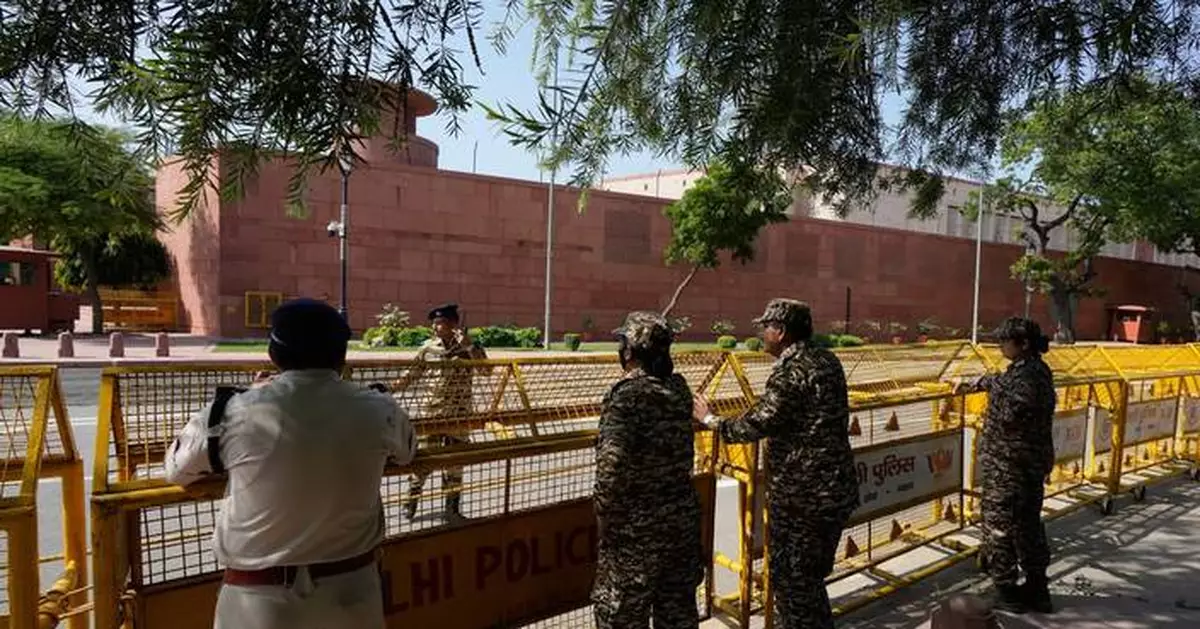
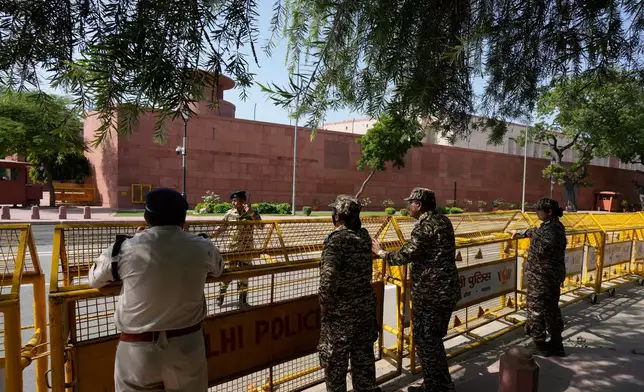
Police officers stand guard around Parliament ahead of a protest organized by opposition parties in New Delhi, India, Tuesday, Oct. 6, 2026. (AP Photo/Manish Swarup)
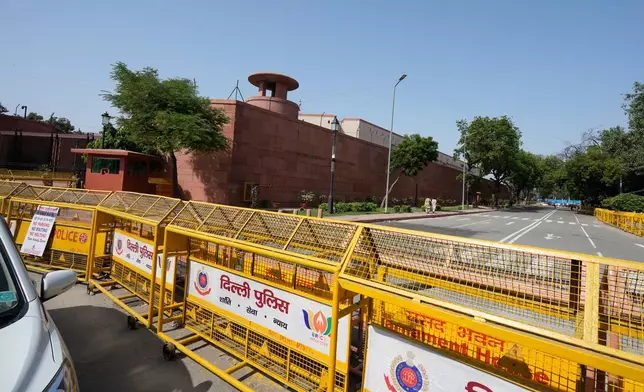
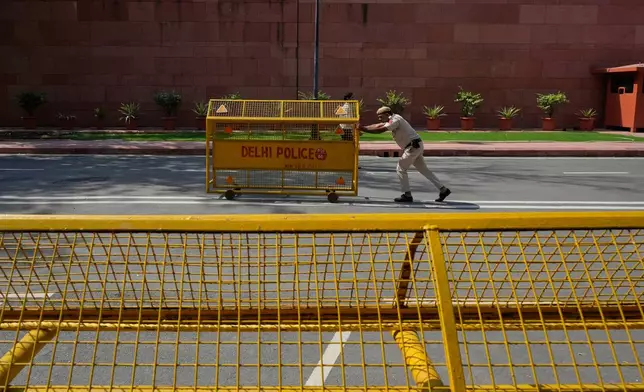
A police officer sets up a barricade around Parliament ahead of a protest organized by opposition parties in New Delhi, India, Tuesday, Oct. 6, 2026. (AP Photo/Manish Swarup)
Police officers stand guard around Parliament ahead of a protest organized by opposition parties in New Delhi, India, Tuesday, Oct. 6, 2026. (AP Photo/Manish Swarup)
The protesters have demanded the resignation of Chief Election Commissioner Gyanesh Kumar, accusing the polling body he oversees of manipulating voter registrations to benefit Prime Minister Narendra Modi’s ruling Bharatiya Janata Party.
The commission and government deny any wrongdoing. Modi’s party on Tuesday defended the Election Commission, calling the opposition’s allegations “completely misleading.”
Opposition lawmakers shouted slogans against Modi and called for Kumar’s resignation as they marched toward the Election Commission headquarters in central Delhi. Authorities blocked the march with barricades, closed roads and issued travel advisories around the area. Several protesters were detained.
The opposition has increasingly adopted Gen Z-style language to appeal to younger voters after the “Cockroach” movement drew large numbers of young people to its protests. The outreach has become a key part of broadening support and challenging Modi.
“Gyanesh, it’s done, bro. Time to resign,” opposition leader Rahul Gandhi of the Congress party wrote on X ahead of the march.
India began its Special Intensive Revision of voter lists in Bihar last year ahead of state elections. The exercise has since expanded to most states and federally administered territories.
Critics say the process requires documents that are confusing and difficult to obtain, risking the exclusion of millions of eligible voters. Election Commission data shows voter rolls could shrink by as much as 30% in some regions.
The commission says the revision is aimed to remove duplicate and ineligible entries while ensuring eligible voters remain registered. Opposition parties and activists say it could disenfranchise legitimate voters.
The campaign against the Election Commission has been led in part by the “Cockroach” movement, which began as an online campaign and calls itself the Cockroach Janata Party. Previous street protests organized by the movement led to the education minister’s resignation in July.
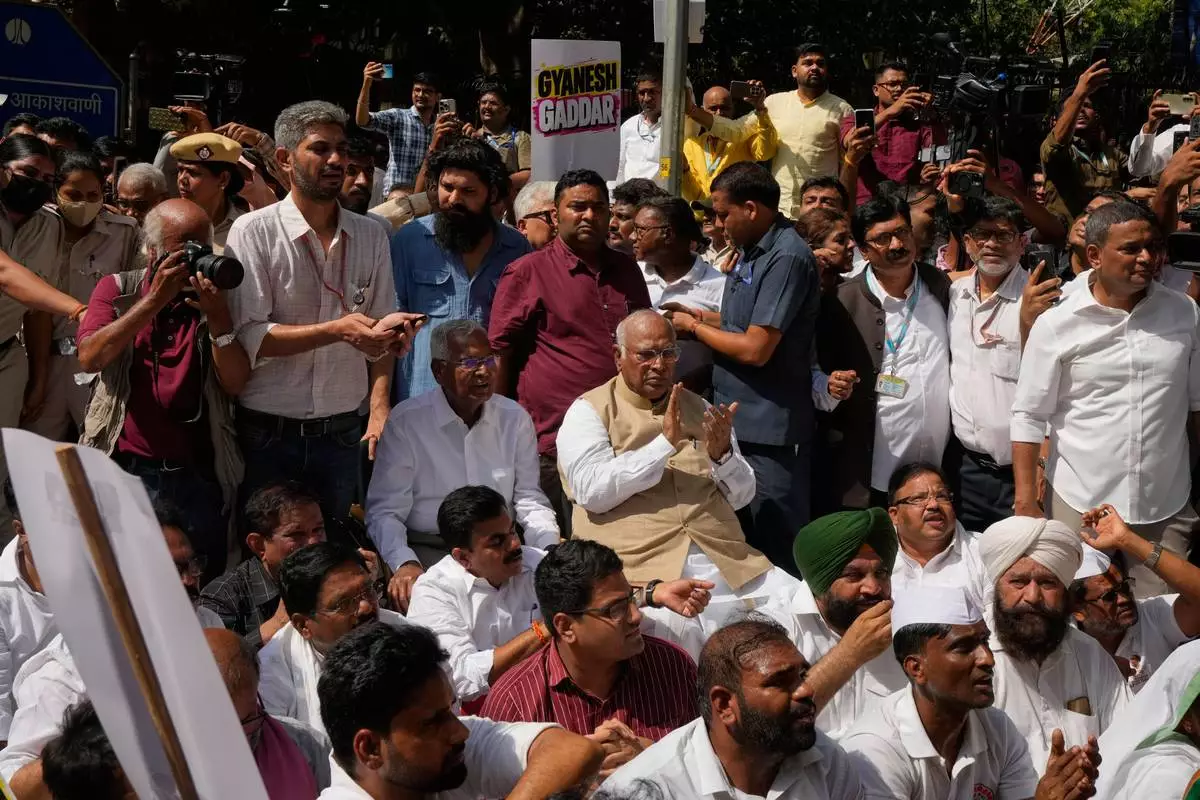
Congress party President Mallikarjun Kharge, center, claps while seated during a protest organized by opposition parties in New Delhi, India, Tuesday, Oct. 6, 2026. (AP Photo/Manish Swarup)
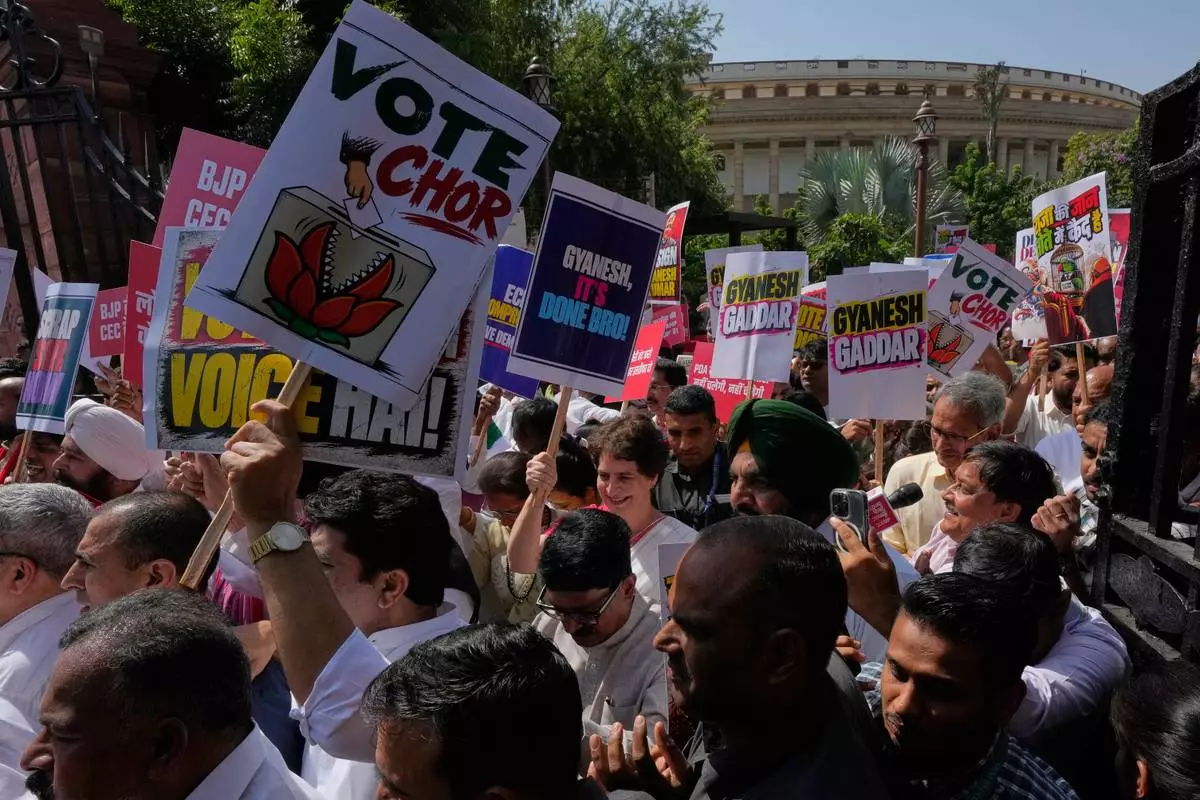
Congress party leader Priyanka Gandhi Vadra, center, and others hold placards as they march during a protest organized by opposition parties in New Delhi, India, Tuesday, Oct. 6, 2026. (AP Photo/Manish Swarup)
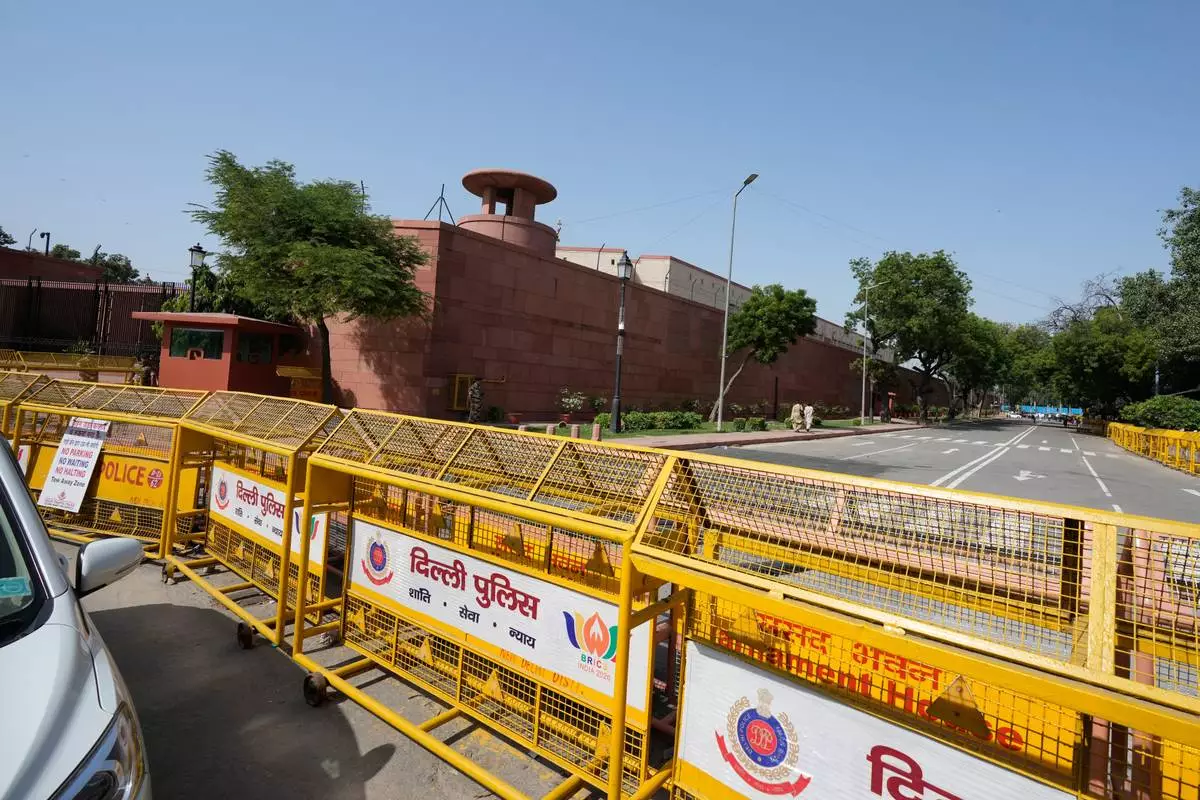
Police officers stand guard around Parliament ahead of a protest organized by opposition parties in New Delhi, India, Tuesday, Oct. 6, 2026. (AP Photo/Manish Swarup)
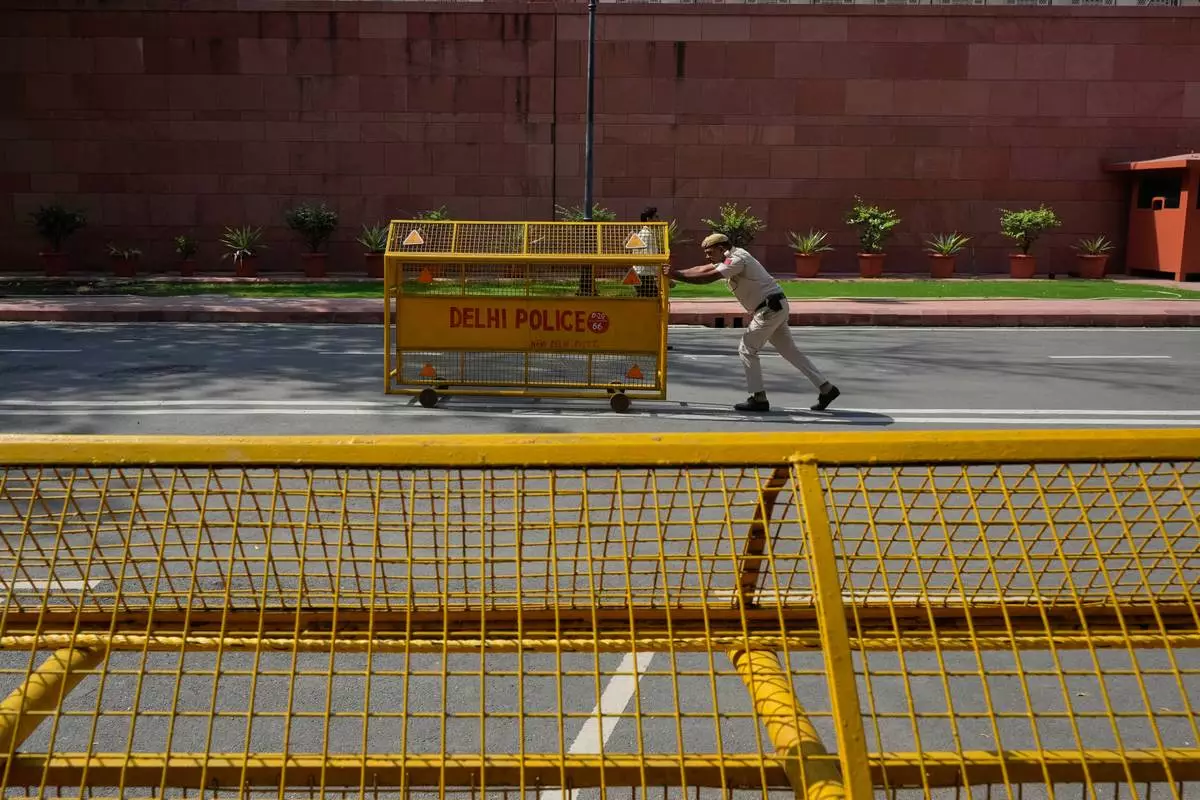
A police officer sets up a barricade around Parliament ahead of a protest organized by opposition parties in New Delhi, India, Tuesday, Oct. 6, 2026. (AP Photo/Manish Swarup)
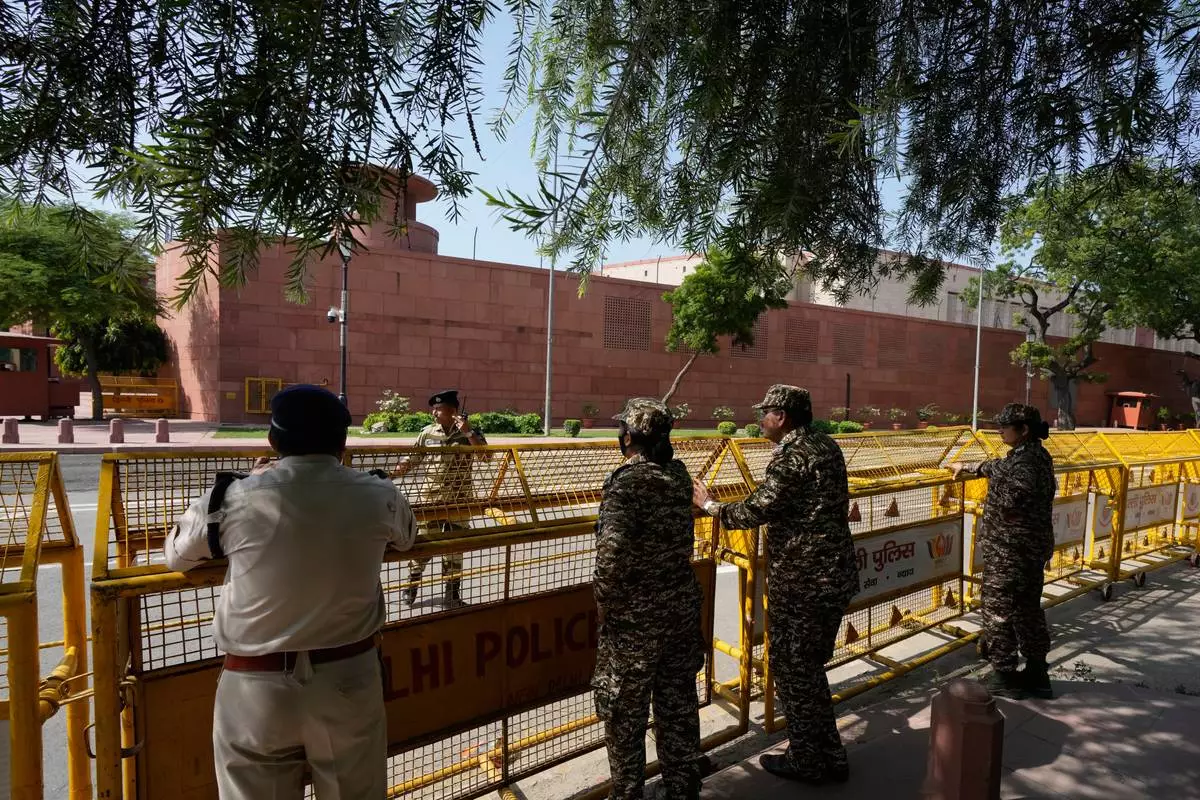
Police officers stand guard around Parliament ahead of a protest organized by opposition parties in New Delhi, India, Tuesday, Oct. 6, 2026. (AP Photo/Manish Swarup)
BERLIN (AP) — Ever since the far-right, anti-immigrant Alternative for Germany party won a regional election last month, not a day goes by without Ola Akhras and her husband discussing whether they should go back to Syria.
The couple live with their two young daughters in Magdeburg, where Saxony-Anhalt's newly elected state legislature is meeting Tuesday for the first time since the Alternative for Germany, or AfD, surged to its best result yet — putting it in a strong position to form Germany's first far-right regional government since World War II.
During its first sitting, the 83-seat legislature will elect its speaker — a job that traditionally goes to the largest party — and the AfD hopes for an initial symbolic victory. The state's next governor is unlikely to be chosen before December.
“It’s bad — we’ve built our lives here, we really loved being here, but now we don’t feel welcome anymore,” said Akhras, who fled Homs for Germany in 2018. She speaks fluent German and works as a doctor at the local hospital, where she is completing her specialist training in internal medicine.
Akhras, who wears a hijab, says she feels appreciated at work, but has lately encountered hostility while shopping and no longer feels safe leaving home in the evening. Her sense of not belonging has become overwhelming since the election.
“Our children will never be recognized as Germans here,” she said.
The mood in society is very different from a decade ago, when Germans welcomed more than a million migrants from war-torn countries such as Syria, Iraq and Afghanistan under Chancellor Angela Merkel. Many built new lives, learned the language and found work.
However, as Germany’s economic problems — slow growth, high inflation, rising energy prices — have worsened, public sentiment toward the newcomers has deteriorated. The AfD and other critics of immigration have blamed migrants for the country's problems.
The 13-year-old party has gained support particularly rapidly in Germany’s formerly communist and economically weaker eastern states, including Saxony-Anhalt. However, it also continues to gain on the national level. It is the strongest opposition party in parliament and leads recent polls.
The AfD's victory in Saxony-Anhalt last month underlined the party's skill in capitalizing on discontent with issues well beyond its core theme of curbing immigration as Chancellor Friedrich Merz's unpopular national government struggles to turn around Germany's stubbornly sluggish economy.
The party's strong showing has unsettled migrants and those Germans who thought the nation was immune to nationalism after the horrors of the Nazi past.
It remains uncertain that AfD will form the next government in Saxony-Anhalt — it fell three seats short of a majority in the Sept. 6 election. But many immigrants and refugees fear that if the far-right party succeeds in heading the state government it could try to implement its campaign promises, which include more and faster deportations as well as restrictions on the admission of asylum seekers.
There are no figures yet showing whether racist incidents have increased since the election, but “counseling centers are extremely busy, the phones are ringing off the hook, counseling appointments are fully booked, and people are in great need of counseling and support,” said Undra Dressler, the executive director of the Saxony-Anhalt State Network of Migrant Organizations.
“We know of people who have left, people who are considering it, and people who have made a conscious decision against it and say: ‘I’m staying. I won’t accept these conditions. Now more than ever, I’m going to get involved,’” Dressler said.
One of those determined to stay is Mohamad Aldabagh, a pharmacist from Homs who fled to Germany in 2015 at the height of Syria's civil war. That year, hundreds of thousands crossed the Mediterranean on flimsy rubber boats in hopes of finding a safer future in Europe.
“It’s been a very good experience living in Germany over the past 10 years,” said Aldabagh, a 34-year-old father of two young children who works at a pharmacy in Magdeburg. “I’ve rebuilt my life here, and I won’t let anyone take that away from me.”
While he says he has experienced racism as well, he believes that skilled workers like himself or the many foreign doctors working in Germany are needed and that society can't afford to treat them badly.
While the AfD program for Saxony-Anhalt does not reject labor migration altogether, it takes a highly selective approach to recruiting foreign workers.
The party explicitly proposes refraining from recruiting workers it describes as “culturally foreign” and ending a state program designed to support the integration of foreign skilled workers, says Rahim Hajji, a professor of social and health services at Magdeburg-Stendal University of Applied Sciences.
“This raises a fundamental question,” Hajji said. “How is a state with an ageing population and growing labor shortages supposed to meet its demand for skilled workers if it substantially restricts the pool of international workers it is willing to recruit?”
As of this August, more than one in four doctors, or 27.1%, in Saxony-Anhalt’s hospitals did not have German citizenship, according to a survey by Mediendienst Integration group, which researches migration in Germany.
“We want to contribute to the well-being of society here,” said Aldabagh. “We are needed. We are not the black sheep in this country.”
He then paused and added: “But if we don’t get respect anymore, then we’ll move to another state where AfD isn’t as strong.”
AP writer Geir Moulson contributed reporting from Berlin.
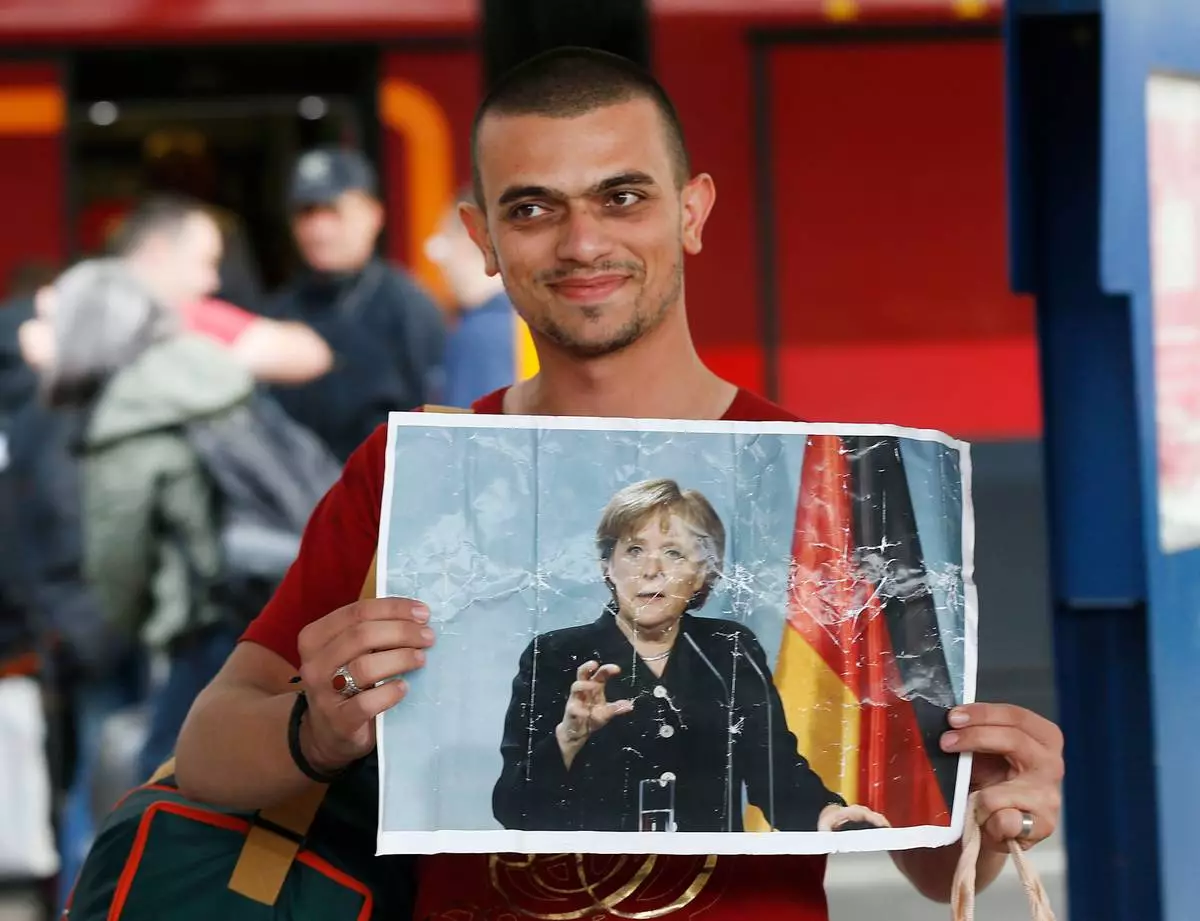
FILE - In this Sept. 5, 2015 file photo a migrant carries a picture of German Chancellor Angela Merkel as he arrives at the main train station in Munich, Germany. (AP Photo/Michael Probst, file)
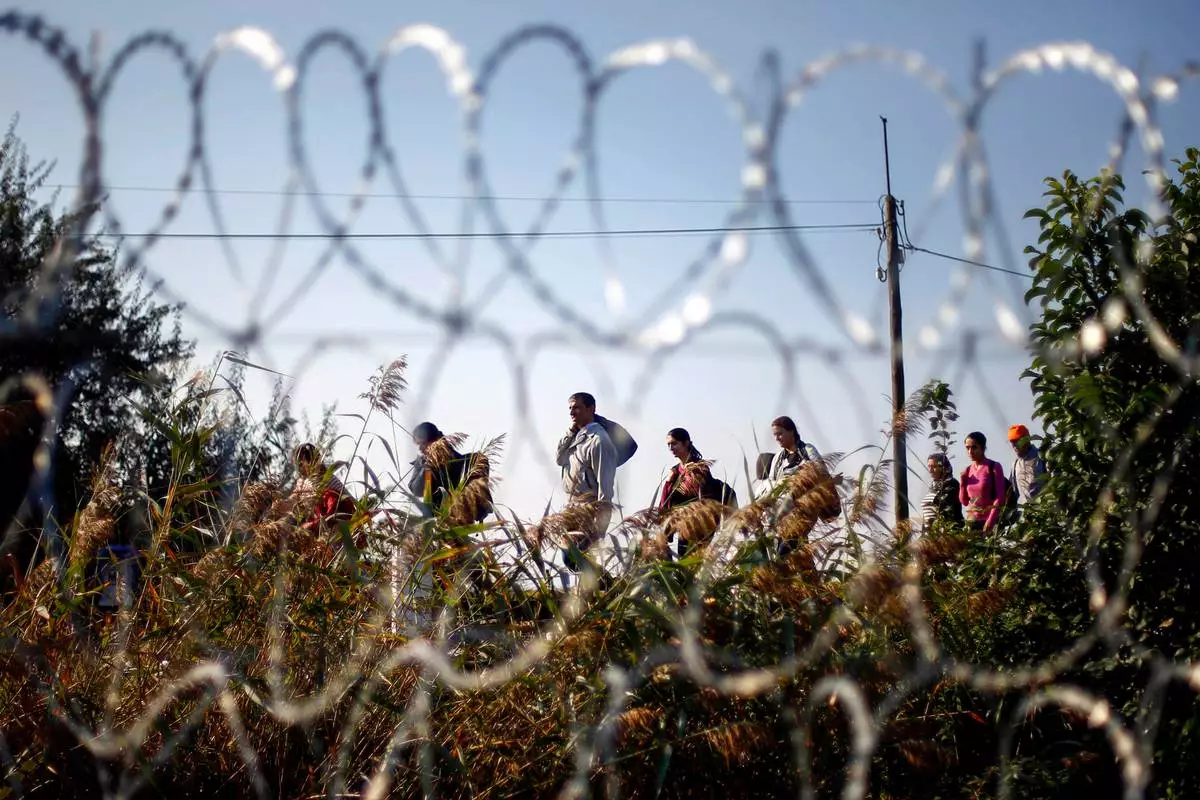
FILE - Migrants arrive at the Hungarian border fence between Serbia and Hungary near Roszke, southern Hungary, on Sept. 13, 2015. (AP Photo/Matthias Schrader, File)
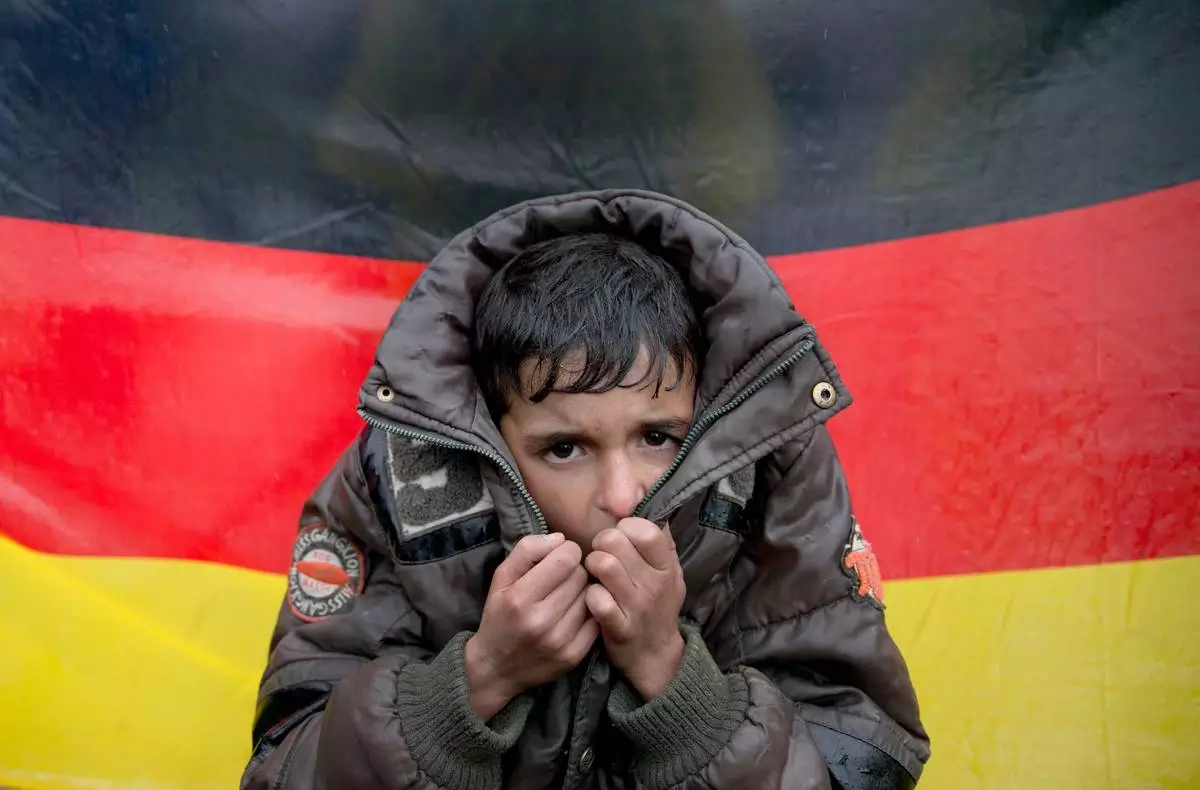
FILE - In this Wednesday, March 9, 2016 file photo a child tries to warm his hands, backdropped by Germany's flag as protesting migrants stage a sit in protest on the railway tracks at northern Greek border station of Idomeni. (AP Photo/Vadim Ghirda, File)

FILE - Top candidate Ulrich Siegmund speaks at an election party of the "Alternative for Germany" (AfD) after the Saxony-Anhalt state elections in Magdeburg, eastern Germany, Sept. 6, 2026. (AP Photo/Matthias Schrader, File)
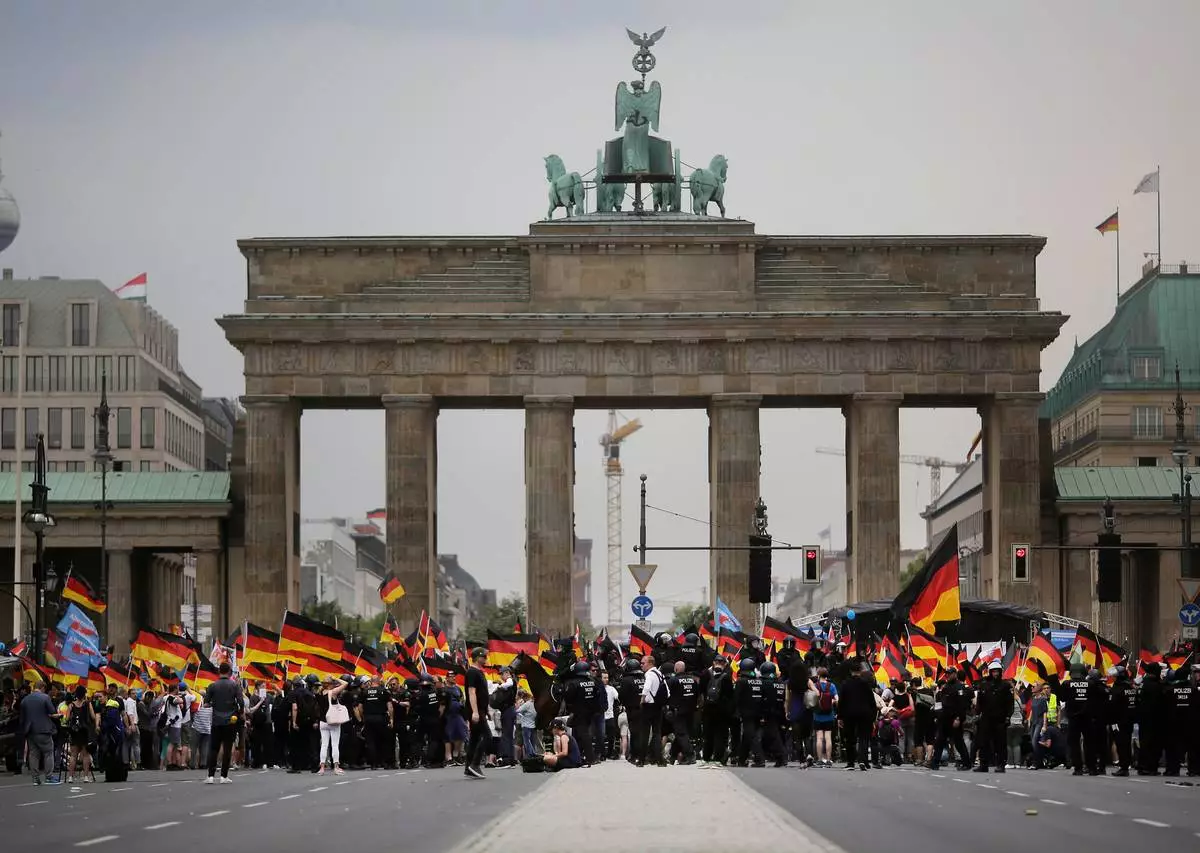
FILE - AfD supporters wave AfD flags and German national flags during a demonstration in front of the Brandenburg Gate in Berlin, Germany, May 27, 2018. (AP Photo/Markus Schreiber, File)